
Articles | Volume 26, issue 17
https://doi.org/10.5194/acp-26-12865-2026
© Author(s) 2026. This work is distributed under
the Creative Commons Attribution 4.0 License.
the Creative Commons Attribution 4.0 License.
https://doi.org/10.5194/acp-26-12865-2026
© Author(s) 2026. This work is distributed under
the Creative Commons Attribution 4.0 License.
the Creative Commons Attribution 4.0 License.
Research article
| 
14 Sep 2026
Research article |
| 14 Sep 2026
| 14 Sep 2026
An advanced modelling study on the role of dimethyl sulfide in new particle formation in the pristine marine boundary layer
Robin Wollesen de Jonge
CORRESPONDING AUTHOR

Institute for Atmospheric and Earth Systems Research, University of Helsinki, 00014 Helsinki, Finland
Zihao Fu
Institute for Atmospheric and Earth Systems Research, University of Helsinki, 00014 Helsinki, Finland
State Key Laboratory of Regional Environment and Sustainability, International Joint Laboratory for Regional Pollution Control, Ministry of Education (IJRC), College of Environmental Sciences and Engineering, Peking University, 100871 Beijing, China
Pontus Roldin
Department of Physics, Lund University, Lund 22363, Sweden
Michael Boy
Institute for Atmospheric and Earth Systems Research, University of Helsinki, 00014 Helsinki, Finland
Atmospheric Modelling Centre – Lahti, Lahti University Campus, 15110 Lahti, Finland
School of Engineering Sciences, Lappeenranta-Lahti University of Technology LUT, Lahti 15110, Finland
Related authors
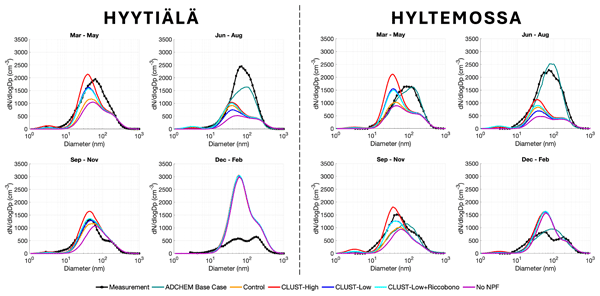
Carl Svenhag, Pontus Roldin, Tinja Olenius, Robin Wollesen de Jonge, Sara M. Blichner, Daniel Yazgi, and Moa K. Sporre
Atmos. Chem. Phys., 25, 11483–11504, https://doi.org/10.5194/acp-25-11483-2025, https://doi.org/10.5194/acp-25-11483-2025, 2025
Short summary
Short summary
This study is an investigation of the model representation of how particles are formed and grow in the atmosphere. Using modelled and observed data from two boreal forest stations in 2018, we identify key factors for new particle formation to improve particle climate predictions in the global EC-Earth3 model. Comparisons with the detailed ADCHEM model show that adding ammonia improves particle growth predictions, though EC-Earth3 still greatly underestimates the number of particles during warmer months.
Zhi-Song Liu, Michael Boy, and Risto Makkonen
Earth Syst. Sci. Data Discuss., https://doi.org/10.5194/essd-2026-792, https://doi.org/10.5194/essd-2026-792, 2026
Preprint under review for ESSD
Short summary
Short summary
Weather forecasts are mostly judged on ordinary days, not on the rare heatwaves, cold spells, storms, downpours, and droughts that cause most harm. We built a global daily record of such unusual weather over land since 1981 and compared it with reported disasters. Rarer weather was more often linked to harm, but disaster records miss much of the world. Leading artificial intelligence forecasts often missed extremes, especially strong winds, so forecasts need testing on extremes everywhere.
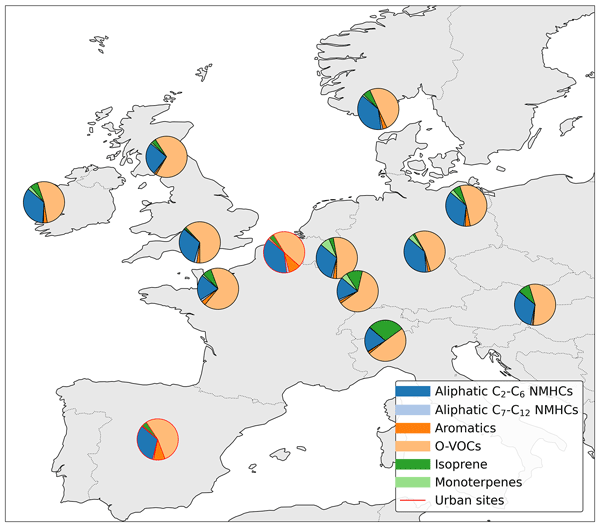
Wenche Aas, Thérèse Salameh, Robert Wegener, Heidi Hellén, Jean-Luc Jaffrezo, Pontus Roldin, Elisabeth Alonso-Blanco, Andres Alastuey, Crist Amelynck, Jgor Arduini, Benjamin Bergmans, Marie Bertrand, Agnes Borbon, Efstratios Bourtsoukidis, Laetitia Bouvier, David Butterfield, Iris Buxbaum, Darius Ceburnis, Anja Claude, Augustin Colette, Aurélie Colomb, Sophie Darfeuil, James Dernie, Maximilien Desservettaz, Elías Díaz-Ramiro, Marvin Dufresne, René Dubus, Mario Duval, Marie Dury, Anna Font, Kirsten N. Fossum, Evelyn Freney, Gotzon Gangoiti, Yao Ge, Maria Carmen Gomez, Francisco J. Gómez-Moreno, Marie Gohy, Valérie Gros, Paul Hamer, Bryan Hellack, Hartmut Herrmann, Robert Holla, Adéla Holubová, Niels R. Jensen, Tuija Jokinen, Matthew Jones, Uwe Käfer, Lukas Kesper, Dieter Klemp, Dagmar Kubistin, Angela Marinoni, Martina Mazzini, Vy Ngoc Thuy Dinh, Jurgita Ovadnevaite, Tuukka Petäjä, Miguel Portillo-Estrada, Jitka Přívozníková, Jean-Philippe Putaud, Stefan Reimann, Laura Renzi, Veronique Riffault, Stuart Ritchie, Chris Robins, Begoña Artíñano Rodríguez de Torres, Laurent Poulain, Julian Rüdiger, Agnieszka Sanocka, Estibaliz Saez de Camara Oleaga, Niels Schoon, Roger Seco, Ivan Simmons, Leïla Simon, David Simpson, Sverre Solberg, Emmanuel Tison, August Thomasson, Svetlana Tsyro, Marsailidh Twigg, Toni Tykkä, Bert Verreyken, Ågot Watne, Katie Williams, Ana Maria Yáñez-Serrano, Karen Yeung, Ilona Ylivinkka, and Karl Espen Yttri
Atmos. Chem. Phys., 26, 8717–8751, https://doi.org/10.5194/acp-26-8717-2026, https://doi.org/10.5194/acp-26-8717-2026, 2026
Short summary
Short summary
A one-week intensive measurement campaign during the 2022 European heatwave included monitoring of ozone, volatile organic compounds, aerosol chemical composition, and organic tracers to investigate air pollution sources. Results showed that emissions from vegetation and human activities contributed to peaks in ozone and secondary organic aerosol particles. Differences between measurements and model simulations underline the need for better characterization of sources and formation pathways.
Putian Zhou, Zeqi Cui, Petri Clusius, Risto Makkonen, Zihao Fu, Veli-Matti Kerminen, Markku Kulmala, and Michael Boy
EGUsphere, https://doi.org/10.5194/egusphere-2026-2381, https://doi.org/10.5194/egusphere-2026-2381, 2026
Short summary
Short summary
Tiny particles in the air affect climate by changing how much sun light reaches the ground and how clouds form. To understand it better, we developed an atmospheric computer model BoxMART to simulate how gases and particles interact in the air. It is flexible and easy to use, suitable for both research and teaching. It is validated by ten sets of cases from earlier studies. BoxMART provides a solid foundation for future work on air quality and climate change.
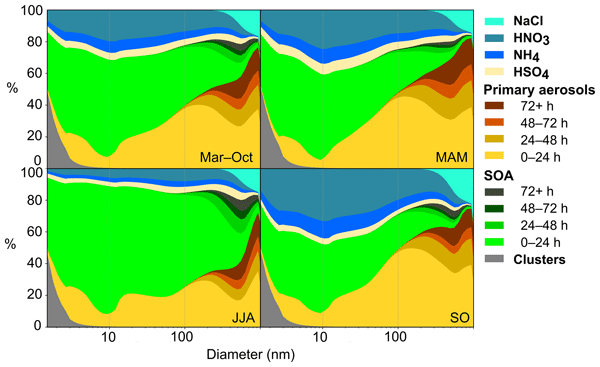
Petri Clusius, Metin Baykara, Carlton Xavier, Putian Zhou, Juniper Tyree, Benjamin Foreback, Mikko Äijälä, Frans Graeffe, Tuukka Petäjä, Markku Kulmala, Pauli Paasonen, Paul I. Palmer, and Michael Boy
Atmos. Chem. Phys., 26, 1967–1992, https://doi.org/10.5194/acp-26-1967-2026, https://doi.org/10.5194/acp-26-1967-2026, 2026
Short summary
Short summary
Cloud condensation nuclei are necessary to form clouds, and their size distribution affects cloud properties and therefore Earth’s energy budget. This study modelled the origins of cloud condensation nuclei at SMEAR II, Hyytiälä, Finland, and found that primary emissions and new particle formation separately contribute to more than half of the condensation nuclei, but they suppress each other, leading to current concentrations. Largest condensation nuclei originated mostly from emissions.
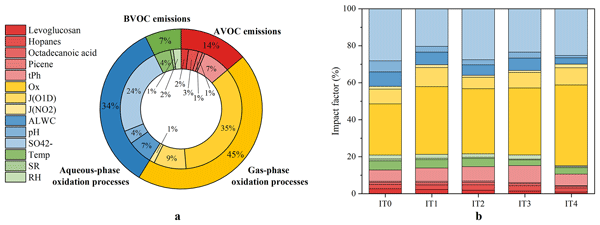
Yunfeng He, Xiang Ding, Quanfu He, Yuqing Zhang, Metin Baykara, Duohong Chen, Tao Zhang, Kong Yang, Junqi Wang, Qian Cheng, Hao Jiang, Zirui Wang, Ping Liu, Xinming Wang, and Michael Boy
Atmos. Chem. Phys., 26, 1093–1107, https://doi.org/10.5194/acp-26-1093-2026, https://doi.org/10.5194/acp-26-1093-2026, 2026
Short summary
Short summary
This study conducted long-term measurements of oxalic acid and molecular markers of primary anthropogenic emissions and secondary organic aerosols (SOA). We found that the reductions in anthropogenic precursors had limited impacts on SOA formation. The results highlight the increasing role of gas-phase oxidation under low-pollution conditions, emphasizing the need for effective ozone control strategies to mitigate SOA formation.
Yunfeng He, Xiang Ding, Quanfu He, Yuqing Zhang, Duohong Chen, Tao Zhang, Kong Yang, Junqi Wang, Qian Cheng, Hao Jiang, Zirui Wang, Ping Liu, Xinming Wang, and Michael Boy
Atmos. Chem. Phys., 25, 13729–13745, https://doi.org/10.5194/acp-25-13729-2025, https://doi.org/10.5194/acp-25-13729-2025, 2025
Short summary
Short summary
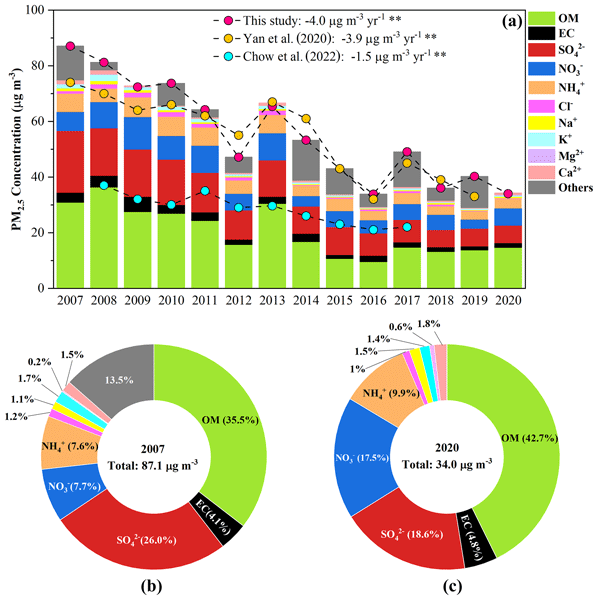
This study presented field measurements of PM2.5 and its chemical composition at a regional background site in the Pearl River Delta (PRD) from 2007 to 2020. As air quality improved, secondary species became more dominant. The changes in chemical composition led to the reductions in aerosol acidity, liquid water content and light extinction coefficient. Our results help to improve understanding of the secondary species formation under decreasing anthropogenic emissions.
Carl Svenhag, Pontus Roldin, Tinja Olenius, Robin Wollesen de Jonge, Sara M. Blichner, Daniel Yazgi, and Moa K. Sporre
Atmos. Chem. Phys., 25, 11483–11504, https://doi.org/10.5194/acp-25-11483-2025, https://doi.org/10.5194/acp-25-11483-2025, 2025
Short summary
Short summary
This study is an investigation of the model representation of how particles are formed and grow in the atmosphere. Using modelled and observed data from two boreal forest stations in 2018, we identify key factors for new particle formation to improve particle climate predictions in the global EC-Earth3 model. Comparisons with the detailed ADCHEM model show that adding ammonia improves particle growth predictions, though EC-Earth3 still greatly underestimates the number of particles during warmer months.
August Thomasson, Pontus Roldin, Nick Schutgens, Babitha George, Hugo Denier van der Gon, Guillaume Monteil, and Marko Scholze
EGUsphere, https://doi.org/10.5194/egusphere-2025-1568, https://doi.org/10.5194/egusphere-2025-1568, 2025
Short summary
Short summary
We present top-down black carbon emissions estimates in Europe based on surface observations of concentrations at 24 rural sites from 2021. The annual emissions are 411 ± 10 Gg, overall 18 % higher compared to a traditional bottom-up estimate. Emissions are higher in for instance eastern Europe and the Iberian peninsula but lower in Poland and Italy. Validation with independent observations show overall better match and the uncertainties are reduced.
Carl Svenhag, Moa K. Sporre, Tinja Olenius, Daniel Yazgi, Sara M. Blichner, Lars P. Nieradzik, and Pontus Roldin
Geosci. Model Dev., 17, 4923–4942, https://doi.org/10.5194/gmd-17-4923-2024, https://doi.org/10.5194/gmd-17-4923-2024, 2024
Short summary
Short summary
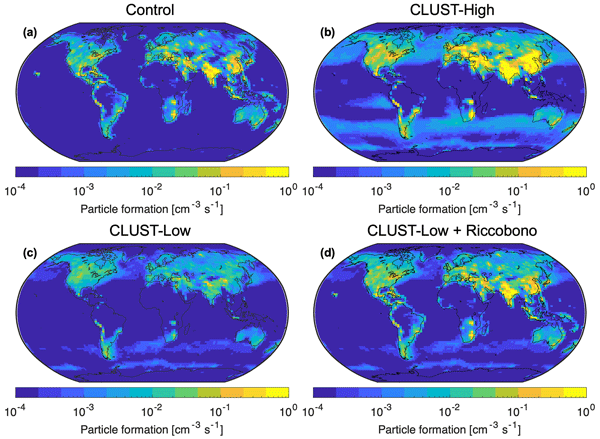
Our research shows the importance of modeling new particle formation (NPF) and growth of particles in the atmosphere on a global scale, as they influence the outcomes of clouds and our climate. With the global model EC-Earth3 we show that using a new method for NPF modeling, which includes new detailed processes with NH3 and H2SO4, significantly impacts the number of particles in the air and clouds and changes the radiation balance of the same magnitude as anthropogenic greenhouse emissions.
Putian Zhou, Zhengyao Lu, Jukka-Pekka Keskinen, Qiong Zhang, Juha Lento, Jianpu Bian, Twan van Noije, Philippe Le Sager, Veli-Matti Kerminen, Markku Kulmala, Michael Boy, and Risto Makkonen
Clim. Past, 19, 2445–2462, https://doi.org/10.5194/cp-19-2445-2023, https://doi.org/10.5194/cp-19-2445-2023, 2023
Short summary
Short summary
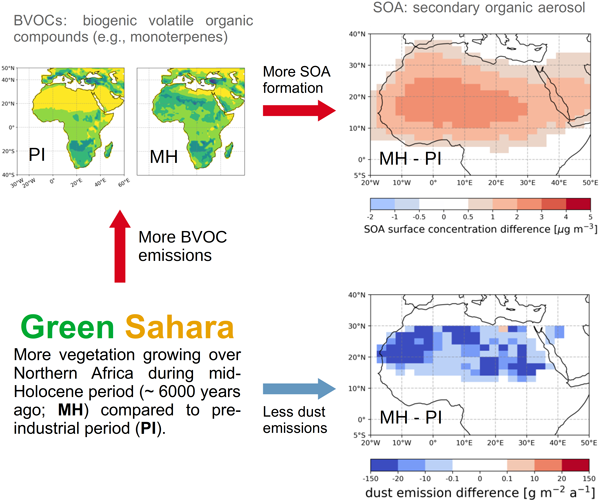
A Green Sahara with enhanced rainfall and larger vegetation cover existed in northern Africa about 6000 years ago. Biosphere–atmosphere interactions are found to be critical to explaining this wet period. Based on modeled vegetation reconstruction data, we simulated dust emissions and aerosol formation, which are key factors in biosphere–atmosphere interactions. Our results also provide a benchmark of aerosol climatology for future paleo-climate simulation experiments.
Lukas Pichelstorfer, Pontus Roldin, Matti Rissanen, Noora Hyttinen, Olga Garmash, Carlton Xavier, Putian Zhou, Petri Clusius, Benjamin Foreback, Thomas Golin Almeida, Chenjuan Deng, Metin Baykara, Theo Kurten, and Michael Boy
EGUsphere, https://doi.org/10.5194/egusphere-2023-1415, https://doi.org/10.5194/egusphere-2023-1415, 2023
Preprint archived
Short summary
Short summary
Secondary organic aerosols (SOA) form effectively from gaseous precursors via a process called autoxidation. While key chemical reaction types seem to be known, no general description of autoxidation chemistry exists. In the present work, we present a method to create autoxidation chemistry schemes for any atmospherically relevant hydrocarbon. We exemplarily investigate benzene and its potential to form aerosols. We found that autoxidation, under some conditions, can dominate the SOA formation.

Petri Clusius, Carlton Xavier, Lukas Pichelstorfer, Putian Zhou, Tinja Olenius, Pontus Roldin, and Michael Boy
Geosci. Model Dev., 15, 7257–7286, https://doi.org/10.5194/gmd-15-7257-2022, https://doi.org/10.5194/gmd-15-7257-2022, 2022
Short summary
Short summary
Atmospheric chemistry and aerosol processes form a dynamic and sensitively balanced system, and solving problems regarding air quality or climate requires detailed modelling and coupling of the processes. The models involved are often very complex to use. We have addressed this problem with the new ARCA box model. It puts much of the current knowledge of the nano- and microscale aerosol dynamics and chemistry into usable software and has the potential to become a valuable tool in the community.
Carlton Xavier, Metin Baykara, Robin Wollesen de Jonge, Barbara Altstädter, Petri Clusius, Ville Vakkari, Roseline Thakur, Lisa Beck, Silvia Becagli, Mirko Severi, Rita Traversi, Radovan Krejci, Peter Tunved, Mauro Mazzola, Birgit Wehner, Mikko Sipilä, Markku Kulmala, Michael Boy, and Pontus Roldin
Atmos. Chem. Phys., 22, 10023–10043, https://doi.org/10.5194/acp-22-10023-2022, https://doi.org/10.5194/acp-22-10023-2022, 2022
Short summary
Short summary
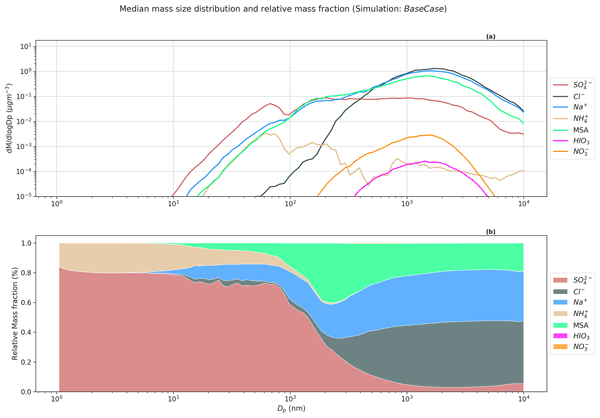
The focus of this work is to study and improve our understanding of processes involved in the formation and growth of new particles in a remote Arctic marine environment. We run the 1D model ADCHEM along air mass trajectories arriving at Ny-Ålesund in May 2018. The model finds that ion-mediated H2SO4–NH3 nucleation can explain the observed new particle formation at Ny-Ålesund. The growth of particles is driven via H2SO4 condensation and formation of methane sulfonic acid in the aqueous phase.
Hanna K. Lappalainen, Tuukka Petäjä, Timo Vihma, Jouni Räisänen, Alexander Baklanov, Sergey Chalov, Igor Esau, Ekaterina Ezhova, Matti Leppäranta, Dmitry Pozdnyakov, Jukka Pumpanen, Meinrat O. Andreae, Mikhail Arshinov, Eija Asmi, Jianhui Bai, Igor Bashmachnikov, Boris Belan, Federico Bianchi, Boris Biskaborn, Michael Boy, Jaana Bäck, Bin Cheng, Natalia Chubarova, Jonathan Duplissy, Egor Dyukarev, Konstantinos Eleftheriadis, Martin Forsius, Martin Heimann, Sirkku Juhola, Vladimir Konovalov, Igor Konovalov, Pavel Konstantinov, Kajar Köster, Elena Lapshina, Anna Lintunen, Alexander Mahura, Risto Makkonen, Svetlana Malkhazova, Ivan Mammarella, Stefano Mammola, Stephany Buenrostro Mazon, Outi Meinander, Eugene Mikhailov, Victoria Miles, Stanislav Myslenkov, Dmitry Orlov, Jean-Daniel Paris, Roberta Pirazzini, Olga Popovicheva, Jouni Pulliainen, Kimmo Rautiainen, Torsten Sachs, Vladimir Shevchenko, Andrey Skorokhod, Andreas Stohl, Elli Suhonen, Erik S. Thomson, Marina Tsidilina, Veli-Pekka Tynkkynen, Petteri Uotila, Aki Virkkula, Nadezhda Voropay, Tobias Wolf, Sayaka Yasunaka, Jiahua Zhang, Yubao Qiu, Aijun Ding, Huadong Guo, Valery Bondur, Nikolay Kasimov, Sergej Zilitinkevich, Veli-Matti Kerminen, and Markku Kulmala
Atmos. Chem. Phys., 22, 4413–4469, https://doi.org/10.5194/acp-22-4413-2022, https://doi.org/10.5194/acp-22-4413-2022, 2022
Short summary
Short summary
We summarize results during the last 5 years in the northern Eurasian region, especially from Russia, and introduce recent observations of the air quality in the urban environments in China. Although the scientific knowledge in these regions has increased, there are still gaps in our understanding of large-scale climate–Earth surface interactions and feedbacks. This arises from limitations in research infrastructures and integrative data analyses, hindering a comprehensive system analysis.
Cited articles
Adler, T., Knizia, G., and Werner, H.-J.: A simple and efficient CCSD(T)-F12 approximation, J. Chem. Phys., 127, 221106, https://doi.org/10.1063/1.2817618, 2008. a
Baccarini, A., Karlsson, L., Dommen, J., Duplessis, P., Vüllers, J., Brooks, I., Alfonso, S.-L., Salter, M., Tjernström, M., Baltensperger, U., Zieger, P., and Schmale, J.: Frequent new particle formation over the high Arctic pack ice by enhanced iodine emissions, Nat. Commun., 11, https://doi.org/10.1038/s41467-020-18551-0, 2020. a
Baccarini, A., Dommen, J., Lehtipalo, K., Henning, S., Modini, R., Gysel, M., Baltensperger, U., and Schmale, J.: Low‐Volatility Vapors and New Particle Formation Over the Southern Ocean During the Antarctic Circumnavigation Expedition, J. Geophys. Res.-Atmos., 126, https://doi.org/10.1029/2021JD035126, 2021. a, b
Barnes, I., Hjorth, J., and Mihalopoulos, N.: Dimethyl Sulfide and Dimethyl Sulfoxide and Their Oxidation in the Atmosphere, Chem. Rev., 106, 940–975, https://doi.org/10.1021/cr020529+, 2006. a, b
Barthel, S., Tegen, I., and Wolke, R.: Do new sea spray aerosol source functions improve the results of a regional aerosol model?, Atmos. Environ., 198, 265–278, https://doi.org/10.1016/j.atmosenv.2018.10.016, 2019. a
Bates, T., Lamb, B., Guenther, A., Dignon, J., and Stoiber, R.: Sulfur Emissions to the Atmosphere from Natural Sources, J. Atmos. Chem., 14, 315–337, https://doi.org/10.1007/BF00115242, 1992. a
Beck, L., Sarnela, N., Junninen, H., Hoppe, C., Garmash, O., Bianchi, F., Riva, M., Rose, C., Peräkylä, O., Wimmer, D., Kausiala, O., Jokinen, T., Ahonen, L., Mikkilä, J., Hakala, J., He, X.-C., Kontkanen, J., Wolf, K., Cappelletti, D., and Sipilä, M.: Differing Mechanisms of New Particle Formation at Two Arctic Sites, Geophys. Res. Lett., 48, https://doi.org/10.1029/2020GL091334, 2021. a
Berndt, T., Scholz, W., Mentler, B., Fischer, L., Hoffmann, E., Tilgner, A., Hyttinen, N., Prisle, N. L., Hansel, A., and Herrmann, H.: Fast Peroxy Radical Isomerization and OH Recycling in the Reaction of OH Radicals with Dimethyl Sulfide, J. Phys. Chem. Lett., 2019, https://doi.org/10.1021/acs.jpclett.9b02567, 2019. a, b, c, d
Berndt, T., Hoffmann, E., Tilgner, A., Stratmann, F., and Herrmann, H.: Direct sulfuric acid formation from the gas-phase oxidation of reduced-sulfur compounds, Nat. Commun., 14, https://doi.org/10.1038/s41467-023-40586-2, 2023. a, b, c, d
Berndt, T., Hoffmann, E. H., Tilgner, A., and Herrmann, H.: Gas-Phase Formation of Sulfurous Acid (H2SO3) in the Atmosphere, Angew. Chem. Int. Edit., 63, e202405572, https://doi.org/10.1002/anie.202405572, 2024. a
Besel, V., Kubecka, J., Kurtén, T., and Vehkamäki, H.: Impact of Quantum Chemistry Parameter Choices and Cluster Distribution Model Settings on Modeled Atmospheric Particle Formation Rates, J. Phys. Chem. A, https://doi.org/10.1021/acs.jpca.0c03984, 2020. a
Blomquist, B. W., Brumer, S. E., Fairall, C. W., Huebert, B. J., Zappa, C. J., Brooks, I. M., Yang, M., Bariteau, L., Prytherch, J., Hare, J. E., Czerski, H., Matei, A., and Pascal, R. W.: Wind Speed and Sea State Dependencies of Air-Sea Gas Transfer: Results From the High Wind Speed Gas Exchange Study (HiWinGS), J. Geophys. Res.-Oceans, 122, 8034–8062, https://doi.org/10.1002/2017JC013181, 2017. a, b, c
Borissenko, D., Kukui, A., Laverdet, G., and Le Bras, G.: Experimental Study of SO2 Formation in the Reactions of CH3SO Radical with NO2 and O3 in Relation with the Atmospheric Oxidation Mechanism of Dimethyl Sulfide, J. Phys. Chem. A, 107, 1155–1161, https://doi.org/10.1021/jp021701g, 2003. a
Braeuer, P., Tilgner, A., Wolke, R., and Herrmann, H.: Mechanism development and modelling of tropospheric multiphase halogen chemistry: The CAPRAM Halogen Module 2.0 (HM2), J. Atmos. Chem., 70, 19–52, https://doi.org/10.1007/s10874-013-9249-6, 2013. a, b
Brean, J., Dall´osto, M., Simó, R., Shi, Z., Beddows, D., and Harrison, R.: Open ocean and coastal new particle formation from sulfuric acid and amines around the Antarctic Peninsula, Nat. Geosci., 14, https://doi.org/10.1038/s41561-021-00751-y, 2021. a, b
Burkart, J., Hodshire, A. L., Mungall, E. L., Pierce, J. R., Collins, D. B., Ladino, L. A., Lee, A. K. Y., Irish, V., Wentzell, J. J. B., Liggio, J., Papakyriakou, T., Murphy, J., and Abbatt, J.: Organic Condensation and Particle Growth to CCN Sizes in the Summertime Marine Arctic Is Driven by Materials More Semivolatile Than at Continental Sites, Geophys. Res. Lett., 44, 10725–10734, https://doi.org/10.1002/2017GL075671, 2017a. a
Burkart, J., Willis, M. D., Bozem, H., Thomas, J. L., Law, K., Hoor, P., Aliabadi, A. A., Köllner, F., Schneider, J., Herber, A., Abbatt, J. P. D., and Leaitch, W. R.: Summertime observations of elevated levels of ultrafine particles in the high Arctic marine boundary layer, Atmos. Chem. Phys., 17, 5515–5535, https://doi.org/10.5194/acp-17-5515-2017, 2017b. a
Canneaux, S., Bohr, F., and Henon, E.: KiSThelP: a program to predict thermodynamic properties and rate constants from quantum chemistry results, J. Comput. Chem., 35, 82–93, 2014. a
Carpenter, L., Archer, S., and Beale, R.: Ocean-atmosphere trace gas exchange, Chem. Soc. Rev., 41, 6473–506, https://doi.org/10.1039/c2cs35121h, 2012. a, b
Charlson, R. J., Lovelock, J. E., Andreae, M. O., and Warren, S. G.: Oceanic phytoplankton, atmospheric sulphur, cloud albedo and climate, Nature, 326, 655–661, https://doi.org/10.1038/326655a0, 1987. a, b
Chen, J., Lane, J., Bates, K., and Kjaergaard, H.: Atmospheric Gas-Phase Formation of Methanesulfonic Acid, Environ. Sci. Technol., 57, https://doi.org/10.1021/acs.est.3c07120, 2023. a
Collins, D. B., Burkart, J., Chang, R. Y.-W., Lizotte, M., Boivin-Rioux, A., Blais, M., Mungall, E. L., Boyer, M., Irish, V. E., Massé, G., Kunkel, D., Tremblay, J.-É., Papakyriakou, T., Bertram, A. K., Bozem, H., Gosselin, M., Levasseur, M., and Abbatt, J. P. D.: Frequent ultrafine particle formation and growth in Canadian Arctic marine and coastal environments, Atmos. Chem. Phys., 17, 13119–13138, https://doi.org/10.5194/acp-17-13119-2017, 2017. a
Dall'Osto, M., Geels, C., Beddows, D. C. S., Boertmann, D., Lange, R., Nøjgaard, J. K., Harrison, R. M., Simo, R., Skov, H., and Massling, A.: Regions of open water and melting sea ice drive new particle formation in North East Greenland, Sci. Rep., 8, 6109, https://doi.org/10.1038/s41598-018-24426-8, 2018. a
D'Ambro, E., Hyttinen, N., Møller, K., Iyer, S., Otkjær, R., Bell, D., Liu, J., Lopez-Hilfiker, F., Schobesberger, S., Shilling, J., Zelenyuk, A., Kjaergaard, H., Thornton, J., and Kurtén, T.: Pathways to Highly Oxidized Products in the Δ3-Carene + OH System, Environ. Sci. Technol., 56, https://doi.org/10.1021/acs.est.1c06949, 2022. a
Damian, V., Sandu, A., Damian, M., Potra, F., and Carmichael, G. R.: The kinetic preprocessor KPP-a software environment for solving chemical kinetics, Comput. Chem. Eng., 26, 1567–1579, https://doi.org/10.1016/S0098-1354(02)00128-X, 2002. a
Dassault Systèmes: BIOVIA COSMOtherm, Release 2021, Dassault Systèmes, http://www.3ds.com (last access: 26 February 2024), 2021. a
Eckart, C.: The penetration of a potential barrier by electrons, Phys. Rev., 35, 1303–1309, 1930. a
Elm, J., Kubečka, J., Besel, V., Jääskeläinen, M. J., Halonen, R., Kurtén, T., and Vehkamäki, H.: Modeling the formation and growth of atmospheric molecular clusters: A review, J. Aerosol Sci., 149, 105621, https://doi.org/10.1016/j.jaerosci.2020.105621, 2020. a
Frisch, M. J., Trucks, G. W., Schlegel, H. B., Scuseria, G. E., Robb, M. A., Cheeseman, J. R., Scalmani, G., Barone, V., Petersson, G. A., Nakatsuji, H., Li, X., Caricato, M., Marenich, A. V., Bloino, J., Janesko, B. G., Gomperts, R., Mennucci, B., Hratchian, H. P., Ortiz, J. V., Izmaylov, A. F., Sonnenberg, J. L., Williams-Young, D., Ding, F., Lipparini, F., Egidi, F., Goings, J., Peng, B., Petrone, A., Henderson, T., Ranasinghe, D., Zakrzewski, V. G., Gao, J., Rega, N., Zheng, G., Liang, W., Hada, M., Ehara, M., Toyota, K., Fukuda, R., Hasegawa, J., Ishida, M., Nakajima, T., Honda, Y., Kitao, O., Nakai, H., Vreven, T., Throssell, K., Montgomery, J. A. J., Peralta, J. E., Ogliaro, F., Bearpark, M. J., Heyd, J. J., Brothers, E. N., Kudin, K. N., Staroverov, V. N., Keith, T. A., Kobayashi, R., Normand, J., Raghavachari, K., Rendell, A. P., Burant, J. C., Iyengar, S. S., Tomasi, J., Cossi, M., Millam, J. M., Klene, M., Adamo, C., Cammi, R., Ochterski, J. W., Martin, R. L., Morokuma, K., Farkas, O., Foresman, J. B., and Fox, D. J.: Gaussian 16, Revision B.01, Gaussian, Inc., Wallingford CT, https://gaussian.com/gaussian16/ (last access: 2 February 2026), 2016. a
Fu, Z., Xie, H. B., Elm, J., Liu, Y., Fu, Z., and Chen, J.: Atmospheric autoxidation of organophosphate esters, Environ. Sci. Technol., 56, 6944–6955, 2022. a
Fu, Z., Guo, S., Xie, H.-B., Zhou, P., Boy, M., Yao, M., and Hu, M.: A Near-Explicit Reaction Mechanism of Chlorine-Initiated Limonene: Implications for Health Risks Associated with the Concurrent Use of Cleaning Agents and Disinfectants, Environ. Sci. Technol., 58, 19762–19773, 2024a. a
Fu, Z., Guo, S., Yu, Y., Xie, H.-B., Li, S., Lv, D., Zhou, P., Song, K., Chen, Z., Tan, R., Hu, K., Shen, R., Yao, M., and Hu, M.: Oxidation Mechanism and Toxicity Evolution of Linalool, a Typical Indoor Volatile Chemical Product, Environ. Health, 2, 486–498, 2024b. a
Hoffmann, E. H., Tilgner, A., Schrödner, R., Bräuer, P., Wolke, R., and Herrmann, H.: An advanced modeling study on the impacts and atmospheric implications of multiphase dimethyl sulfide chemistry, P. Natl. Acad. Sci. USA, 113, 11776–11781, https://doi.org/10.1073/pnas.1606320113, 2016. a, b, c, d, e, f
Hulswar, S., Simó, R., Galí, M., Bell, T. G., Lana, A., Inamdar, S., Halloran, P. R., Manville, G., and Mahajan, A. S.: Third revision of the global surface seawater dimethyl sulfide climatology (DMS-Rev3), Earth Syst. Sci. Data, 14, 2963–2987, https://doi.org/10.5194/essd-14-2963-2022, 2022. a, b, c, d, e
Jacob, L. S. D., Giorio, C., and Archibald, A. T.: Extension, development, and evaluation of the representation of the OH-initiated dimethyl sulfide (DMS) oxidation mechanism in the Master Chemical Mechanism (MCM) v3.3.1 framework, Atmos. Chem. Phys., 24, 3329–3347, https://doi.org/10.5194/acp-24-3329-2024, 2024. a, b, c, d, e, f, g, h
Jacobson, M. Z.: Fundamentals of Atmospheric Modeling, Cambridge University Press, 2nd edn., https://doi.org/10.1017/CBO9781139165389, 2005. a, b
Jenkin, M. E., Saunders, S. M., and Pilling, M. J.: The tropospheric degradation of volatile organic compounds: a protocol for mechanism development, Atmos. Environ., 31, 81–104, https://doi.org/10.1016/S1352-2310(96)00105-7, 1997. a
Jenkin, M. E., Saunders, S. M., Wagner, V., and Pilling, M. J.: Protocol for the development of the Master Chemical Mechanism, MCM v3 (Part B): tropospheric degradation of aromatic volatile organic compounds, Atmos. Chem. Phys., 3, 181–193, https://doi.org/10.5194/acp-3-181-2003, 2003. a
Jernigan, C. M., Rivard, M. J., Berkelhammer, M. B., and Bertram, T. H.: Sulfate and Carbonyl Sulfide Production in Aqueous Reactions of Hydroperoxymethyl Thioformate, ACS ES&T Air, 1, 397–404, https://doi.org/10.1021/acsestair.3c00098, 2024. a
Johnson, M. T., Liss, P. S., Bell, T. G., Lesworth, T. J., Baker, A. R., Hind, A. J., Jickells, T. D., Biswas, K. F., Woodward, E. M. S., and Gibb, S. W.: Field observations of the ocean-atmosphere exchange of ammonia: Fundamental importance of temperature as revealed by a comparison of high and low latitudes, Global Biogeochem. Cy., 22, https://doi.org/10.1029/2007GB003039, 2008. a
Jokinen, T., Sipilä, M., Kontkanen, J., Vakkari, V., Tisler, P., Duplissy (née Kyrö), E.-M., Junninen, H., Kangasluoma, J., Manninen, H., Petäjä, T., Kulmala, M., Worsnop, D., Kirkby, J., Virkkula, A., and Kerminen, V.-M.: Ion-induced sulfuric acid–ammonia nucleation drives particle formation in coastal Antarctica, Sci. Adv., 4, eaat9744, https://doi.org/10.1126/sciadv.aat9744, 2018. a
Kilgour, D. B., Jernigan, C. M., Garmash, O., Aggarwal, S., Zhou, S., Mohr, C., Salter, M. E., Thornton, J. A., Wang, J., Zieger, P., and Bertram, T. H.: Cloud processing of dimethyl sulfide (DMS) oxidation products limits sulfur dioxide (SO2) and carbonyl sulfide (OCS) production in the eastern North Atlantic marine boundary layer, Atmos. Chem. Phys., 25, 1931–1947, https://doi.org/10.5194/acp-25-1931-2025, 2025. a
Kirkby, J., Curtius, J., Almeida, J., Dunne, E., Duplissy, J., Ehrhart, S., Franchin, A., Gagné, S., Ickes, L., Kürten, A., Kupc, A., Metzger, A., Riccobono, F., Rondo, L., Schobesberger, S., Tsagkogeorgas, G., Wimmer, D., Amorim, A., Bianchi, F., and Kulmala, M.: Role of sulphuric acid, ammonia and galactic cosmic rays in atmospheric aerosol nucleation, Nature, 476, 429–33, https://doi.org/10.1038/nature10343, 2011. a
Korhonen, P., Kulmala, M., Laaksonen, A., Viisanen, Y., McGraw, R., and Seinfeld, J. H.: Ternary nucleation of H2SO4, NH3, and H2O in the atmosphere, J. Geophys. Res.-Atmos., 104, 26349–26353, https://doi.org/10.1029/1999JD900784, 1999. a
Kukui, A., Borissenko, D., Laverdet, G., and Bras, G.: Gas-Phase Reactions of OH Radicals with Dimethyl Sulfoxide and Methane Sulfinic Acid Using Turbulent Flow Reactor and Chemical Ionization Mass Spectrometry, J. Phys. Chem. A, 107, https://doi.org/10.1021/jp0276911, 2003. a, b, c, d
Kulmala, M., Kontkanen, J., Junninen, H., Lehtipalo, K., Manninen, H. E., Nieminen, T., Petäjä, T., Sipilä, M., Schobesberger, S., Rantala, P., Franchin, A., Jokinen, T., Järvinen, E., Äijälä, M., Kangasluoma, J., Hakala, J., Aalto, P. P., Paasonen, P., Mikkilä, J., Vanhanen, J., Aalto, J., Hakola, H., Makkonen, U., Ruuskanen, T., Mauldin, R. L., Duplissy, J., Vehkamäki, H., Bäck, J., Kortelainen, A., Riipinen, I., Kurtén, T., Johnston, M. V., Smith, J. N., Ehn, M., Mentel, T. F., Lehtinen, K. E. J., Laaksonen, A., Kerminen, V.-M., and Worsnop, D. R.: Direct Observations of Atmospheric Aerosol Nucleation, Science, 339, 943–946, https://doi.org/10.1126/science.1227385, 2013. a
Laakso, L., Grönholm, T., Üllar Rannik, Kosmale, M., Fiedler, V., Vehkamäki, H., and Kulmala, M.: Ultrafine particle scavenging coefficients calculated from 6 years field measurements, Atmos. Environ., 37, 3605–3613, https://doi.org/10.1016/S1352-2310(03)00326-1, 2003. a
Lana, A., Bell, T. G., Simó, R., Vallina, S. M., Ballabrera-Poy, J., Kettle, A. J., Dachs, J., Bopp, L., Saltzman, E. S., Stefels, J., Johnson, J. E., and Liss, P. S.: An updated climatology of surface dimethlysulfide concentrations and emission fluxes in the global ocean, Global Biogeochem. Cy., 25, https://doi.org/10.1029/2010GB003850, 2011. a, b, c, d, e
Lawson, S. J., Law, C. S., Harvey, M. J., Bell, T. G., Walker, C. F., de Bruyn, W. J., and Saltzman, E. S.: Methanethiol, dimethyl sulfide and acetone over biologically productive waters in the southwest Pacific Ocean, Atmos. Chem. Phys., 20, 3061–3078, https://doi.org/10.5194/acp-20-3061-2020, 2020. a
Liss, P. S. and Merlivat, L.: Air-Sea Gas Exchange Rates: Introduction and Synthesis, Springer Netherlands, Dordrecht, 113–127, ISBN 978-94-009-4738-2, https://doi.org/10.1007/978-94-009-4738-2_5, 1986. a, b, c
Lovelock, J. E., Maggs, R. J., and Rasmussen, R. A.: Atmospheric Dimethyl Sulfide and the Natural Sulfur Cycle, Nature, 237, 452–453, 1972. a
Lucas, D. D. and Prinn, R. G.: Mechanistic studies of dimethylsulfide oxidation products using an observationally constrained model, J. Geophys. Res.-Atmos., 107, ACH 12-1–ACH 12-26, https://doi.org/10.1029/2001JD000843, 2002. a, b, c
Lv, G., Zhang, C., and Sun, X.: Understanding the oxidation mechanism of methanesulfinic acid by ozone in the atmosphere, Sci. Rep., 9, 322, https://doi.org/10.1038/s41598-018-36405-0, 2019. a, b
Marandino, C., Bruyn, W., Miller, S., and Saltzman, E.: Dms Air/Sea Flux and Gas Transfer Coefficients From the North Atlantic Summertime Coccolithophore Bloom, Geophys. Res. Lett., 35, https://doi.org/10.1029/2008GL036370, 2008. a
McGrath, M. J., Olenius, T., Ortega, I. K., Loukonen, V., Paasonen, P., Kurtén, T., Kulmala, M., and Vehkamäki, H.: Atmospheric Cluster Dynamics Code: a flexible method for solution of the birth-death equations, Atmos. Chem. Phys., 12, 2345–2355, https://doi.org/10.5194/acp-12-2345-2012, 2012. a
Merikanto, J., Spracklen, D. V., Mann, G. W., Pickering, S. J., and Carslaw, K. S.: Impact of nucleation on global CCN, Atmos. Chem. Phys., 9, 8601–8616, https://doi.org/10.5194/acp-9-8601-2009, 2009. a
Møller, K. H., Bates, K. H., and Kjaergaard, H. G.: The Importance of Peroxy Radical Hydrogen-Shift Reactions in Atmospheric Isoprene Oxidation, J. Phys. Chem. A, 123, 920–932, https://doi.org/10.1021/acs.jpca.8b10432, 2019. a
Nightingale, P. D., Malin, G., Law, C. S., Watson, A. J., Liss, P. S., Liddicoat, M. I., Boutin, J., and Upstill-Goddard, R. C.: In situ evaluation of air-sea gas exchange parameterizations using novel conservative and volatile tracers, Global Biogeochem. Cy., 14, 373–387, https://doi.org/10.1029/1999GB900091, 2000. a, b, c
Novak, G., Fite, C. H., Holmes, C., Veres, P., Neuman, J., Faloona, I., Thornton, J., Wolfe, G., Vermeuel, M., Jernigan, C., Peischl, J., Ryerson, T., Thompson, C., Bourgeois, I., warneke, C., Gkatzelis, G., Coggon, M., Sekimoto, K., Bui, T., and Bertram, T.: Rapid cloud removal of dimethyl sulfide oxidation products limits SO 2 and cloud condensation nuclei production in the marine atmosphere, P. Natl. Acad. Sci. USA, 118, e2110472118, https://doi.org/10.1073/pnas.2110472118, 2021. a
Novak, G. A., Kilgour, D. B., Jernigan, C. M., Vermeuel, M. P., and Bertram, T. H.: Oceanic emissions of dimethyl sulfide and methanethiol and their contribution to sulfur dioxide production in the marine atmosphere, Atmos. Chem. Phys., 22, 6309–6325, https://doi.org/10.5194/acp-22-6309-2022, 2022. a
Olenius, T., Kupiainen-Määttä, O., Ortega, I., Kurtén, T., and Vehkamäki, H.: Free energy barrier in the growth of sulfuric acid-ammonia and sulfuric acid-dimethylamine clusters, J. Chem. Phys., 139, 084312, https://doi.org/10.1063/1.4819024, 2013. a
Paulot, F., Jacob, D. J., Johnson, M. T., Bell, T. G., Baker, A. R., Keene, W. C., Lima, I. D., Doney, S. C., and Stock, C. A.: Global oceanic emission of ammonia: Constraints from seawater and atmospheric observations, Global Biogeochem. Cy., 29, 1165–1178, https://doi.org/10.1002/2015GB005106, 2015. a
Paulot, F., Stock, C., John, J. G., Zadeh, N., and Horowitz, L. W.: Ocean Ammonia Outgassing: Modulation by CO and Anthropogenic Nitrogen Deposition, J. Adv. Model. Earth Sy., 12, e2019MS002026, https://doi.org/10.1029/2019MS002026, 2020. a, b, c, d
Pirjola, L., O'Dowd, C. D., Brooks, I. M., and Kulmala, M.: Can new particle formation occur in the clean marine boundary layer?, J. Geophys. Res.-Atmos., 105, 26531–26546, https://doi.org/10.1029/2000JD900310, 2000. a
Quinn, P. K. and Bates, T. S.: The case against climate regulation via oceanic phytoplankton sulphur emissions, Nature, 480, 51–56, https://doi.org/10.1038/nature10580, 2011. a
Roldin, P. and Wollesen de Jonge, R.: DMS mechanism and model results, Zenodo [data set], https://doi.org/10.5281/zenodo.21913874, 2026. a
Roldin, P., Eriksson, A. C., Nordin, E. Z., Hermansson, E., Mogensen, D., Rusanen, A., Boy, M., Swietlicki, E., Svenningsson, B., Zelenyuk, A., and Pagels, J.: Modelling non-equilibrium secondary organic aerosol formation and evaporation with the aerosol dynamics, gas- and particle-phase chemistry kinetic multilayer model ADCHAM, Atmos. Chem. Phys., 14, 7953–7993, https://doi.org/10.5194/acp-14-7953-2014, 2014. a
Rosati, B., Christiansen, S., Wollesen de Jonge, R., Roldin, P., Jensen, M. M., Wang, K., Moosakutty, S. P., Thomsen, D., Salomonsen, C., Hyttinen, N., Elm, J., Feilberg, A., Glasius, M., and Bilde, M.: New Particle Formation and Growth from Dimethyl Sulfide Oxidation by Hydroxyl Radicals, ACS Earth Space Chem., 5, 801–811, https://doi.org/10.1021/acsearthspacechem.0c00333, 2021. a
Rosenfeld, D., Zhu, Y., Wang, M., Zheng, Y., Goren, T., and Yu, S.: Aerosol-driven droplet concentrations dominate coverage and water of oceanic low-level clouds, Science, 363, eaav0566, https://doi.org/10.1126/science.aav0566, 2019. a
Salter, M. E., Zieger, P., Acosta Navarro, J. C., Grythe, H., Kirkevåg, A., Rosati, B., Riipinen, I., and Nilsson, E. D.: An empirically derived inorganic sea spray source function incorporating sea surface temperature, Atmos. Chem. Phys., 15, 11047–11066, https://doi.org/10.5194/acp-15-11047-2015, 2015. a, b
Schmitz, G. and Elm, J.: Assessment of the DLPNO Binding Energies of Strongly Noncovalent Bonded Atmospheric Molecular Clusters, ACS Omega, 5, 7601–7612, https://doi.org/10.1021/acsomega.0c00436, 2020. a
Shen, J., Scholz, W., He, X.-C., Zhou, P., Marie, G., Wang, M., Marten, R., Surdu, M., Rörup, B., Baalbaki, R., Amorim, A., Ataei, F., Bell, D. M., Bertozzi, B., Brasseur, Z., Caudillo, L., Chen, D., Chu, B., Dada, L., Duplissy, J., Finkenzeller, H., Granzin, M., Guida, R., Heinritzi, M., Hofbauer, V., Iyer, S., Kemppainen, D., Kong, W., Krechmer, J. E., Kürten, A., Lamkaddam, H., Lee, C. P., Lopez, B., Mahfouz, N. G. A., Manninen, H. E., Massabò, D., Mauldin, R. L., Mentler, B., Müller, T., Pfeifer, J., Philippov, M., Piedehierro, A. A., Roldin, P., Schobesberger, S., Simon, M., Stolzenburg, D., Tham, Y. J., Tomé, A., Umo, N. S., Wang, D., Wang, Y., Weber, S. K., Welti, A., Wollesen de Jonge, R., Wu, Y., Zauner-Wieczorek, M., Zust, F., Baltensperger, U., Curtius, J., Flagan, R. C., Hansel, A., Möhler, O., Petäjä, T., Volkamer, R., Kulmala, M., Lehtipalo, K., Rissanen, M., Kirkby, J., El-Haddad, I., Bianchi, F., Sipilä, M., Donahue, N. M., and Worsnop, D. R.: High Gas-Phase Methanesulfonic Acid Production in the OH-Initiated Oxidation of Dimethyl Sulfide at Low Temperatures, Environ. Sci. Technol., 56, 13931–13944, https://doi.org/10.1021/acs.est.2c05154, 2022. a, b, c, d
Slinn, S. and Slinn, W.: Predictions for particle deposition on natural waters, Atmos. Environ.), 14, 1013–1016, https://doi.org/10.1016/0004-6981(80)90032-3, 1980. a
Sofiev, M., Soares, J., Prank, M., de Leeuw, G., and Kukkonen, J.: A regional-to-global model of emission and transport of sea salt particles in the atmosphere, J. Geophys. Res.-Atmos., 116, 21302, https://doi.org/10.1029/2010JD014713, 2011. a
Stefels, J., Steinke, M., Turner, S., Malin, G., and Belviso, S.: Environmental constraints on the production and removal of the climatically active gas dimethylsulphide (DMS) and implications for ecosystem modelling, Phaeocystis, Major Link in the Biogeochemical Cycling of Climate-Relevant Elements, 245–275, https://doi.org/10.1007/978-1-4020-6214-8_18, 2007. a
Turnipseed, A. A., Barone, S. B., Jensen, N. R., Hanson, D. R., Howard, C. J., and Ravishankara, A. R.: Kinetics of the Reactions of CF3O Radicals with CO and H2O, J. Phys. Chem., 99, 6000–6009, https://doi.org/10.1021/j100016a041, 1995. a
Veres, P. R., Neuman, J. A., Bertram, T. H., Assaf, E., Wolfe, G. M., Williamson, C. J., Weinzierl, B., Tilmes, S., Thompson, C. R., Thames, A. B., Schroder, J. C., Saiz-Lopez, A., Rollins, A. W., Roberts, J. M., Price, D., Peischl, J., Nault, B. A., Møller, K. H., Miller, D. O., Meinardi, S., Li, Q., Lamarque, J.-F., Kupc, A., Kjaergaard, H. G., Kinnison, D., Jimenez, J. L., Jernigan, C. M., Hornbrook, R. S., Hills, A., Dollner, M., Day, D. A., Cuevas, C. A., Campuzano-Jost, P., Burkholder, J., Bui, T. P., Brune, W. H., Brown, S. S., Brock, C. A., Bourgeois, I., Blake, D. R., Apel, E. C., and Ryerson, T. B.: Global airborne sampling reveals a previously unobserved dimethyl sulfide oxidation mechanism in the marine atmosphere, P. Natl. Acad. Sci. USA, 117, 4505–4510, https://doi.org/10.1073/pnas.1919344117, 2020. a, b, c, d
Wang, S., Newland, M., Deng, W., Rickard, A., Hamilton, J., Muñoz, A., Ródenas, M., Vázquez, M., Wang, L., and Wang, X.: Aromatic Photooxidation, A New Source of Atmospheric Acidity, Environ. Sci. Technol., https://doi.org/10.1021/acs.est.0c00526, 2020. a
Wanninkhof, R.: Relationship between wind speed and gas exchange over the ocean revisited, Limnol. Oceanogr.-Meth., 12, 351–362, https://doi.org/10.4319/lom.2014.12.351, 2014. a, b
Wentworth, G. R., Murphy, J. G., Croft, B., Martin, R. V., Pierce, J. R., Côté, J.-S., Courchesne, I., Tremblay, J.-É., Gagnon, J., Thomas, J. L., Sharma, S., Toom-Sauntry, D., Chivulescu, A., Levasseur, M., and Abbatt, J. P. D.: Ammonia in the summertime Arctic marine boundary layer: sources, sinks, and implications, Atmos. Chem. Phys., 16, 1937–1953, https://doi.org/10.5194/acp-16-1937-2016, 2016. a, b
Werner, H.-J., Knowles, P. J., Manby, F. R., Black, J. A., Doll, K., Hesselmann, A., Kats, D., Kohn, A., Korona, T., Kreplin, D. A., Ma, Q., Miller, T. F. I., Mitrushchenkov, A., Peterson, K. A., Polyak, I., Rauhut, G., and Sibaev, M.: The Molpro quantum chemistry package, J. Chem. Phys., 152, 144107, https://doi.org/10.1063/5.0005081, 2020. a
Williamson, C. J., Kupc, A., Axisa, D., Bilsback, K. R., Bui, T., Campuzano-Jost, P., Dollner, M., Froyd, K. D., Hodshire, A. L., Jimenez, J. L., Kodros, J. K., Luo, G., Murphy, D. M., Nault, B. A., Ray, E. A., Weinzierl, B., Wilson, J. C., Yu, F., Yu, P., Pierce, J. R., and Brock, C. A.: A large source of cloud condensation nuclei from new particle formation in the tropics, Nature, 574, 399–403, https://doi.org/10.1038/s41586-019-1638-9, 2019. a
Willis, M. D., Burkart, J., Thomas, J. L., Köllner, F., Schneider, J., Bozem, H., Hoor, P. M., Aliabadi, A. A., Schulz, H., Herber, A. B., Leaitch, W. R., and Abbatt, J. P. D.: Growth of nucleation mode particles in the summertime Arctic: a case study, Atmos. Chem. Phys., 16, 7663–7679, https://doi.org/10.5194/acp-16-7663-2016, 2016. a
Wollesen de Jonge, R., Elm, J., Rosati, B., Christiansen, S., Hyttinen, N., Lüdemann, D., Bilde, M., and Roldin, P.: Secondary aerosol formation from dimethyl sulfide – improved mechanistic understanding based on smog chamber experiments and modelling, Atmos. Chem. Phys., 21, 9955–9976, https://doi.org/10.5194/acp-21-9955-2021, 2021. a, b, c, d, e
Wollesen de Jonge, R., Xavier, C., Olenius, T., Elm, J., Svenhag, C., Hyttinen, N., Nieradzik, L., Sarnela, N., Kristensson, A., Petäjä, T., Ehn, M., and Roldin, P.: Natural Marine Precursors Boost Continental New Particle Formation and Production of Cloud Condensation Nuclei, Environ. Sci. Technol., 58, 10956–10968, https://doi.org/10.1021/acs.est.4c01891, 2024. a, b
Wu, R., Wang, S., and Wang, L.: A New Mechanism for The Atmospheric Oxidation of Dimethyl Sulfide. The Importance of Intramolecular Hydrogen Shift in CH3SCH2OO Radical, J. Phys. Chem. A, 119, https://doi.org/10.1021/jp511616j, 2014. a, b, c
Ye, Q., Goss, M. B., Krechmer, J. E., Majluf, F., Zaytsev, A., Li, Y., Roscioli, J. R., Canagaratna, M., Keutsch, F. N., Heald, C. L., and Kroll, J. H.: Product distribution, kinetics, and aerosol formation from the OH oxidation of dimethyl sulfide under different RO2 regimes, Atmos. Chem. Phys., 22, 16003–16015, https://doi.org/10.5194/acp-22-16003-2022, 2022. a, b, c, d, e, f, g, h
Yin, F., Grosjean, D., Flagan, R. C., and Seinfeld, J. H.: Photooxidation of dimethyl sulfide and dimethyl disulfide. II: Mechanism evaluation, J. Atmos. Chem., 11, 365–399, https://doi.org/10.1007/BF00053781, 1990. a
Zhao, Y. and Truhlar, D.: The M06 suite of density functionals for main group thermochemistry, thermochemical kinetics, noncovalent interactions, excited states, and transition elements: two new functionals and systematic testing of four M06 functionals and 12 other functionals, Theor. Chem. Acc., 120, 215–241, https://doi.org/10.1007/s00214-007-0310-x, 2008. a
Zheng, G., Wang, Y., Wood, R., Jensen, M. P., Kuang, C., McCoy, I. L., Matthews, A., Mei, F., Tomlinson, J. M., Shilling, J. E., Zawadowicz, M. A., Crosbie, E., Moore, R., Ziemba, L., Andreae, M. O., and Wang, J.: New particle formation in the remote marine boundary layer, Nat. Commun., 12, 527, https://doi.org/10.1038/s41467-020-20773-1, 2021. a, b, c
Ziska, F., Quack, B., Abrahamsson, K., Archer, S. D., Atlas, E., Bell, T., Butler, J. H., Carpenter, L. J., Jones, C. E., Harris, N. R. P., Hepach, H., Heumann, K. G., Hughes, C., Kuss, J., Krüger, K., Liss, P., Moore, R. M., Orlikowska, A., Raimund, S., Reeves, C. E., Reifenhäuser, W., Robinson, A. D., Schall, C., Tanhua, T., Tegtmeier, S., Turner, S., Wang, L., Wallace, D., Williams, J., Yamamoto, H., Yvon-Lewis, S., and Yokouchi, Y.: Global sea-to-air flux climatology for bromoform, dibromomethane and methyl iodide, Atmos. Chem. Phys., 13, 8915–8934, https://doi.org/10.5194/acp-13-8915-2013, 2013. a
Short summary
New particle formation is thought to be unlikely in the remote marine boundary layer. Using a process-based atmospheric model, we show that new particle formation can occur under various meteorological and hydrological conditions from DMS-derived H2SO4 and natural emissions of NH3. The particles are able to grow into the cloud condensation nuclei size range, with the potential to affect clouds and climate.
New particle formation is thought to be unlikely in the remote marine boundary layer. Using a...


Altmetrics
Final-revised paper
Preprint