
Articles | Volume 26, issue 2
https://doi.org/10.5194/acp-26-1277-2026
© Author(s) 2026. This work is distributed under
the Creative Commons Attribution 4.0 License.
the Creative Commons Attribution 4.0 License.
https://doi.org/10.5194/acp-26-1277-2026
© Author(s) 2026. This work is distributed under
the Creative Commons Attribution 4.0 License.
the Creative Commons Attribution 4.0 License.
Research article
| 
26 Jan 2026
Research article |
| 26 Jan 2026
| 26 Jan 2026
Cloud Chamber Studies on the Linear Depolarisation Ratio of Small Cirrus Ice Crystals

Institute of Meteorology and Climate Research Atmospheric Aerosol Research (IMKAAF), Karlsruhe Institute of Technology, Karlsruhe, Germany
Martin Schnaiter
Institute for Atmospheric and Environmental Research, University of Wuppertal, Wuppertal, Germany
schnaiTEC GmbH, Wuppertal, Germany
Masanori Saito
Department of Atmospheric Science, University of Wyoming, Laramie, USA
Robert Wagner
Institute of Meteorology and Climate Research Atmospheric Aerosol Research (IMKAAF), Karlsruhe Institute of Technology, Karlsruhe, Germany
Institute for Atmospheric and Environmental Research, University of Wuppertal, Wuppertal, Germany
Related authors
Adrian Hamel, Massimo del Guasta, Carl Schmitt, Christophe Genthon, Emma Järvinen, and Martin Schnaiter
Atmos. Chem. Phys., 26, 1211–1228, https://doi.org/10.5194/acp-26-1211-2026, https://doi.org/10.5194/acp-26-1211-2026, 2026
Short summary
Short summary
Size and shape of small ice particles in the dry and cold atmosphere of inland Antarctica were measured. We observed that particles originating near the surface are smaller than those falling from higher altitudes. Inland Antarctic particles of frozen fog occur at lower concentrations and are less complex than those observed in an urban, polluted environment. These findings can help to improve Antarctic climate models and to accurately interpret satellite observations of the polar atmosphere.
Harry Ballington, Martin Schnaiter, and Emma Järvinen
EGUsphere, https://doi.org/10.5194/egusphere-2026-4436, https://doi.org/10.5194/egusphere-2026-4436, 2026
This preprint is open for discussion and under review for Atmospheric Chemistry and Physics (ACP).
Short summary
Short summary
High altitude clouds known as cirrus cover about one third of the planet and strongly influence global climate. Our understanding of how they scatter light is poorly understood because ice crystals are highly varied and it is impossible to account for them all individually. We combine measurements from the new EarthCARE satellite with in-situ aircraft data and with computer simulations to determine which crystal shapes best match observations.
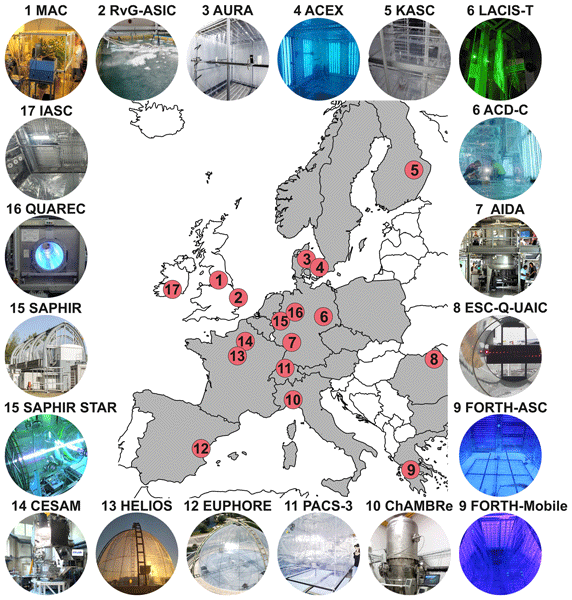
Hendrik Fuchs, Niklas Illmann, Amalia Muñoz, Mila Ródenas, Bénédicte Picquet-Varrault, M. Rami Alfarra, Cecilia Arsene, Iustinian G. Bejan, David M. Bell, Merete Bilde, Alexander Böhmländer, Mixtli Campos-Pineda, Mathieu Cazaunau, Patrice Coll, Véronique Daële, Claudia Di Biagio, Michael Flynn, Paola Formenti, Hartmut Herrmann, Kristina Höhler, Thorsten Hohaus, Matthew S. Johnson, Eija Juurola, Niku Kivekäs, Jan Kaiser, Christos Kaltsonoudis, Paolo Laj, Dario Massabò, Federico Mazzei, Gordon McFiggans, Max R. McGillen, Abdelwahid Mellouki, Peter Mettke, Ottmar Möhler, Falk Mothes, Dennis Niedermeier, Anna Novelli, Romeo I. Olariu, Spyros N. Pandis, Iulia Patroescu-Klotz, Rosa Maria Petracca Altieri, Paolo Prati, Claudiu Roman, Albert A. Ruth, Harald Saathoff, Silvio Schmalfuß, Frank Stratmann, Virginia Vernocchi, Aristeidis Voliotis, Jens Voigtländer, Annele Virtanen, Andreas Wahner, Robert Wagner, John Wenger, Sören Zorn, Peter Wiesen, and Jean-Francois Doussin
Atmos. Meas. Tech., 19, 4165–4199, https://doi.org/10.5194/amt-19-4165-2026, https://doi.org/10.5194/amt-19-4165-2026, 2026
Short summary
Short summary
Atmospheric simulation chambers enable experiments to be conducted under controlled conditions, improving our understanding of, and ability to predict, changes in the composition of the atmosphere. This is important for assessing air quality and its effects on human health, climate, the environment, and the economy. This paper describes the chambers of the European ACTRIS research infrastructure and discusses topics and directions that can be addressed in future chamber experiments.
Aymeric Dziduch, Antoine Baudoux, Guillaume Mioche, Antoine Canzi, Benjamin Doiteau, Manuel Moser, Emma Järvinen, Étienne Vignon, Jean-Christophe Raut, Régis Dupuy, Christophe Gourbeyre, Jean-Luc Baray, Marie Monier, Frédéric Szczap, Guillaume Penide, Julien Delanoë, Odran Sourdeval, Alfons Schwarzenboeck, Stephan Mertes, Franz Martin Schnaiter, Christiane Voigt, Mario Mech, Susanne Crewell, Andreas Herber, Christof Lüpkes, André Ehrlich, Manfred Wendisch, and Olivier Jourdan
EGUsphere, https://doi.org/10.5194/egusphere-2026-3265, https://doi.org/10.5194/egusphere-2026-3265, 2026
This preprint is open for discussion and under review for Atmospheric Chemistry and Physics (ACP).
Short summary
Short summary
This study examines the microphysical properties and ice crystal habits of low-level Arctic mixed-phase clouds around Svalbard. Using airborne in situ observations from four campaigns, we show that cloud microphysical structure and ice crystal habits are influenced by weather conditions and surface type. These results provide quantitative observations to better understand low-level Arctic clouds, their ice formation processes, and their influence on the Arctic atmosphere and climate system.
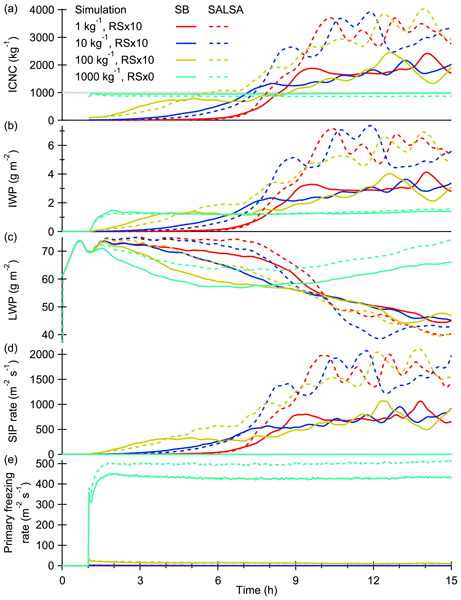
Tomi Raatikainen, Silvia Calderón, Emma Järvinen, Marje Prank, and Sami Romakkaniemi
Atmos. Chem. Phys., 26, 5019–5038, https://doi.org/10.5194/acp-26-5019-2026, https://doi.org/10.5194/acp-26-5019-2026, 2026
Short summary
Short summary
We used high-resolution simulations to examine if secondary ice production could explain the high ice particle concentrations observed during an airborne Arctic cloud study. For these clouds, the dominating secondary ice production process was rime splintering. It can produce high ice concentrations, but some model adjustments may be needed. Clouds in our simulations reached realistic steady states where rime splintering became a self-sustaining process.
Emma Järvinen and Franz Martin Schnaiter
Atmos. Chem. Phys., 26, 2465–2486, https://doi.org/10.5194/acp-26-2465-2026, https://doi.org/10.5194/acp-26-2465-2026, 2026
Short summary
Short summary
Ice clouds in the Arctic and mid-latitudes were investigated using in situ aircraft observations combining single-particle imaging with simultaneous light-scattering measurements. The joint characterisation of ice particle size, shape, and optical response shows that these clouds reflect substantially more solar radiation than is typically represented in models. The observations provide an empirical basis for improving the physical realism of ice cloud optical properties in climate models.
Greema Regmi, William Reed Espinosa, Jose Vanderlei Martins, Anin Puthukkudy, Masanori Saito, Oleg Dubovik, Masahiro Momoi, and Anton Lopatin
EGUsphere, https://doi.org/10.5194/egusphere-2025-5865, https://doi.org/10.5194/egusphere-2025-5865, 2026
Short summary
Short summary
We retrieved dust size and absorption properties by combining information from lidar and Multi Angle Polarimeter (MAP) and compared them with results from each instrument alone. We tested two particle shapes, spheroid and hexahedral. The spheroid model could not match the Lidar+MAP observations without producing unrealistic dust behavior, while the hexahedral model gave consistent and physically reasonable retrievals across all setups.
Adrian Hamel, Massimo del Guasta, Carl Schmitt, Christophe Genthon, Emma Järvinen, and Martin Schnaiter
Atmos. Chem. Phys., 26, 1211–1228, https://doi.org/10.5194/acp-26-1211-2026, https://doi.org/10.5194/acp-26-1211-2026, 2026
Short summary
Short summary
Size and shape of small ice particles in the dry and cold atmosphere of inland Antarctica were measured. We observed that particles originating near the surface are smaller than those falling from higher altitudes. Inland Antarctic particles of frozen fog occur at lower concentrations and are less complex than those observed in an urban, polluted environment. These findings can help to improve Antarctic climate models and to accurately interpret satellite observations of the polar atmosphere.
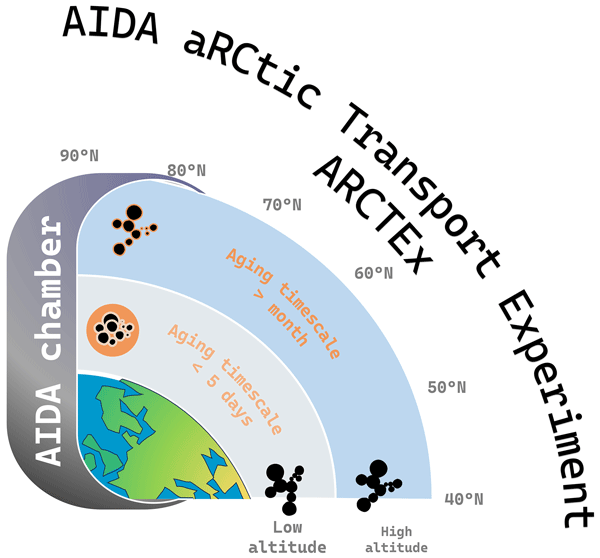
Marco Zanatta, Pia Bogert, Patrick Ginot, Yiwei Gong, Gholam Ali Hoshyaripour, Yaqiong Hu, Feng Jiang, Paolo Laj, Yanxia Li, Claudia Linke, Ottmar Möhler, Harald Saathoff, Martin Schnaiter, Nsikanabasi Silas Umo, Franziska Vogel, and Robert Wagner
Aerosol Research, 3, 477–502, https://doi.org/10.5194/ar-3-477-2025, https://doi.org/10.5194/ar-3-477-2025, 2025
Short summary
Short summary
Back carbon is an atmospheric pollutant from combustion and contributes to the Arctic warming. However, its properties change as it travels through the atmosphere, affecting its impact. We recreated Arctic transport conditions in a laboratory to study how black carbon evolves over time. Our findings show that temperature and altitude strongly influence its transformation, providing key insights for improving climate models and understanding Arctic pollution.
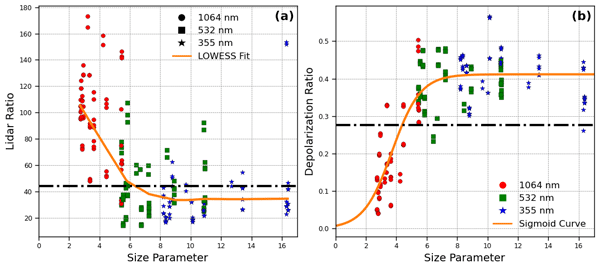
Anthony La Luna, Zhibo Zhang, Jianyu Zheng, Qianqian Song, Hongbin Yu, Jiachen Ding, Ping Yang, and Masanori Saito
Atmos. Chem. Phys., 25, 13359–13377, https://doi.org/10.5194/acp-25-13359-2025, https://doi.org/10.5194/acp-25-13359-2025, 2025
Short summary
Short summary
The lidar backscattering properties of Asian dust particles were studied using a discrete dipole approximation (DDA) model. Both the lidar ratio (LR) and the depolarization ratio (DPR) exhibit an asymptotic trend with dust particle size. Two parameterization schemes were developed: one to estimate the DPR of a single dust particle given its size and the other to estimate the DPR of dust particles with a lognormal particle size distribution given the effective radius.
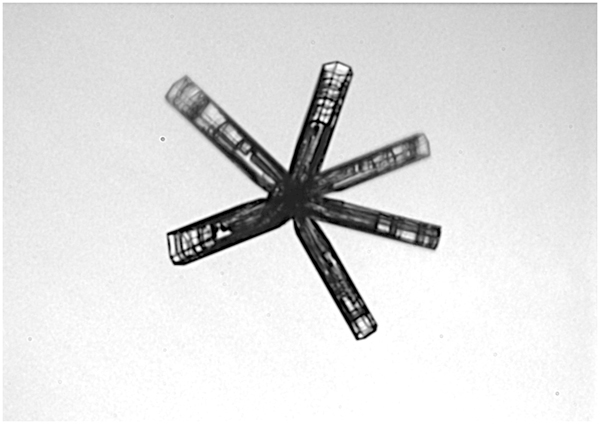
Shawn W. Wagner, Martin Schnaiter, Guanglang Xu, Franziska Rogge, and Emma Järvinen
Atmos. Chem. Phys., 25, 8785–8804, https://doi.org/10.5194/acp-25-8785-2025, https://doi.org/10.5194/acp-25-8785-2025, 2025
Short summary
Short summary
Understanding the interaction between cirrus clouds and solar radiation is critical for modeling the Earth's climate. A common crystal type found in cirrus clouds is the bullet rosette. Here, atmospheric bullet rosettes measured from jet aircraft are analyzed for their morphological and radiative properties. Atmospheric bullet rosettes are found to be more morphologically complex than previously assumed. This complexity has a significant impact on their radiative properties.
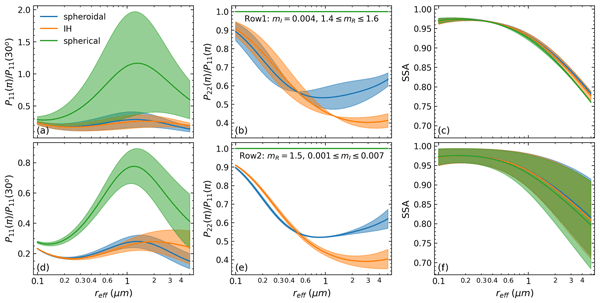
Yuyang Chang, Qiaoyun Hu, Philippe Goloub, Thierry Podvin, Igor Veselovskii, Fabrice Ducos, Gaël Dubois, Masanori Saito, Anton Lopatin, Oleg Dubovik, and Cheng Chen
Atmos. Chem. Phys., 25, 6787–6821, https://doi.org/10.5194/acp-25-6787-2025, https://doi.org/10.5194/acp-25-6787-2025, 2025
Short summary
Short summary
Our study retrieved dust aerosol microphysical properties from lidar measurements using different scattering models. Numeric simulations and real data applications revealed the importance of considering depolarization measurements and the superiority of the irregular–hexahedral model in the retrieval of dust aerosols from lidar measurements.
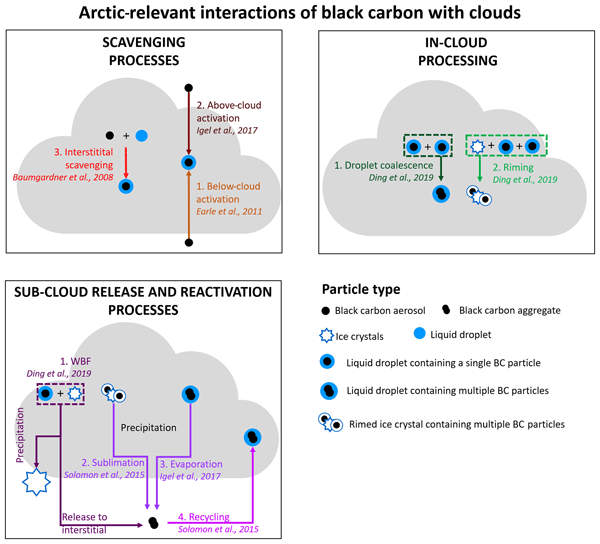
Marco Zanatta, Stephan Mertes, Olivier Jourdan, Regis Dupuy, Emma Järvinen, Martin Schnaiter, Oliver Eppers, Johannes Schneider, Zsófia Jurányi, and Andreas Herber
Atmos. Chem. Phys., 23, 7955–7973, https://doi.org/10.5194/acp-23-7955-2023, https://doi.org/10.5194/acp-23-7955-2023, 2023
Short summary
Short summary
Black carbon (BC) particles influence the Arctic radiative balance. Vertical measurements of black carbon were conducted during the ACLOUD campaign in the European Arctic to study the interaction of BC with clouds. This study shows that clouds influence the vertical variability of BC properties across the inversion layer and that multiple activation and transformation mechanisms of BC may occur in the presence of low-level, persistent, mixed-phase clouds.
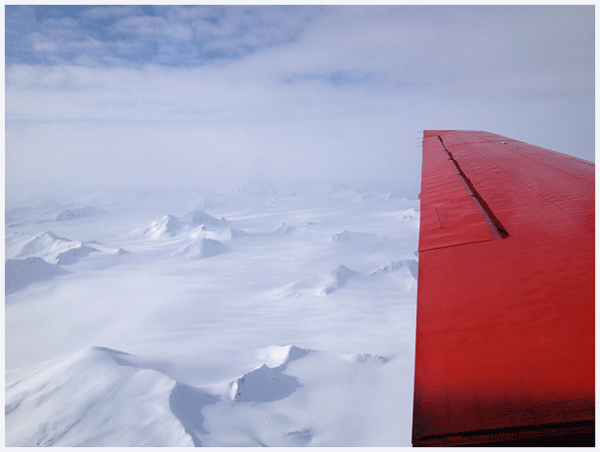
Emma Järvinen, Franziska Nehlert, Guanglang Xu, Fritz Waitz, Guillaume Mioche, Regis Dupuy, Olivier Jourdan, and Martin Schnaiter
Atmos. Chem. Phys., 23, 7611–7633, https://doi.org/10.5194/acp-23-7611-2023, https://doi.org/10.5194/acp-23-7611-2023, 2023
Short summary
Short summary
The Arctic is warming faster than other regions. Arctic low-level mixed-phase clouds, where ice crystals and liquid droplets co-exist, are thought to have an important role in Arctic warming. Here we show airborne measurements of vertical distribution of liquid and ice particles and their relative abundance. Ice particles are found in relative warm clouds, which can be explained by multiplication of existing ice crystals. However, the role of ice particles in redistributing sun light is minimal.
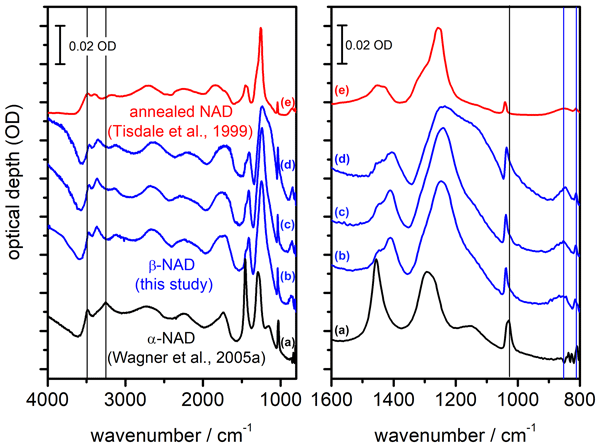
Robert Wagner, Alexander D. James, Victoria L. Frankland, Ottmar Möhler, Benjamin J. Murray, John M. C. Plane, Harald Saathoff, Ralf Weigel, and Martin Schnaiter
Atmos. Chem. Phys., 23, 6789–6811, https://doi.org/10.5194/acp-23-6789-2023, https://doi.org/10.5194/acp-23-6789-2023, 2023
Short summary
Short summary
Polar stratospheric clouds (PSCs) play an important role in the depletion of stratospheric ozone. They can consist of different chemical species, including crystalline nitric acid hydrates. We found that mineral dust or meteoric ablation material can efficiently catalyse the formation of a specific phase of nitric acid dihydrate crystals. We determined predominant particle shapes and infrared optical properties of these crystals, which are important inputs for remote sensing detection of PSCs.
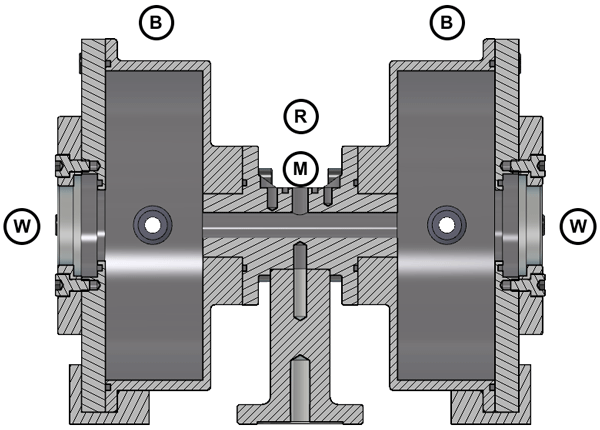
Franz Martin Schnaiter, Claudia Linke, Eija Asmi, Henri Servomaa, Antti-Pekka Hyvärinen, Sho Ohata, Yutaka Kondo, and Emma Järvinen
Atmos. Meas. Tech., 16, 2753–2769, https://doi.org/10.5194/amt-16-2753-2023, https://doi.org/10.5194/amt-16-2753-2023, 2023
Short summary
Short summary
Light-absorbing particles from combustion processes are important contributors to climate warming. Their highly variable spectral light absorption properties need to be monitored in the field. Commonly used methods show measurement artefacts that are difficult to correct. We introduce a new instrument that is based on the photoacoustic effect. Long-term operation in the Finnish Arctic demonstrates the applicability of the new instrument for unattended light absorption monitoring.
Yue Huang, Jasper F. Kok, Masanori Saito, and Olga Muñoz
Atmos. Chem. Phys., 23, 2557–2577, https://doi.org/10.5194/acp-23-2557-2023, https://doi.org/10.5194/acp-23-2557-2023, 2023
Short summary
Short summary
Global aerosol models and remote sensing retrievals use dust optical models with inconsistent and inaccurate dust shape approximations. Here, we present a new dust optical model constrained by measured dust shape distributions. This new dust optical model is an improvement on the current dust optical models used in models and retrieval algorithms, as quantified by comparisons against laboratory and field observations of dust optics.

Fritz Waitz, Martin Schnaiter, Thomas Leisner, and Emma Järvinen
Atmos. Chem. Phys., 22, 7087–7103, https://doi.org/10.5194/acp-22-7087-2022, https://doi.org/10.5194/acp-22-7087-2022, 2022
Short summary
Short summary
Riming, i.e., the accretion of small droplets on the surface of ice particles via collision, is one of the major uncertainties in model prediction of mixed-phase clouds. We discuss the occurrence (up to 50% of particles) and aging of rimed ice particles and show correlations of the occurrence and the degree of riming with ambient meteorological parameters using data gathered by the Particle Habit Imaging and Polar Scattering (PHIPS) probe during three airborne in situ field campaigns.
Cited articles
Baker, I.: Imaging dislocations in ice, Microsc. Res. Techniq., 62, 70–82, https://doi.org/10.1002/jemt.10382, 2003. a
Cotton, R., Osborne, S., Ulanowski, Z., Hirst, E., Kaye, P. H., and Greenaway, R.: The ability of the Small Ice Detector (SID-2) to characterize cloud particle and aerosol morphologies obtained during flights of the FAAM BAe-146 research aircraft, J. Atmos. Ocean. Tech., 27, 290–303, https://doi.org/10.1175/2009jtecha1282.1, 2010. a
De La Torre Castro, E., Jurkat-Witschas, T., Afchine, A., Grewe, V., Hahn, V., Kirschler, S., Krämer, M., Lucke, J., Spelten, N., Wernli, H., Zöger, M., and Voigt, C.: Differences in microphysical properties of cirrus at high and mid-latitudes, Atmos. Chem. Phys., 23, 13167–13189, https://doi.org/10.5194/acp-23-13167-2023, 2023. a
Del Guasta, M.: Simulation of LIDAR returns from pristine and deformed hexagonal ice prisms in cold cirrus by means of “face tracing”, J. Geophys. Res.-Atmos., 106, 12589–12602, https://doi.org/10.1029/2000jd900724, 2001. a
Del Guasta, M. and Vallar, E.: In-cloud variability of LIDAR depolarization of polar and midlatitude cirrus, Geophys. Res. Lett., 30, https://doi.org/10.1029/2003gl017163, 2003. a
Donovan, D. P., van Zadelhoff, G.-J., and Wang, P.: The EarthCARE lidar cloud and aerosol profile processor (A-PRO): the A-AER, A-EBD, A-TC, and A-ICE products, Atmos. Meas. Tech., 17, 5301–5340, https://doi.org/10.5194/amt-17-5301-2024, 2024. a
Ebert, V., Teichert, H., Giesemann, C., Saathoff, H., and Schurath, U.: Fibre-coupled in-situ laser absorption spectrometer for the selective detection of water vapour traces down to the ppb-level; Fasergekoppeltes In-situ-Laserspektrometer fuer den selektiven Nachweis von Wasserdampfspuren bis in den ppb-Bereich, Technisches Messen (TM), 72, https://doi.org/10.1524/teme.72.1.23.56689, 2005. a
Feingold, G. and Levin, Z.: The lognormal fit to raindrop spectra from frontal convective clouds in Israel, J. Clim. Appl. Meteorol., 1346–1363, https://doi.org/10.1175/1520-0450(1986)025<1346:tlftrs>2.0.co;2, 1986. a
Futyan, J. M. and Del Genio, A. D.: Deep convective system evolution over Africa and the tropical Atlantic, J. Climate, 20, 5041–5060, https://doi.org/10.1175/jcli4297.1, 2007. a
Gil-Díaz, C., Sicard, M., Comerón, A., dos Santos Oliveira, D. C. F., Muñoz-Porcar, C., Rodríguez-Gómez, A., Lewis, J. R., Welton, E. J., and Lolli, S.: Geometrical and optical properties of cirrus clouds in Barcelona, Spain: analysis with the two-way transmittance method of 4 years of lidar measurements, Atmos. Meas. Tech., 17, 1197–1216, https://doi.org/10.5194/amt-17-1197-2024, 2024. a
Groß, S., Jurkat-Witschas, T., Li, Q., Wirth, M., Urbanek, B., Krämer, M., Weigel, R., and Voigt, C.: Investigating an indirect aviation effect on mid-latitude cirrus clouds – linking lidar-derived optical properties to in situ measurements, Atmos. Chem. Phys., 23, 8369–8381, https://doi.org/10.5194/acp-23-8369-2023, 2023. a
Gultepe, I., Heymsfield, A. J., Gallagher, M., Ickes, L., and Baumgardner, D.: Ice fog: The current state of knowledge and future challenges, Meteorological Monographs, 58, 4–1, https://doi.org/10.1175/amsmonographs-d-17-0002.1, 2017. a
Hamel, A., Schnaiter, M., Wagner, R., and Järvinen, E.:, Linear Depolarisation Ratio of Cloud Chamber Grown Cirrus, Karlsruhe Institute of Technology [data set], https://doi.org/10.35097/66tc7z2u0s2gf1fe, 2025. a
Harrington, J. Y. and Pokrifka, G. F.: An Approximate Criterion for Morphological Transformations in Small Vapor Grown Ice Crystals, J. Atmos. Sci., 81, 401–416, https://doi.org/10.1175/JAS-D-23-0131.1, 2024. a
Järvinen, E.: Investigations of Angular Light Scattering by Complex Atmospheric Particles, KIT Scientific Publishing, https://doi.org/10.5445/KSP/1000056601, 2016. a
Järvinen, E., van Diedenhoven, B., Magee, N., Neshyba, S., Schnaiter, M., Xu, G., Jourdan, O., Delene, D., Waitz, F., Lolli, S., and Kato, S.: Ice Crystal Complexity and Link to the Cirrus Cloud Radiative Effect, Clouds and their Climatic Impacts: Radiation, Circulation, and Precipitation, 47–85, https://doi.org/10.1002/9781119700357.ch3, 2023. a, b
Kaye, P. H., Hirst, E., Greenaway, R. S., Ulanowski, Z., Hesse, E., DeMott, P. J., Saunders, C., and Connolly, P.: Classifying atmospheric ice crystals by spatial light scattering, Optics Letters, 33, 1545–1547, https://doi.org/10.1364/ol.33.001545, 2008. a
Kim, Y., Kim, S.-W., Kim, M.-H., and Yoon, S.-C.: Geometric and optical properties of cirrus clouds inferred from three-year ground-based lidar and CALIOP measurements over Seoul, Korea, Atmos. Res., 139, 27–35, https://doi.org/10.1016/j.atmosres.2013.12.016, 2014. a
Kustova, N., Konoshonkin, A., Shishko, V., Timofeev, D., Tkachev, I., Wang, Z., and Borovoi, A.: Depolarization Ratio for Randomly Oriented Ice Crystals of Cirrus Clouds, Atmosphere, 13, 1551, https://doi.org/10.3390/atmos13101551, 2022. a
Lawson, R., Woods, S., Jensen, E., Erfani, E., Gurganus, C., Gallagher, M., Connolly, P., Whiteway, J., Baran, A., May, P., Heymsfield, A., Schmitt, C. G., McFarquhar, G., Um, J., Protat, A., Bailey, M., Lance, S., Muehlbauer, A., Stith, J., Korolev, A., Toon, O. B., and Krämer, M.: A review of ice particle shapes in cirrus formed in situ and in anvils, J. Geophys. Res.-Atmos., 124, 10049–10090, https://doi.org/10.1029/2018jd030122, 2019. a
Leinonen, J.: High-level interface to T-matrix scattering calculations: architecture, capabilities and limitations, Optics Express, 22, 1655–1660, https://doi.org/10.1364/oe.22.001655, 2014. a, b, c, d
Li, Q. and Groß, S.: Changes in cirrus cloud properties and occurrence over Europe during the COVID-19-caused air traffic reduction, Atmos. Chem. Phys., 21, 14573–14590, https://doi.org/10.5194/acp-21-14573-2021, 2021. a, b
Li, Q. and Groß, S.: Lidar observations of cirrus cloud properties with CALIPSO from midlatitudes towards high-latitudes, Atmos. Chem. Phys., 25, 16657–16677, https://doi.org/10.5194/acp-25-16657-2025, 2025. a
Liou, K.-N. and Lahore, H.: Laser sensing of cloud composition: a backscattered depolarization technique, J. Appl. Meteorol. Clim., 13, 257–263, https://doi.org/10.1175/1520-0450(1974)013<0257:lsocca>2.0.co;2, 1974. a, b, c
Liu, C., Panetta, R. L., and Yang, P.: The effects of surface roughness on the scattering properties of hexagonal columns with sizes from the Rayleigh to the geometric optics regimes, J. Quant. Spectrosc. Ra., 129, 169–185, https://doi.org/10.1016/j.jqsrt.2013.06.011, 2013. a
Liu, C., Yang, P., Minnis, P., Loeb, N., Kato, S., Heymsfield, A., and Schmitt, C.: A two-habit model for the microphysical and optical properties of ice clouds, Atmos. Chem. Phys., 14, 13719–13737, https://doi.org/10.5194/acp-14-13719-2014, 2014. a
Macke, A., Mishchenko, M. I., Muinonen, K., and Carlson, B. E.: Scattering of light by large nonspherical particles: ray-tracing approximation versus T-matrix method, Optics Letters, 20, 1934–1936, https://doi.org/10.1364/ol.20.001934, 1995. a
Macke, A., Mishchenko, M. I., and Cairns, B.: The influence of inclusions on light scattering by large ice particles, J. Geophys. Res.-Atmos., 101, 23311–23316, https://doi.org/10.1029/96jd02364, 1996a. a, b
Macke, A., Mueller, J., and Raschke, E.: Single scattering properties of atmospheric ice crystals, J. Atmos. Sci., 53, 2813–2825, https://doi.org/10.1175/1520-0469(1996)053<2813:sspoai>2.0.co;2, 1996b. a, b
Manoj Kumar, N. and Venkatramanan, K.: Lidar observed optical properties of tropical Cirrus clouds over Gadanki region, Frontiers in Earth Science, 8, 140, https://doi.org/10.3389/feart.2020.00140, 2020. a
Mishchenko, M. and Hovenier, J.: Depolarization of light backscattered by randomly oriented nonspherical particles, Optics Letters, 20, 1356–1358, https://doi.org/10.1364/ol.20.001356, 1995. a, b
Mishchenko, M. I. and Travis, L. D.: Capabilities and limitations of a current FORTRAN implementation of the T-matrix method for randomly oriented, rotationally symmetric scatterers, J. Quant. Spectrosc. Ra., 60, 309–324, https://doi.org/10.1016/s0022-4073(98)00008-9, 1998. a, b
Mishchenko, M. I., Hovenier, J. W., and Travis, L. D.: Light scattering by nonspherical particles: theory, measurements, and applications, Academic Press, San Diego, 147–172, ISBN 0-12-498660-9, 2000. a
Mitchell, D. L., Lawson, R. P., and Baker, B.: Understanding effective diameter and its application to terrestrial radiation in ice clouds, Atmos. Chem. Phys., 11, 3417–3429, https://doi.org/10.5194/acp-11-3417-2011, 2011. a
Möhler, O., Büttner, S., Linke, C., Schnaiter, M., Saathoff, H., Stetzer, O., Wagner, R., Krämer, M., Mangold, A., Ebert, V., and Schurath, U.: Effect of sulfuric acid coating on heterogeneous ice nucleation by soot aerosol particles, J. Geophys. Res.-Atmos., 110, https://doi.org/10.1029/2004jd005169, 2005. a
Nicolae, D., Vasilescu, J., Talianu, C., Binietoglou, I., Nicolae, V., Andrei, S., and Antonescu, B.: A neural network aerosol-typing algorithm based on lidar data, Atmos. Chem. Phys., 18, 14511–14537, https://doi.org/10.5194/acp-18-14511-2018, 2018. a
Noel, V., Chepfer, H., Ledanois, G., Delaval, A., and Flamant, P. H.: Classification of particle effective shape ratios in cirrus clouds based on the lidar depolarization ratio, Appl. Optics, 41, 4245–4257, https://doi.org/10.1364/ao.41.004245, 2002. a
Pauly, R. M., Yorks, J. E., Hlavka, D. L., McGill, M. J., Amiridis, V., Palm, S. P., Rodier, S. D., Vaughan, M. A., Selmer, P. A., Kupchock, A. W., Baars, H., and Gialitaki, A.: Cloud-Aerosol Transport System (CATS) 1064 nm calibration and validation, Atmos. Meas. Tech., 12, 6241–6258, https://doi.org/10.5194/amt-12-6241-2019, 2019. a
Prahl, S.: miepython: Pure python calculation of Mie scattering, Zenodo [code], https://doi.org/10.5281/zenodo.11135148, 2024. a, b
Saito, M., Yang, P., Ding, J., and Liu, X.: A comprehensive database of the optical properties of irregular aerosol particles for radiative transfer simulations, J. Atmos. Sci., 78, 2089–2111, https://doi.org/10.1175/jas-d-20-0338.1, 2021. a
Sassen, K.: The polarization lidar technique for cloud research: A review and current assessment, B. Am. Meteorol. Soc., 72, 1848–1866, https://doi.org/10.1175/1520-0477(1991)072<1848:tpltfc>2.0.co;2, 1991. a
Sassen, K. and Benson, S.: A midlatitude cirrus cloud climatology from the Facility for Atmospheric Remote Sensing. Part II: Microphysical properties derived from lidar depolarization, J. Atmos. Sci., 58, 2103–2112, https://doi.org/10.1175/1520-0469(2001)058<2103:amcccf>2.0.co;2, 2001. a, b
Sassen, K. and Zhu, J.: A global survey of CALIPSO linear depolarization ratios in ice clouds: Initial findings, J. Geophys. Res.-Atmos., 114, https://doi.org/10.1029/2009jd012279, 2009. a, b, c
Sassen, K., Kayetha, V. K., and Zhu, J.: Ice cloud depolarization for nadir and off-nadir CALIPSO measurements, Geophys. Res. Lett., 39, https://doi.org/10.1029/2012gl053116, 2012. a, b
Sato, K. and Okamoto, H.: Global analysis of height-resolved ice particle categories from spaceborne lidar, Geophys. Res. Lett., 50, e2023GL105522, https://doi.org/10.1029/2023gl105522, 2023. a
Schmitt, C. and Heymsfield, A.: On the occurrence of hollow bullet rosette–and column-shaped ice crystals in midlatitude cirrus, J. Atmos. Sci., 64, 4514–4519, https://doi.org/10.1175/2007jas2317.1, 2007. a
Schnaiter, M., Büttner, S., Möhler, O., Skrotzki, J., Vragel, M., and Wagner, R.: Influence of particle size and shape on the backscattering linear depolarisation ratio of small ice crystals – cloud chamber measurements in the context of contrail and cirrus microphysics, Atmos. Chem. Phys., 12, 10465–10484, https://doi.org/10.5194/acp-12-10465-2012, 2012. a, b, c, d, e, f
Schnaiter, M., Järvinen, E., Vochezer, P., Abdelmonem, A., Wagner, R., Jourdan, O., Mioche, G., Shcherbakov, V. N., Schmitt, C. G., Tricoli, U., Ulanowski, Z., and Heymsfield, A. J.: Cloud chamber experiments on the origin of ice crystal complexity in cirrus clouds, Atmos. Chem. Phys., 16, 5091–5110, https://doi.org/10.5194/acp-16-5091-2016, 2016. a, b, c, d, e, f, g, h, i, j
Singh, D. K., Sanyal, S., and Wuebbles, D. J.: Understanding the role of contrails and contrail cirrus in climate change: a global perspective, Atmos. Chem. Phys., 24, 9219–9262, https://doi.org/10.5194/acp-24-9219-2024, 2024. a
Smith, H. R., Connolly, P. J., Webb, A. R., and Baran, A. J.: Exact and near backscattering measurements of the linear depolarisation ratio of various ice crystal habits generated in a laboratory cloud chamber, J. Quant. Spectrosc. Ra., 178, 361–378, https://doi.org/10.1016/j.jqsrt.2016.01.030, 2016. a, b, c, d, e
Tian, L., Heymsfield, G. M., Li, L., Heymsfield, A. J., Bansemer, A., Twohy, C. H., and Srivastava, R. C.: A study of cirrus ice particle size distribution using TC4 observations, J. Atmos. Sci., 67, 195–216, https://doi.org/10.1175/2009jas3114.1, 2010. a
Ulanowski, Z., Kaye, P. H., Hirst, E., Greenaway, R. S., Cotton, R. J., Hesse, E., and Collier, C. T.: Incidence of rough and irregular atmospheric ice particles from Small Ice Detector 3 measurements, Atmos. Chem. Phys., 14, 1649–1662, https://doi.org/10.5194/acp-14-1649-2014, 2014. a
Um, J., McFarquhar, G. M., Hong, Y. P., Lee, S.-S., Jung, C. H., Lawson, R. P., and Mo, Q.: Dimensions and aspect ratios of natural ice crystals, Atmos. Chem. Phys., 15, 3933–3956, https://doi.org/10.5194/acp-15-3933-2015, 2015. a
Urbanek, B., Groß, S., Wirth, M., Rolf, C., Krämer, M., and Voigt, C.: High depolarization ratios of naturally occurring cirrus clouds near air traffic regions over Europe, Geophys. Res. Lett., 45, 13–166, https://doi.org/10.1029/2018gl079345, 2018. a
Veselovskii, I., Dubovik, O., Kolgotin, A., Lapyonok, T., Di Girolamo, P., Summa, D., Whiteman, D. N., Mishchenko, M., and Tanré, D.: Application of randomly oriented spheroids for retrieval of dust particle parameters from multiwavelength lidar measurements, J. Geophys. Res.-Atmos., 115, https://doi.org/10.1029/2010jd014139, 2010. a
Wagner, R., Benz, S., Möhler, O., Saathoff, H., and Schurath, U.: Probing ice clouds by broadband mid-infrared extinction spectroscopy: case studies from ice nucleation experiments in the AIDA aerosol and cloud chamber, Atmos. Chem. Phys., 6, 4775–4800, https://doi.org/10.5194/acp-6-4775-2006, 2006. a
Walden, V. P., Warren, S. G., and Tuttle, E.: Atmospheric ice crystals over the Antarctic Plateau in winter, J. Appl. Meteorol., 42, 1391–1405, https://doi.org/10.1175/1520-0450(2003)042<1391:aicota>2.0.co;2, 2003. a, b
Wang, Z., Chi, R., Liu, B., and Zhou, J.: Depolarization properties of cirrus clouds from polarization lidar measurements over Hefei in spring, Chinese Optics Letters, 6, 235–237, https://doi.org/10.3788/col20080604.0235, 2008. a
Woods, S., Lawson, R. P., Jensen, E., Bui, T., Thornberry, T., Rollins, A., Pfister, L., and Avery, M.: Microphysical properties of tropical tropopause layer cirrus, J. Geophys. Res.-Atmos., 123, 6053–6069, https://doi.org/10.1029/2017jd028068, 2018. a, b
Yang, P., Zhang, Z., Kattawar, G. W., Warren, S. G., Baum, B. A., Huang, H.-L., Hu, Y. X., Winker, D., and Iaquinta, J.: Effect of cavities on the optical properties of bullet rosettes: Implications for active and passive remote sensing of ice cloud properties, J. Appl. Meteorol. Clim., 47, 2311–2330, https://doi.org/10.1175/2008jamc1905.1, 2008. a, b
Yang, P., Bi, L., Baum, B. A., Liou, K.-N., Kattawar, G. W., Mishchenko, M. I., and Cole, B.: Spectrally consistent scattering, absorption, and polarization properties of atmospheric ice crystals at wavelengths from 0.2 to 100 µm, J. Atmos. Sci., 70, 330–347, https://doi.org/10.1175/jas-d-12-039.1, 2013. a, b
Zhu, X., Wang, Z., Konoshonkin, A., Kustova, N., Shishko, V., Timofeev, D., Tkachev, I., and Liu, D.: Backscattering properties of randomly oriented hexagonal hollow columns for lidar application, Optics Express, 31, 35257–35271, https://doi.org/10.1364/oe.502185, 2023. a
Short summary
The depolarisation ratio of ice clouds is commonly measured by satellites and ground-based instruments to learn about ice particle shapes. In our cloud chamber experiments, we found that for small ice crystals, the depolarisation ratio is more strongly influenced by particle size than by nano-scale structure. The measured trends could be reproduced with numerical simulations. This result helps improve the interpretation of remote sensing data and the accuracy of light scattering models.
The depolarisation ratio of ice clouds is commonly measured by satellites and ground-based...


Altmetrics
Final-revised paper
Preprint