
Articles | Volume 26, issue 17
https://doi.org/10.5194/acp-26-12591-2026
© Author(s) 2026. This work is distributed under
the Creative Commons Attribution 4.0 License.
the Creative Commons Attribution 4.0 License.
https://doi.org/10.5194/acp-26-12591-2026
© Author(s) 2026. This work is distributed under
the Creative Commons Attribution 4.0 License.
the Creative Commons Attribution 4.0 License.
Research article
| 
04 Sep 2026
Research article |
| 04 Sep 2026
| 04 Sep 2026
Planetary albedo change exacerbates surface warming: a perspective from cloud-type changes
Ruixue Li
Key Laboratory for Semi-Arid Climate Change of the Ministry of Education, College of Atmospheric Sciences, Lanzhou University, Lanzhou, China
Jiming Li
CORRESPONDING AUTHOR

Key Laboratory for Semi-Arid Climate Change of the Ministry of Education, College of Atmospheric Sciences, Lanzhou University, Lanzhou, China
Bida Jian
Key Laboratory for Semi-Arid Climate Change of the Ministry of Education, College of Atmospheric Sciences, Lanzhou University, Lanzhou, China
Lijie Zhang
Key Laboratory for Semi-Arid Climate Change of the Ministry of Education, College of Atmospheric Sciences, Lanzhou University, Lanzhou, China
Key Laboratory for Semi-Arid Climate Change of the Ministry of Education, College of Atmospheric Sciences, Lanzhou University, Lanzhou, China
Related authors
No articles found.
Yuchen Jiang, Yuan Wang, Qiudi Xu, Zhao Ji, Ping Zhang, Yang Wang, Hao Wu, Zhiliang Shu, Weiyuan Zhang, Xinyi Wang, and Jiming Li
EGUsphere, https://doi.org/10.5194/egusphere-2026-6076, https://doi.org/10.5194/egusphere-2026-6076, 2026
This preprint is open for discussion and under review for Atmospheric Measurement Techniques (AMT).
Short summary
Short summary
Distinguishing aerosols, droplets and ice crystals in mixed-phase clouds is challenging yet vital for cloud research. This work presents a ground-based particle classification method validated by lab and mountain field tests. Using combined parameters, it separates these particles with high accuracy and handles overlapping signals. This temperature-independent tool quantifies cloud freezing and aids cloud and climate studies.
Chengqing Chen, Yang Wang, Jiming Li, Lu Feng, Tianrong Chai, Zhao Ji, Jian Wang, and Yuan Wang
Atmos. Chem. Phys., 26, 9017–9036, https://doi.org/10.5194/acp-26-9017-2026, https://doi.org/10.5194/acp-26-9017-2026, 2026
Short summary
Short summary
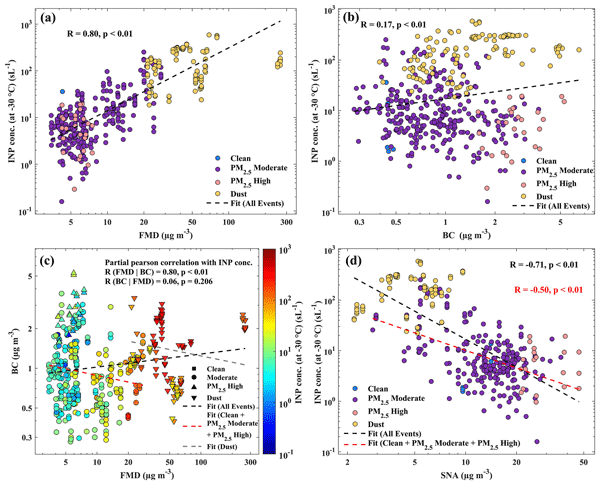
Our observations show that both local dust and dust carried over long distances can increase the number of particles that help form ice in clouds. Polluted air held fewer such particles and appears to weaken the ability of dust to initiate ice formation. In semi-arid cities, larger particles in the 1–2.5 µm range strongly indicate how many of these ice-forming particles are present. Understanding how different particles behave is essential for representing cloud glaciation and regional climate.
Jiayi Li, Yang Wang, Jiming Li, Weiyuan Zhang, Lijie Zhang, and Yuan Wang
Atmos. Chem. Phys., 25, 17455–17472, https://doi.org/10.5194/acp-25-17455-2025, https://doi.org/10.5194/acp-25-17455-2025, 2025
Short summary
Short summary
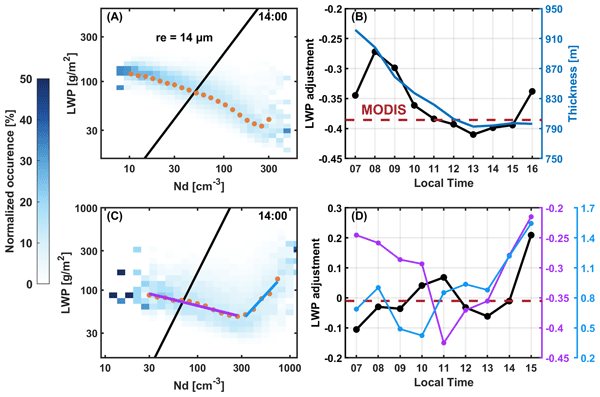
A key challenge in climate projections is the uncertainty in cloud water response to aerosols, especially from unclear diurnal microphysical-dynamical mechanisms. Geostationary satellite shows that neglecting the diurnal variations leads to an underestimation (up to 89 %) of the cooling effect induced by changes in cloud albedo due to aerosol perturbations. The results provide new insights in aerosol-cloud interactions, verifying this is a significant yet often overlooked source of uncertainty.
Ruixue Li, Bida Jian, Jiming Li, Deyu Wen, Lijie Zhang, Yang Wang, and Yuan Wang
Atmos. Chem. Phys., 24, 9777–9803, https://doi.org/10.5194/acp-24-9777-2024, https://doi.org/10.5194/acp-24-9777-2024, 2024
Short summary
Short summary
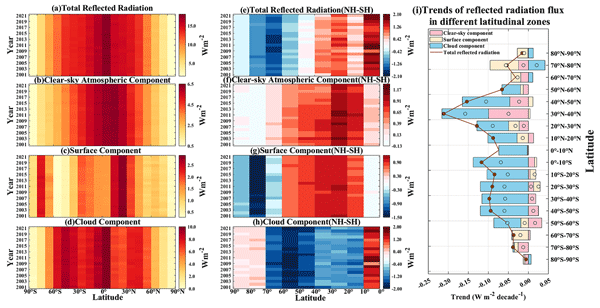
Hemispheric or interannual averages of reflected solar radiation (RSR) can mask signals from seasonally active or region-specific mechanisms. We examine RSR characteristics from latitude and month perspectives, revealing decreased trends observed by CERES in both hemispheres driven by clear-sky atmospheric and cloud components at 30–50° N and cloud components at 0–50° S. AVHRR achieves symmetry criteria within uncertainty and is suitable for the long-term analysis of hemispheric RSR symmetry.
Yuxin Zhao, Jiming Li, Deyu Wen, Yarong Li, Yuan Wang, and Jianping Huang
Atmos. Chem. Phys., 24, 9435–9457, https://doi.org/10.5194/acp-24-9435-2024, https://doi.org/10.5194/acp-24-9435-2024, 2024
Short summary
Short summary
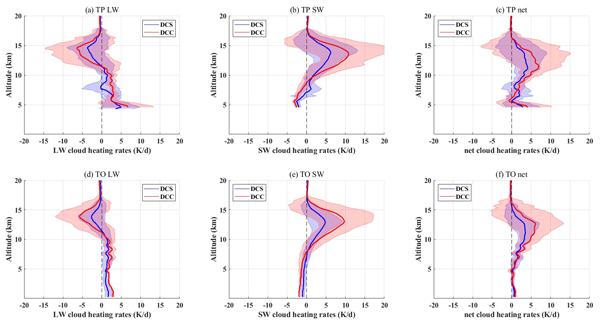
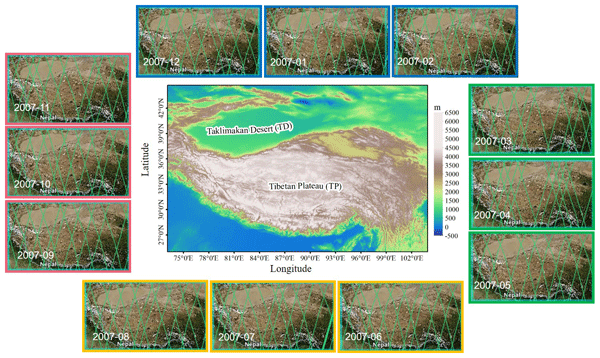
This study identifies deep convection systems (DCSs), including deep convection cores and anvils, over the Tibetan Plateau (TP) and tropical Indian Ocean (TO). The DCSs over the TP are less frequent, showing narrower and thinner cores and anvils compared to those over the TO. TP DCSs show a stronger longwave cloud radiative effect at the surface and in the low-level atmosphere. Distinct aerosol–cloud–precipitation interaction is found in TP DCSs, probably due to the cold cloud bases.
Honglin Pan, Jianping Huang, Jiming Li, Zhongwei Huang, Minzhong Wang, Ali Mamtimin, Wen Huo, Fan Yang, Tian Zhou, and Kanike Raghavendra Kumar
Earth Syst. Sci. Data, 16, 1185–1207, https://doi.org/10.5194/essd-16-1185-2024, https://doi.org/10.5194/essd-16-1185-2024, 2024
Short summary
Short summary
We applied several correction procedures and rigorously checked for data quality constraints during the long observation period spanning almost 14 years (2007–2020). Nevertheless, some uncertainties remain, mainly due to technical constraints and limited documentation of the measurements. Even though not completely accurate, this strategy is expected to at least reduce the inaccuracy of the computed characteristic value of aerosol optical parameters.
Yuxin Zhao, Jiming Li, Lijie Zhang, Cong Deng, Yarong Li, Bida Jian, and Jianping Huang
Atmos. Chem. Phys., 23, 743–769, https://doi.org/10.5194/acp-23-743-2023, https://doi.org/10.5194/acp-23-743-2023, 2023
Short summary
Short summary
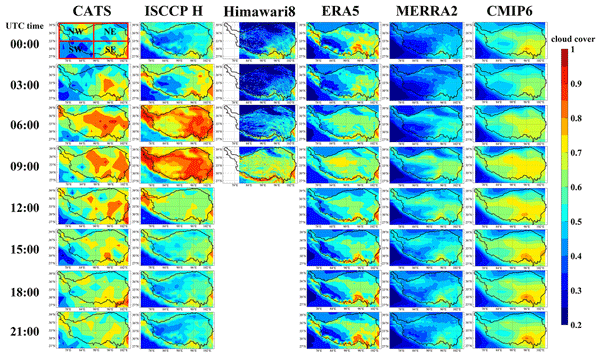
Diurnal variations of clouds play an important role in the radiative budget and precipitation. Based on satellite observations, reanalysis, and CMIP6 outputs, the diurnal variations in total cloud cover and cloud vertical distribution over the Tibetan Plateau are explored. The diurnal cycle of cirrus is a key focus and found to have different characteristics from those found in the tropics. The relationship between the diurnal cycle of cirrus and meteorological factors is also discussed.
Cited articles
Albrecht, B. A.: Aerosols, Cloud Microphysics, and Fractional Cloudiness, Science, 245, 1227–1230, https://doi.org/10.1126/science.245.4923.1227, 1989.
Alkama, R., Taylor, P. C., Garcia-San Martin, L., Douville, H., Duveiller, G., Forzieri, G., Swingedouw, D., and Cescatti, A.: Clouds damp the radiative impacts of polar sea ice loss, The Cryosphere, 14, 2673–2686, https://doi.org/10.5194/tc-14-2673-2020, 2020.
Andersen, H., Cermak, J., Zipfel, L., and Myers, T. A.: Attribution of observed recent decrease in low clouds over the Northeastern Pacific to cloud‐controlling factors, Geophys. Res. Lett., 49, e2021GL096498, https://doi.org/10.1029/2021GL096498, 2022.
Andersen, H., Cermak, J., Douglas, A., Myers, T. A., Nowack, P., Stier, P., Wall, C. J., and Wilson Kemsley, S.: Sensitivities of cloud radiative effects to large-scale meteorology and aerosols from global observations, Atmos. Chem. Phys., 23, 10775–10794, https://doi.org/10.5194/acp-23-10775-2023, 2023.
Andrews, T., Forster, P. M., and Gregory, J. M.: A surface energy perspective on climate change, J. Climate, 22, 2557–2570, https://doi.org/10.1175/2008JCLI2759.1, 2009.
Arking, A.: The radiative effects of clouds and their impact on climate, B. Am. Meteor. Soc., 72, 795–814, https://doi.org/10.1175/1520-0477(1991)072<0795:TREOCA>2.0.CO;2, 1991.
Bai, H., Wang, M., Zhang, Z., and Liu, Y.: Synergetic satellite trend analysis of aerosol and warm cloud properties ver ocean and its implication for aerosol‐cloud interactions, J. Geophys. Res.-Atmos., 125, e2019JD031598, https://doi.org/10.1029/2019JD031598, 2020.
Bellouin, N., Quaas, J., Gryspeerdt, E., Kinne, S., Stier, P., Watson‐Parris, D., Boucher, O., Carslaw, K. S., Christensen, M., Daniau, A. L., Dufresne, J. L., Feingold, G., Fiedler, S., Forster, P., Gettelman, A., Haywood, J. M., Lohmann, U., Malavelle, F., Mauritsen, T., McCoy, D. T., Myhre, G., Mülmenstädt, J., Neubauer, D., Possner, A., Rugenstein, M., Sato, Y., Schulz, M., Schwartz, S. E., Sourdeval, O., Storelvmo, T., Toll, V., Winker, D., and Stevens, B.: Bounding Global Aerosol Radiative Forcing of Climate Change, Rev. Geophys., 58, e2019RG000660, https://doi.org/10.1029/2019RG000660, 2020.
Bender, F. A. M., Engström, A., Wood, R., and Charlson, R. J.: Evaluation of Hemispheric Asymmetries in Marine Cloud Radiative Properties, J. Climate, 30, 4131–4147, https://doi.org/10.1175/jcli-d-16-0263.1, 2017.
Blanchard-Wrigglesworth, E., Bilbao, R., Donohoe, A., and Materia, S.: Record warmth of 2023 and 2024 was highly predictable and resulted from ENSO transition and Northern Hemisphere absorbed shortwave anomalies, Geophys. Res. Lett., 52, e2025GL115614, https://doi.org/10.1029/2025GL115614, 2025.
Boeke, R. C. and Taylor, P. C.: Seasonal energy exchange in sea ice retreat regions contributes to differences in projected Arctic warming, Nat. Commun., 9, 5017, https://doi.org/10.1038/s41467-018-07061-9, 2018.
Bony, S. and Emanuel, K. A.: A Parameterization of the Cloudiness Associated with Cumulus Convection; Evaluation Using TOGA COARE Data, J. Atmos. Sci., 58, 3158–3183, https://doi.org/10.1175/1520-0469(2001)058<3158:apotca>2.0.co;2, 2001.
Bony, S., Colman, R., Kattsov, V. M., Allan, R. P., Bretherton, C. S., Dufresne, J.-L., Hall, A., Hallegatte, S., Holland, M. M., and Ingram, W.: How well do we understand and evaluate climate change feedback processes?, J. Climate, 19, 3445–3482, https://doi.org/10.1175/JCLI3819.1, 2006.
Buchard, V., Randles, C., Da Silva, A., Darmenov, A., Colarco, P., Govindaraju, R., Ferrare, R., Hair, J., Beyersdorf, A., and Ziemba, L.: The MERRA-2 aerosol reanalysis, 1980 onward. Part II: Evaluation and case studies, J. Climate, 30, 6851–6872, https://doi.org/10.1175/JCLI-D-16-0613.1, 2017.
Buck, A. L.: New Equations for Computing Vapor Pressure and Enhancement Factor, J. Appl. Meteorol., 20, 1527–1532, https://doi.org/10.1175/1520-0450(1981)020<1527:nefcvp>2.0.co;2, 1981.
Cao, Y., Zhu, Y., Wang, M., Rosenfeld, D., Liang, Y., Liu, J., Liu, Z., and Bai, H.: Emission reductions significantly reduce the hemispheric contrast in cloud droplet number concentration in recent two decades, J. Geophys. Res.-Atmos., 128, e2022JD037417, https://doi.org/10.1029/2022JD037417, 2023.
Ceppi, P. and Hartmann, D. L.: Clouds and the atmospheric circulation response to warming, J. Climate, 29, 783–799, https://doi.org/10.1175/JCLI-D-15-0394.1, 2016.
Chen, C., Park, T., Wang, X., Piao, S., Xu, B., Chaturvedi, R. K., Fuchs, R., Brovkin, V., Ciais, P., and Fensholt, R.: China and India lead in greening of the world through land-use management, Nat. Sustain., 2, 122–129, https://doi.org/10.1038/s41893-019-0220-7, 2019.
Cheng, L., Abraham, J., Trenberth, K. E., Reagan, J., Zhang, H.-M., Storto, A., Von Schuckmann, K., Pan, Y., Zhu, Y., and Mann, M. E.: Record high temperatures in the ocean in 2024, Adv. Atmos. Sci., 42, 1092–1109, https://doi.org/10.1007/s00376-025-4541-3, 2025.
Colman, R.: Climate radiative feedbacks and adjustments at the Earth's surface, J. Geophys. Res.-Atmos., 120, 3173–3182, https://doi.org/10.1002/2014JD022896, 2015.
Datseris, G. and Stevens, B.: Earth's Albedo and Its Symmetry, AGU Adv., 2, e2021AV000440, https://doi.org/10.1029/2021AV000440, 2021.
Diamond, M. S., Gristey, J. J., and Feingold, G.: Testing Cloud Adjustment Hypotheses for the Maintenance of Earth's Hemispheric Albedo Symmetry with Observed Trends and Natural Experiments, Geophys. Res. Lett., 51, e2024GL111733, https://doi.org/10.1029/2024GL111733, 2024.
Ding, J., Chen, J., and Tang, W.: Increasing trend of precipitable water vapor in Antarctica and Greenland, China Satellite Navigation Conference, 286–296, https://doi.org/10.1007/978-981-19-2588-7_27, 2022.
Dong, T., Zeng, Z., Pan, M., Wang, D., Chen, Y., Liang, L., Yang, S., Jin, Y., Luo, S., and Liang, S.: Record-breaking 2023 marine heatwaves, Science, 389, 369–374, https://doi.org/10.1126/science.adr0910, 2025.
Donohoe, A. and Battisti, D. S.: Atmospheric and surface contributions to planetary albedo, J. Climate, 24, 4402–4418, https://doi.org/10.1175/2011JCLI3946.1, 2011.
Donohoe, A. and Battisti, D. S.: The seasonal cycle of atmospheric heating and temperature, J. Climate, 26, 4962–4980, https://doi.org/10.1175/JCLI-D-12-00713.1, 2013.
Georgakakos, K. P. and Bras, R. L.: A hydrologically useful station precipitation model: 1. Formulation, Water Resour. Res., 20, 1585–1596, https://doi.org/10.1029/WR020i011p01585, 1984.
Global Modeling and Assimilation Office (GMAO): MERRA-2 tavgM_2d_aer_Nx: 2d, monthly mean, time-averaged, single-level, assimilation, aerosol diagnostics V5.12.4, Goddard Earth Sciences Data and Information Services Center [data set], https://doi.org/10.5067/FH9A0MLJPC7N, 2015.
Goessling, H. F., Rackow, T., and Jung, T.: Recent global temperature surge intensified by record-low planetary albedo, Science, eadq7280, https://doi.org/10.1126/science.adq7280, 2025.
Gould, C. F., Heft-Neal, S., Heaney, A. K., Bendavid, E., Callahan, C. W., Kiang, M. V., Graff Zivin, J., and Burke, M.: Temperature extremes impact mortality and morbidity differently, Sci. Adv., 11, eadr3070, https://doi.org/10.1126/sciadv.adr3070, 2025.
Grise, K. M. and Tselioudis, G.: Understanding the Relationship between Cloud Controlling Factors and the ISCCP Weather States, J. Climate, 37, 5387–5403, https://doi.org/10.1175/jcli-d-24-0011.1, 2024.
Gui, K., Zhang, X., Che, H., Li, L., Zheng, Y., An, L., Miao, Y., Zhao, H., Dubovik, O., Holben, B., Wang, J., Gupta, P., Lind, E. S., Toledano, C., Wang, H., Wang, Z., Wang, Y., Huang, X., Dai, K., Xia, X., Xu, X., and Zhang, X.: Advancing operational global aerosol forecasting with machine learning, Nature, 651, 658–665, https://doi.org/10.1038/s41586-026-10234-y, 2026.
Guo, Y., Hu, A., Meehl, G. A., Molina, M. J., Li, H., Bellomo, K., and Rosenbloom, N.: Migration of the intertropical convergence zone driven by ocean circulation changes, Nat. Commun., 17, 6501, https://doi.org/10.1038/s41467-026-73200-2, 2026.
Hadas, O., Datseris, G., Blanco, J., Bony, S., Caballero, R., Stevens, B., and Kaspi, Y.: The role of baroclinic activity in controlling Earth's albedo in the present and future climates, P. Natl. Acad. Sci. USA, 120, e2208778120, https://doi.org/10.1073/pnas.2208778120, 2023.
Han, X., Chen, Q., Song, Z., Fu, D., and Shi, H.: Impacts of Aerosol Optical Depth on Different Types of Cloud Macrophysical and Microphysical Properties over East Asia, Remote Sens., 17, 3535, https://doi.org/10.3390/rs17213535, 2025.
Hartmann, D. L. and Doelling, D.: On the net radiative effectiveness of clouds, J. Geophys. Res.-Atmos., 96, 869–891, https://doi.org/10.1029/90JD02065, 1991.
Hartmann, D. L., Ockert-Bell, M. E., and Michelsen, M. L.: The effect of cloud type on Earth's energy balance: Global analysis, J. Climate, 5, 1281–1304, https://doi.org/10.1175/1520-0442(1992)005<1281:TEOCTO>2.0.CO;2, 1992.
Haywood, J. and Boucher, O.: Estimates of the direct and indirect radiative forcing due to tropospheric aerosols: A review, Rev. Geophys., 38, 513–543, https://doi.org/10.1029/1999RG000078, 2000.
He, M., Hu, Y., Chen, N., Wang, D., Huang, J., and Stamnes, K.: High cloud coverage over melted areas dominates the impact of clouds on the albedo feedback in the Arctic, Sci. Rep., 9, 9529, https://doi.org/10.1038/s41598-019-44155-w, 2019.
Hersbach, H., Bell, B., Berrisford, P., Biavati, G., Horányi, A., Muñoz Sabater, J., Nicolas, J., Peubey, C., Radu, R., and Rozum, I.: ERA5 monthly averaged data on pressure levels from 1940 to present, Copernicus Climate Change Service (C3S) Climate Data Store (CDS) [data set], https://doi.org/10.24381/cds.6860a573, 2023a.
Hersbach, H., Bell, B., Berrisford, P., Biavati, G., Horányi, A., Muñoz Sabater, J., Nicolas, J., Peubey, C., Radu, R., Rozum, I., Schepers, D., Simmons, A., Soci, C., Dee, D., and Thépaut, J.-N.: ERA5 monthly averaged data on single levels from 1940 to present, Copernicus Climate Change Service (C3S) Climate Data Store (CDS) [data set], https://doi.org/10.24381/cds.f17050d7, 2023b.
Hodnebrog, Ø., Myhre, G., Jouan, C., Andrews, T., Forster, P. M., Jia, H., Loeb, N. G., Olivié, D. J., Paynter, D., and Quaas, J.: Recent reductions in aerosol emissions have increased Earth's energy imbalance, Commun. Earth Environ., 5, 166, https://doi.org/10.1038/s43247-024-01324-8, 2024.
Inoue, T. and Kamahori, H.: Statistical Relationship between ISCCP Cloud Type and Vertical Relative Humidity Profile, J. Meteorol. Soc. Jpn., 79, 1243-1256, https://doi.org/10.2151/jmsj.79.1243, 2001.
Intrieri, J. M., Fairall, C. W., Shupe, M. D., Persson, P. O. G., Andreas, E. L., Guest, P. S., and Moritz, R. E.: An annual cycle of Arctic surface cloud forcing at SHEBA, J. Geophys. Res.-Oceans, 107, https://doi.org/10.1029/2000JC000439, 2002.
Izumi, K., Bartlein, P. J., and Harrison, S. P.: Energy-balance mechanisms underlying consistent large-scale temperature responses in warm and cold climates, Clim. Dynam., 44, 3111–3127, https://doi.org/10.1007/s00382-014-2189-2, 2015.
Jian, B., Li, J., Wang, G., He, Y., Han, Y., Zhang, M., and Huang, J.: The Impacts of Atmospheric and Surface Parameters on Long-Term Variations in the Planetary Albedo, J. Climate, 31, 8705–8718, https://doi.org/10.1175/jcli-d-17-0848.1, 2018.
Jönsson, A. R. and Bender, F. A.-M.: The implications of maintaining Earth's hemispheric albedo symmetry for shortwave radiative feedbacks, Earth Syst. Dynam., 14, 345–365, https://doi.org/10.5194/esd-14-345-2023, 2023.
Kato, S., Rose, F. G., Rutan, D. A., Thorsen, T. J., Loeb, N. G., Doelling, D. R., Huang, X., Smith, W. L., Su, W., and Ham, S.-H.: Surface irradiances of edition 4.0 clouds and the earth's radiant energy system (CERES) energy balanced and filled (EBAF) data product, J. Climate, 31, 4501–4527, https://doi.org/10.1175/JCLI-D-17-0523.1, 2018.
Kaufman, Y. J., Koren, I., Remer, L. A., Rosenfeld, D., and Rudich, Y.: The effect of smoke, dust, and pollution aerosol on shallow cloud development over the Atlantic Ocean, P. Natl. Acad. Sci. USA, 102, 11207–11212, https://doi.org/10.1073/pnas.0505191102, 2005.
Kay, J. E. and Gettelman, A.: Cloud influence on and response to seasonal Arctic sea ice loss, J. Geophys. Res.-Atmos., 114, 2009JD011773, https://doi.org/10.1029/2009JD011773, 2009.
Kim, B.-M., Hong, J.-Y., Jun, S.-Y., Zhang, X., Kwon, H., Kim, S.-J., Kim, J.-H., Kim, S.-W., and Kim, H.-K.: Major cause of unprecedented Arctic warming in January 2016: Critical role of an Atlantic windstorm, Sci. Rep., 7, 40051, https://doi.org/10.1038/srep40051, 2017.
King, M. D., Kaufman, Y. J., Menzel, W. P., and Tanre, D.: Remote sensing of cloud, aerosol, and water vapor properties from the moderate resolution imaging spectrometer(MODIS), IEEE T. Geosci. Remote, 30, 2–27, https://doi.org/10.1109/36.124212, 1992.
Klein, S. A., Hall, A., Norris, J. R., and Pincus, R.: Low-cloud feedbacks from cloud-controlling factors: A review, Surv. Geophys., 38, 1307–1329, https://doi.org/10.1007/s10712-017-9433-3, 2017.
Lapere, R., Thomas, J. L., Marelle, L., Ekman, A. M., Frey, M. M., Lund, M. T., Makkonen, R., Ranjithkumar, A., Salter, M. E., and Samset, B. H.: The representation of sea salt aerosols and their role in polar climate within CMIP6, J. Geophys. Res.-Atmos., 128, e2022JD038235, https://doi.org/10.1029/2022JD038235, 2023.
Lelli, L., Vountas, M., Khosravi, N., and Burrows, J. P.: Satellite remote sensing of regional and seasonal Arctic cooling showing a multi-decadal trend towards brighter and more liquid clouds, Atmos. Chem. Phys., 23, 2579–2611, https://doi.org/10.5194/acp-23-2579-2023, 2023.
Li, J., Jian, B., Huang, J., Hu, Y., Zhao, C., Kawamoto, K., Liao, S., and Wu, M.: Long-term variation of cloud droplet number concentrations from space-based Lidar, Remote Sens. Environ., 213, 144–161, https://doi.org/10.1016/j.rse.2018.05.011, 2018.
Li, J., Wang, Y., Li, J., Zhang, W., Zhang, L., and Wang, Y.: Strong aerosol indirect radiative effect from dynamic-driven diurnal variations of cloud water adjustments, Atmos. Chem. Phys., 25, 17455–17472, https://doi.org/10.5194/acp-25-17455-2025, 2025a.
Li, K., Zheng, F., Zhu, J., and Zeng, Q.-C.: El Niño and the AMO sparked the astonishingly large margin of warming in the global mean surface temperature in 2023, Adv. Atmos. Sci., 41, 1017–1022, https://doi.org/10.1007/s00376-023-3371-4, 2024a.
Li, R., Jian, B., Li, J., Li, J., Cao, Z., Wang, Y., Wang, Y., and Huang, J.: Planetary albedo and reflected shortwave flux: Basic characteristics, mechanisms of change and future projections, Earth Sci. Rev., 105274, https://doi.org/10.1016/j.earscirev.2025.105274, 2025b.
Li, R., Jian, B., Li, J., Wen, D., Zhang, L., Wang, Y., and Wang, Y.: Understanding the trends in reflected solar radiation: a latitude- and month-based perspective, Atmos. Chem. Phys., 24, 9777–9803, https://doi.org/10.5194/acp-24-9777-2024, 2024b.
Li, Y., Thompson, D. W. J., Stephens, G. L., and Bony, S.: A global survey of the instantaneous linkages between cloud vertical structure and large-scale climate, J. Geophys. Res.-Atmos., 119, 3770–3792, https://doi.org/10.1002/2013JD020669, 2014.
Li, Y., Ge, J., Hu, Y., Xu, Z., Du, J., and Mu, Q.: Global Low Clouds Evolution and Their Meteorological Drivers Across Multiple Timescales, Remote Sens., 17, 4045, https://doi.org/10.3390/rs17244045, 2025c.
Liu, L., Huang, Y., and Gyakum, J. R.: Clouds reduce downwelling longwave radiation over land in a warming climate, Nature, 637, 868–874, https://doi.org/10.1038/s41586-024-08323-x, 2025.
Liu, Y., Huang, Y., Yuan, J., Xie, Y., and Zhou, C.: Contribution of surface radiative effects, heat fluxes and their interactions to land surface temperature variability, J. Geophys. Res.-Atmos., 129, e2023JD039495, https://doi.org/10.1029/2023JD039495, 2024.
Loeb, N. G., Wielicki, B. A., Doelling, D. R., Smith, G. L., Keyes, D. F., Kato, S., Manalo-Smith, N., and Wong, T.: Toward optimal closure of the Earth's top-of-atmosphere radiation budget, J. Climate, 22, 748–766, https://doi.org/10.1175/2008JCLI2637.1, 2009.
Loeb, N. G., Doelling, D. R., Wang, H., Su, W., Nguyen, C., Corbett, J. G., Liang, L., Mitrescu, C., Rose, F. G., and Kato, S.: Clouds and the Earth's Radiant Energy System (CERES) Energy Balanced and Filled (EBAF) Top-of-Atmosphere (TOA) Edition-4.0 Data Product, J. Climate, 31, 895–918, https://doi.org/10.1175/jcli-d-17-0208.1, 2018.
Loeb, N. G., Johnson, G. C., Thorsen, T. J., Lyman, J. M., Rose, F. G., and Kato, S.: Satellite and ocean data reveal marked increase in Earth's heating rate, Geophys. Res. Lett., 48, e2021GL093047, https://doi.org/10.1029/2021GL093047, 2021.
Loeb, N. G., Ham, S.-H., Allan, R. P., Thorsen, T. J., Meyssignac, B., Kato, S., Johnson, G. C., and Lyman, J. M.: Observational Assessment of Changes in Earth's Energy Imbalance Since 2000, Surv. Geophys., 45, 1757–1783, https://doi.org/10.1007/s10712-024-09838-8, 2024.
Loeb, N. G., Thorsen, T. J., Kato, S., Rose, F. G., Hodnebrog, Ø., and Myhre, G.: Emerging hemispheric asymmetry of Earth's radiation, P. Natl. Acad. Sci. USA, 122, e2511595122, https://doi.org/10.1073/pnas.2511595122, 2025.
Lu, J. and Cai, M.: Seasonality of polar surface warming amplification in climate simulations, Geophys. Res. Lett., 36, https://doi.org/10.1029/2009GL040133, 2009.
Mahesh, A., Gray, M. A., Palm, S. P., Hart, W. D., and Spinhirne, J. D.: Passive and active detection of clouds: Comparisons between MODIS and GLAS observations, Geophys. Res. Lett., 31, https://doi.org/10.1029/2003GL018859, 2004.
Minobe, S., Behrens, E., Findell, K. L., Loeb, N. G., Meyssignac, B., and Sutton, R.: Global and regional drivers for exceptional climate extremes in 2023-2024: beyond the new normal, npj Clim. Atmos. Sci., 8, 138, https://doi.org/10.1038/s41612-025-00996-z, 2025.
Miyamoto, A., Xie, S.-P., and Deser, C.: Unforced interannual to decadal variability of global radiation imbalance: Role of low clouds, J. Climate, e250320, https://doi.org/10.1175/JCLI-D-25-0320.1, 2026.
Murray, F. W.: On the computation of saturation vapor pressure, RAND Corporation Paper P-3423, Santa Monica, CA, USA, https://www.rand.org/pubs/papers/P3423.html (last access: 1 September 2026), 1966.
Myers, T. A., Mechoso, C. R., Cesana, G. V., DeFlorio, M. J., and Waliser, D. E.: Cloud feedback key to marine heatwave off Baja California, Geophys. Res. Lett., 45, 4345–4352, https://doi.org/10.1029/2018GL078242, 2018.
NASA/LARC/SD/ASDC: CERES Energy Balanced and Filled (EBAF) Ed4.2.1, NASA Langley Atmospheric Science Data Center DAAC [data set], https://ceres-tool.larc.nasa.gov/ord-tool/jsp/EBAF421Selection.jsp (last access: 1 September 2026), 2025.
NASA/LARC/SD/ASDC: CERES Monthly Daytime Mean Regionally Averaged Terra and Aqua TOA Fluxes and Associated Cloud Properties Stratified by Optical Depth and Effective Pressure Edition4A, NASA Langley Atmospheric Science Data Center DAAC [data set], https://doi.org/10.5067/Terra-Aqua/CERES/FLUXBYCLDTYP-MONTH_L3.004A, 2020.
Naud, C. M., Elsaesser, G. S., and Booth, J. F.: Dominant cloud controlling factors for low‐level cloud fraction: Subtropical versus extratropical oceans, Geophys. Res. Lett., 50, e2023GL104496, https://doi.org/10.1029/2023GL104496, 2023.
Naud, C. M., Elsaesser, G. S., and Booth, J. F.: A map of dominant cloud‐controlling factors for cloud fraction and total liquid water path can identify marine low‐level cloud types, J. Geophys. Res.-Atmos., 130, e2025JD044503, https://doi.org/10.1029/2025JD044503, 2025.
Patel, V. K. and Kuttippurath, J.: Increase in tropospheric water vapor amplifies global warming and climate change, Ocean-Land-Atmosphere Research, 2, 0015, https://doi.org/10.34133/olar.0015, 2023.
Qu, X., Hall, A., Klein, S. A., and Caldwell, P. M.: The strength of the tropical inversion and its response to climate change in 18 CMIP5 models, Clim. Dynam., 45, 375–396, https://doi.org/10.1007/s00382-014-2441-9, 2015.
Raghuraman, S. P., Paynter, D., Menzel, R., and Ramaswamy, V.: Forcing, Cloud Feedbacks, Cloud Masking, and Internal Variability in the Cloud Radiative Effect Satellite Record, J. Climate, 36, 4151–4167, https://doi.org/10.1175/JCLI-D-22-0555.1, 2023a.
Raghuraman, S. P., Paynter, D., Menzel, R., and Ramaswamy, V.: Forcing, Cloud Feedbacks, Cloud Masking, and Internal Variability in the Cloud Radiative Effect Satellite Record (Data), Zenodo [data set], https://doi.org/10.5281/zenodo.7623726, 2023b.
Raghuraman, S. P., Medeiros, B., and Gettelman, A.: Observational Quantification of Tropical High Cloud Changes and Feedbacks, J. Geophys. Res.-Atmos., 129, e2023JD039364, https://doi.org/10.1029/2023JD039364, 2024.
Randles, C., Da Silva, A., Buchard, V., Colarco, P., Darmenov, A., Govindaraju, R., Smirnov, A., Holben, B., Ferrare, R., and Hair, J.: The MERRA-2 aerosol reanalysis, 1980 onward. Part I: System description and data assimilation evaluation, J. Climate, 30, 6823–6850, https://doi.org/10.1175/JCLI-D-16-0609.1, 2017.
Reichler, T., Dameris, M., and Sausen, R.: Determining the tropopause height from gridded data, Geophys. Res. Lett., 30, https://doi.org/10.1029/2003GL018240, 2003.
Ripple, W. J., Wolf, C., Gregg, J. W., Rockström, J., Mann, M. E., Oreskes, N., Lenton, T. M., Rahmstorf, S., Newsome, T. M., and Xu, C.: The 2024 state of the climate report: Perilous times on planet Earth, Bioscience, 74, 812–824, https://doi.org/10.1093/biosci/biae087, 2024.
Rosenfeld, D., Zhu, Y., Wang, M., Zheng, Y., Goren, T., and Yu, S.: Aerosol-driven droplet concentrations dominate coverage and water of oceanic low-level clouds, Science, 363, eaav0566, https://doi.org/10.1126/science.aav0566, 2019.
Schmale, J., Zieger, P., and Ekman, A. M.: Aerosols in current and future Arctic climate, Nat. Clim. Change, 11, 95–105, https://doi.org/10.1038/s41558-020-00969-5, 2021.
Schneider, T., Bischoff, T., and Haug, G. H.: Migrations and dynamics of the intertropical convergence zone, Nature, 513, 45–53, https://doi.org/10.1038/nature13636, 2014.
Scott, R. C., Myers, T. A., Norris, J. R., Zelinka, M. D., Klein, S. A., Sun, M., and Doelling, D. R.: Observed sensitivity of low-cloud radiative effects to meteorological perturbations over the global oceans, J. Climate, 33, 7717–7734, https://doi.org/10.1175/JCLI-D-19-1028.1, 2020.
Sejas, S. A., Hu, X., Cai, M., and Fan, H.: Understanding the differences between TOA and surface energy budget attributions of surface warming, Front. Earth Sci., 9, 725816, https://doi.org/10.3389/feart.2021.725816, 2021.
Sherwood, S. C., Bony, S., Boucher, O., Bretherton, C., Forster, P. M., Gregory, J. M., and Stevens, B.: Adjustments in the forcing-feedback framework for understanding climate change, B. Am. Meteor. Soc., 96, 217–228, https://doi.org/10.1175/BAMS-D-13-00167.1, 2015.
Shrestha, S., Soden, B. J., and He, H.: Reversal of the ITCZ Shift During the Satellite Era, Geophys. Res. Lett., 53, e2026GL123402, https://doi.org/10.1029/2026GL123402, 2026.
Shupe, M. D. and Intrieri, J. M.: Cloud radiative forcing of the Arctic surface: The influence of cloud properties, surface albedo, and solar zenith angle, J. Climate, 17, 616–628, https://doi.org/10.1175/1520-0442(2004)017<0616:CRFOTA>2.0.CO;2, 2004.
Sledd, A. and L'Ecuyer, T. S.: A Cloudier Picture of Ice-Albedo Feedback in CMIP6 Models, Front. Earth Sci., 9, 769844, https://doi.org/10.3389/feart.2021.769844, 2021.
Soden, B. J., Broccoli, A. J., and Hemler, R. S.: On the Use of Cloud Forcing to Estimate Cloud Feedback, J. Climate, 17, 3661–3665, https://doi.org/10.1175/1520-0442(2004)017<3661:OTUOCF>2.0.CO;2, 2004.
Soden, B. J., Held, I. M., Colman, R., Shell, K. M., Kiehl, J. T., and Shields, C. A.: Quantifying Climate Feedbacks Using Radiative Kernels, J. Climate, 21, 3504–3520, https://doi.org/10.1175/2007JCLI2110.1, 2008.
Stephens, G. L., O'Brien, D., Webster, P. J., Pilewski, P., Kato, S., and Li, J.-L.: The albedo of Earth, Rev. Geophys., 53, 141–163, https://doi.org/10.1002/2014rg000449, 2015.
Sun, M., Doelling, D. R., Loeb, N. G., Scott, R. C., Wilkins, J., Nguyen, L. T., and Mlynczak, P.: Clouds and the Earth's Radiant Energy System (CERES) FluxByCldTyp edition 4 data product, J. Atmos. Ocean. Tech., 39, 303–318, https://doi.org/10.1175/JTECH-D-21-0029.1, 2022.
Szopa, S., Naik, V., Adhikary, B., Artaxo, P., Berntsen, T., Collins, W. D., Fuzzi, S., Gallardo, L., Kiendler-Scharr, A., Klimont, Z., Liao, H., Unger, N., and Zanis, P.: Short-lived climate forcers, in: Climate Change 2021: The Physical Science Basis, edited by: Masson-Delmotte, V., Zhai, P., Pirani, A., Connors, S. L., Pean, C., Berger, S., Caud, N., Chen, Y., Goldfarb, L., Gomis, M. I., Huang, M., Leitzell, K., Lonnoy, E., Matthews, J. B. R., Maycock, T. K., Waterfield, T., Yelekci, O., Yu, R., and Zhou, B., Cambridge University Press, Cambridge, UK and New York, NY, USA, 817–922, https://doi.org/10.1017/9781009157896.008, 2023.
Trenberth, K. E., Fasullo, J. T., and Kiehl, J.: Earth's Global Energy Budget, B. Am. Meteor. Soc., 90, 311–324, https://doi.org/10.1175/2008bams2634.1, 2009.
Tselioudis, G., Rossow, W. B., Bender, F., Oreopoulos, L., and Remillard, J.: Oceanic cloud trends during the satellite era and their radiative signatures, Clim. Dynam., 62, 9319–9332, https://doi.org/10.1007/s00382-024-07396-8, 2024.
Tselioudis, G., Remillard, J., Jakob, C., and Rossow, W. B.: Contraction of the world's storm‐cloud zones the primary contributor to the 21st century increase in the Earth's sunlight absorption, Geophys. Res. Lett., 52, e2025GL114882, https://doi.org/10.1029/2025GL114882, 2025.
Twohy, C. H., DeMott, P. J., Russell, L. M., Toohey, D. W., Rainwater, B., Geiss, R., Sanchez, K. J., Lewis, S., Roberts, G. C., and Humphries, R. S.: Cloud‐nucleating particles over the Southern Ocean in a changing climate, Earth's Future, 9, e2020EF001673, https://doi.org/10.1029/2020EF001673, 2021.
Twomey, S.: Pollution and the planetary albedo, Atmos. Environ., 8, 1251–1256, https://doi.org/10.1016/0004-6981(74)90004-3, 1974.
Twomey, S.: The influence of pollution on the shortwave albedo of clouds, J. Atmos. Sci., 34, 1149–1152, https://doi.org/10.1175/1520-0469(1977)034<1149:TIOPOT>2.0.CO;2, 1977.
Viúdez-Mora, A., Costa-Surós, M., Calbó, J., and González, J.: Modeling atmospheric longwave radiation at the surface during overcast skies: The role of cloud base height, J. Geophys. Res.-Atmos., 120, 199–214, https://doi.org/10.1002/2014JD022310, 2015.
von Salzen, K., Akingunola, A., Cole, J. N., Digby, R. A., Doherty, S. J., Fraser-Leach, L., Gryspeerdt, E., Sigmond, M., and Wood, R.: Reduced aerosol pollution diminished cloud reflectivity over the North Atlantic and Northeast Pacific, Nat. Commun., 16, 9433, https://doi.org/10.1038/s41467-025-65127-x, 2025.
Walters, D., Baran, A. J., Boutle, I., Brooks, M., Earnshaw, P., Edwards, J., Furtado, K., Hill, P., Lock, A., Manners, J., Morcrette, C., Mulcahy, J., Sanchez, C., Smith, C., Stratton, R., Tennant, W., Tomassini, L., Van Weverberg, K., Vosper, S., Willett, M., Browse, J., Bushell, A., Carslaw, K., Dalvi, M., Essery, R., Gedney, N., Hardiman, S., Johnson, B., Johnson, C., Jones, A., Jones, C., Mann, G., Milton, S., Rumbold, H., Sellar, A., Ujiie, M., Whitall, M., Williams, K., and Zerroukat, M.: The Met Office Unified Model Global Atmosphere 7.0/7.1 and JULES Global Land 7.0 configurations, Geosci. Model Dev., 12, 1909–1963, https://doi.org/10.5194/gmd-12-1909-2019, 2019.
Wang, Y., Li, J., Zhao, Y., Li, Y., Zhao, Y., and Wu, X.: Distinct Diurnal Cycle of Supercooled Water Cloud Fraction Dominated by Dust Extinction Coefficient, Geophys. Res. Lett., 49, e2021GL097006, https://doi.org/10.1029/2021GL097006, 2022.
Wang, Y., Chai, T., Li, J., Feng, L., Jian, J., Huang, J., and McFarquhar, G. M.: Dust Decline Amplifies High-Cloud Ice-to-Liquid Transition and Buffers the Radiative Feedback Under Warming, Geophys. Res. Lett., 53, e2026GL121917, https://doi.org/10.1029/2026GL121917, 2026.
Wielicki, B. A., Barkstrom, B. R., Harrison, E. F., Lee III, R. B., Smith, G. L., and Cooper, J. E.: Clouds and the Earth's Radiant Energy System (CERES): An earth observing system experiment, B. Am. Meteor. Soc., 77, 853–868, https://doi.org/10.1175/1520-0477(1996)077<0853:CATERE>2.0.CO;2, 1996.
Wild, M.: Global dimming and brightening: A review, J. Geophys. Res.-Atmos., 114, 2008JD011470, https://doi.org/10.1029/2008JD011470, 2009.
Wills, R. C. J., Dong, Y., Proistosescu, C., Armour, K. C., and Battisti, D. S.: Systematic climate model biases in the large-scale patterns of recent sea-surface temperature and sea-level pressure change, Geophys. Res. Lett., 49, e2022GL100011, https://doi.org/10.1029/2022GL100011, 2022.
Wilson Kemsley, S., Ceppi, P., Andersen, H., Cermak, J., Stier, P., and Nowack, P.: A systematic evaluation of high-cloud controlling factors, Atmos. Chem. Phys., 24, 8295–8316, https://doi.org/10.5194/acp-24-8295-2024, 2024.
Wong, S., Naud, C. M., Kahn, B. H., Wu, L., and Fetzer, E. J.: Coupling of Precipitation and Cloud Structures in Oceanic Extratropical Cyclones to Large-Scale Moisture Flux Convergence, J. Climate, 31, 9565–9584, https://doi.org/10.1175/jcli-d-18-0115.1, 2018.
Wood, R.: Stratocumulus clouds, Mon. Weather Rev., 140, 2373–2423, https://doi.org/10.1175/MWR-D-11-00121.1, 2012.
Wood, R. and Bretherton, C. S.: On the relationship between stratiform low cloud cover and lower-tropospheric stability, J. Climate, 19, 6425–6432, https://doi.org/10.1175/JCLI3988.1, 2006.
Woods, C. and Caballero, R.: The role of moist intrusions in winter Arctic warming and sea ice decline, J. Climate, 29, 4473–4485, https://doi.org/10.1175/JCLI-D-15-0773.1, 2016.
Wu, D. L., Lee, J. N., Kim, K.-M., and Lim, Y.-K.: Interannual variations of TOA albedo over the Arctic, Antarctic and Tibetan plateau in 2000–2019, Remote Sens., 12, 1460, https://doi.org/10.3390/rs12091460, 2020.
Wu, M., Zhou, T., Li, C., Li, H., Chen, X., Wu, B., Zhang, W., and Zhang, L.: A very likely weakening of Pacific Walker Circulation in constrained near-future projections, Nat. Commun., 12, 6502, https://doi.org/10.1038/s41467-021-26693-y, 2021.
Yamanouchi, T., Suzuki, K., and Kawaguchi, S.: Detection of clouds in Antarctica from infrared multispectral data of AVHRR, J. Meteorol. Soc. Jpn. Ser. II, 65, 949–962, https://doi.org/10.2151/jmsj1965.65.6_949, 1987.
Yuan, T., Song, H., Oreopoulos, L., Wood, R., Bian, H., Breen, K., Chin, M., Yu, H., Barahona, D., and Meyer, K.: Abrupt reduction in shipping emission as an inadvertent geoengineering termination shock produces substantial radiative warming, Commun. Earth Environ., 5, 281, https://doi.org/10.1038/s43247-024-01442-3, 2024.
Zelinka, M. D., Klein, S. A., and Hartmann, D. L.: Computing and Partitioning Cloud Feedbacks Using Cloud Property Histograms. Part II: Attribution to Changes in Cloud Amount, Altitude, and Optical Depth, J. Climate, 25, 3736–3754, https://doi.org/10.1175/JCLI-D-11-00249.1, 2012.
Zelinka, M. D., Klein, S. A., Taylor, K. E., Andrews, T., Webb, M. J., Gregory, J. M., and Forster, P. M.: Contributions of Different Cloud Types to Feedbacks and Rapid Adjustments in CMIP5, J. Climate, 26, 5007–5027, https://doi.org/10.1175/JCLI-D-12-00555.1, 2013.
Zelinka, M. D., Myers, T. A., McCoy, D. T., Po‐Chedley, S., Caldwell, P. M., Ceppi, P., Klein, S. A., and Taylor, K. E.: Causes of higher climate sensitivity in CMIP6 models, Geophys. Res. Lett., 47, e2019GL085782, https://doi.org/10.1029/2019GL085782, 2020.
Zhao, D., Miuqian, K., Dong, W., Lin, Y., Jian, B., Li, Y., and Zhang, B.: Evaluation of clouds and precipitation in the WRF convection-permitting model over the Tibetan Plateau, J. Geophys. Res.-Atmos., 131, e2025JD046099, https://doi.org/10.1029/2025JD046099, 2026.
Zhou, C., Zelinka, M. D., and Klein, S. A.: Impact of decadal cloud variations on the Earth's energy budget, Nat. Geosci., 9, 871–874, https://doi.org/10.1038/ngeo2828, 2016.
Short summary
Using satellite radiation observations and a surface energy framework, we show that recent cloud changes weakly affect global mean warming but strongly modulate regional warming, enhancing warming in low- and mid-latitudes while mitigating it in polar regions. This effect is driven by changes from low- and mid-level clouds to high-level thin clouds, reducing planetary albedo and weakening longwave emission, with distinct controls in the two hemispheres.
Using satellite radiation observations and a surface energy framework, we show that recent cloud...


Altmetrics
Final-revised paper
Preprint