
Articles | Volume 26, issue 16
https://doi.org/10.5194/acp-26-12171-2026
© Author(s) 2026. This work is distributed under
the Creative Commons Attribution 4.0 License.
the Creative Commons Attribution 4.0 License.
https://doi.org/10.5194/acp-26-12171-2026
© Author(s) 2026. This work is distributed under
the Creative Commons Attribution 4.0 License.
the Creative Commons Attribution 4.0 License.
Research article
| 
27 Aug 2026
Research article |
| 27 Aug 2026
| 27 Aug 2026
Perchloric acid (HClO4) drives atmospheric new particle formation enhanced by dimethylamine, ammonia and sulfuric acid: mechanisms and implications
Shengming Wang
Environment Research Institute, Shandong University, Qingdao, 266237, China
Laboratory of Atmospheric Environment and Pollution Control, Research Center for Eco-Environmental Sciences, Chinese Academy of Sciences, Beijing, 100085, China
Ziheng Li
Shenzhen Univ, Sch Architecture & Urban Planning, Shenzhen, 518060, China
Xiangli Shi
CORRESPONDING AUTHOR

College of Geography and Environment, Shandong Normal University, Jinan, 250014, China
Qingzhu Zhang
Environment Research Institute, Shandong University, Qingdao, 266237, China
Wenxing Wang
Environment Research Institute, Shandong University, Qingdao, 266237, China
Related authors
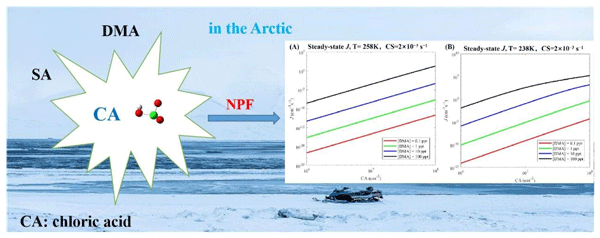
Shengming Wang, Huidi Zhang, Xiangli Shi, Qingzhu Zhang, Wenxing Wang, and Qiao Wang
Atmos. Chem. Phys., 25, 15359–15368, https://doi.org/10.5194/acp-25-15359-2025, https://doi.org/10.5194/acp-25-15359-2025, 2025
Short summary
Short summary
Recent studies have shown that chloric acid (HClO3, CA) is prevalent in the Arctic boundary layer. However, the mechanism of CA-based nucleation is unclear. We provide molecular-level evidence that CA-dimethylamine (DMA) nucleation may not effectively contribute to Arctic new particle formation (NPF). The proposed CA-DMA nucleation mechanism may help us to deeply understand marine NPF events in the Arctic boundary layer.
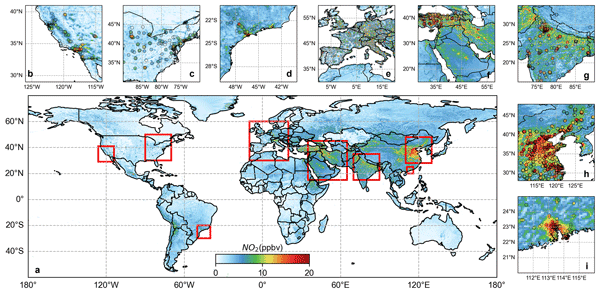
Jiangshan Mu, Chenliang Tao, Yuqiang Zhang, Zhou Liu, Yingnan Zhang, Na Zhao, Bin Luo, Qionghui Zhou, Qingzhu Zhang, Hongliang Zhang, and Likun Xue
Earth Syst. Sci. Data, 18, 2999–3011, https://doi.org/10.5194/essd-18-2999-2026, https://doi.org/10.5194/essd-18-2999-2026, 2026
Short summary
Short summary
Nitrogen dioxide is a common air pollutant that varies strongly across space and time, yet consistent global information has been limited. We developed a new global dataset that describes daily nitrogen dioxide levels from 2005 to 2023 by combining satellite observations, weather data, and ground measurements using artificial intelligence. The dataset reveals long-term changes and regional patterns and provides a reliable resource for future air quality research.
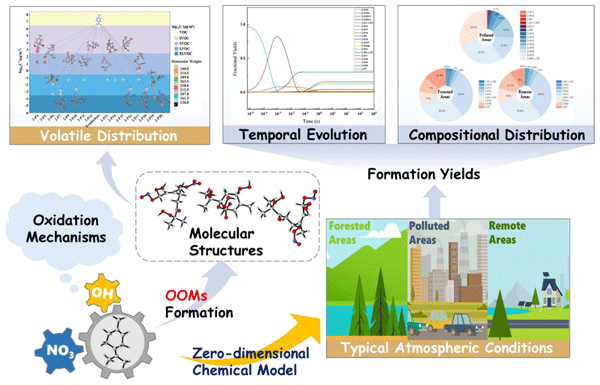
Hongjin Wu, Juan Dang, Xiaomeng Zhang, Weichen Yang, Shuai Tian, Shibo Zhang, Qingzhu Zhang, and Wenxing Wang
Atmos. Chem. Phys., 25, 16435–16450, https://doi.org/10.5194/acp-25-16435-2025, https://doi.org/10.5194/acp-25-16435-2025, 2025
Short summary
Short summary
Terpinolene is an isomeride of limonene, with a high secondary organic aerosol (SOA) yield. The comparative analysis of OH-initiated (daytime) and NO3-driven (nocturnal) terpinolene oxidation mechanism, highlighted the formation of nitrogen-containing oxygenated organic molecules (OOMs), would be conducive to molecular structures identification of OOMs in atmospheric monitoring and atmospheric chemical model refinement.
Shengming Wang, Huidi Zhang, Xiangli Shi, Qingzhu Zhang, Wenxing Wang, and Qiao Wang
Atmos. Chem. Phys., 25, 15359–15368, https://doi.org/10.5194/acp-25-15359-2025, https://doi.org/10.5194/acp-25-15359-2025, 2025
Short summary
Short summary
Recent studies have shown that chloric acid (HClO3, CA) is prevalent in the Arctic boundary layer. However, the mechanism of CA-based nucleation is unclear. We provide molecular-level evidence that CA-dimethylamine (DMA) nucleation may not effectively contribute to Arctic new particle formation (NPF). The proposed CA-DMA nucleation mechanism may help us to deeply understand marine NPF events in the Arctic boundary layer.
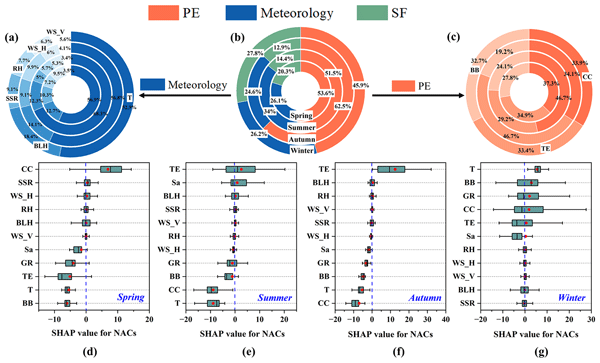
Min Li, Xinfeng Wang, Tianshuai Li, Yujia Wang, Yueru Jiang, Yujiao Zhu, Wei Nie, Rui Li, Jian Gao, Likun Xue, Qingzhu Zhang, and Wenxing Wang
Atmos. Chem. Phys., 25, 8407–8425, https://doi.org/10.5194/acp-25-8407-2025, https://doi.org/10.5194/acp-25-8407-2025, 2025
Short summary
Short summary
By integrating field measurements with an interpretable ensemble machine learning framework, we comprehensively identified key driving factors of nitro-aromatic compounds (NACs), demonstrated complex interrelationships, and quantified their contributions across different locations. This work provides a reliable modeling approach for recognizing causes of NAC pollution, enhances our understanding of variations of atmospheric NACs, and highlights the necessity of strengthening emission controls.
Yue Sun, Yujiao Zhu, Hengde Liu, Lanxiadi Chen, Hongyong Li, Yujian Bi, Di Wu, Xiangkun Yin, Can Cui, Ping Liu, Yu Yang, Jisheng Zhang, Yanqiu Nie, Lanxin Zhang, Jiangshan Mu, Yuhong Liu, Zhaoxin Guo, Qinyi Li, Yuqiang Zhang, Xinfeng Wang, Mingjin Tang, Wenxing Wang, and Likun Xue
EGUsphere, https://doi.org/10.5194/egusphere-2025-2855, https://doi.org/10.5194/egusphere-2025-2855, 2025
Preprint archived
Short summary
Short summary
Rainwater samples collected at the summit of Mount Tai were analyzed for ice-nucleating particles (INPs). Our findings revealed that INP concentrations peaked in spring, driven predominantly by long-range transport of dust aerosols. Mineral dust contributed 43.6 % of annual INPs, with its contribution rising sharply to 71.7 % in spring. Satellite observations further revealed that the long-range transport of dust in spring promotes large-scale cloud formation over the NCP region.
Yujia Wang, Hongbin Wang, Bo Zhang, Peng Liu, Xinfeng Wang, Shuchun Si, Likun Xue, Qingzhu Zhang, and Qiao Wang
Atmos. Chem. Phys., 25, 5537–5555, https://doi.org/10.5194/acp-25-5537-2025, https://doi.org/10.5194/acp-25-5537-2025, 2025
Short summary
Short summary
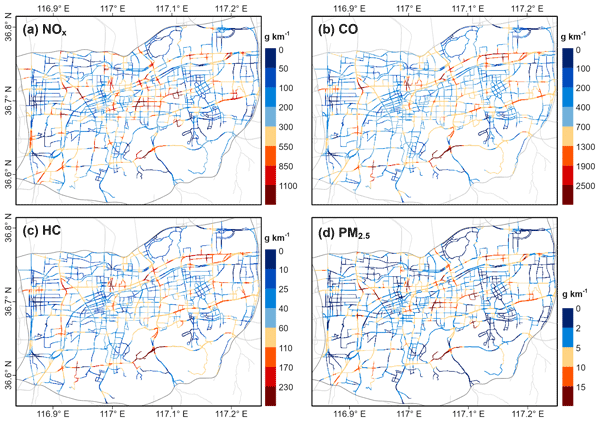
This study established a bottom-up approach that employs real-time traffic flows and interpolation to obtain a spatially continuous on-road vehicle emission mapping for the main urban area of Jinan. The diurnal variation, spatial distribution, and emission hotspots were analyzed with clustering and hotspot analysis, showing unique fine-scale variation characteristics of on-road vehicle emissions. Future scenario analysis demonstrates remarkable benefits of electrification on emission reduction.
Bin Luo, Yuqiang Zhang, Tao Tang, Hongliang Zhang, Jianlin Hu, Jiangshan Mu, Wenxing Wang, and Likun Xue
Atmos. Chem. Phys., 25, 4767–4783, https://doi.org/10.5194/acp-25-4767-2025, https://doi.org/10.5194/acp-25-4767-2025, 2025
Short summary
Short summary
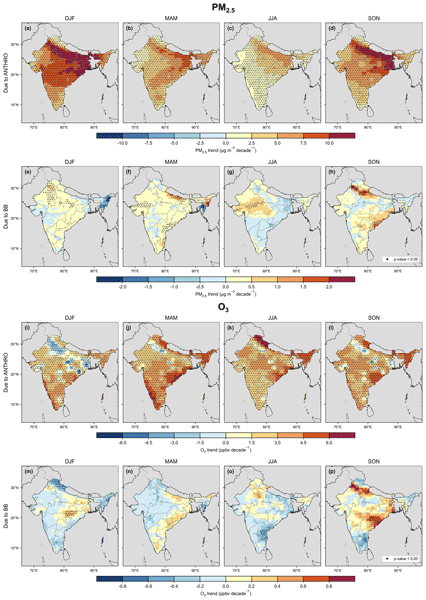
India is facing a severe air pollution crisis that poses significant health risks, particularly from PM2.5 and O3. Our study reveals rising levels of both pollutants from 1995 to 2014, leading to increased premature mortality. While anthropogenic emissions play a significant role, biomass burning also impacts air quality, in particular seasons and regions in India. This study underscores the urgent need for localized policies to protect public health amid escalating environmental challenges.
Chenliang Tao, Yanbo Peng, Qingzhu Zhang, Yuqiang Zhang, Bing Gong, Qiao Wang, and Wenxing Wang
Atmos. Chem. Phys., 24, 4177–4192, https://doi.org/10.5194/acp-24-4177-2024, https://doi.org/10.5194/acp-24-4177-2024, 2024
Short summary
Short summary
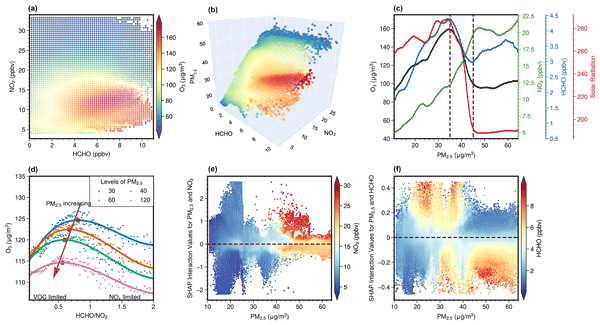
We developed a novel transformer framework to bridge the sparse surface monitoring for inferring ozone–NOx–VOC–aerosol sensitivity and their urban–nonurban discrepancies at a finer scale with implications for improving our understanding of ozone variations. The change in urban–rural disparities in ozone was dominated by PM2.5 from 2019 to 2020. An aerosol-inhibited regime on top of the two traditional NOx- and VOC-limited regimes was identified in Jiaodong Peninsula, Shandong, China.
Yue Sun, Yujiao Zhu, Yanbin Qi, Lanxiadi Chen, Jiangshan Mu, Ye Shan, Yu Yang, Yanqiu Nie, Ping Liu, Can Cui, Ji Zhang, Mingxuan Liu, Lingli Zhang, Yufei Wang, Xinfeng Wang, Mingjin Tang, Wenxing Wang, and Likun Xue
Atmos. Chem. Phys., 24, 3241–3256, https://doi.org/10.5194/acp-24-3241-2024, https://doi.org/10.5194/acp-24-3241-2024, 2024
Short summary
Short summary
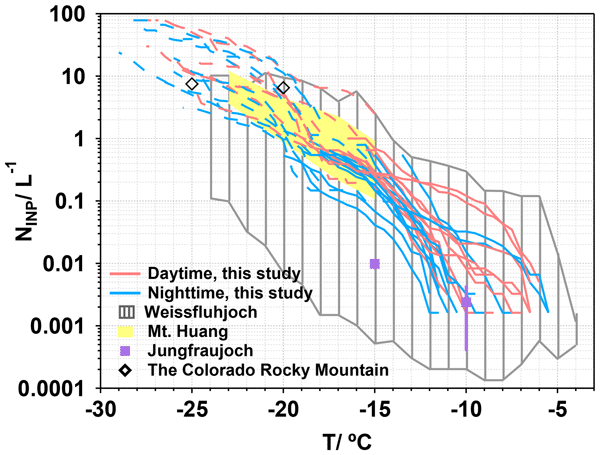
Field observations were conducted at the summit of Changbai Mountain in northeast Asia. The cumulative number concentration of ice-nucleating particles (INPs) varied from 1.6 × 10⁻³ to 78.3 L−1 over the temperature range of −5.5 to −29.0 ℃. Biological INPs (bio-INPs) accounted for the majority of INPs, and the proportion exceeded 90% above −13.0 ℃. Planetary boundary layer height, valley breezes, and long-distance transport of air mass influence the abundance of bio-INPs.
Xuelian Zhong, Hengqing Shen, Min Zhao, Ji Zhang, Yue Sun, Yuhong Liu, Yingnan Zhang, Ye Shan, Hongyong Li, Jiangshan Mu, Yu Yang, Yanqiu Nie, Jinghao Tang, Can Dong, Xinfeng Wang, Yujiao Zhu, Mingzhi Guo, Wenxing Wang, and Likun Xue
Atmos. Chem. Phys., 23, 14761–14778, https://doi.org/10.5194/acp-23-14761-2023, https://doi.org/10.5194/acp-23-14761-2023, 2023
Short summary
Short summary
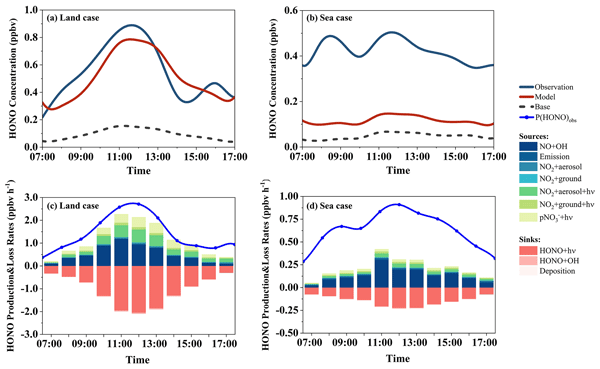
Nitrous acid (HONO) is vital for atmospheric oxidation. In research at Mount Lao, China, models revealed a significant unidentified marine HONO source. Overlooking this could skew our understanding of air quality and climate change. This finding emphasizes HONO’s importance in the coastal atmosphere, uncovering previously unnoticed interactions.
Cited articles
Almeida, J., Schobesberger, S., Kürten, A., Ortega, I. K., Kupiainen-Määttä, O., Praplan, A. P., Adamov, A., Amorim, A., Bianchi, F., and Breitenlechner, M.: Molecular understanding of sulphuric acid–amine particle nucleation in the atmosphere, Nature, 502, 359–363, 2013.
Barrie, L., Bottenheim, J., Schnell, R. C., Crutzen, P., and Rasmussen, R.: Ozone destruction and photochemical reactions at polar sunrise in the lower Arctic atmosphere, Nature, 334, 138–141, 1988.
Chen, M., Titcombe, M., Jiang, J., Jen, C., Kuang, C., Fischer, M. L., Eisele, F. L., Siepmann, J. I., Hanson, D. R., and Zhao, J.: Acid–base chemical reaction model for nucleation rates in the polluted atmospheric boundary layer, P. Natl. Acad. Sci. USA, 109, 18713–18718, 2012.
Chu, B., Kerminen, V.-M., Bianchi, F., Yan, C., Petäjä, T., and Kulmala, M.: Atmospheric new particle formation in China, Atmos. Chem. Phys., 19, 115–138, https://doi.org/10.5194/acp-19-115-2019, 2019.
Dasgupta, P. K., Martinelango, P. K., Jackson, W. A., Anderson, T. A., Tian, K., Tock, R. W., and Rajagopalan, S.: The origin of naturally occurring perchlorate: the role of atmospheric processes, Environ. Sci. Technol., 39, 1569–1575, 2005.
Elm, J.: Elucidating the limiting steps in sulfuric acid–base new particle formation, J. Phys. Chem. A, 121, 8288–8295, 2017.
Engsvang, M., Knattrup, Y., Kubecka, J., and Elm, J.: Chlorine oxyacids potentially contribute to arctic aerosol formation, Environ. Sci. Technol. Lett., 11, 101–105, 2024.
Erupe, M. E., Viggiano, A. A., and Lee, S.-H.: The effect of trimethylamine on atmospheric nucleation involving H2SO4, Atmos. Chem. Phys., 11, 4767–4775, https://doi.org/10.5194/acp-11-4767-2011, 2011.
Ferrero, L., Sangiorgi, G., Perrone, M. G., Rizzi, C., Cataldi, M., Markuszewski, P., Pakszys, P., Makuch, P., Petelski, T., and Becagli, S.: Chemical composition of aerosol over the Arctic Ocean from summer ARctic EXpedition (AREX) 2011–2012 cruises: ions, amines, elemental carbon, organic matter, polycyclic aromatic hydrocarbons, n-alkanes, metals, and rare earth elements, Atmosphere, 10, 54, https://doi.org/10.3390/atmos10020054 2019.
Frisch, M. J., Trucks, G. W., Schlegel, H. B., Scuseria, G. E., Robb, M. A., Cheeseman, J. R., Scalmani, G., Barone, V., Petersson, G. A., Nakatsuji, H., Li, X., Caricato, M., Marenich, A. V., Bloino, J., Janesko, B. G., Gomperts, R., Mennucci, B., Hratchian, H. P., Ortiz, J. V., Izmaylov, A. F., Sonnenberg, J. L., Williams-Young, D., Ding, F., Lipparini, F., Egidi, F., Goings, J., Peng, B., Petrone, A., Henderson, T., Ranasinghe, D., Zakrzewski, V. G., Gao, J., Rega, N., Zheng, G., Liang, W., Hada, M., Ehara, M., Toyota, K., Fukuda, R., Hasegawa, J., Ishida, M., Nakajima, T., Honda, Y., Kitao, O., Nakai, H., Vreven, T., Throssell, K., Montgomery Jr., J. A., Peralta, J. E., Ogliaro, F., Bearpark, M. J., Heyd, J. J., Brothers, E. N., Kudin, K. N., Staroverov, V. N., Keith, T. A., Kobayashi, R., Normand, J., Raghavachari, K., Rendell, A. P., Burant, J. C., Iyengar, S. S., Tomasi, J., Cossi, M., Millam, J. M., Klene, M., Adamo, C., Cammi, R., Ochterski, J. W., Martin, R. L., Morokuma, K., Farkas, O., Foresman, J. B., and Fox, D. J.: Gaussian 16, Revision A.03, Gaussian Inc., Wallingford, CT, USA, https://gaussian.com/gaussian16/ (last access: 20 November 2023), 2016.
Furdui, V. I. and Tomassini, F.: Trends and sources of perchlorate in Arctic snow, Environ. Sci. Technol., 44, 588–592, 2010.
Ge, X., Wexler, A. S., and Clegg, S. L.: Atmospheric amines – Part II: Thermodynamic properties and gas/particle partitioning, Atmos. Environ., 45, 561–577, 2011.
Gordon, H., Kirkby, J., Baltensperger, U., Bianchi, F., Breitenlechner, M., Curtius, J., Dias, A., Dommen, J., Donahue, N. M., and Dunne, E. M.: Causes and importance of new particle formation in the present‐day and preindustrial atmospheres, J. Geophys. Res.-Atmos., 122, 8739–8760, 2017.
Jaeglé, L., Yung, Y. L., Toon, G. C., Sen, B., and Blavier, J. F.: Balloon observations of organic and inorganic chlorine in the stratosphere: The role of HClO4 production on sulfate aerosols, Geophys. Res. Lett., 23, 1749–1752, 1996.
Jen, C. N., McMurry, P. H., and Hanson, D. R.: Stabilization of sulfuric acid dimers by ammonia, methylamine, dimethylamine, and trimethylamine, J. Geophys. Res.-Atmos., 119, 7502–7514, 2014.
Kalivitis, N., Kerminen, V.-M., Kouvarakis, G., Stavroulas, I., Tzitzikalaki, E., Kalkavouras, P., Daskalakis, N., Myriokefalitakis, S., Bougiatioti, A., Manninen, H. E., Roldin, P., Petäjä, T., Boy, M., Kulmala, M., Kanakidou, M., and Mihalopoulos, N.: Formation and growth of atmospheric nanoparticles in the eastern Mediterranean: results from long-term measurements and process simulations, Atmos. Chem. Phys., 19, 2671–2686, https://doi.org/10.5194/acp-19-2671-2019, 2019.
Karaboga, D., Ozturk, C., Karaboga, N., and Gorkemli, B.: Artificial bee colony programming for symbolic regression, Information Sciences, 209, 1–15, https://doi.org/10.1016/j.ins.2012.05.002, 2012.
Lee, S. H., Gordon, H., Yu, H., Lehtipalo, K., Haley, R., Li, Y., and Zhang, R.: New particle formation in the atmosphere: From molecular clusters to global climate, J. Geophys. Res.-Atmos., 124, 7098–7146, 2019.
Liu, L., Li, S., Zu, H., and Zhang, X.: Unexpectedly significant stabilizing mechanism of iodous acid on iodic acid nucleation under different atmospheric conditions, Sci. Total Environ., 859, 159832, https://doi.org/10.1016/j.scitotenv.2022.159832, 2023.
Loukonen, V., Kurtén, T., Ortega, I. K., Vehkamäki, H., Pádua, A. A. H., Sellegri, K., and Kulmala, M.: Enhancing effect of dimethylamine in sulfuric acid nucleation in the presence of water – a computational study, Atmos. Chem. Phys., 10, 4961–4974, https://doi.org/10.5194/acp-10-4961-2010, 2010.
Lu, Y., Liu, L., Ning, A., Yang, G., Liu, Y., Kurtén, T., Vehkamäki, H., Zhang, X., and Wang, L.: Atmospheric sulfuric acid‐dimethylamine nucleation enhanced by trifluoroacetic acid, Geophys. Res. Lett., 47, e2019GL085627, https://doi.org/10.1029/2019gl085627, 2020.
Masson-Delmotte, V., Zhai, P., Pirani, S., Connors, C., Péan, S., Berger, N., Caud, Y., Chen, L., Goldfarb, M., and Scheel Monteiro, P. M.: Summary for policymakers, in: Climate change 2021: The physical science basis, contribution of working group I to the sixth assessment report of the intergovernmental panel on climate change, https://www.ipcc.ch (last access: 25 August 2026), 2021.
McGrath, M. J., Olenius, T., Ortega, I. K., Loukonen, V., Paasonen, P., Kurtén, T., Kulmala, M., and Vehkamäki, H.: Atmospheric Cluster Dynamics Code: a flexible method for solution of the birth-death equations, Atmos. Chem. Phys., 12, 2345–2355, https://doi.org/10.5194/acp-12-2345-2012, 2012.
Neese, F.: The ORCA program system, Wiley Interdisciplinary Reviews: Computational Molecular Science, 2, 73–78, https://doi.org/10.1002/wcms.81, 2012.
Ning, A., Liu, L., Zhang, S., Yu, F., Du, L., Ge, M., and Zhang, X.: The critical role of dimethylamine in the rapid formation of iodic acid particles in marine areas, npj Clim. Atmos. Sci., 5, 92, https://doi.org/10.1038/s41612-022-00316-9, 2022.
Ning, A., Mao, L., Zhao, B., Zu, H., Shen, J., Zhao, Y., Li, J., Deng, X., Liu, L., and Zhang, H.: Marine upper-tropospheric rapid particle formation dominated by methanesulfonic acid, P. Natl. Acad. Sci. USA, 123, e2606521123, https://doi.org/10.1073/pnas.2606521123, 2026.
Olenius, T., Kupiainen-Määttä, O., Ortega, I., Kurtén, T., and Vehkamäki, H.: Free energy barrier in the growth of sulfuric acid–ammonia and sulfuric acid–dimethylamine clusters, J. Chem. Phys., 139, https://doi.org/10.1063/1.4819024, 2013.
Rajagopalan, S., Anderson, T., Cox, S., Harvey, G., Cheng, Q., and Jackson, W. A.: Perchlorate in wet deposition across North America, Environ. Sci. Technol., 43, 616–622, 2009.
Rappé, A. K., Casewit, C. J., Colwell, K. S., Goddard III, W. A., and Skiff, W. M.: UFF, a full periodic table force field for molecular mechanics and molecular dynamics simulations, J. Am. Chem. Soc., 114, 10024–10035, 1992.
Sander, S. P., Friedl, R. R., and Yung, Y. L.: Rate of formation of the ClO dimer in the polar stratosphere: Implications for ozone loss, Science, 245, 1095–1098, 1989.
Takegawa, N., Seto, T., Moteki, N., Koike, M., Oshima, N., Adachi, K., Kita, K., Takami, A., and Kondo, Y.: Enhanced new particle formation above the marine boundary layer over the Yellow Sea: Potential impacts on cloud condensation nuclei, J. Geophys. Res.-Atmos., 125, e2019JD031448, https://doi.org/10.1029/2019jd031448, 2020.
Tham, Y. J., Sarnela, N., Iyer, S., Li, Q., Angot, H., Quéléver, L. L., Beck, I., Laurila, T., Beck, L. J., and Boyer, M.: Widespread detection of chlorine oxyacids in the Arctic atmosphere, Nat. Commun., 14, 1769, https://doi.org/10.1038/s41467-023-37387-y, 2023.
Wang, S., Zhang, H., Shi, X., Zhang, Q., Wang, W., and Wang, Q.: Chloric acid-driven nucleation enhanced by dimethylamine and sulfuric acid in the Arctic: mechanistic study, Atmos. Chem. Phys., 25, 15359–15368, https://doi.org/10.5194/acp-25-15359-2025, 2025.
Webster, C., May, R., Toohey, D., Avallone, L., Anderson, J., Newman, P., Lait, L., Schoeberl, M., Elkins, J., and Chan, K.: Chlorine chemistry on polar stratospheric cloud particles in the Arctic winter, Science, 261, 1130–1134, 1993.
Williamson, C. J., Kupc, A., Axisa, D., Bilsback, K. R., Bui, T., Campuzano-Jost, P., Dollner, M., Froyd, K. D., Hodshire, A. L., and Jimenez, J. L.: A large source of cloud condensation nuclei from new particle formation in the tropics, Nature, 574, 399–403, 2019.
Xie, H.-B., Elm, J., Halonen, R., Myllys, N., Kurten, T., Kulmala, M., and Vehkamaki, H.: Atmospheric fate of monoethanolamine: enhancing new particle formation of sulfuric acid as an important removal process, Environ. Sci. Technol., 51, 8422–8431, 2017.
Zhang, J. and Dolg, M.: ABCluster: the artificial bee colony algorithm for cluster global optimization, Phys. Chem. Chem. Phys., 17, 24173–24181, 2015.
Zhang, R.: Getting to the critical nucleus of aerosol formation, Science, 328, 1366–1367, 2010.
Zhang, R., Khalizov, A., Wang, L., Hu, M., and Xu, W.: Nucleation and growth of nanoparticles in the atmosphere, Chem. Rev., 112, 1957–2011, 2012.
Zhang, R., Shen, J., Xie, H.-B., Chen, J., and Elm, J.: The role of organic acids in new particle formation from methanesulfonic acid and methylamine, Atmos. Chem. Phys., 22, 2639–2650, https://doi.org/10.5194/acp-22-2639-2022, 2022a.
Zhang, R., Xie, H.-B., Ma, F., Chen, J., Iyer, S., Simon, M., Heinritzi, M., Shen, J., Tham, Y. J., and Kurten, T.: Critical role of iodous acid in neutral iodine oxoacid nucleation, Environ. Sci. Technol., 56, 14166–14177, 2022b.
Zhao, B., Donahue, N. M., Zhang, K., Mao, L., Shrivastava, M., Ma, P.-L., Shen, J., Wang, S., Sun, J., and Gordon, H.: Global variability in atmospheric new particle formation mechanisms, Nature, 631, 98–105, 2024.
Zhao, J., Eisele, F. L., Titcombe, M., Kuang, C., and McMurry, P. H.: Chemical ionization mass spectrometric measurements of atmospheric neutral clusters using the cluster‐CIMS, J. Geophys. Res.-Atmos., 115, https://doi.org/10.1029/2009jd012606, 2010.
Zollner, J. H., Glasoe, W. A., Panta, B., Carlson, K. K., McMurry, P. H., and Hanson, D. R.: Sulfuric acid nucleation: power dependencies, variation with relative humidity, and effect of bases, Atmos. Chem. Phys., 12, 4399–4411, https://doi.org/10.5194/acp-12-4399-2012, 2012.
Short summary
This study examines how perchloric acid (HClO₄) promotes atmospheric new particle formation. Computational simulations reveal that dimethylamine (DMA) greatly enhances this process—far more effectively than ammonia or sulfuric acid, even at substantially lower concentrations. The DMA–HClO₄ interaction thus represents a previously overlooked source of marine aerosols, offering new insight into polar climate change.
This study examines how perchloric acid (HClO₄) promotes atmospheric new particle formation....


Altmetrics
Final-revised paper
Preprint