
Articles | Volume 26, issue 15
https://doi.org/10.5194/acp-26-11255-2026
© Author(s) 2026. This work is distributed under
the Creative Commons Attribution 4.0 License.
the Creative Commons Attribution 4.0 License.
https://doi.org/10.5194/acp-26-11255-2026
© Author(s) 2026. This work is distributed under
the Creative Commons Attribution 4.0 License.
the Creative Commons Attribution 4.0 License.
Research article
| 
12 Aug 2026
Research article |
| 12 Aug 2026
| 12 Aug 2026
The impact of model resolution on the North Atlantic multidecadal response to anthropogenic sulphate aerosols
Wah Kin Michael Lai
CORRESPONDING AUTHOR

Met Office Hadley Centre, Exeter, UK
Jon Robson
National Centre for Atmospheric Science, University of Reading, Reading, UK
Laura Wilcox
National Centre for Atmospheric Science, University of Reading, Reading, UK
Nick Dunstone
Met Office Hadley Centre, Exeter, UK
Rowan Sutton
Met Office Hadley Centre, Exeter, UK
National Centre for Atmospheric Science, University of Reading, Reading, UK
Related authors
Flossie Brown, Sabine Bischof, Brodie Pearson, Aditya Sengupta, Pauline Bonnet, Swen Brands, Jayasankar C.B., James Carruthers, Marion Devilliers, F. Feba, Mehmet Sedat Gözlet, Saurabh Kelkar, Sifan A. Koriche, Michael Lai, Andre Lanfer Marquez, Xiaohan Sally Li, Yiwen Li, Abhnil Prasad, Angelica R. Rodriguez, Serena Schroeter, Gopika Suresh, and Rebecca Varney
EGUsphere, https://doi.org/10.5194/egusphere-2026-3510, https://doi.org/10.5194/egusphere-2026-3510, 2026
Short summary
Short summary
The Coupled Model Intercomparison Project (CMIP) creates simulations of the Earth and climate, but its representation of many features are imperfect. In this review, we show how these biases are connected across the atmosphere, land and ocean and discuss current understanding of their causes and effects. In addition, we provide a perspective on the modelling advances expected in CMIP7 aimed at end users, those new to CMIP data and those looking to connect different aspects of the Earth system.
Malcolm J. Roberts, Kevin A. Reed, Qing Bao, Joseph J. Barsugli, Suzana J. Camargo, Louis-Philippe Caron, Ping Chang, Cheng-Ta Chen, Hannah M. Christensen, Gokhan Danabasoglu, Ivy Frenger, Neven S. Fučkar, Shabeh ul Hasson, Helene T. Hewitt, Huanping Huang, Daehyun Kim, Chihiro Kodama, Michael Lai, Lai-Yung Ruby Leung, Ryo Mizuta, Paulo Nobre, Pablo Ortega, Dominique Paquin, Christopher D. Roberts, Enrico Scoccimarro, Jon Seddon, Anne Marie Treguier, Chia-Ying Tu, Paul A. Ullrich, Pier Luigi Vidale, Michael F. Wehner, Colin M. Zarzycki, Bosong Zhang, Wei Zhang, and Ming Zhao
Geosci. Model Dev., 18, 1307–1332, https://doi.org/10.5194/gmd-18-1307-2025, https://doi.org/10.5194/gmd-18-1307-2025, 2025
Short summary
Short summary
HighResMIP2 is a model intercomparison project focusing on high-resolution global climate models, that is, those with grid spacings of 25 km or less in the atmosphere and ocean, using simulations of decades to a century in length. We are proposing an update of our simulation protocol to make the models more applicable to key questions for climate variability and hazard in present-day and future projections and to build links with other communities to provide more robust climate information.
Reinhard K. H. Schiemann, Grenville Lister, Rosalyn Hatcher, Dan Hodson, Bryan Lawrence, Len Shaffrey, Jeff Cole, Andrea Dittus, Jenny Mecking, Jon Robson, Simon Wilson, Yevgeny Aksenov, Adam T. Blaker, Ben Harvey, Oscar Martínez-Alvarado, Annette Osprey, Stephanie Rynders, Sharar Ahmadi, Jake Aylmer, Laura Baker, David Case, Emanuele Silvio Gentile, Steve George, Kevin Hodges, Eliza Karlowska, Charlotte Lang, Hua Lu, Niamh O'Callaghan, Weronika Osmolska, Scott Osprey, Tony Phillips, David Schröder, Robin Smith, Andrew G. Turner, Steve Woolnough, Martin Andrews, Andrew Coward, Steven Hardiman, James Harle, John W. Rostron, David M. H. Sexton, Bablu Sinha, Jonny Williams, and Chris Wilson
EGUsphere, https://doi.org/10.5194/egusphere-2026-2281, https://doi.org/10.5194/egusphere-2026-2281, 2026
This preprint is open for discussion and under review for Geoscientific Model Development (GMD).
Short summary
Short summary
This paper presents a new large ensemble of climate model simulations: The CANARI HadGEM3 Large Ensemble (CANARI LE). The CANARI LE has a comparatively high resolution, provides sub-daily output on atmospheric pressure levels, and boundary conditions for driving regional model simulations. The CANARI LE is thus a community resource that lends itself for the study of physical coupled climate processes, weather systems, and impacts in a changing climate.
Katrina Macneill, Lucy Martin, Richard A. Wood, and Rowan Sutton
EGUsphere, https://doi.org/10.5194/egusphere-2026-3767, https://doi.org/10.5194/egusphere-2026-3767, 2026
This preprint is open for discussion and under review for Geoscience Communication (GC).
Short summary
Short summary
Climate science uses terms like “tipping points” that shape how people understand climate risks, but these words are not always interpreted as intended. Through focus groups, this study shows that people rely on everyday meanings and personal experience, which can lead to misunderstandings and varied emotional responses. It highlights the how clearer language can be used and introduces a practical glossary to support better communication.
Flossie Brown, Sabine Bischof, Brodie Pearson, Aditya Sengupta, Pauline Bonnet, Swen Brands, Jayasankar C.B., James Carruthers, Marion Devilliers, F. Feba, Mehmet Sedat Gözlet, Saurabh Kelkar, Sifan A. Koriche, Michael Lai, Andre Lanfer Marquez, Xiaohan Sally Li, Yiwen Li, Abhnil Prasad, Angelica R. Rodriguez, Serena Schroeter, Gopika Suresh, and Rebecca Varney
EGUsphere, https://doi.org/10.5194/egusphere-2026-3510, https://doi.org/10.5194/egusphere-2026-3510, 2026
Short summary
Short summary
The Coupled Model Intercomparison Project (CMIP) creates simulations of the Earth and climate, but its representation of many features are imperfect. In this review, we show how these biases are connected across the atmosphere, land and ocean and discuss current understanding of their causes and effects. In addition, we provide a perspective on the modelling advances expected in CMIP7 aimed at end users, those new to CMIP data and those looking to connect different aspects of the Earth system.
Feifei Luo, Manoj Joshi, Bjørn H. Samset, Laura J. Wilcox, Camilla W. Stjern, Robert J. Allen, Yan-Ning Kuo, Wei Hua, and Shuanglin Li
EGUsphere, https://doi.org/10.5194/egusphere-2026-3301, https://doi.org/10.5194/egusphere-2026-3301, 2026
Short summary
Short summary
This study examines if this impact changes in a warmer world. Using a climate model, we compare identical Asian emissions under cooler and 1 K warmer climates. Aerosols reduce extreme rainfall in both, but more strongly over northern India in the warmer climate. A warmer, stabler atmosphere weakens circulation that partly offsets aerosol drying in cooler conditions. Continued warming may strengthen this drying over parts of Asia, while future pollution cuts could amplify heavy rainfall.
Bosi Sheng, Massimo A. Bollasina, Alexandre S. Gagnon, Laura J. Wilcox, Thomas P. S. Reynolds, Christopher T. S. Beckett, Haolin Wang, Qingxiang Li, Pierre Nabat, Robert J. Allen, Bjørn H. Samset, Joonas Merikanto, Geeta G. Persad, Toshihiko Takemura, Kostas Tsigaridis, Sharar Ahmadi, Maxwell T. Elling, Knut von Salzen, Daniel M. Westervelt, Naga Oshima, and Tsuyoshi Koshiro
EGUsphere, https://doi.org/10.5194/egusphere-2026-2198, https://doi.org/10.5194/egusphere-2026-2198, 2026
Short summary
Short summary
Observational records indicate that austral summer rainfall over southern Africa experienced substantial wetting during the late 20th century, followed by pronounced drying over the past two decades. We show that East Asian sulphate aerosol emissions played a key role in shaping these rainfall trends. These findings have important implications for reducing uncertainties in regional rainfall projections and for understanding their links to ecosystem changes.
Stephanie Fiedler, Fiona M. O'Connor, Duncan Watson-Parris, Robert J. Allen, William J. Collins, Paul T. Griffiths, Matthew Kasoar, Jarmo Kikstra, Jasper F. Kok, Lee T. Murray, Fabien Paulot, Maria Sand, Steven T. Turnock, James Weber, Laura J. Wilcox, and Vaishali Naik
Geosci. Model Dev., 19, 3477–3508, https://doi.org/10.5194/gmd-19-3477-2026, https://doi.org/10.5194/gmd-19-3477-2026, 2026
Short summary
Short summary
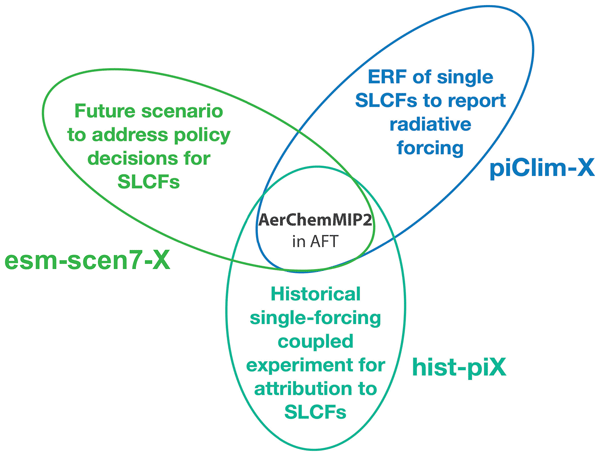
The Aerosol and Chemistry Model Intercomparison Project phase two (AerChemMIP2) allows the community to compare results from contemporary Earth system models. AerChemMIP2 is asking modelling centres to perform experiments following the same protocol. It includes experiments for enabling new science and for tracking progress. Model output will be used for addressing research and policy questions about anthropogenic and natural drivers of climate change, and the impacts on air quality.
Beth Dingley, James A. Anstey, Marta Abalos, Carsten Abraham, Tommi Bergman, Lisa Bock, Sonya Fiddes, Birgit Hassler, Ryan J. Kramer, Fei Luo, Fiona M. O'Connor, Petr Šácha, Isla R. Simpson, Laura J. Wilcox, and Mark D. Zelinka
Geosci. Model Dev., 19, 2945–2984, https://doi.org/10.5194/gmd-19-2945-2026, https://doi.org/10.5194/gmd-19-2945-2026, 2026
Short summary
Short summary
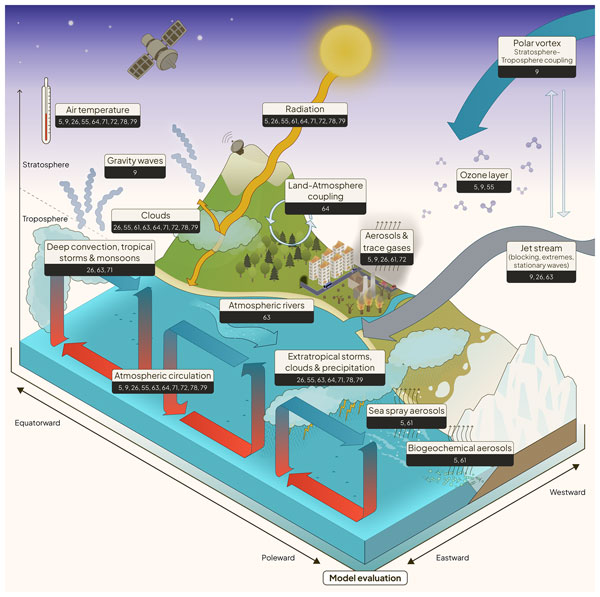
This manuscript defines as a list of variables and scientific opportunities which are requested from the Coupled Model Intercomparison Project Phase 7 (CMIP7) Assessment Fast Track to address open atmospheric science questions. The list reflects the output of a large public community engagement effort, coordinated across autumn 2025 through to summer 2025.
Didier Swingedouw, Laura Jackson, Aixue Hu, Anastasia Romanou, Nicole C. Laureanti, Wilbert Weijer, Sina Loriani, Bette Otto-Bliesner, Ayako Abe-Ouchi, Lucas Almeida, Alessio Bellucci, Reyk Börner, Gokhan Danabasoglu, Donovan P. Dennis, Marion Devilliers, Sybren Drijfhout, Jonathan Donges, Friederike Fröb, Thomas L. Frölicher, Guillaume Gastineau, Heiko Goelzer, Chuncheng Guo, Urs Hofmann, Anna Höse, Colin Jones, Torben Koenigk, Ann Kristin Klose, Valerio Lembo, Jose Licon-Salaiz, Ken Mankoff, Virna Meccia, Irina Melnikova, Oliver Mehling, Laurie Menviel, Juliette Mignot, Jon I. Robson, Gavin A. Schmidt, Robin Smith, Yuchen Sun, Irene Trombini, Matteo Willeit, Richard Wood, Fanghua Wu, Lin Zhaohui, and Ricarda Winkelmann
EGUsphere, https://doi.org/10.5194/egusphere-2026-1698, https://doi.org/10.5194/egusphere-2026-1698, 2026
Short summary
Short summary
This study presents a plan for climate model experiments to better understand how changes in freshwater in the North Atlantic affect major ocean currents. We designed coordinated simulations to test their response to warming, added freshwater, and possible recovery after weakening. Comparing results across models and past climate evidence helps improve confidence in projections and assess risks of large ocean circulation changes.
Catherine A. Toolan, Joe Adabouk Amooli, Laura J. Wilcox, Bjørn H. Samset, Andrew G. Turner, and Daniel M. Westervelt
Atmos. Chem. Phys., 25, 10523–10557, https://doi.org/10.5194/acp-25-10523-2025, https://doi.org/10.5194/acp-25-10523-2025, 2025
Short summary
Short summary
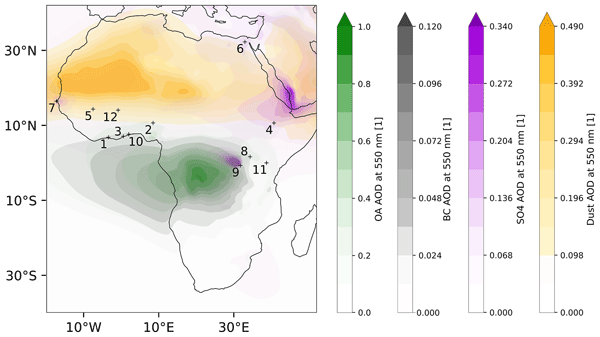
Our research explores how well air pollution and rainfall patterns in Africa are represented in current climate models by comparing model data to observations from 1981 to 2023. While most models capture seasonal air quality changes well, they struggle to replicate the distribution of non-dust pollutants and certain rainfall patterns, especially over east Africa. Improving these models is crucial for better climate predictions and preparing for future risks.
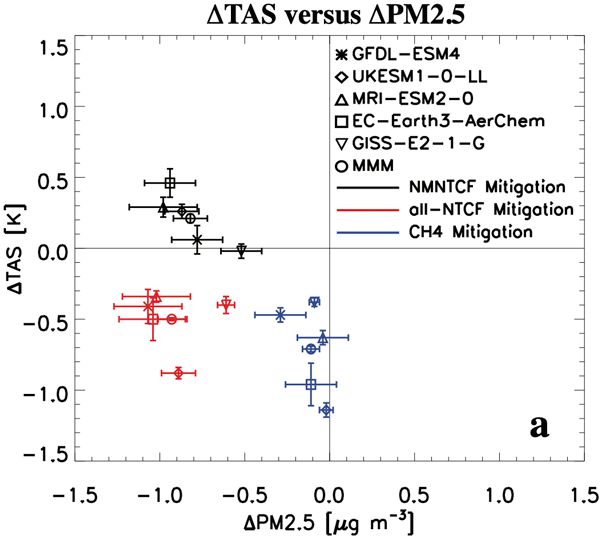
Paul T. Griffiths, Laura J. Wilcox, Robert J. Allen, Vaishali Naik, Fiona M. O'Connor, Michael Prather, Alex Archibald, Florence Brown, Makoto Deushi, William Collins, Stephanie Fiedler, Naga Oshima, Lee T. Murray, Bjørn H. Samset, Chris Smith, Steven Turnock, Duncan Watson-Parris, and Paul J. Young
Atmos. Chem. Phys., 25, 8289–8328, https://doi.org/10.5194/acp-25-8289-2025, https://doi.org/10.5194/acp-25-8289-2025, 2025
Short summary
Short summary
The Aerosol Chemistry Model Intercomparison Project (AerChemMIP) aimed to quantify the climate and air quality impacts of aerosols and chemically reactive gases. We review its contribution to AR6 (Sixth Assessment Report of the Intergovernmental Panel on Climate Change) and the wider understanding of the role of these species in climate and climate change. We identify challenges and provide recommendations to improve the utility and uptake of climate model data, detailed summary tables of CMIP6 models, experiments, and emergent diagnostics.
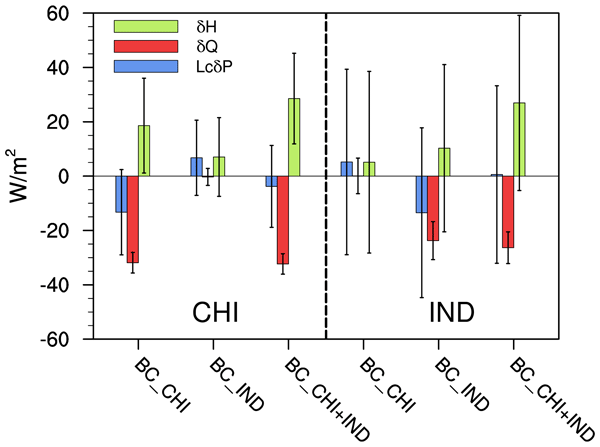
Feifei Luo, Bjørn H. Samset, Camilla W. Stjern, Manoj Joshi, Laura J. Wilcox, Robert J. Allen, Wei Hua, and Shuanglin Li
Atmos. Chem. Phys., 25, 7647–7667, https://doi.org/10.5194/acp-25-7647-2025, https://doi.org/10.5194/acp-25-7647-2025, 2025
Short summary
Short summary
Black carbon (BC) aerosol is emitted from the incomplete combustion of biomass and fossil fuels. We found that Asian BC leads to strong local cooling and drying. Reductions in precipitation primarily depend on the thermodynamic effects due to solar radiation absorption by BC. The combined thermodynamic and dynamic effects shape the spatial pattern of precipitation responses to Asian BC. These results help us further understand the impact of emissions of anthropogenic aerosols on Asian climate.
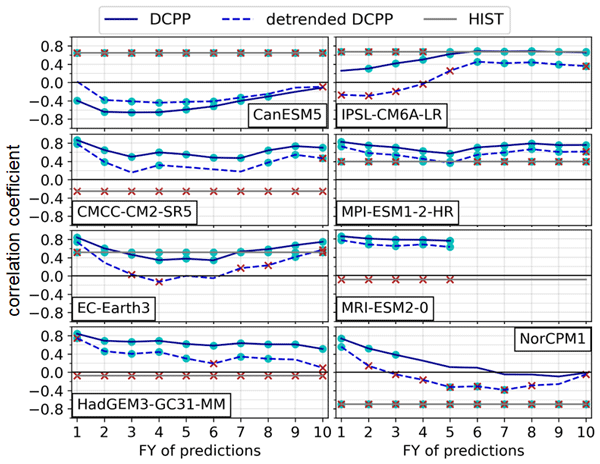
Teresa Carmo-Costa, Roberto Bilbao, Jon Robson, Ana Teles-Machado, and Pablo Ortega
Earth Syst. Dynam., 16, 1001–1028, https://doi.org/10.5194/esd-16-1001-2025, https://doi.org/10.5194/esd-16-1001-2025, 2025
Short summary
Short summary
Climate models can be used to skilfully predict decadal changes in North Atlantic ocean heat content. However, significant regional differences among these models reveal large uncertainties in the influence of external forcings. This study examines eight climate models to understand the differences in their predictive capacity for the North Atlantic, investigating the importance of external forcings and key model characteristics such as ocean stratification and the local atmospheric forcing.
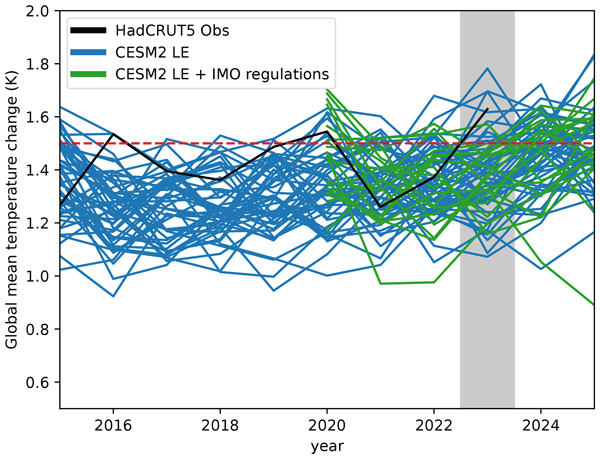
Duncan Watson-Parris, Laura J. Wilcox, Camilla W. Stjern, Robert J. Allen, Geeta Persad, Massimo A. Bollasina, Annica M. L. Ekman, Carley E. Iles, Manoj Joshi, Marianne T. Lund, Daniel McCoy, Daniel M. Westervelt, Andrew I. L. Williams, and Bjørn H. Samset
Atmos. Chem. Phys., 25, 4443–4454, https://doi.org/10.5194/acp-25-4443-2025, https://doi.org/10.5194/acp-25-4443-2025, 2025
Short summary
Short summary
In 2020, regulations by the International Maritime Organization aimed to reduce aerosol emissions from ships. These aerosols previously had a cooling effect, which the regulations might reduce, revealing more greenhouse gas warming. Here we find that, while there is regional warming, the global 2020–2040 temperature rise is only +0.03 °C. This small change is difficult to distinguish from natural climate variability, indicating the regulations have had a limited effect on observed warming to date.
Malcolm J. Roberts, Kevin A. Reed, Qing Bao, Joseph J. Barsugli, Suzana J. Camargo, Louis-Philippe Caron, Ping Chang, Cheng-Ta Chen, Hannah M. Christensen, Gokhan Danabasoglu, Ivy Frenger, Neven S. Fučkar, Shabeh ul Hasson, Helene T. Hewitt, Huanping Huang, Daehyun Kim, Chihiro Kodama, Michael Lai, Lai-Yung Ruby Leung, Ryo Mizuta, Paulo Nobre, Pablo Ortega, Dominique Paquin, Christopher D. Roberts, Enrico Scoccimarro, Jon Seddon, Anne Marie Treguier, Chia-Ying Tu, Paul A. Ullrich, Pier Luigi Vidale, Michael F. Wehner, Colin M. Zarzycki, Bosong Zhang, Wei Zhang, and Ming Zhao
Geosci. Model Dev., 18, 1307–1332, https://doi.org/10.5194/gmd-18-1307-2025, https://doi.org/10.5194/gmd-18-1307-2025, 2025
Short summary
Short summary
HighResMIP2 is a model intercomparison project focusing on high-resolution global climate models, that is, those with grid spacings of 25 km or less in the atmosphere and ocean, using simulations of decades to a century in length. We are proposing an update of our simulation protocol to make the models more applicable to key questions for climate variability and hazard in present-day and future projections and to build links with other communities to provide more robust climate information.
Alcide Zhao, Laura J. Wilcox, and Claire L. Ryder
Atmos. Chem. Phys., 24, 13385–13402, https://doi.org/10.5194/acp-24-13385-2024, https://doi.org/10.5194/acp-24-13385-2024, 2024
Short summary
Short summary
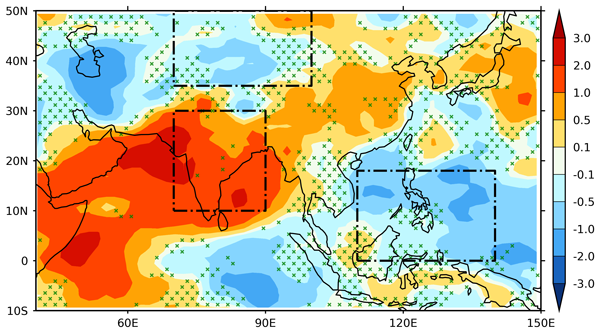
Climate models include desert dust aerosols, which cause atmospheric heating and can change circulation patterns. We assess the effect of dust on the Indian and east Asian summer monsoons through multi-model experiments isolating the effect of dust in current climate models for the first time. Dust atmospheric heating results in a southward shift of western Pacific equatorial rainfall and an enhanced Indian summer monsoon. This shows the importance of accurate dust representation in models.
Alison L. Kay, Nick Dunstone, Gillian Kay, Victoria A. Bell, and Jamie Hannaford
Nat. Hazards Earth Syst. Sci., 24, 2953–2970, https://doi.org/10.5194/nhess-24-2953-2024, https://doi.org/10.5194/nhess-24-2953-2024, 2024
Short summary
Short summary
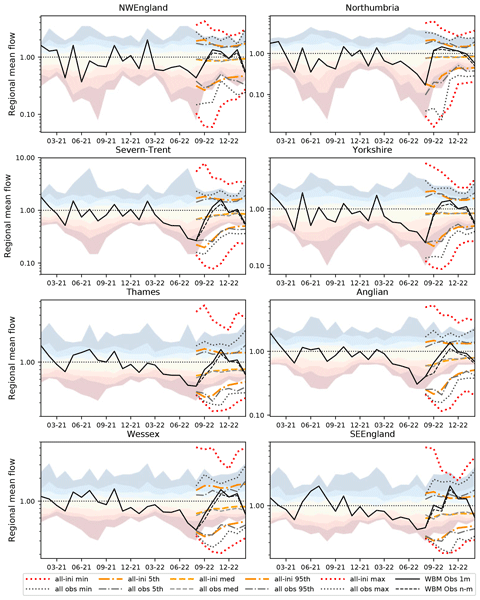
Hydrological hazards affect people and ecosystems, but extremes are not fully understood due to limited observations. A large climate ensemble and simple hydrological model are used to assess unprecedented but plausible floods and droughts. The chain gives extreme flows outside the observed range: summer 2022 ~ 28 % lower and autumn 2023 ~ 42 % higher. Spatial dependence and temporal persistence are analysed. Planning for such events could help water supply resilience and flood risk management.
Zhen Liu, Massimo A. Bollasina, and Laura J. Wilcox
Atmos. Chem. Phys., 24, 7227–7252, https://doi.org/10.5194/acp-24-7227-2024, https://doi.org/10.5194/acp-24-7227-2024, 2024
Short summary
Short summary
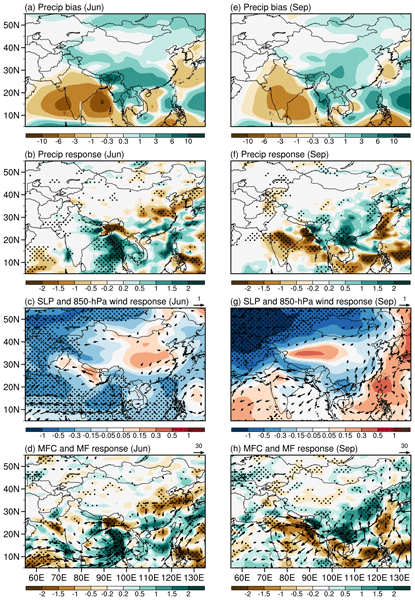
The aerosol impact on monsoon precipitation and circulation is strongly influenced by a model-simulated spatio-temporal variability in the climatological monsoon precipitation across Asia, which critically modulates the efficacy of aerosol–cloud–precipitation interactions, the predominant driver of the total aerosol response. There is a strong interplay between South Asia and East Asia monsoon precipitation biases and their relative predominance in driving the overall monsoon response.
Roberto Bilbao, Pablo Ortega, Didier Swingedouw, Leon Hermanson, Panos Athanasiadis, Rosie Eade, Marion Devilliers, Francisco Doblas-Reyes, Nick Dunstone, An-Chi Ho, William Merryfield, Juliette Mignot, Dario Nicolì, Margarida Samsó, Reinel Sospedra-Alfonso, Xian Wu, and Stephen Yeager
Earth Syst. Dynam., 15, 501–525, https://doi.org/10.5194/esd-15-501-2024, https://doi.org/10.5194/esd-15-501-2024, 2024
Short summary
Short summary
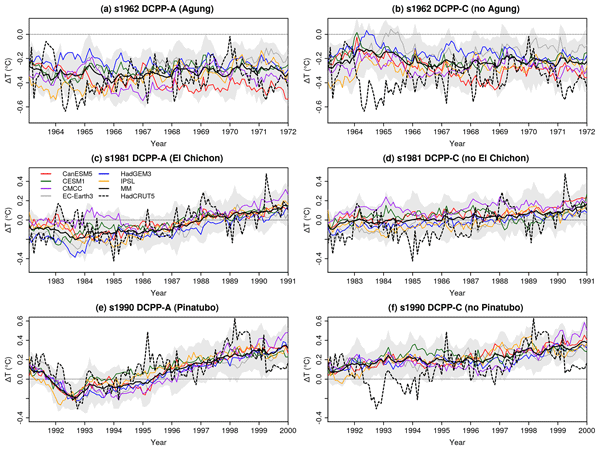
In recent decades three major volcanic eruptions have occurred: Mount Agung in 1963, El Chichón in 1982 and Mount Pinatubo in 1991. In this article we explore the climatic impacts of these volcanic eruptions with a purposefully designed set of simulations from six CMIP6 decadal prediction systems. We analyse the radiative and dynamical responses and show that including the volcanic forcing in these predictions is important to reproduce the observed surface temperature variations.
Stephanie Fiedler, Vaishali Naik, Fiona M. O'Connor, Christopher J. Smith, Paul Griffiths, Ryan J. Kramer, Toshihiko Takemura, Robert J. Allen, Ulas Im, Matthew Kasoar, Angshuman Modak, Steven Turnock, Apostolos Voulgarakis, Duncan Watson-Parris, Daniel M. Westervelt, Laura J. Wilcox, Alcide Zhao, William J. Collins, Michael Schulz, Gunnar Myhre, and Piers M. Forster
Geosci. Model Dev., 17, 2387–2417, https://doi.org/10.5194/gmd-17-2387-2024, https://doi.org/10.5194/gmd-17-2387-2024, 2024
Short summary
Short summary
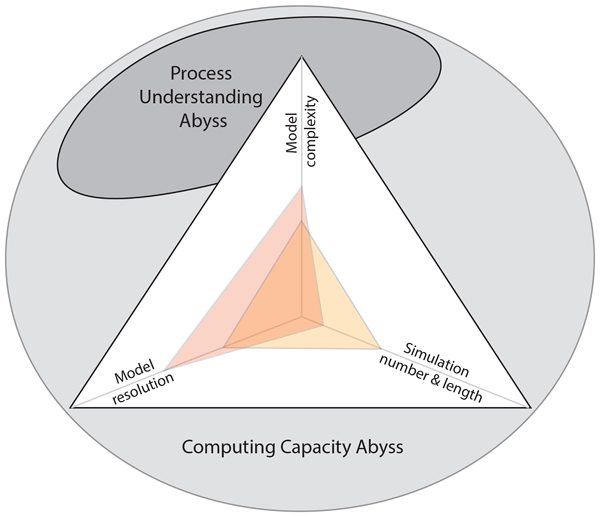
Climate scientists want to better understand modern climate change. Thus, climate model experiments are performed and compared. The results of climate model experiments differ, as assessed in the latest Intergovernmental Panel on Climate Change (IPCC) assessment report. This article gives insights into the challenges and outlines opportunities for further improving the understanding of climate change. It is based on views of a group of experts in atmospheric composition–climate interactions.
Laura J. Wilcox, Robert J. Allen, Bjørn H. Samset, Massimo A. Bollasina, Paul T. Griffiths, James Keeble, Marianne T. Lund, Risto Makkonen, Joonas Merikanto, Declan O'Donnell, David J. Paynter, Geeta G. Persad, Steven T. Rumbold, Toshihiko Takemura, Kostas Tsigaridis, Sabine Undorf, and Daniel M. Westervelt
Geosci. Model Dev., 16, 4451–4479, https://doi.org/10.5194/gmd-16-4451-2023, https://doi.org/10.5194/gmd-16-4451-2023, 2023
Short summary
Short summary
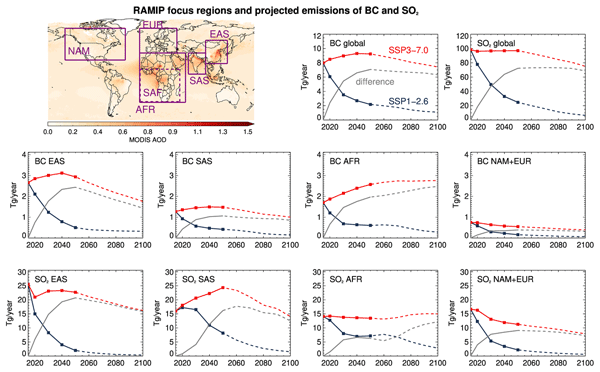
Changes in anthropogenic aerosol emissions have strongly contributed to global and regional climate change. However, the size of these regional impacts and the way they arise are still uncertain. With large changes in aerosol emissions a possibility over the next few decades, it is important to better quantify the potential role of aerosol in future regional climate change. The Regional Aerosol Model Intercomparison Project will deliver experiments designed to facilitate this.
Oscar Dimdore-Miles, Lesley Gray, Scott Osprey, Jon Robson, Rowan Sutton, and Bablu Sinha
Atmos. Chem. Phys., 22, 4867–4893, https://doi.org/10.5194/acp-22-4867-2022, https://doi.org/10.5194/acp-22-4867-2022, 2022
Short summary
Short summary
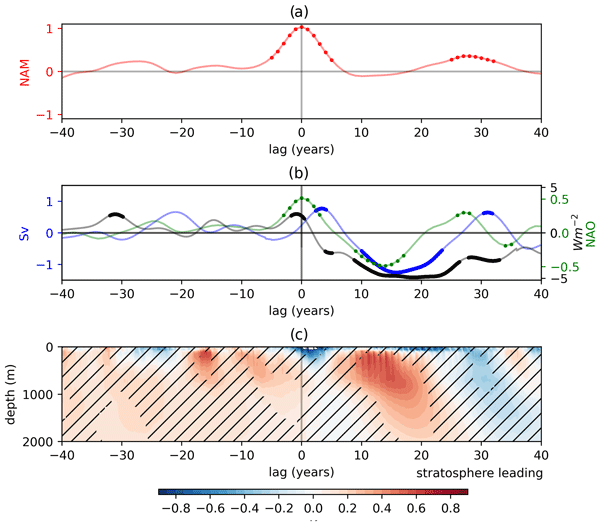
This study examines interactions between variations in the strength of polar stratospheric winds and circulation in the North Atlantic in a climate model simulation. It finds that the Atlantic Meridional Overturning Circulation (AMOC) responds with oscillations to sets of consecutive Northern Hemisphere winters, which show all strong or all weak polar vortex conditions. The study also shows that a set of strong vortex winters in the 1990s contributed to the recent slowdown in the observed AMOC.
Alcide Zhao, Claire L. Ryder, and Laura J. Wilcox
Atmos. Chem. Phys., 22, 2095–2119, https://doi.org/10.5194/acp-22-2095-2022, https://doi.org/10.5194/acp-22-2095-2022, 2022
Short summary
Short summary
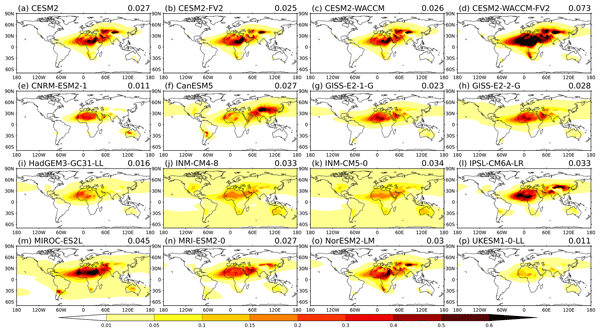
The CMIP6 models' simulated dust processes are getting more uncertain as models become more sophisticated. Of particular challenge are the links between dust cycles and optical properties, and we recommend more detailed output relating to dust cycles in future intercomparison projects to constrain such links. Also, models struggle to capture certain key regional dust processes such as dust accumulation along the slope of the Himalayas and dust seasonal cycles in North China and North America.
Jie Zhang, Kalli Furtado, Steven T. Turnock, Jane P. Mulcahy, Laura J. Wilcox, Ben B. Booth, David Sexton, Tongwen Wu, Fang Zhang, and Qianxia Liu
Atmos. Chem. Phys., 21, 18609–18627, https://doi.org/10.5194/acp-21-18609-2021, https://doi.org/10.5194/acp-21-18609-2021, 2021
Short summary
Short summary
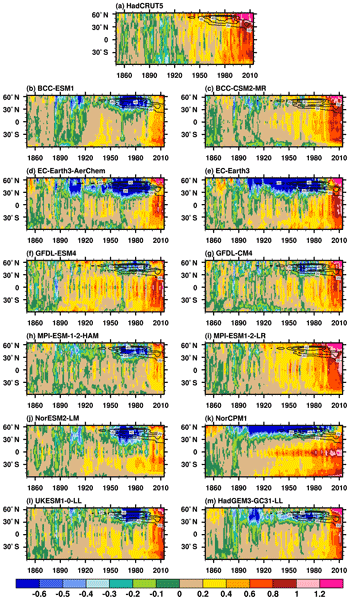
The CMIP6 ESMs systematically underestimate TAS anomalies in the NH midlatitudes, especially from 1960 to 1990. The anomalous cooling is concurrent in time and space with anthropogenic SO2 emissions. The spurious drop in TAS is attributed to the overestimated aerosol concentrations. The aerosol forcing sensitivity cannot well explain the inter-model spread of PHC biases. And the cloud-amount term accounts for most of the inter-model spread in aerosol forcing sensitivity.
Liang Guo, Laura J. Wilcox, Massimo Bollasina, Steven T. Turnock, Marianne T. Lund, and Lixia Zhang
Atmos. Chem. Phys., 21, 15299–15308, https://doi.org/10.5194/acp-21-15299-2021, https://doi.org/10.5194/acp-21-15299-2021, 2021
Short summary
Short summary
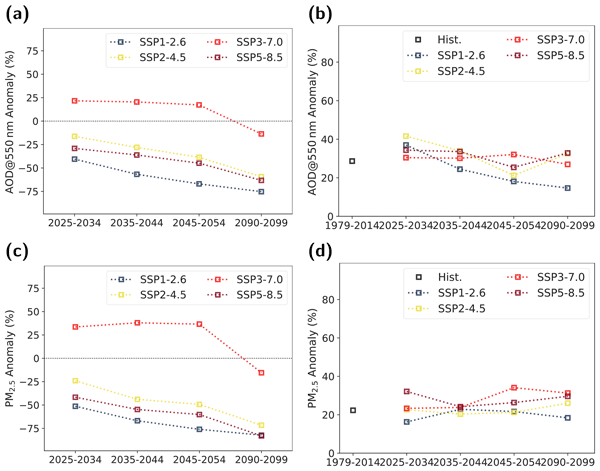
Severe haze remains serious over Beijing despite emissions decreasing since 2008. Future haze changes in four scenarios are studied. The pattern conducive to haze weather increases with the atmospheric warming caused by the accumulation of greenhouse gases. However, the actual haze intensity, measured by either PM2.5 or optical depth, decreases with aerosol emissions. We show that only using the weather pattern index to predict the future change of Beijing haze is insufficient.
Cited articles
Andrews, M. B., Ridley, J. K., Wood, R. A., Andrews, T., Blockley, E. W., Booth, B., Burke, E., Dittus, A. J., Florek, P., Gray, L. J., Haddad, S., Hardiman, S. C., Hermanson, L., Hodson, D., Hogan, E., Jones, G. S., Knight, J. R., Kuhlbrodt, T., Misios, S., Mizielinski, M. S., Ringer, M. A., Robson, J., and Sutton, R. T.: Historical Simulations With HadGEM3-GC3.1 for CMIP6, J. Adv. Model. Earth Sy., 12, https://doi.org/10.1029/2019MS001995, 2020. a, b, c
Ba, J., Keenlyside, N. S., Latif, M., Park, W., Ding, H., Lohmann, K., Mignot, J., Menary, M., Otterå, O. H., Wouters, B., y Melia, D. S., Oka, A., Bellucci, A., and Volodin, E.: A multi-model comparison of Atlantic multidecadal variability, Clim. Dynam., 43, 2333–2348, https://doi.org/10.1007/s00382-014-2056-1, 2014. a, b
Bellomo, K., Murphy, L. N., Cane, M. A., Clement, A. C., and Polvani, L. M.: Historical forcings as main drivers of the Atlantic multidecadal variability in the CESM large ensemble, Clim. Dynam., 50, 3687–3698, https://doi.org/10.1007/s00382-017-3834-3, 2018. a, b
Bellouin, N., Mann, G. W., Woodhouse, M. T., Johnson, C., Carslaw, K. S., and Dalvi, M.: Impact of the modal aerosol scheme GLOMAP-mode on aerosol forcing in the Hadley Centre Global Environmental Model, Atmos. Chem. Phys., 13, 3027–3044, https://doi.org/10.5194/acp-13-3027-2013, 2013. a
Bellucci, A., Mariotti, A., and Gualdi, S.: The role of forcings in the twentieth-century North Atlantic multidecadal variability: The 1940–75 North Atlantic cooling case study, J. Climate, 30, 7317–7337, https://doi.org/10.1175/JCLI-D-16-0301.1, 2017. a
Bjerknes, J.: Atlantic Air-Sea Interaction, 10, 1–82, https://doi.org/10.1016/S0065-2687(08)60005-9, 1964. a
Buckley, M. W. and Marshall, J.: Observations, inferences, and mechanisms of the Atlantic Meridional Overturning Circulation: A review, Rev. Geophys., 54, 5–63, https://doi.org/10.1002/2015RG000493, 2016. a
Chang, C.-Y., Chiang, J. C. H., Wehner, M. F., Friedman, A. R., and Ruedy, R.: Sulfate Aerosol Control of Tropical Atlantic Climate over the Twentieth Century, J. Climate, 24, 2540–2555, https://doi.org/10.1175/2010JCLI4065.1, 2011. a, b
Chassignet, E. P., Yeager, S. G., Fox-Kemper, B., Bozec, A., Castruccio, F., Danabasoglu, G., Horvat, C., Kim, W. M., Koldunov, N., Li, Y., Lin, P., Liu, H., Sein, D. V., Sidorenko, D., Wang, Q., and Xu, X.: Impact of horizontal resolution on global ocean–sea ice model simulations based on the experimental protocols of the Ocean Model Intercomparison Project phase 2 (OMIP-2), Geosci. Model Dev., 13, 4595–4637, https://doi.org/10.5194/gmd-13-4595-2020, 2020. a
Cheng, W., Weijer, W., Kim, W. M., Danabasoglu, G., Yeager, S. G., Gent, P. R., Zhang, D., Chiang, J. C. H., and Zhang, J.: Can the Salt-Advection Feedback Be Detected in Internal Variability of the Atlantic Meridional Overturning Circulation?, J. Climate, 31, 6649–6667, https://doi.org/10.1175/JCLI-D-17-0825.1, 2018. a
Cheung, A. H., Mann, M. E., Steinman, B. A., Frankcombe, L. M., England, M. H., and Miller, S. K.: Comparison of Low-Frequency Internal Climate Variability in CMIP5 Models and Observations, J. Climate, 30, 4763–4776, https://doi.org/10.1175/JCLI-D-16-0712.1, 2017. a
Delworth, T. L. and Mann, M. E.: Observed and simulated multidecadal variability in the Northern Hemisphere, Clim. Dynam., 16, 661–676, https://doi.org/10.1007/s003820000075, 2000. a
Desbruyères, D. G., Mercier, H., Maze, G., and Daniault, N.: Surface predictor of overturning circulation and heat content change in the subpolar North Atlantic, Ocean Sci., 15, 809–817, https://doi.org/10.5194/os-15-809-2019, 2019. a, b
Eyring, V., Bony, S., Meehl, G. A., Senior, C. A., Stevens, B., Stouffer, R. J., and Taylor, K. E.: Overview of the Coupled Model Intercomparison Project Phase 6 (CMIP6) experimental design and organization, Geosci. Model Dev., 9, 1937–1958, https://doi.org/10.5194/gmd-9-1937-2016, 2016. a
Gastineau, G. and Frankignoul, C.: Influence of the North Atlantic SST Variability on the Atmospheric Circulation during the Twentieth Century, J. Climate, 28, 1396–1416, https://doi.org/10.1175/JCLI-D-14-00424.1, 2015. a
Gillett, N. P., Shiogama, H., Funke, B., Hegerl, G., Knutti, R., Matthes, K., Santer, B. D., Stone, D., and Tebaldi, C.: The Detection and Attribution Model Intercomparison Project (DAMIP v1.0) contribution to CMIP6, Geosci. Model Dev., 9, 3685–3697, https://doi.org/10.5194/gmd-9-3685-2016, 2016. a
Groeskamp, S., Griffies, S. M., Iudicone, D., Marsh, R., Nurser, A. G., and Zika, J. D.: The Water Mass Transformation Framework for Ocean Physics and Biogeochemistry, Annu. Rev. Mar. Sci., 11, 271–305, https://doi.org/10.1146/annurev-marine-010318-095421, 2019. a, b
Guo, L., Turner, A. G., and Highwood, E. J.: Local and Remote Impacts of Aerosol Species on Indian Summer Monsoon Rainfall in a GCM, J. Climate, 29, 6937–6955, https://doi.org/10.1175/JCLI-D-15-0728.1, 2016. a
Gurvan, M., Bourdallé-Badie, R., Bouttier, P.-A., Bricaud, C., Bru ciaferri, D., Calvert, D., Chanut, J., Clementi, E., Coward, A., Delrosso, D., Ethé, C., Flavoni, S., Graham, Tim., Harle, J., Iovino, D., Lea, D., Lévy, C., Lovato, T., Martin, N., Masson, S., Mocavero, S., Paul, J., Rousset, C., Storkey, D., Storto, A., and Vancoppenolle, M.: NEMO ocean engine, Notes du Pôle de modélisation de lÍnstitut Pierre-Simon Laplace (IPSL), Zenodo, https://doi.org/10.5281/zenodo.1472492, 2017. a
Han, Z., Luo, F., Li, S., Gao, Y., Furevik, T., and Svendsen, L.: Simulation by CMIP5 models of the atlantic multidecadal oscillation and its climate impacts, Adv. Atmos. Sci., 33, 1329–1342, https://doi.org/10.1007/s00376-016-5270-4, 2016. a
Hassan, T., Allen, R. J., Liu, W., and Randles, C. A.: Anthropogenic aerosol forcing of the Atlantic meridional overturning circulation and the associated mechanisms in CMIP6 models, Atmos. Chem. Phys., 21, 5821–5846, https://doi.org/10.5194/acp-21-5821-2021, 2021. a, b, c
Hirschi, J. J., Barnier, B., Böning, C., Biastoch, A., Blaker, A. T., Coward, A., Danilov, S., Drijfhout, S., Getzlaff, K., Griffies, S. M., Hasumi, H., Hewitt, H., Iovino, D., Kawasaki, T., Kiss, A. E., Koldunov, N., Marzocchi, A., Mecking, J. V., Moat, B., Molines, J. M., Myers, P. G., Penduff, T., Roberts, M., Treguier, A. M., Sein, D. V., Sidorenko, D., Small, J., Spence, P., Thompson, L. A., Weijer, W., and Xu, X.: The Atlantic Meridional Overturning Circulation in High-Resolution Models, J. Geophys. Res.-Oceans, 125, e2019JC015522, https://doi.org/10.1029/2019JC015522, 2020. a, b
Jungclaus, J. H., Haak, H., Latif, M., and Mikolajewicz, U.: Arctic-North Atlantic interactions and multidecadal variability of the meridional overturning circulation, J. Climate, 18, 4013–4031, https://doi.org/10.1175/JCLI3462.1, 2005. a, b, c
Kim, W. M., Yeager, S. G., and Danabasoglu, G.: Key Role of Internal Ocean Dynamics in Atlantic Multidecadal Variability During the Last Half Century, Geophys. Res. Lett., 45, 13449–13457, https://doi.org/10.1029/2018GL080474, 2018. a
Knight, J. R.: A signature of persistent natural thermohaline circulation cycles in observed climate, Geophys. Res. Lett., 32, L20708, https://doi.org/10.1029/2005GL024233, 2005. a
Kuhlbrodt, T., Jones, C. G., Sellar, A., Storkey, D., Blockley, E., Stringer, M., Hill, R., Graham, T., Ridley, J., Blaker, A., Calvert, D., Copsey, D., Ellis, R., Hewitt, H., Hyder, P., Ineson, S., Mulcahy, J., Siahaan, A., and Walton, J.: The Low-Resolution Version of HadGEM3 GC3.1: Development and Evaluation for Global Climate, J. Adv. Model. Earth Sy., 10, 2865–2888, https://doi.org/10.1029/2018MS001370, 2018. a, b, c, d, e
Lai, W. K. M., Robson, J. I., Dunstone, N., Wilcox, L. J., and Sutton, R. T.: Data from an idealised SO2 single forcing experiment over the North Atlantic with the HadGEM3-GC3.1 model at MM and LL resolutions, Zenodo [code, data set], https://doi.org/10.5281/zenodo.21478005, 2026. a
Liu, F., Li, X., Luo, Y., Cai, W., Lu, J., Zheng, X.-T., Kang, S. M., Wang, H., and Zhou, L.: Increased Asian aerosols drive a slowdown of Atlantic Meridional Overturning Circulation, Nat. Commun., 15, 18, https://doi.org/10.1038/s41467-023-44597-x, 2024. a
Martin, E. R., Thorncroft, C., and Booth, B. B.: The multidecadal atlantic SST-sahel rainfall teleconnection in CMIP5 simulations, J. Climate, 27, 784–806, https://doi.org/10.1175/JCLI-D-13-00242.1, 2014. a
Mecking, J. V., Drijfhout, S. S., Jackson, L. C., and Graham, T.: Stable AMOC off state in an eddy-permitting coupled climate model, Clim. Dynam., 47, 2455–2470, https://doi.org/10.1007/s00382-016-2975-0, 2016. a
Menary, M. B., Roberts, C. D., Palmer, M. D., Halloran, P. R., Jackson, L., Wood, R. A., Müller, W. A., Matei, D., and Lee, S.-K.: Mechanisms of aerosol-forced AMOC variability in a state of the art climate model, J. Geophys. Res.-Oceans, 118, 2087–2096, https://doi.org/10.1002/jgrc.20178, 2013. a, b, c, d, e, f
Menary, M. B., Hodson, D. L. R., Robson, J. I., Sutton, R. T., Wood, R. A., and Hunt, J. A.: Exploring the impact of CMIP5 model biases on the simulation of North Atlantic decadal variability, Geophys. Res. Lett., 42, 5926–5934, https://doi.org/10.1002/2015GL064360, 2015. a
Menary, M. B., Kuhlbrodt, T., Ridley, J., Andrews, M. B., Dimdore‐Miles, O. B., Deshayes, J., Eade, R., Gray, L., Ineson, S., Mignot, J., Roberts, C. D., Robson, J., Wood, R. A., and Xavier, P.: Preindustrial Control Simulations With HadGEM3‐GC3.1 for CMIP6, J. Adv. Model. Earth Sy., 10, 2018MS001495, https://doi.org/10.1029/2018MS001495, 2018. a
Menary, M. B., Robson, J., Allan, R. P., Booth, B. B. B., Cassou, C., Gastineau, G., Gregory, J., Hodson, D., Jones, C., Mignot, J., Ringer, M., Sutton, R., Wilcox, L., and Zhang, R.: Aerosol‐Forced AMOC Changes in CMIP6 Historical Simulations, Geophys. Res. Lett., 47, e2020GL088166, https://doi.org/10.1029/2020GL088166, 2020. a, b, c, d, e, f
Monerie, P., Robson, J., Dong, B., Hodson, D. L. R., and Klingaman, N. P.: Effect of the Atlantic Multidecadal Variability on the Global Monsoon, Geophys. Res. Lett., 46, 1765–1775, https://doi.org/10.1029/2018GL080903, 2019. a
Mulcahy, J. P., Johnson, C., Jones, C. G., Povey, A. C., Scott, C. E., Sellar, A., Turnock, S. T., Woodhouse, M. T., Abraham, N. L., Andrews, M. B., Bellouin, N., Browse, J., Carslaw, K. S., Dalvi, M., Folberth, G. A., Glover, M., Grosvenor, D. P., Hardacre, C., Hill, R., Johnson, B., Jones, A., Kipling, Z., Mann, G., Mollard, J., O'Connor, F. M., Palmiéri, J., Reddington, C., Rumbold, S. T., Richardson, M., Schutgens, N. A. J., Stier, P., Stringer, M., Tang, Y., Walton, J., Woodward, S., and Yool, A.: Description and evaluation of aerosol in UKESM1 and HadGEM3-GC3.1 CMIP6 historical simulations, Geosci. Model Dev., 13, 6383–6423, https://doi.org/10.5194/gmd-13-6383-2020, 2020. a, b
Myhre, G., Forster, P. M., Samset, B. H., Hodnebrog, Ø., Sillmann, J., Aalbergsjø, S. G., Andrews, T., Boucher, O., Faluvegi, G., Fläschner, D., Iversen, T., Kasoar, M., Kharin, V., Kirkevåg, A., Lamarque, J.-F., Olivié, D., Richardson, T. B., Shindell, D., Shine, K. P., Stjern, C. W., Takemura, T., Voulgarakis, A., and Zwiers, F.: PDRMIP: A Precipitation Driver and Response Model Intercomparison Project—Protocol and Preliminary Results, B. Am. Meteorol. Soc., 98, 1185–1198, https://doi.org/10.1175/BAMS-D-16-0019.1, 2017. a
Ortega, P., Robson, J. I., Menary, M., Sutton, R. T., Blaker, A., Germe, A., Hirschi, J. J.-M., Sinha, B., Hermanson, L., and Yeager, S.: Labrador Sea subsurface density as a precursor of multidecadal variability in the North Atlantic: a multi-model study, Earth Syst. Dynam., 12, 419–438, https://doi.org/10.5194/esd-12-419-2021, 2021. a
Peings, Y. and Magnusdottir, G.: Forcing of the wintertime atmospheric circulation by the multidecadal fluctuations of the North Atlantic ocean, Environ. Res. Lett., 9, 034018, https://doi.org/10.1088/1748-9326/9/3/034018, 2014. a
Peings, Y., Simpkins, G., and Magnusdottir, G.: Multidecadal fluctuations of the North Atlantic Ocean and feedback on the winter climate in CMIP5 control simulations, J. Geophys. Res.-Atmos., 121, 2571–2592, https://doi.org/10.1002/2015JD024107, 2016. a
Petit, T., Robson, J., Ferreira, D., and Jackson, L. C.: Understanding the Sensitivity of the North Atlantic Subpolar Overturning in Different Resolution Versions of HadGEM3-GC3.1, J. Geophys. Res.-Oceans, 128, e2023JC019672, https://doi.org/10.1029/2023JC019672, 2023. a, b
Rasch, P. J., Barth, M. C., Kiehl, J. T., Schwartz, S. E., and Benkovitz, C. M.: A description of the global sulfur cycle and its controlling processes in the National Center for Atmospheric Research Community Climate Model, Version 3, J. Geophys. Res.-Atmos., 105, 1367–1385, https://doi.org/10.1029/1999JD900777, 2000. a
Ridley, J. K., Blockley, E. W., Keen, A. B., Rae, J. G. L., West, A. E., and Schroeder, D.: The sea ice model component of HadGEM3-GC3.1, Geosci. Model Dev., 11, 713–723, https://doi.org/10.5194/gmd-11-713-2018, 2018. a
Roberts, M. J., Hewitt, H. T., Hyder, P., Ferreira, D., Josey, S. A., Mizielinski, M., and Shelly, A.: Impact of ocean resolution on coupled air-sea fluxes and large-scale climate, Geophys. Res. Lett., 43, 10430–10438, https://doi.org/10.1002/2016GL070559, 2016. a
Roberts, M. J., Baker, A., Blockley, E. W., Calvert, D., Coward, A., Hewitt, H. T., Jackson, L. C., Kuhlbrodt, T., Mathiot, P., Roberts, C. D., Schiemann, R., Seddon, J., Vannière, B., and Vidale, P. L.: Description of the resolution hierarchy of the global coupled HadGEM3-GC3.1 model as used in CMIP6 HighResMIP experiments, Geosci. Model Dev., 12, 4999–5028, https://doi.org/10.5194/gmd-12-4999-2019, 2019. a
Roberts, M. J., Jackson, L. C., Roberts, C. D., Meccia, V., Docquier, D., Koenigk, T., Ortega, P., Moreno-Chamarro, E., Bellucci, A., Coward, A., Drijfhout, S., Exarchou, E., Gutjahr, O., Hewitt, H., Iovino, D., Lohmann, K., Putrasahan, D., Schiemann, R., Seddon, J., Terray, L., Xu, X., Zhang, Q., Chang, P., Yeager, S. G., Castruccio, F. S., Zhang, S., and Wu, L.: Sensitivity of the Atlantic Meridional Overturning Circulation to Model Resolution in CMIP6 HighResMIP Simulations and Implications for Future Changes, J. Adv. Model. Earth Sy., 12, e2019MS002014, https://doi.org/10.1029/2019MS002014, 2020. a
Robson, J., Ortega, P., and Sutton, R.: A reversal of climatic trends in the North Atlantic since 2005, Nat. Geosci., 9, 513–517, https://doi.org/10.1038/ngeo2727, 2016. a, b
Robson, J., Menary, M. B., Sutton, R. T., Mecking, J., Gregory, J. M., Jones, C., Sinha, B., Stevens, D. P., and Wilcox, L. J.: The role of anthropogenic aerosol forcing in the 1850–1985 strengthening of the AMOC in CMIP6 historical simulations, J. Climate, 1–48, https://doi.org/10.1175/JCLI-D-22-0124.1, 2022. a, b, c, d, e, f, g, h
Ruprich-Robert, Y., Msadek, R., Castruccio, F., Yeager, S., Delworth, T., and Danabasoglu, G.: Assessing the climate impacts of the observed atlantic multidecadal variability using the GFDL CM2.1 and NCAR CESM1 global coupled models, J. Climate, 30, 2785–2810, https://doi.org/10.1175/JCLI-D-16-0127.1, 2017. a
Ruprich-Robert, Y., Delworth, T., Msadek, R., Castruccio, F., Yeager, S., and Danabasoglu, G.: Impacts of the Atlantic multidecadal variability on North American summer climate and heat waves, J. Climate, 31, 3679–3700, https://doi.org/10.1175/JCLI-D-17-0270.1, 2018. a
Speer, K. and Tziperman, E.: Rates of Water Mass Formation in the North Atlantic Ocean, J. Phys. Oceanogr., 22, 93–104, 1992. a
Storkey, D., Blaker, A. T., Mathiot, P., Megann, A., Aksenov, Y., Blockley, E. W., Calvert, D., Graham, T., Hewitt, H. T., Hyder, P., Kuhlbrodt, T., Rae, J. G. L., and Sinha, B.: UK Global Ocean GO6 and GO7: a traceable hierarchy of model resolutions, Geosci. Model Dev., 11, 3187–3213, https://doi.org/10.5194/gmd-11-3187-2018, 2018. a
Sutton, R. T. and Dong, B.: Atlantic Ocean influence on a shift in European climate in the 1990s, Nat. Geosci., 5, 788–792, https://doi.org/10.1038/ngeo1595, 2012. a
Sutton, R. T. and Hodson, D. L.: Ocean science: Atlantic Ocean forcing of North American and European summer climate, Science, 309, 115–118, https://doi.org/10.1126/science.1109496, 2005. a
Sutton, R. T., McCarthy, G. D., Robson, J., Sinha, B., Archibald, A. T., and Gray, L. J.: Atlantic multidecadal variability and the U.K. acsis program, B. Am. Meteorol. Soc., 99, 415–425, https://doi.org/10.1175/BAMS-D-16-0266.1, 2018. a, b
Thornhill, G. D., Collins, W. J., Kramer, R. J., Olivié, D., Skeie, R. B., O'Connor, F. M., Abraham, N. L., Checa-Garcia, R., Bauer, S. E., Deushi, M., Emmons, L. K., Forster, P. M., Horowitz, L. W., Johnson, B., Keeble, J., Lamarque, J.-F., Michou, M., Mills, M. J., Mulcahy, J. P., Myhre, G., Nabat, P., Naik, V., Oshima, N., Schulz, M., Smith, C. J., Takemura, T., Tilmes, S., Wu, T., Zeng, G., and Zhang, J.: Effective radiative forcing from emissions of reactive gases and aerosols – a multi-model comparison, Atmos. Chem. Phys., 21, 853–874, https://doi.org/10.5194/acp-21-853-2021, 2021. a, b
Twomey, S.: The Influence of Pollution on the Shortwave Albedo of Clouds, J. Atmos. Sci., 34, 1149–1152, https://doi.org/10.1175/1520-0469(1977)034<1149:TIOPOT>2.0.CO;2, 1977. a
Undorf, S., Bollasina, M. A., Booth, B. B. B., and Hegerl, G. C.: Contrasting the Effects of the 1850–1975 Increase in Sulphate Aerosols from North America and Europe on the Atlantic in the CESM, Geophys. Res. Lett., 45, 11930–11940, https://doi.org/10.1029/2018GL079970, 2018. a
Valcke, S., Craig, T., and Coquart, L.: OASIS3-MCT User Guide, OASIS3-MCT_3.0, Technical Report, TR/CMGC/15/38, CER FACS/CNRS/SUC URA No1875, Toulouse, France, http://www.cerfacs.fr/oa4web/oasis3-mct_3.0/oasis3mct_UserGuide.pdf (last access: August 2026), 2015. a
Vellinga, M. and Wu, P.: Low-latitude freshwater influence on centennial variability of the Atlantic thermohaline circulation, J. Climate, 17, 4498–4511, https://doi.org/10.1175/3219.1, 2004. a
Walters, D., Baran, A. J., Boutle, I., Brooks, M., Earnshaw, P., Edwards, J., Furtado, K., Hill, P., Lock, A., Manners, J., Morcrette, C., Mulcahy, J., Sanchez, C., Smith, C., Stratton, R., Tennant, W., Tomassini, L., Van Weverberg, K., Vosper, S., Willett, M., Browse, J., Bushell, A., Carslaw, K., Dalvi, M., Essery, R., Gedney, N., Hardiman, S., Johnson, B., Johnson, C., Jones, A., Jones, C., Mann, G., Milton, S., Rumbold, H., Sellar, A., Ujiie, M., Whitall, M., Williams, K., and Zerroukat, M.: The Met Office Unified Model Global Atmosphere 7.0/7.1 and JULES Global Land 7.0 configurations, Geosci. Model Dev., 12, 1909–1963, https://doi.org/10.5194/gmd-12-1909-2019, 2019. a
Wang, C., Dong, S., Evan, A. T., Foltz, G. R., and Lee, S.-K.: Multidecadal Covariability of North Atlantic Sea Surface Temperature, African Dust, Sahel Rainfall, and Atlantic Hurricanes, J. Climate, 25, 5404–5415, https://doi.org/10.1175/JCLI-D-11-00413.1, 2012. a
Watanabe, M. and Tatebe, H.: Reconciling roles of sulphate aerosol forcing and internal variability in Atlantic multidecadal climate changes, Clim. Dynam., 53, 4651–4665, https://doi.org/10.1007/s00382-019-04811-3, 2019. a, b
Wilcox, L. J., Dunstone, N., Lewinschal, A., Bollasina, M., Ekman, A. M. L., and Highwood, E. J.: Mechanisms for a remote response to Asian anthropogenic aerosol in boreal winter, Atmos. Chem. Phys., 19, 9081–9095, https://doi.org/10.5194/acp-19-9081-2019, 2019. a
Wilcox, L. J., Allen, R. J., Samset, B. H., Bollasina, M. A., Griffiths, P. T., Keeble, J., Lund, M. T., Makkonen, R., Merikanto, J., O'Donnell, D., Paynter, D. J., Persad, G. G., Rumbold, S. T., Takemura, T., Tsigaridis, K., Undorf, S., and Westervelt, D. M.: The Regional Aerosol Model Intercomparison Project (RAMIP), Geosci. Model Dev., 16, 4451–4479, https://doi.org/10.5194/gmd-16-4451-2023, 2023. a
Williams, K. D., Copsey, D., Blockley, E. W., Bodas‐Salcedo, A., Calvert, D., Comer, R., Davis, P., Graham, T., Hewitt, H. T., Hill, R., Hyder, P., Ineson, S., Johns, T. C., Keen, A. B., Lee, R. W., Megann, A., Milton, S. F., Rae, J. G. L., Roberts, M. J., Scaife, A. A., Schiemann, R., Storkey, D., Thorpe, L., Watterson, I. G., Walters, D. N., West, A., Wood, R. A., Woollings, T., and Xavier, P. K.: The Met Office Global Coupled Model 3.0 and 3.1 (GC3.0 and GC3.1) Configurations, J. Adv. Model. Earth Sy., 10, 357–380, https://doi.org/10.1002/2017MS001115, 2018. a, b
Wills, R. C., Armour, K. C., Battisti, D. S., and Hartmann, D. L.: Ocean-atmosphere dynamical coupling fundamental to the atlantic multidecadal oscillation, J. Climate, 32, 251–272, https://doi.org/10.1175/JCLI-D-18-0269.1, 2019. a, b, c, d
Yeager, S., Castruccio, F., Chang, P., Danabasoglu, G., Maroon, E., Small, J., Wang, H., Wu, L., and Zhang, S.: An outsized role for the Labrador Sea in the multidecadal variability of the Atlantic overturning circulation, Sci. Adv., 7, eabh3592, https://doi.org/10.1126/sciadv.abh3592, 2021. a
Zhang, R. and Delworth, T. L.: Impact of Atlantic multidecadal oscillations on India/Sahel rainfall and Atlantic hurricanes, Geophys. Res. Lett., 33, https://doi.org/10.1029/2006GL026267, 2006. a
Zhang, R., Delworth, T. L., Sutton, R., Hodson, D. L. R., Dixon, K. W., Held, I. M., Kushnir, Y., Marshall, J., Ming, Y., Msadek, R., Robson, J., Rosati, A. J., Ting, M., and Vecchi, G. A.: Have Aerosols Caused the Observed Atlantic Multidecadal Variability?, J. Atmos. Sci., 70, 1135–1144, https://doi.org/10.1175/JAS-D-12-0331.1, 2013. a
Short summary
In a climate model at two different resolutions, sulphate aerosols are shown to induce a fast cooling followed by a delayed warming in the subpolar North Atlantic. The delayed warming is stronger at higher resolution due to a stronger Atlantic Meridional Overturning Circulation (AMOC) response. This difference is due to the lower resolution model having more sea ice which insulates the ocean, showing that the North Atlantic response to external forcing is sensitive to regional differences.
In a climate model at two different resolutions, sulphate aerosols are shown to induce a fast...


Altmetrics
Final-revised paper
Preprint