
Articles | Volume 25, issue 15
https://doi.org/10.5194/acp-25-8443-2025
© Author(s) 2025. This work is distributed under
the Creative Commons Attribution 4.0 License.
the Creative Commons Attribution 4.0 License.
https://doi.org/10.5194/acp-25-8443-2025
© Author(s) 2025. This work is distributed under
the Creative Commons Attribution 4.0 License.
the Creative Commons Attribution 4.0 License.
Research article
| 
04 Aug 2025
Research article |
| 04 Aug 2025
| 04 Aug 2025
First reported detection of a winter continental gamma-ray glow in Europe
Jakub Šlegl
Nuclear Physics Institute, Czech Academy of Sciences, Husinec-Rez, Czech Republic
Faculty of Nuclear Sciences and Physical Engineering, Czech Technical University in Prague, Prague, Czech Republic
Zbyněk Sokol
Institute of Atmospheric Physics, Czech Academy of Sciences, Prague, Czech Republic
Petr Pešice
Institute of Atmospheric Physics, Czech Academy of Sciences, Prague, Czech Republic
Ronald Langer
Institute of Experimental Physics, Slovak Academy of Sciences, Košice, Slovakia
Igor Strhárský
Institute of Experimental Physics, Slovak Academy of Sciences, Košice, Slovakia
Jana Popová
Institute of Atmospheric Physics, Czech Academy of Sciences, Prague, Czech Republic
Martin Kákona
Nuclear Physics Institute, Czech Academy of Sciences, Husinec-Rez, Czech Republic
Institute of Experimental Physics, Slovak Academy of Sciences, Košice, Slovakia
Iva Ambrožová
Nuclear Physics Institute, Czech Academy of Sciences, Husinec-Rez, Czech Republic
Nuclear Physics Institute, Czech Academy of Sciences, Husinec-Rez, Czech Republic
Related authors
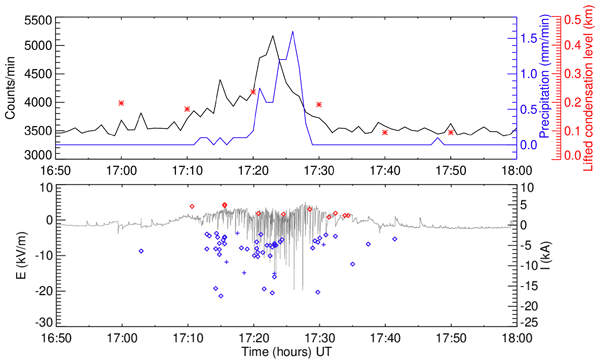
Ivana Kolmašová, Ondřej Santolík, Jakub Šlegl, Jana Popová, Zbyněk Sokol, Petr Zacharov, Ondřej Ploc, Gerhard Diendorfer, Ronald Langer, Radek Lán, and Igor Strhárský
Atmos. Chem. Phys., 22, 7959–7973, https://doi.org/10.5194/acp-22-7959-2022, https://doi.org/10.5194/acp-22-7959-2022, 2022
Short summary
Short summary
Gamma ray radiation related to thunderstorms was previously observed at the high-altitude mountain observatories or on the western coast of Japan, usually being terminated by lightning discharges. We show unusual observations of gamma rays at an altitude below 1000 m, coinciding with peculiar rapid variations in the vertical electric field, which are linked to inverted intracloud lightning discharges. This indicates that a strong, lower positive-charge region was present inside the thundercloud.
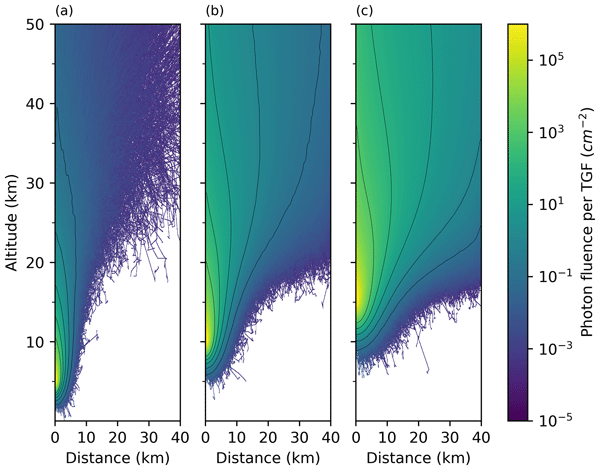
Marek Sommer, Tomáš Czakoj, Iva Ambrožová, Martin Kákona, Olena Velychko, and Ondřej Ploc
Atmos. Meas. Tech., 19, 2881–2895, https://doi.org/10.5194/amt-19-2881-2026, https://doi.org/10.5194/amt-19-2881-2026, 2026
Short summary
Short summary
This work studies powerful bursts of radiation, called terrestrial gamma ray flashes, which happen during thunderstorms. It explores the use of planes and weather balloons as platforms for radiation detectors to gather data about this phenomenon. Using computer simulations, it was found that balloons might work better for high-altitude storms, while planes could be useful for lower ones. Moreover, the influence of the terrestrial gamma ray flash strength and its altitude of origin was revealed.
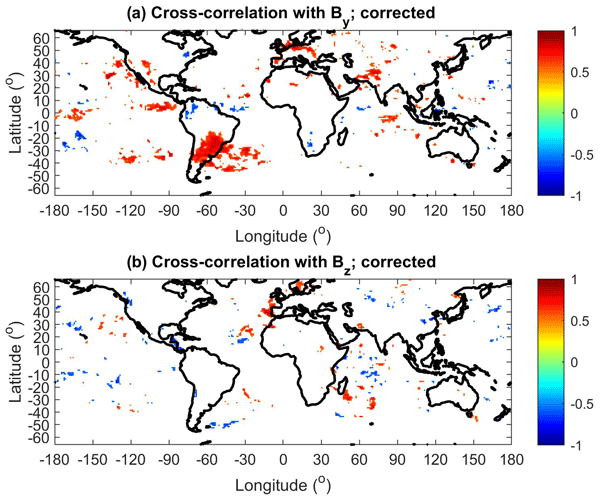
Jaroslav Chum, Ronald Langer, Ivana Kolmašová, Ondřej Lhotka, Jan Rusz, and Igor Strhárský
Atmos. Chem. Phys., 24, 9119–9130, https://doi.org/10.5194/acp-24-9119-2024, https://doi.org/10.5194/acp-24-9119-2024, 2024
Short summary
Short summary
Lightning and extreme weather can endanger people and technology. Despite advances in science, not all the factors that lead to the formation of thunderclouds, to their charging and to lightning ignition are known in detail. This paper shows that lightning frequency may, to some extent, be modulated by solar activity and solar wind. Namely, in the region of the South Atlantic Anomaly of the Earth's magnetic field, it correlates with the polarity and intensity of the solar wind.
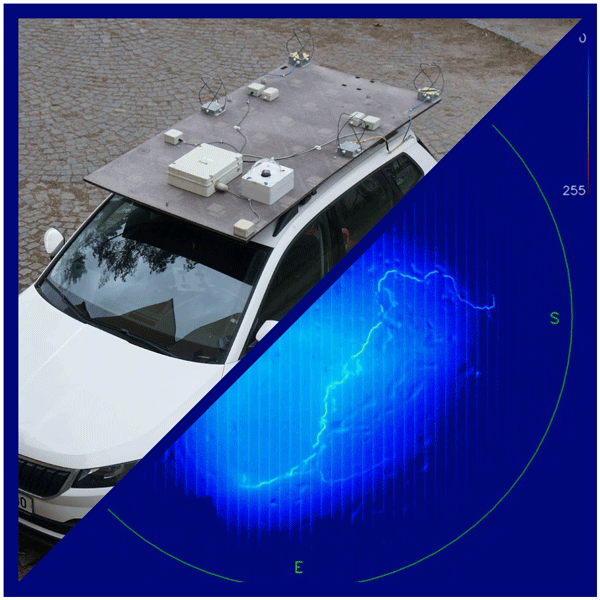
Jakub Kákona, Jan Mikeš, Iva Ambrožová, Ondřej Ploc, Olena Velychko, Lembit Sihver, and Martin Kákona
Atmos. Meas. Tech., 16, 547–561, https://doi.org/10.5194/amt-16-547-2023, https://doi.org/10.5194/amt-16-547-2023, 2023
Short summary
Short summary
Storm activity is sometimes associated with the generation of ionizing radiation. Our motivation for performing this research was to understand its origin. Using measuring cars fitted with new instruments, it was found that the duration of lightning is longer than generally thought. In most cases, lightning occurs only inside the cloud; however, rarely, it is also visible outside the cloud. In such cases, the course of emission over time can be used to assume what it looks like inside the cloud.
Ivana Kolmašová, Ondřej Santolík, Jakub Šlegl, Jana Popová, Zbyněk Sokol, Petr Zacharov, Ondřej Ploc, Gerhard Diendorfer, Ronald Langer, Radek Lán, and Igor Strhárský
Atmos. Chem. Phys., 22, 7959–7973, https://doi.org/10.5194/acp-22-7959-2022, https://doi.org/10.5194/acp-22-7959-2022, 2022
Short summary
Short summary
Gamma ray radiation related to thunderstorms was previously observed at the high-altitude mountain observatories or on the western coast of Japan, usually being terminated by lightning discharges. We show unusual observations of gamma rays at an altitude below 1000 m, coinciding with peculiar rapid variations in the vertical electric field, which are linked to inverted intracloud lightning discharges. This indicates that a strong, lower positive-charge region was present inside the thundercloud.
Cited articles
Chilingarian, A. and Mkrtchyan, H.: Role of the Lower Positive Charge Region (LPCR) in initiation of the Thunderstorm Ground Enhancements (TGEs), Phys. Rev. D, 86, 1–11, https://doi.org/10.1103/PhysRevD.86.072003, 2012. a, b
Chilingarian, A., Hovsepyan, G., Arakelyan, K., Chilingaryan, S., Danielyan, V., Avakyan, K., Yeghikyan, A., Reymers, A., and Tserunyan, S.: Space environmental viewing and analysis network (SEVAN), Earth Moon Planets, 104, 195–210, https://doi.org/10.1007/s11038-008-9288-1, 2009. a
Chilingarian, A., Daryan, A., Arakelyan, K., Hovhannisyan, A., Mailyan, B., Melkumyan, L., Hovsepyan, G., Chilingaryan, S., Reymers, A., and Vanyan, L.: Ground-based observations of thunderstorm-correlated fluxes of high-energy electrons, gamma rays, and neutrons, Phys. Rev. D, 82, 1–11, https://doi.org/10.1103/PhysRevD.82.043009, 2010. a
Chilingarian, A., Hovsepyan, G., and Hovhannisyan, A.: Particle bursts from thunderclouds: Natural particle accelerators above our heads, Phys. Rev. D, 83, 1–11, https://doi.org/10.1103/PhysRevD.83.062001, 2011. a
Chilingarian, A., Hovsepyan, G., Khanikyanc, G., Reymers, A., and Soghomonyan, S.: Lightning origination and thunderstorm ground enhancements terminated by the lightning flash, EPL-Europhys. Lett., 110, 49001, https://doi.org/10.1209/0295-5075/110/49001, 2015. a
Chilingarian, A., Hovsepyan, G., and Mnatsakanyan, E.: Mount Aragats as a stable electron accelerator for atmospheric high-energy physics research, Phys. Rev. D, 93, 1–12, https://doi.org/10.1103/PhysRevD.93.052006, 2016. a
Chilingarian, A., Hovsepyan, G., and Mailyan, B.: In situ measurements of the Runaway Breakdown (RB) on Aragats mountain, Nucl. Instrum. Meth. A, 874, 19–27, https://doi.org/10.1016/j.nima.2017.08.022, 2017. a
Chilingarian, A., Hovsepyan, G., Karapetyan, G., and Zazyan, M.: Stopping muon effect and estimation of intracloud electric field, Astropart. Phys., 124, 102505, https://doi.org/10.1016/j.astropartphys.2020.102505, 2021a. a
Chilingarian, A., Hovsepyan, G., Svechnikova, E., and Zazyan, M.: Electrical structure of the thundercloud and operation of the electron accelerator inside it, Astropart. Phys., 132, 102615, https://doi.org/10.1016/j.astropartphys.2021.102615, 2021b. a, b
Chilingarian, A., Karapetyan, T., Zazyan, M., Hovsepyan, G., Sargsyan, B., Nikolova, N., Angelov, H., Chum, J., and Langer, R.: Maximum strength of the atmospheric electric field, Phys. Rev. D, 103, 43021, https://doi.org/10.1103/PhysRevD.103.043021, 2021c. a, b, c
Chum, J., Langer, R., Baše, J., Kollárik, M., Strhárský, I., Diendorfer, G., and Rusz, J.: Significant enhancements of secondary cosmic rays and electric field at the high mountain peak of Lomnický Štít in High Tatras during thunderstorms, Earth Planets Space, 72, 28, https://doi.org/10.1186/s40623-020-01155-9, 2020. a, b
Diniz, G., Wada, Y., Ohira, Y., Nakazawa, K., and Enoto, T.: Atmospheric Electron Spatial Range Extended by Thundercloud Electric Field Below the Relativistic Runaway Electron Avalanche Threshold, J. Geophys. Res.-Atmos., 127, 1–14, https://doi.org/10.1029/2021JD035958, 2022. a
Gurevich, A. V., Milikh, G. M., and Roussel-Dupre, R.: Runaway electron mechanism of air breakdown and preconditioning during a thunderstorm, Phys. Lett. A, 165, 463–468, https://doi.org/10.1016/0375-9601(92)90348-P, 1992. a
Kelley, N. A., Smith, D. M., Dwyer, J. R., Splitt, M., Lazarus, S., Martinez-McKinney, F., Hazelton, B., Grefenstette, B., Lowell, A., and Rassoul, H. K.: Relativistic electron avalanches as a thunderstorm discharge competing with lightning, Nat. Commun., 6, 7845, https://doi.org/10.1038/ncomms8845, 2015. a
Kochkin, P., van Deursen, A. P., Marisaldi, M., Ursi, A., de Boer, A. I., Bardet, M., Allasia, C., Boissin, J. F., Flourens, F., Østgaard, N., van Deursen, A. P. J., Marisaldi, M., Ursi, A., de Boer, A. I., Bardet, M., Allasia, C., Boissin, J. F., Flourens, F., and Østgaard, N.: In-Flight Observation of Gamma Ray Glows by ILDAS, J. Geophys. Res.-Atmos., 122, 12801–12811, https://doi.org/10.1002/2017JD027405, 2017. a
Kolmašová, I.: Comment on egusphere-2024-3075, https://doi.org/10.5194/egusphere-2024-3075-CC1, 2024. a
Kolmašová, I., Santolík, O., Šlegl, J., Popová, J., Sokol, Z., Zacharov, P., Ploc, O., Diendorfer, G., Langer, R., Lán, R., and Strhárský, I.: Continental thunderstorm ground enhancement observed at an exceptionally low altitude, Atmos. Chem. Phys., 22, 7959–7973, https://doi.org/10.5194/acp-22-7959-2022, 2022. a, b
Kudela, K., Chum, J., Kollárik, M., Langer, R., Strhárský, I., and Baše, J.: Correlations Between Secondary Cosmic Ray Rates and Strong Electric Fields at Lomnický štít, J. Geophys. Res.-Atmos., 122, 10700–10710, https://doi.org/10.1002/2016JD026439, 2017. a
McCarthy, M. and Parks, G. K.: Further observations of X-rays inside thunderstorms, Geophys. Res. Lett., 12, 393–396, https://doi.org/10.1029/GL012i006p00393, 1985. a
Melnikov, V., Zrnić, D. S., Weber, M. E., Fierro, A. O., and MacGorman, D. R.: Electrified Cloud Areas Observed in the SHV and LDR Radar Modes, J. Atmos. Ocean. Tech., 36, 151–159, https://doi.org/10.1175/JTECH-D-18-0022.1, 2019. a, b
Munzar, J. and Franc, M.: Winter thunderstorms in central Europe in the past and the present, Atmos. Res., 67–68, 501–515, https://doi.org/10.1016/S0169-8095(03)00062-0, 2003. a, b
Plotly Technologies Inc.: Collaborative data science, Plotly Technologies Inc., Montreal, QC [code], https://plot.ly (last access: 10 July 2025), 2015. a
Šlegl, J. and Sokol, Z.: Materials for “First Reported Detection of a Winter Continental Gamma-Ray Glow in Europe”, V2, Mendeley Data [data set], https://doi.org/10.17632/c3tn4877gj.2, 2025. a
Šlegl, J., Minářová, J., Kuča, P., Kolmašová, I., Santolík, O., Sokol, Z., Reitz, G., Ambrožová, I., and Ploc, O.: Response of the Czech RMN Network to Thunderstorm Activity, Radiat. Prot. Dosim., 186, 215–218, https://doi.org/10.1093/rpd/ncz205, 2019. a
Šlegl, J., Langer, R., Brunclík, T., Mašek, P., Strhárský, I., Ambrožová, I., Chum, J., and Ploc, O.: Spectrometry of High-Energy Photons on High Mountain Observatory Lomnický Štít During Thunderstorms, Radiat. Prot. Dosim., 198, 623–627, https://doi.org/10.1093/rpd/ncac108, 2022. a, b
Sokol, Z., Minářová, J., and Novák, P.: Classification of hydrometeors using measurements of the ka-band cloud radar installed at the Milešovka Mountain (Central Europe), Remote Sens.-Basel, 10, 1674, https://doi.org/10.3390/rs10111674, 2018. a, b
Sokol, Z., Minářová, J., and Fišer, O.: Hydrometeor Distribution and Linear Depolarization Ratio in Thunderstorms, Remote Sens.-Basel, 12, 2144, https://doi.org/10.3390/rs12132144, 2020. a
Torii, T., Sugita, T., Tanabe, S., Kimura, Y., Kamogawa, M., Yajima, K., and Yasuda, H.: Gradual increase of energetic radiation associated with thunderstorm activity at the top of Mt. Fuji, Geophys. Res. Lett., 36, L13804, https://doi.org/10.1029/2008GL037105, 2009. a
Torii, T., Sugita, T., Kamogawa, M., Watanabe, Y., and Kusunoki, K.: Migrating source of energetic radiation generated by thunderstorm activity, Geophys. Res. Lett., 38, 2–6, https://doi.org/10.1029/2011GL049731, 2011. a, b
Tsuchiya, H., Enoto, T., Yamada, S., Yuasa, T., Kawaharada, M., Kitaguchi, T., Kokubun, M., Kato, H., Okano, M., Nakamura, S., and Makishima, K.: Detection of high-energy gamma rays from winter thunderclouds, Phys. Rev. Lett., 99, 165002, https://doi.org/10.1103/PhysRevLett.99.165002, 2007. a
Tsuchiya, H., Enoto, T., Torii, T., Nakazawa, K., Yuasa, T., Torii, S., Fukuyama, T., Yamaguchi, T., Kato, H., Okano, M., Takita, M., and Makishima, K.: Observation of an energetic radiation burst from mountain-top thunderclouds, Phys. Rev. Lett., 102, 10–13, https://doi.org/10.1103/PhysRevLett.102.255003, 2009. a, b
Tsuchiya, H., Enoto, T., Yamada, S., Yuasa, T., Nakazawa, K., Kitaguchi, T., Kawaharada, M., Kokubun, M., Kato, H., Okano, M., and Makishima, K.: Long-duration γ ray emissions from 2007 and 2008 winter thunderstorms, J. Geophys. Res., 116, D09113, https://doi.org/10.1029/2010JD015161, 2011. a
Tsuchiya, H., Hibino, K., Kawata, K., Hotta, N., Tateyama, N., Ohnishi, M., Takita, M., Chen, D., Huang, J., Miyasaka, M., Kondo, I., Takahashi, E., Shimoda, S., Yamada, Y., Lu, H., Zhang, J. L., Yu, X. X., Tan, Y. H., Nie, S. M., Munakata, K., Enoto, T., and Makishima, K.: Observation of thundercloud-related gamma rays and neutrons in Tibet, Phys. Rev. D, 85, 092006, https://doi.org/10.1103/PhysRevD.85.092006, 2012. a
Tsuchiya, H., Enoto, T., Iwata, K., Yamada, S., Yuasa, T., Kitaguchi, T., Kawaharada, M., Nakazawa, K., Kokubun, M., Kato, H., Okano, M., Tamagawa, T., and Makishima, K.: Hardening and termination of long-duration γ rays detected prior to lightning, Phys. Rev. Lett., 111, 1–5, https://doi.org/10.1103/PhysRevLett.111.015001, 2013. a
Wada, Y., Bowers, G. S., Enoto, T., Kamogawa, M., Nakamura, Y., Morimoto, T., Smith, D. M., Furuta, Y., Nakazawa, K., Yuasa, T., Matsuki, A., Kubo, M., Tamagawa, T., Makishima, K., and Tsuchiya, H.: Termination of Electron Acceleration in Thundercloud by Intracloud/Intercloud Discharge, Geophys. Res. Lett., 45, 5700–5707, https://doi.org/10.1029/2018GL077784, 2018. a, b
Wada, Y., Enoto, T., Nakamura, Y., Furuta, Y., Yuasa, T., Nakazawa, K., Morimoto, T., Sato, M., Matsumoto, T., Yonetoku, D., Sawano, T., Sakai, H., Kamogawa, M., Ushio, T., Makishima, K., and Tsuchiya, H.: Gamma-ray glow preceding downward terrestrial gamma-ray flash, Communications Physics, 2, 3–6, https://doi.org/10.1038/s42005-019-0168-y, 2019. a, b, c, d
Wada, Y., Enoto, T., Kubo, M., Nakazawa, K., Shinoda, T., Yonetoku, D., Sawano, T., Yuasa, T., Ushio, T., Sato, Y., Diniz, G. S., and Tsuchiya, H.: Meteorological Aspects of Gamma-Ray Glows in Winter Thunderstorms, Geophys. Res. Lett., 48, 1–11, https://doi.org/10.1029/2020GL091910, 2021a. a
Wada, Y., Matsumoto, T., Enoto, T., Nakazawa, K., Yuasa, T., Furuta, Y., Yonetoku, D., Sawano, T., Okada, G., Nanto, H., Hisadomi, S., Tsuji, Y., Diniz, G. S., Makishima, K., and Tsuchiya, H.: Catalog of gamma-ray glows during four winter seasons in Japan, Physical Review Research, 3, 043117, https://doi.org/10.1103/PhysRevResearch.3.043117, 2021b. a, b, c, d
Wada, Y., Tsurumi, M., Hayashi, S., and Michimoto, K.: Synoptic meteorological conditions of gamma-ray glows in winter thunderstorms, Progress in Earth and Planetary Science, 10, 6, https://doi.org/10.1186/s40645-023-00538-2, 2023. a
Wanke, E.: Blitzortung.org A low cost Time of Arrival Lightning Location Network, https://www.blitzortung.org/Compendium/Documentations/Documentation_2010-11-03_Green_PCB_6.5_PCB_5.5.pdf (last access: 10 July 2025), 2010. a
Williams, E., Mkrtchyan, H., Mailyan, B., Karapetyan, G., and Hovakimyan, S.: Radar Diagnosis of the Thundercloud Electron Accelerator, J. Geophys. Res.-Atmos., 127, e2021JD035957, https://doi.org/10.1029/2021JD035957, 2022. a
Short summary
We present the first-ever reported gamma-ray glows from a winter thunderstorm in continental Europe. Although two glows were detected at the same time, only one was ended by a discharge. Using advanced instruments such as the Ka-band vertically oriented Doppler radar and SEVAN detector, we gained new insights into the inner thunderstorm processes even in a cloud only 3 km in height.
We present the first-ever reported gamma-ray glows from a winter thunderstorm in...


Altmetrics
Final-revised paper
Preprint