
Articles | Volume 25, issue 23
https://doi.org/10.5194/acp-25-18249-2025
© Author(s) 2025. This work is distributed under
the Creative Commons Attribution 4.0 License.
the Creative Commons Attribution 4.0 License.
Special issue:
https://doi.org/10.5194/acp-25-18249-2025
© Author(s) 2025. This work is distributed under
the Creative Commons Attribution 4.0 License.
the Creative Commons Attribution 4.0 License.
Research article
| 
12 Dec 2025
Research article |
| 12 Dec 2025
| 12 Dec 2025
Volume uptake of carbonyls during diffusional ice crystal growth

Institute for Atmospheric Physics, Johannes Gutenberg University, Mainz, Germany
Miklós Szakáll
Institute for Atmospheric Physics, Johannes Gutenberg University, Mainz, Germany
Alexander Theis
Particle Chemistry Department, Max Planck Institute for Chemistry, Mainz, Germany
Subir K. Mitra
Particle Chemistry Department, Max Planck Institute for Chemistry, Mainz, Germany
Christine Borchers
Department of Chemistry, Johannes Gutenberg University, Mainz, Germany
Thorsten Hoffmann
Department of Chemistry, Johannes Gutenberg University, Mainz, Germany
Related authors
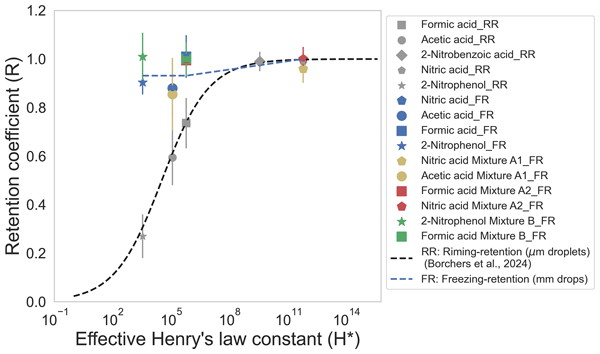
Martanda Gautam, Alexander Theis, Jackson Seymore, Moritz Hey, Stephan Borrmann, Karoline Diehl, Subir K. Mitra, and Miklós Szakáll
Atmos. Chem. Phys., 25, 11813–11828, https://doi.org/10.5194/acp-25-11813-2025, https://doi.org/10.5194/acp-25-11813-2025, 2025
Short summary
Short summary
We investigated the retention of chemical species and their binary mixtures during freezing of raindrops via acoustic levitation. Our results reveal high retention, with nearly all substances being fully retained during freezing. This could be attributed to a faster freezing time compared to a slower mass expulsion time, along with ice shell formation during freezing. This result helps improve our understanding of the interaction between ice microphysical processes and chemistry in deep convective clouds.
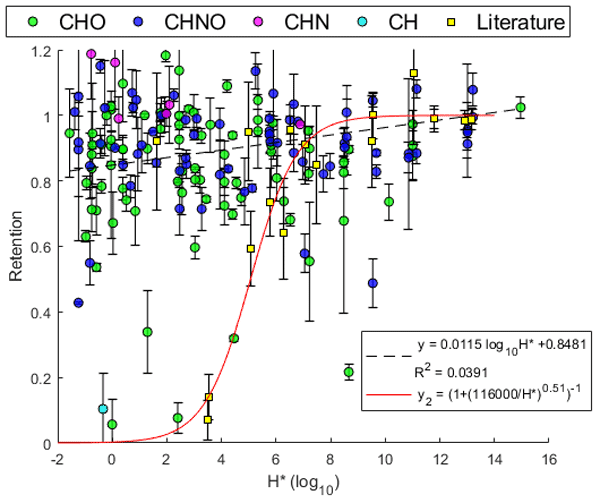
Jackson Seymore, Martanda Gautam, Miklós Szakáll, Alexander Theis, Thorsten Hoffmann, Jialiang Ma, Lingli Zhou, and Alexander L. Vogel
Atmos. Chem. Phys., 25, 11829–11845, https://doi.org/10.5194/acp-25-11829-2025, https://doi.org/10.5194/acp-25-11829-2025, 2025
Short summary
Short summary
We investigated the chemical retention of water-soluble organic compounds in Beijing aerosols using an acoustic levitator and drop-freezing experiments. Samples from PM2.5 filter extracts were frozen at -15 °C in an acoustic levitator without artificial nucleators and analyzed using ultra-high resolution mass spectrometry. Our findings reveal a non-normal distribution of retention coefficients that differs from current literature on cloud droplets.
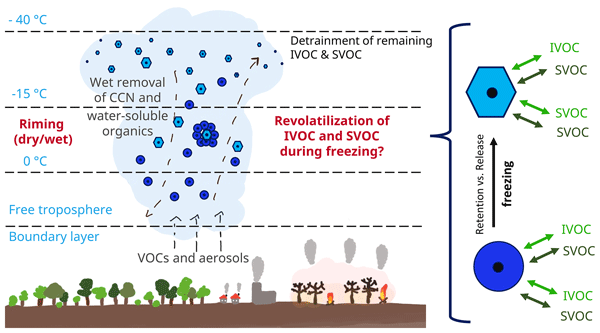
Christine Borchers, Jackson Seymore, Martanda Gautam, Konstantin Dörholt, Yannik Müller, Andreas Arndt, Laura Gömmer, Florian Ungeheuer, Miklós Szakáll, Stephan Borrmann, Alexander Theis, Alexander L. Vogel, and Thorsten Hoffmann
Atmos. Chem. Phys., 24, 13961–13974, https://doi.org/10.5194/acp-24-13961-2024, https://doi.org/10.5194/acp-24-13961-2024, 2024
Short summary
Short summary
Riming, a crucial process in cloud dynamics, influences the vertical distribution of compounds in the atmosphere. Experiments in Mainz's wind tunnel investigated retention coefficients of organic compounds under varying conditions. Findings suggest a correlation between the Henry's law constant and retention, applicable even to complex organic molecules.
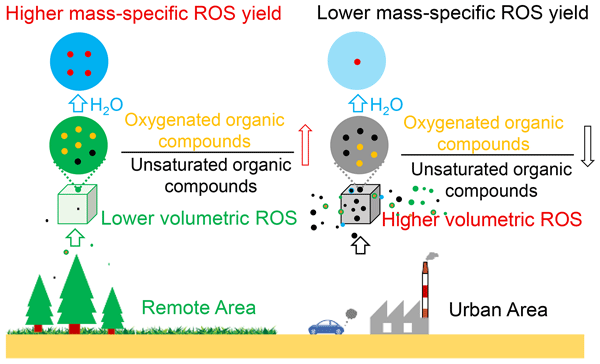
Fobang Liu, Yun Zhang, Siyao Yue, Helmi-Marja K. Keskinen, Tuukka Petäjä, Markku Kulmala, Pingqing Fu, Thorsten Hoffmann, Kai Wang, and Haijie Tong
Atmos. Chem. Phys., 26, 14655–14669, https://doi.org/10.5194/acp-26-14655-2026, https://doi.org/10.5194/acp-26-14655-2026, 2026
Short summary
Short summary
Reactive oxygen species (ROS) produced by airborne particles are linked to adverse health effects, but the organic compounds responsible remain unclear. We developed a new molecular framework to classify complex organic compounds using advanced mass spectrometry. The framework shows that particles rich in oxidized organic compounds produce more ROS per unit mass, while polluted urban air produces more total ROS mainly because of higher particle concentrations.
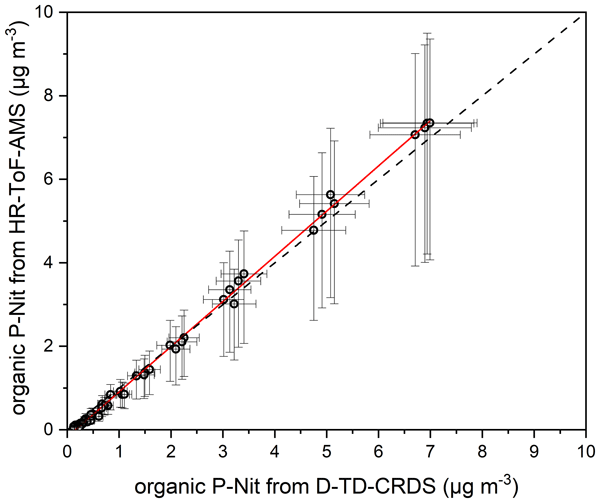
Patrick Dewald, Tobias Seubert, Laura Wüst, Jan Schuladen, Frank Drewnick, Friederike Fachinger, Thorsten Hoffmann, and John N. Crowley
Atmos. Meas. Tech., 19, 3445–3457, https://doi.org/10.5194/amt-19-3445-2026, https://doi.org/10.5194/amt-19-3445-2026, 2026
Short summary
Short summary
We have developed and tested an instrument that quantitatively detects particulate nitrate. Gas-phase reactive nitrogen species are denuded using an active-carbon surface and particle nitrate is converted to NO2, which is detected using cavity-ringdown-spectroscopy. Key to accurate measurement of particulate nitrate is drying of the sampled air. Excellent agreement with an aerosol-mass-spectrometer indicates that the instrument detects both organic and inorganic nitrate particle mass accurately.
Johannes Degen, Nicole Bobrowski, Mélisende M. Bossard, Lucie Boucher, Huilin Chen, Andreas Engel, Bastien H. Geil, Giovanni B. Giuffrida, Steven van Heuven, Thorsten Hoffmann, Niklas Karbach, Gianluigi Ortenzi, and Tanja J. Schuck
EGUsphere, https://doi.org/10.5194/egusphere-2026-1865, https://doi.org/10.5194/egusphere-2026-1865, 2026
This preprint is open for discussion and under review for Atmospheric Measurement Techniques (AMT).
Short summary
Short summary
Observations in volcanic plumes often rely on Uncrewed Aerial Systems (UAS). In July 2024, we used the active AirCore technique with UAS to probe the plumes of Mount Etna (Italy). This was the first time to use this technique inside volcanic plumes. AirCore samples are stored in long coils for laboratory analyses delivering high-quality trace gas measurements. We observed enhanced mole fractions of CO2 and often also of CO. allowing conclusions on oxidation processes inside the crater.
Niklas Karbach, Pauline Pouyes, Emilie Perraudin, Eric Villenave, and Thorsten Hoffmann
EGUsphere, https://doi.org/10.5194/egusphere-2026-2473, https://doi.org/10.5194/egusphere-2026-2473, 2026
Short summary
Short summary
We investigated the chemical composition of organic aerosol near Paris to distinguish contributions from urban emissions and surrounding biogenic sources. By combining high resolution mass spectrometry with statistical clustering and wind information, we identified clear source specific patterns. Urban influence was associated with sulfur and nitrogen containing compounds, whereas biogenic influence was dominated by oxidized organic compounds.
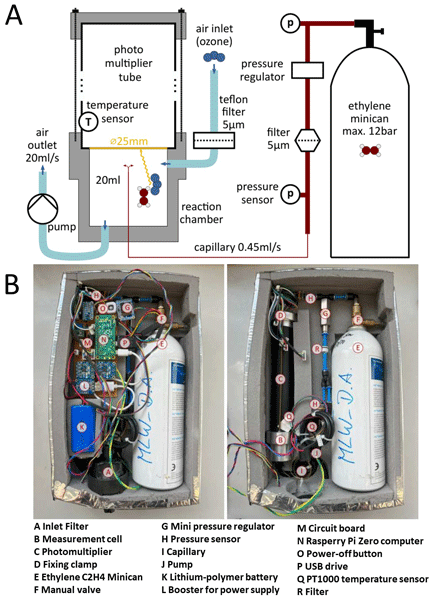
Maja Rüth, Nicole Bobrowski, Ellen Bräutigam, Alexander Nies, Jonas Kuhn, Thorsten Hoffmann, Niklas Karbach, Bastien Geil, Ralph Kleinschek, Stefan Schmitt, and Ulrich Platt
Atmos. Meas. Tech., 19, 2047–2059, https://doi.org/10.5194/amt-19-2047-2026, https://doi.org/10.5194/amt-19-2047-2026, 2026
Short summary
Short summary
UV absorption and electrochemical O3 sensor measurement techniques suffer from interferences, especially from SO2, which is a main constituent of volcanic plumes. Only chemiluminescence (CL) O3 monitors have no known interference with SO2. However, modern CL O3 monitors are impractical because they are heavy and bulky. We developed and applied a lightweight version of a CL O3 instrument (l.5 kg, shoebox size) and present the result of those drone based CL O3 measurements.
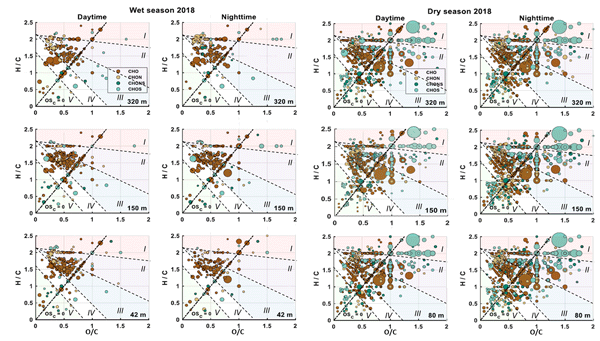
Denis Leppla, Stefanie Hildmann, Nora Zannoni, Leslie A. Kremper, Bruna A. Holanda, Jonathan Williams, Christopher Pöhlker, Stefan Wolff, Marta Sà, Maria Christina Solci, Ulrich Pöschl, and Thorsten Hoffmann
Atmos. Chem. Phys., 26, 365–390, https://doi.org/10.5194/acp-26-365-2026, https://doi.org/10.5194/acp-26-365-2026, 2026
Short summary
Short summary
The chemical composition of organic particles in the Amazon rainforest was investigated to understand how biogenic and human emissions influence the atmosphere in this unique ecosystem. Seasonal patterns were found where wet seasons were dominated by biogenic compounds from natural sources while dry seasons showed increased fire-related pollutants. These findings reveal how emissions, fires and long-range transport affect atmospheric chemistry, with implications for climate models.
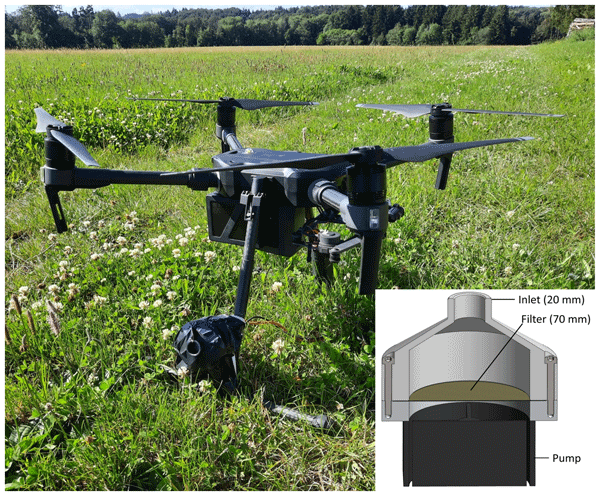
Christine Borchers, Lasse Moormann, Bastien Geil, Niklas Karbach, David Wasserzier, and Thorsten Hoffmann
Atmos. Meas. Tech., 18, 7231–7242, https://doi.org/10.5194/amt-18-7231-2025, https://doi.org/10.5194/amt-18-7231-2025, 2025
Short summary
Short summary
A three-dimensionally printed filter holder is connected to a lightweight, high-performance pump. This sampling system allows for easy and cost-effective measurements of organic aerosols at different heights and locations. By elucidating the chemical composition of organic aerosol, sources and processing of the compounds can be identified. Measurements at different altitudes and times of the day provide insight into the chemical aging and daytime trends of the aerosol particles.
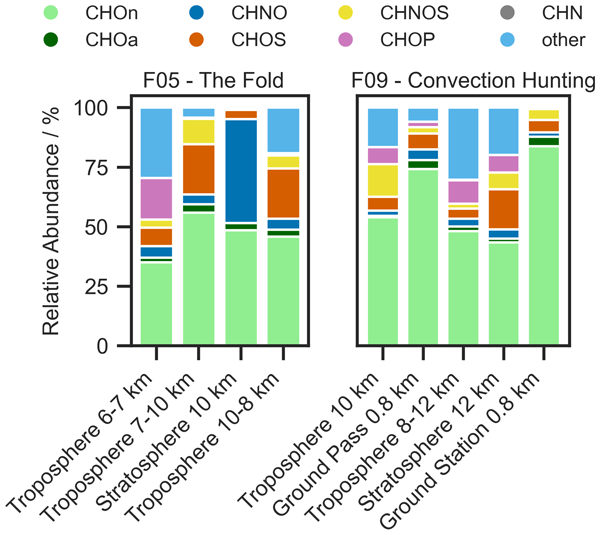
Anna Breuninger, Philipp Joppe, Jonas Wilsch, Cornelis Schwenk, Heiko Bozem, Nicolas Emig, Laurin Merkel, Rainer Rossberg, Timo Keber, Arthur Kutschka, Philipp Waleska, Stefan Hofmann, Sarah Richter, Florian Ungeheuer, Konstantin Dörholt, Thorsten Hoffmann, Annette Miltenberger, Johannes Schneider, Peter Hoor, and Alexander L. Vogel
Atmos. Chem. Phys., 25, 16533–16551, https://doi.org/10.5194/acp-25-16533-2025, https://doi.org/10.5194/acp-25-16533-2025, 2025
Short summary
Short summary
This study investigates molecular organic aerosol composition in the upper troposphere and lower stratosphere from an airborne campaign over Central Europe in summer 2024. Via ultra-high-performance liquid chromatography and high-resolution mass spectrometry of tropospheric and stratospheric filter samples, we identified various organic compounds. Our findings underscore the significant cross-tropopause transport of biogenic secondary organic aerosol and anthropogenic pollutants.
Martanda Gautam, Alexander Theis, Jackson Seymore, Moritz Hey, Stephan Borrmann, Karoline Diehl, Subir K. Mitra, and Miklós Szakáll
Atmos. Chem. Phys., 25, 11813–11828, https://doi.org/10.5194/acp-25-11813-2025, https://doi.org/10.5194/acp-25-11813-2025, 2025
Short summary
Short summary
We investigated the retention of chemical species and their binary mixtures during freezing of raindrops via acoustic levitation. Our results reveal high retention, with nearly all substances being fully retained during freezing. This could be attributed to a faster freezing time compared to a slower mass expulsion time, along with ice shell formation during freezing. This result helps improve our understanding of the interaction between ice microphysical processes and chemistry in deep convective clouds.
Jackson Seymore, Martanda Gautam, Miklós Szakáll, Alexander Theis, Thorsten Hoffmann, Jialiang Ma, Lingli Zhou, and Alexander L. Vogel
Atmos. Chem. Phys., 25, 11829–11845, https://doi.org/10.5194/acp-25-11829-2025, https://doi.org/10.5194/acp-25-11829-2025, 2025
Short summary
Short summary
We investigated the chemical retention of water-soluble organic compounds in Beijing aerosols using an acoustic levitator and drop-freezing experiments. Samples from PM2.5 filter extracts were frozen at -15 °C in an acoustic levitator without artificial nucleators and analyzed using ultra-high resolution mass spectrometry. Our findings reveal a non-normal distribution of retention coefficients that differs from current literature on cloud droplets.
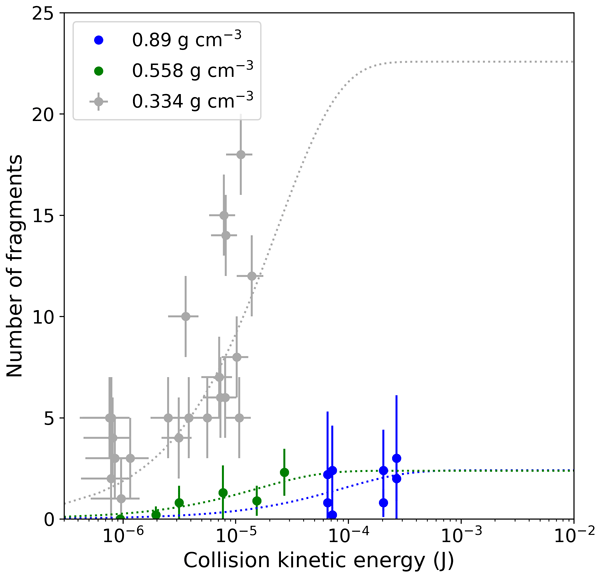
Sudha Yadav, Lilly Metten, Pierre Grzegorczyk, Alexander Theis, Subir K. Mitra, and Miklós Szakáll
Atmos. Chem. Phys., 25, 8671–8682, https://doi.org/10.5194/acp-25-8671-2025, https://doi.org/10.5194/acp-25-8671-2025, 2025
Short summary
Short summary
Laboratory studies on the fragmentation of ice particles by collision are presented. Graupel particles were created by riming at –7 and –15 °C, also simulating rotation and tumbling. Frozen ice drops were generated by freezing water in 3D-printed spherical molds. The number of fragments generated by collision was between 1 and 20 and was strongly dependent on the density of the graupel. We also showed that the number of fragments approaches zero when the particle suffers more than three collisions in a row.
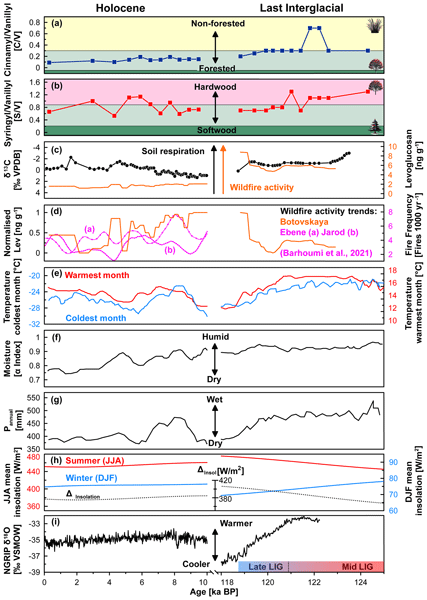
Jade Margerum, Julia Homann, Stuart Umbo, Gernot Nehrke, Thorsten Hoffmann, Anton Vaks, Aleksandr Kononov, Alexander Osintsev, Alena Giesche, Andrew Mason, Franziska A. Lechleitner, Gideon M. Henderson, Ola Kwiecien, and Sebastian F. M. Breitenbach
Clim. Past, 21, 661–677, https://doi.org/10.5194/cp-21-661-2025, https://doi.org/10.5194/cp-21-661-2025, 2025
Short summary
Short summary
We analyse a southern Siberian stalagmite to reconstruct soil respiration, wildfire, and vegetation trends during the Last Interglacial (LIG) (124.1–118.8 ka) and the Holocene (10–0 ka). Wildfires were more prevalent during the LIG than the Holocene and were supported by fire-prone species, low soil respiration, and a greater difference between summer and winter temperature. We show that vegetation type and summer/winter temperature contrast are strong drivers of Siberian wildfires.
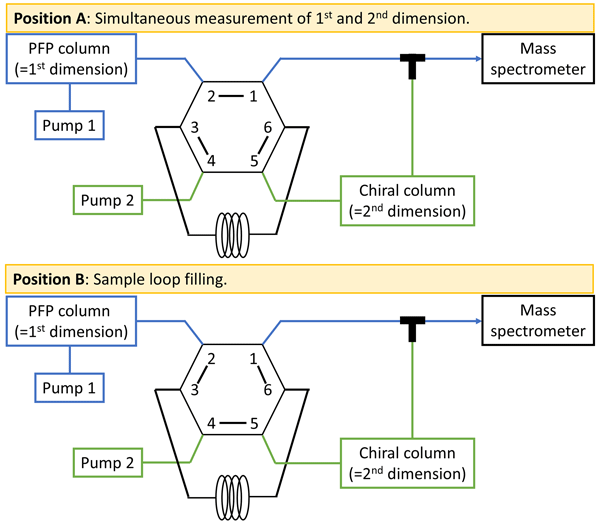
Johanna Schäfer, Anja Beschnitt, François Burgay, Thomas Singer, Margit Schwikowski, and Thorsten Hoffmann
Atmos. Meas. Tech., 18, 421–430, https://doi.org/10.5194/amt-18-421-2025, https://doi.org/10.5194/amt-18-421-2025, 2025
Short summary
Short summary
Glaciers preserve organic compounds from atmospheric aerosols, which can serve as markers for emission sources. Most studies overlook the enantiomers of chiral compounds. We developed a two-dimensional liquid chromatography method to determine the chiral ratios of the monoterpene oxidation products cis-pinic acid and cis-pinonic acid in ice-core samples. Applied to samples from the Belukha Glacier (1870–1970 CE), the method revealed fluctuating chiral ratios for the analytes.
Christine Borchers, Jackson Seymore, Martanda Gautam, Konstantin Dörholt, Yannik Müller, Andreas Arndt, Laura Gömmer, Florian Ungeheuer, Miklós Szakáll, Stephan Borrmann, Alexander Theis, Alexander L. Vogel, and Thorsten Hoffmann
Atmos. Chem. Phys., 24, 13961–13974, https://doi.org/10.5194/acp-24-13961-2024, https://doi.org/10.5194/acp-24-13961-2024, 2024
Short summary
Short summary
Riming, a crucial process in cloud dynamics, influences the vertical distribution of compounds in the atmosphere. Experiments in Mainz's wind tunnel investigated retention coefficients of organic compounds under varying conditions. Findings suggest a correlation between the Henry's law constant and retention, applicable even to complex organic molecules.
Niklas Karbach, Lisa Höhler, Peter Hoor, Heiko Bozem, Nicole Bobrowski, and Thorsten Hoffmann
Atmos. Meas. Tech., 17, 4081–4086, https://doi.org/10.5194/amt-17-4081-2024, https://doi.org/10.5194/amt-17-4081-2024, 2024
Short summary
Short summary
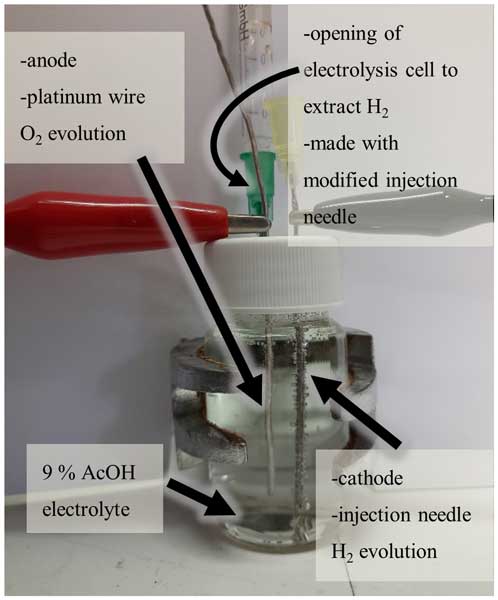
The system presented here can accurately generate and reproduce a stable flow of gas mixtures of known concentrations over several days using ambient air as a dilution medium. In combination with the small size and low weight of the system, this enables the calibration of hydrogen sensors in the field, reducing the influence of matrix effects on the accuracy of the sensor. The system is inexpensive to assemble and easy to maintain, which is the key to reliable measurement results.
Pierre Grzegorczyk, Sudha Yadav, Florian Zanger, Alexander Theis, Subir K. Mitra, Stephan Borrmann, and Miklós Szakáll
Atmos. Chem. Phys., 23, 13505–13521, https://doi.org/10.5194/acp-23-13505-2023, https://doi.org/10.5194/acp-23-13505-2023, 2023
Short summary
Short summary
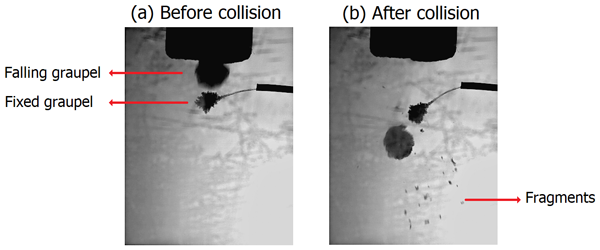
Secondary ice production generates high concentrations of ice crystals in clouds. These processes have been poorly understood. We conducted experiments at the wind tunnel laboratory of the Johannes Gutenberg University, Mainz, on graupel–graupel and graupel–snowflake collisions. From these experiments fragment number, size, cross-sectional area, and aspect ratio were determined.
Julia Homann, Niklas Karbach, Stacy A. Carolin, Daniel H. James, David Hodell, Sebastian F. M. Breitenbach, Ola Kwiecien, Mark Brenner, Carlos Peraza Lope, and Thorsten Hoffmann
Biogeosciences, 20, 3249–3260, https://doi.org/10.5194/bg-20-3249-2023, https://doi.org/10.5194/bg-20-3249-2023, 2023
Short summary
Short summary
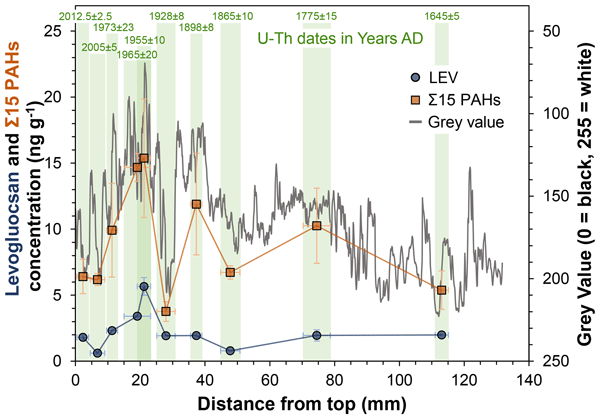
Cave stalagmites contain substances that can be used to reconstruct past changes in local and regional environmental conditions. We used two classes of biomarkers (polycyclic aromatic hydrocarbons and monosaccharide anhydrides) to detect the presence of fire and to also explore changes in fire regime (e.g. fire frequency, intensity, and fuel source). We tested our new method on a stalagmite from Mayapan, a large Maya city on the Yucatán Peninsula.
Denis Leppla, Nora Zannoni, Leslie Kremper, Jonathan Williams, Christopher Pöhlker, Marta Sá, Maria Christina Solci, and Thorsten Hoffmann
Atmos. Chem. Phys., 23, 809–820, https://doi.org/10.5194/acp-23-809-2023, https://doi.org/10.5194/acp-23-809-2023, 2023
Short summary
Short summary
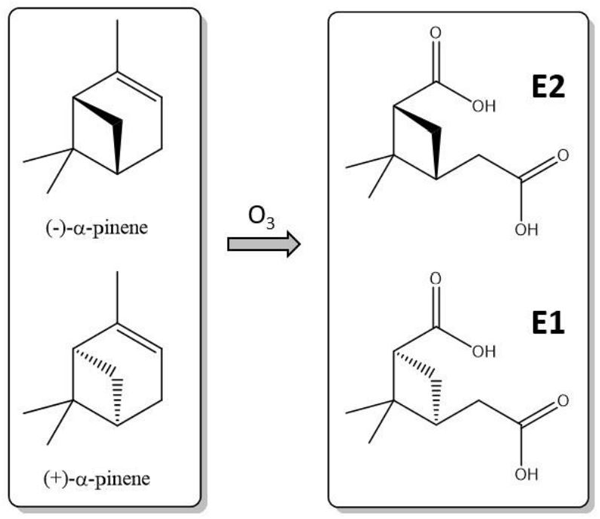
Chiral chemodiversity plays a critical role in biochemical processes such as insect and plant communication. Here we report on the measurement of chiral-specified secondary organic aerosol in the Amazon rainforest. The results show that the chiral ratio is mainly determined by large-scale emission processes. Characteristic emissions of chiral aerosol precursors from different forest ecosystems can thus provide large-scale information on different biogenic sources via chiral particle analysis.
Yunfan Liu, Hang Su, Siwen Wang, Chao Wei, Wei Tao, Mira L. Pöhlker, Christopher Pöhlker, Bruna A. Holanda, Ovid O. Krüger, Thorsten Hoffmann, Manfred Wendisch, Paulo Artaxo, Ulrich Pöschl, Meinrat O. Andreae, and Yafang Cheng
Atmos. Chem. Phys., 23, 251–272, https://doi.org/10.5194/acp-23-251-2023, https://doi.org/10.5194/acp-23-251-2023, 2023
Short summary
Short summary
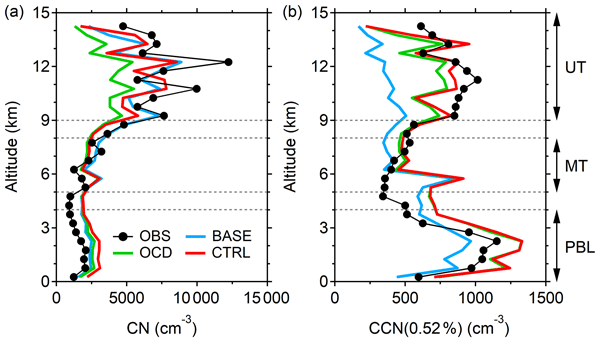
The origins of the abundant cloud condensation nuclei (CCN) in the upper troposphere (UT) of the Amazon remain unclear. With model developments of new secondary organic aerosol schemes and constrained by observation, we show that strong aerosol nucleation and condensation in the UT is triggered by biogenic organics, and organic condensation is key for UT CCN production. This UT CCN-producing mechanism may prevail over broader vegetation canopies and deserves emphasis in aerosol–climate feedback.
Jing Duan, Ru-Jin Huang, Yifang Gu, Chunshui Lin, Haobin Zhong, Wei Xu, Quan Liu, Yan You, Jurgita Ovadnevaite, Darius Ceburnis, Thorsten Hoffmann, and Colin O'Dowd
Atmos. Chem. Phys., 22, 10139–10153, https://doi.org/10.5194/acp-22-10139-2022, https://doi.org/10.5194/acp-22-10139-2022, 2022
Short summary
Short summary
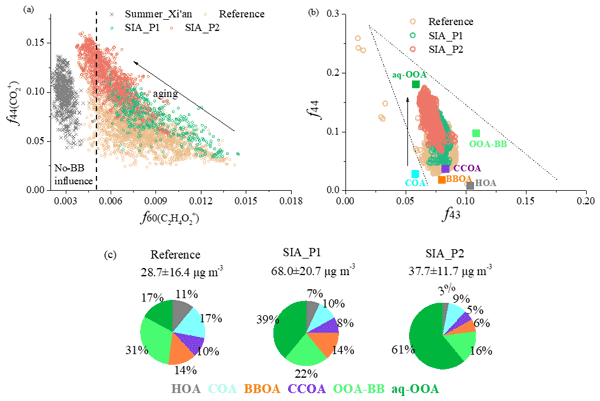
Biomass-burning-influenced oxygenated organic aerosol (OOA-BB), formed from the photochemical oxidation and aging of biomass burning OA (BBOA), was resolved in urban Xi’an. The aqueous-phase processed oxygenated OA (aq-OOA) concentration was more dependent on secondary inorganic aerosol (SIA) content and aerosol liquid water content (ALWC). The increased aq-OOA contribution during SIA-enhanced periods likely reflects OA evolution due to the addition of alcohol or peroxide groups
Cited articles
Abbatt, J. P. D., Bartels-Rausch, T., Ullerstam, M., and Ye, T. J.: Uptake of acetone, ethanol and benzene to snow and ice: effects of surface area andtemperature, Environmental Research Letters, 3, 045008, https://doi.org/10.1088/1748-9326/3/4/045008, 2008.
Bartels-Rausch, T., Jacobi, H.-W., Kahan, T. F., Thomas, J. L., Thomson, E. S., Abbatt, J. P. D., Ammann, M., Blackford, J. R., Bluhm, H., Boxe, C., Domine, F., Frey, M. M., Gladich, I., Guzmán, M. I., Heger, D., Huthwelker, Th., Klán, P., Kuhs, W. F., Kuo, M. H., Maus, S., Moussa, S. G., McNeill, V. F., Newberg, J. T., Pettersson, J. B. C., Roeselová, M., and Sodeau, J. R.: A review of air–ice chemical and physical interactions (AICI): liquids, quasi-liquids, and solids in snow, Atmos. Chem. Phys., 14, 1587–1633, https://doi.org/10.5194/acp-14-1587-2014, 2014.
Behr, P., Terziyski, A., and Zellner, R.: Acetone adsorption on ice surfaces in the temperature range T= 190–220 K: Evidence for aging effects due to crystallographic changes of the adsorption sites, Journal of Physical Chemistry A, 110, 8098–8107, 2006.
Borchers, C., Seymore, J., Gautam, M., Dörholt, K., Müller, Y., Arndt, A., Gömmer, L., Ungeheuer, F., Szakáll, M., Borrmann, S., Theis, A., Vogel, A. L., and Hoffmann, T.: Retention of α-pinene oxidation products and nitro-aromatic compounds during riming, Atmos. Chem. Phys., 24, 13961–13974, https://doi.org/10.5194/acp-24-13961-2024, 2024.
Brimblecombe, P. and Dawson, G. A.: Wet removal of highly soluble gases, J. Atmos. Chem., 2, 95–107, https://doi.org/https://doi.org/10.1007/BF00127265, 1984.
Cabezas, C., Juanes, M., Saragi, R. T., Lesarri, A., and Peña, I.: Water binding to the atmospheric oxidation product methyl vinyl ketone, Spectrochim. Acta A Mol. Biomol. Spectrosc., 270, 120846, https://doi.org/10.1016/J.SAA.2021.120846, 2022.
Chen, G., Kong, W., Wang, L., and Wang, F.: On the experimental and theoretical model for ice crystal characteristics near a substrate, Int. J. Heat Mass Transf., 152, 119462, https://doi.org/10.1016/J.IJHEATMASSTRANSFER.2020.119462, 2020.
Chickos, J. S., Hosseini, S., and Hesse, D. G.: Determination of vaporization enthalpies of simple organic molecules by correlations of changes in gas chromatographic net retention times, Thermochim. Acta, 249, 41–62, https://doi.org/10.1016/0040-6031(95)90670-3, 1995.
Comstock, J. M., Ackerman, T. P., Turner, D. D., Comstock, J. M., Ackerman, T. P., and Turner, D. D.: Evidence of high ice supersaturation in cirrus clouds using ARM Raman lidar measurements, Geophys. Res. Lett., 31, 11106, https://doi.org/10.1029/2004GL019705, 2004.
Conklin, M. H. and Bales, R. C.: SO2 uptake on ice spheres: Liquid nature of the ice-air interface, Journal of Geophysical Research: Atmospheres, 98, 16851–16855, https://doi.org/10.1029/93JD01207, 1993.
Conklin, M. H., Sommerfeld, R. A., Kay Laird, S., and Villinski, J. E.: Sulfur dioxide reactions on ice surfaces: implications for dry deposition to snow, Atmospheric Environment. Part A. General Topics, 27, 159–166, https://doi.org/10.1016/0960-1686(93)90346-Z, 1993.
Cooke, M. C., Utembe, S. R., Gorrotxategi Carbajo, P., Archibald, A. T., Orr-Ewing, A. J., Jenkin, M. E., Derwent, R. G., Lary, D. J., and Shallcross, D. E.: Impacts of formaldehyde photolysis rates on tropospheric chemistry, Atmospheric Science Letters, 11, 33–38, https://doi.org/10.1002/ASL.251, 2010.
Couch, D. E., Nguyen, Q. L. D., Liu, A., Hickstein, D. D., Kapteyn, H. C., Murnane, M. M., and Labbe, N. J.: Detection of the keto-enol tautomerization in acetaldehyde, acetone, cyclohexanone, and methyl vinyl ketone with a novel VUV light source, Proceedings of the Combustion Institute, 38, 1737–1744, https://doi.org/10.1016/J.PROCI.2020.06.139, 2021.
Crutzen, P. J. and Lawrence, M. G.: The Impact of Precipitation Scavenging on the Transport of Trace Gases: A 3-Dimensional Model Sensitivity Study, Journal of Atmospheric Chemistry, 37, 81–112, https://doi.org/10.1023/A:1006322926426, 2000.
Davidovits, P., Kolb, C. E., Williams, L. R., Jayne, J. T., and Worsnop, D. R.: Mass Accommodation and Chemical Reactions at Gas-Liquid Interfaces, Chem. Rev., 106, 1323–1354, https://doi.org/10.1021/cr040366k, 2006.
Dekoutsidis, G., Groß, S., Wirth, M., Krämer, M., and Rolf, C.: Characteristics of supersaturation in midlatitude cirrus clouds and their adjacent cloud-free air, Atmos. Chem. Phys., 23, 3103–3117, https://doi.org/10.5194/acp-23-3103-2023, 2023.
Diehl, K., Mitra, S. K., and Pruppacher, H. R.: A laboratory study of the uptake ofHNO3 and HCl vapor by snow crystals and ice spheres at temperatures between 0 and −40 °C, Atmos. Environ., 29, 975–981, 1995.
Dominé, F. and Thibert, E.: Mechanism of incorporation of trace gases in ice grown from the gas phase, Geophys. Res. Lett., 23, 3627–3630, https://doi.org/10.1029/96GL03290, 1996.
Dragan, A. I., Read, C. M., and Crane-Robinson, C.: Enthalpy–entropy compensation: the role of solvation, Eur. Biophys. J., 46, 301–308, https://doi.org/10.1007/s00249-016-1182-6, 2017.
Ervens, B. and Kreidenweis, S. M.: SOA formation by biogenic and carbonyl compounds: Data evaluation and application, Environ. Sci. Technol., 41, 3904–3910, 2007.
Franz, T. P. and Eisenreich, S. J.: Accumulation of polychlorinated biphenyls and polycyclic aromatic hydrocarbons in the snowpack of Minnesota and Lake Superior, J. Great Lakes Res., 26, 220–234, https://doi.org/10.1016/S0380-1330(00)70688-5, 2000.
Fried, A., Barth, M. C., Bela, M., Weibring, P., Richter, D., Walega, J., Li, Y., Pickering, K., Apel, E., Hornbrook, R., Hills, A., Riemer, D. D., Blake, N., Blake, D. R., Schroeder, J. R., Luo, Z. J., Crawford, J. H., Olson, J., Rutledge, S., Betten, D., Biggerstaff, M. I., Diskin, G. S., Sachse, G., Campos, T., Flocke, F., Weinheimer, A., Cantrel, C., Pollack, I., Peischl, J., Froyd, K., Wisthaler, A., Mikoviny, T., and Woods, S.: Convective transport of formaldehyde to the upper troposphere and lower stratosphere and associated scavenging in thunderstorms over the central United States during the 2012 DC3 study, Journal of Geophysical Research: Atmospheres, 121, 7430–7460, https://doi.org/10.1002/2015JD024477, 2016.
Fries, E., Haunold, W., Jaeschke, W., Hoog, I., Mitra, S. K., and Borrmann, S.: Uptake of gaseous aromatic hydrocarbons by non-growing ice crystals, Atmos. Environ., 40, 5476–5485, https://doi.org/10.1016/J.ATMOSENV.2006.03.055, 2006.
Fries, E., Starokozhev, E., Haunold, W., Jaeschke, W., Mitra, S. K., Borrmann, S., and Schmidt, M. U.: Laboratory studies on the uptake of aromatic hydrocarbons by ice crystals during vapor depositional crystal growth, Atmos. Environ., 41, 6156–6166, https://doi.org/10.1016/j.atmosenv.2007.04.028, 2007.
Galeazzo, T., Aumont, B., Camredon, M., Valorso, R., Lim, Y. B., Ziemann, P. J., and Shiraiwa, M.: Secondary organic aerosols derived from intermediate-volatility n-alkanes adopt low-viscous phase state, Atmos. Chem. Phys., 24, 5549–5565, https://doi.org/10.5194/acp-24-5549-2024, 2024.
Gautam, M., Theis, A., Seymore, J., Hey, M., Borrmann, S., Diehl, K., Mitra, S. K., and Szakáll, M.: Retention during freezing of raindrops – Part 1: Investigation of single and binary mixtures of nitric, formic, and acetic acids and 2-nitrophenol, Atmos. Chem. Phys., 25, 11813–11828, https://doi.org/10.5194/acp-25-11813-2025, 2025.
Goss, K. U.: Adsorption of Organic Vapors on Ice and Quartz Sand at Temperatures Below 0 °C, Environ. Sci. Technol., 27, 2826–2830, 1993.
Griessen, R. and Dam, B.: Simple Accurate Verification of Enthalpy-Entropy Compensation and Isoequilibrium Relationship, Chem. Phys. Chem., 22, 1774–1784, https://doi.org/10.1002/CPHC.202100431, 2021.
Grosjean, D., Williams II, E. L., and Grosjean, E.: Atmospheric Chemistry of Isoprene and of Its Carbonyl Products, Environ. Sci. Technol., 27, 830–840, https://doi.org/10.1021/es00042a004, 1993.
Grunwald, E. and Steel, C.: Solvent Reorganization and Thermodynamic Enthalpy-Entropy Compensation, J. Am. Chem. Soc., 117, 5687–5692, https://doi.org/10.1021/ja00126a009, 1995.
Heymsfield, A. J., Schmitt, C., Chen, C. C. J., Bansemer, A., Gettelman, A., Field, P. R., and Liu, C.: Contributions of the Liquid and Ice Phases to Global Surface Precipitation: Observations and Global Climate Modeling, J. Atmos. Sci., 77, 2629–2648, https://doi.org/10.1175/JAS-D-19-0352.1, 2020.
Hoareau, C., Noel, V., Chepfer, H., Vidot, J., Chiriaco, M., Bastin, S., Reverdy, M., and Cesana, G.: Remote sensing ice supersaturation inside and near cirrus clouds: a case study in the subtropics, Atmospheric Science Letters, 17, 639–645, https://doi.org/10.1002/ASL.714, 2016.
Hudson, P. K., Zondlo, M. A., and Tolbert, M. A.: The interaction of methanol, acetone, and acetaldehyde with ice and nitric acid-doped ice: Implications for cirrus clouds, Journal of Physical Chemistry A, 106, 2882–2888, https://doi.org/10.1021/jp012718m, 2002.
Huffman, W. A. and Snider, J. R.: Ice-oxyhydrocarbon interactions in the troposphere, Journal of Geophysical Research: Atmospheres, 109, https://doi.org/10.1029/2003jd003778, 2004.
Jacob, D.: Introduction to atmospheric chemistry, 11th edn., ISBN 0691001855, 2021.
Jayne, J. T., Duan, S. X., Davidovits, P., Worsnop, D. R., Zahniser, M. S., and Kolb, C. E.: Uptake of gas-phase alcohol and organic acid molecules by water surfaces, Journal of Physical Chemistry, 95, 6329–6336, 1991.
Jost, A., Szakáll, M., Diehl, K., Mitra, S. K., and Borrmann, S.: Chemistry of riming: the retention of organic and inorganic atmospheric trace constituents, Atmos. Chem. Phys., 17, 9717–9732, https://doi.org/10.5194/acp-17-9717-2017, 2017.
Kahnt, A., Iinuma, Y., Böge, O., Mutzel, A., and Herrmann, H.: Denuder sampling techniques for the determination of gas-phase carbonyl compounds: A comparison and characterisation of in situ and ex situ derivatisation methods, J. Chromatogr. B Analyt. Technol. Biomed. Life Sci., 879, 1402–1411, https://doi.org/10.1016/j.jchromb.2011.02.028, 2011.
Krug, R. R., Hunter, W. G., and Grieger, R. A.: Statistical interpretation of enthalpy–entropy compensation, Nature, 261, 566–567, https://doi.org/10.1038/261566a0, 1976.
Leffler, J. E.: The enthalpy-entropy relationship and its implications for organic chemistry, J. Org. Chem., 20, 1202–1231, https://doi.org/10.1021/jo01126a009, 1955.
Leung, D. H., Bergman, R. G., and Raymond, K. N.: Enthalpy-entropy compensation reveals solvent reorganization as a driving force for supramolecular encapsulation in water, J. Am. Chem. Soc., 130, 2798–2805, https://doi.org/10.1021/ja075975z, 2008.
Ling, Z., Xie, Q., Shao, M., Wang, Z., Wang, T., Guo, H., and Wang, X.: Formation and sink of glyoxal and methylglyoxal in a polluted subtropical environment: observation-based photochemical analysis and impact evaluation, Atmos. Chem. Phys., 20, 11451–11467, https://doi.org/10.5194/acp-20-11451-2020, 2020.
Liu, L. and Guo, Q. X.: Isokinetic relationship, isoequilibrium relationship, and enthalpy-entropy compensation, Chemical Reviews, 101, 673–696, https://doi.org/10.1021/cr990416z, 2001.
Liu, Q., Gao, Y., Huang, W., Ling, Z., Wang, Z., and Wang, X.: Carbonyl compounds in the atmosphere: A review of abundance, source and their contributions to O3 and SOA formation, Atmos. Res., 274, 106184, https://doi.org/10.1016/J.ATMOSRES.2022.106184, 2022.
Lumry, R.: [29] On the interpretation of data from isothermal processes, in: Methods in Enzymology, vol. 259, Academic Press, 628–720, https://doi.org/10.1016/0076-6879(95)59065-X, 1995.
Lumry, R. and Rajender, S.: Enthalpy–entropy compensation phenomena in water solutions of proteins and small molecules: A ubiquitous properly of water, Biopolymers, 9, 1125–1227, https://doi.org/10.1002/bip.1970.360091002, 1970.
Mitra, S. K., Barth, S., and Pruppacher, H. R.: A laboratory study on the scavenging of SO2 by snow crystals, Atmospheric Environment. Part A. General Topics, 24, 2307–2312, https://doi.org/10.1016/0960-1686(90)90324-G, 1990.
Moulik, S. P., Naskar, B., and Rakshit, A. K.: Current Status of Enthalpy–Entropy Compensation Phenomenon, Curr. Sci., 117, 1286, https://doi.org/10.18520/cs/v117/i8/1286-1291, 2019.
Mu, Y. and Xu, Z.: Scavenging of carbonyl sulfide precursor in the atmosphere by precipitation, Journal of Geophysical Research: Atmospheres, 114, https://doi.org/10.1029/2008JD010622, 2009.
Mülmenstädt, J., Sourdeval, O., Delanoë, J., and Quaas, J.: Frequency of occurrence of rain from liquid-, mixed-, and ice-phase clouds derived from A-Train satellite retrievals, Geophys. Res. Lett., 42, 6502–6509, https://doi.org/10.1002/2015GL064604, 2015.
Orem, M. W. and Adamson, A. W.: Physical adsorption of vapor on ice: II. n-alkanes, J. Colloid Interface Sci., 31, 278–286, https://doi.org/10.1016/0021-9797(69)90337-3, 1969.
Pan, A., Biswas, T., Rakshit, A. K., and Moulik, S. P.: Enthalpy-Entropy Compensation (EEC) Effect: A Revisit, Journal of Physical Chemistry B, 119, 15876–15884, https://doi.org/10.1021/acs.jpcb.5b09925, 2015.
Perrier, S., Houdier, S., Dominé, F., Cabanes, A., Legagneux, L., Sumner, A. L., and Shepson, P. B.: Formaldehyde in Arctic snow. Incorporation into ice particles and evolution in the snowpack, Atmos. Environ., 36, 2695–2705, https://doi.org/10.1016/S1352-2310(02)00110-3, 2002.
Reif, F.: Fundamentals of Statistical and Thermal Physics, International Student Edition, McGraw-Hill, London, New York, ISBN 0070518009, 1965.
Renard, P., Siekmann, F., Salque, G., Demelas, C., Coulomb, B., Vassalo, L., Ravier, S., Temime-Roussel, B., Voisin, D., and Monod, A.: Aqueous-phase oligomerization of methyl vinyl ketone through photooxidation – Part 1: Aging processes of oligomers, Atmos. Chem. Phys., 15, 21–35, https://doi.org/10.5194/acp-15-21-2015, 2015.
Roth, C. M., Goss, K. U., and Schwarzenbach, R. P.: Sorption of diverse organic vapors to snow, Environ. Sci. Technol., 38, 4078–4084, https://doi.org/10.1021/ES0350684, 2004.
Sander, R.: Compilation of Henry's law constants (version 5.0.0) for water as solvent, Atmos. Chem. Phys., 23, 10901–12440, https://doi.org/10.5194/acp-23-10901-2023, 2023.
Santachiara, G., Prodi, F., Udisti, R., and Prodi, A.: Scavenging of SO2 and NH3 during growth of ice, Atmos. Res., 47–48, 209–217, https://doi.org/10.1016/S0169-8095(97)00087-2, 1998.
Seymore, J.: Data and Matlab files for “Volume uptake of carbonyls during diffusional ice crystal growth”, Zenodo [data set and code] https://doi.org/10.5281/ZENODO.17843885, 2025.
Seymore, J., Gautam, M., Szakáll, M., Theis, A., Hoffmann, T., Ma, J., Zhou, L., and Vogel, A. L.: Retention during freezing of raindrops – Part 2: Investigation of ambient organics from Beijing urban aerosol samples, Atmos. Chem. Phys., 25, 11829–11845, https://doi.org/10.5194/acp-25-11829-2025, 2025.
Sharp, K.: Entropy – enthalpy compensation: Fact or artifact?, Protein Science, 10, 661–667, https://doi.org/10.1110/ps.37801, 2001.
Sokolov, O. and Abbatt, J. P. D.: Adsorption to ice of n-alcohols (ethanol to 1-hexanol), acetic acid, and hexanal, Journal of Physical Chemistry A, 106, 775–782, 2002.
Sonntag, D.: Fortschritte in der Hygrometrie, Meteorologische Zeitschrift, 3, 51–66, https://doi.org/10.1127/metz/3/1994/51, 1994.
Srivastava, D., Vu, T. V., Tong, S., Shi, Z., and Harrison, R. M.: Formation of secondary organic aerosols from anthropogenic precursors in laboratory studies, npj Climate and Atmospheric Science, 5, 1–30, https://doi.org/10.1038/s41612-022-00238-6, 2022.
Su, S., Xie, Q., Lang, Y., Cao, D., Xu, Y., Chen, J., Chen, S., Hu, W., Qi, Y., Pan, X., Sun, Y., Wang, Z., Liu, C.-Q., Jiang, G., and Fu, P.: High Molecular Diversity of Organic Nitrogen in Urban Snow in North China, Environ. Sci. Technol., https://doi.org/10.1021/acs.est.0c06851, 2021.
Valdez, M. P., Dawson, G. A., and Bales, R. C.: Sulfur dioxide incorporation into ice depositing from the vapor, J. Geophys. Res., 94, 1095–1103, 1989.
Von Hessberg, P., Pouvesle, N., Winkler, A. K., Schuster, G., and Crowley, J. N.: Interaction of formic and acetic acid with ice surfaces between 187 and 227 K. Investigation of single species- and competitive adsorption, Physical Chemistry Chemical Physics, 10, 2345–2355, https://doi.org/10.1039/B800831K, 2008.
von Kuhlmann, R. and Lawrence, M. G.: The impact of ice uptake of nitric acid on atmospheric chemistry, Atmos. Chem. Phys., 6, 225–235, https://doi.org/10.5194/acp-6-225-2006, 2006.
Wang, J., Chen, S., Qiu, X., Niu, W., Li, O., Zhu, C., Zhang, X., Yang, X., and Zhang, G.: Pollution Characteristics of Atmospheric Carbonyl Compounds in a Large City of Northern China, J. Chem., 2022, 3292598, https://doi.org/10.1155/2022/3292598, 2022.
Warhaft, Z.: An Introduction to Thermal-fluid Engineering: The Engine and The Atmosphere, Cambridge University Press, 266 pp., ISBN 0521589274, 1998.
Winkler, A. K., Holmes, N. S., and Crowley, J. N.: Interaction of methanol, acetone and formaldehyde with ice surfaces between 198 and 223 K, Physical Chemistry Chemical Physics, 4, 5270–5275, https://doi.org/10.1039/b206258e, 2002.
Xu, Y., Feng, X., Chen, Y., Zheng, P., Hui, L., Chen, Y., Yu, J. Z., and Wang, Z.: Development of an enhanced method for atmospheric carbonyls and characterizing their roles in photochemistry in subtropical Hong Kong, Science of The Total Environment, 896, 165135, https://doi.org/10.1016/J.SCITOTENV.2023.165135, 2023.
Yu, L., Smith, J., Laskin, A., Anastasio, C., Laskin, J., and Zhang, Q.: Chemical characterization of SOA formed from aqueous-phase reactions of phenols with the triplet excited state of carbonyl and hydroxyl radical, Atmos. Chem. Phys., 14, 13801–13816, https://doi.org/10.5194/acp-14-13801-2014, 2014.
Zhao, M. and Shi, X.: A Study on the Wide Range of Relative Humidity in Cirrus Clouds Using Large-Ensemble Parcel Model Simulations, Atmosphere, 14, 583, https://doi.org/10.3390/ATMOS14030583, 2023.
Zhao, Y. H., Abraham, M. H., and Zissimos, A. M.: Fast calculation of van der Waals volume as a sum of atomic and bond contributions and its application to drug compounds, Journal of Organic Chemistry, 68, 7368–7373, https://doi.org/10.1021/jo034808o, 2003.
Zondlo, M. A., Barone, S. B., and Tolbert, M. A.: Uptake of HNO3 on ice under upper tropospheric conditions, Geophys. Res. Lett., 24, 1391–1394, https://doi.org/10.1029/97GL01287, 1997.
Short summary
Laboratory studies examined carbonyl deposition into ice crystals using a flowtube setup. Ice crystals were grown under conditions that mimic cirrus clouds in the presence of carbonyl vapors. Ice and gas samples were collected and analyzed to calculate ice uptake coefficients for 14 carbonyls at different temperatures. This revealed an inverse relationship between uptake and temperature. Vapor pressure and molar mass were found to be the most significant factors in uptake.
Laboratory studies examined carbonyl deposition into ice crystals using a flowtube setup. Ice...


Altmetrics
Final-revised paper
Preprint