Articles | Volume 25, issue 23
https://doi.org/10.5194/acp-25-18077-2025
© Author(s) 2025. This work is distributed under
the Creative Commons Attribution 4.0 License.
https://doi.org/10.5194/acp-25-18077-2025
© Author(s) 2025. This work is distributed under
the Creative Commons Attribution 4.0 License.
A 23-year nationwide study revealing aerosol-driven light rain shifts in China's emission control era

Rou Zhang
School of Ecology and Environment, College of Artificial Intelligence, Harbin Institute of Technology (Shenzhen), Shenzhen 518055, China
Xiaoxiao Huang
School of Ecology and Environment, College of Artificial Intelligence, Harbin Institute of Technology (Shenzhen), Shenzhen 518055, China
Pu Wang
School of Ecology and Environment, College of Artificial Intelligence, Harbin Institute of Technology (Shenzhen), Shenzhen 518055, China
Guiquan Liu
School of Ecology and Environment, College of Artificial Intelligence, Harbin Institute of Technology (Shenzhen), Shenzhen 518055, China
Mengyu Liu
School of Ecology and Environment, College of Artificial Intelligence, Harbin Institute of Technology (Shenzhen), Shenzhen 518055, China
Songjian Zou
School of Ecology and Environment, College of Artificial Intelligence, Harbin Institute of Technology (Shenzhen), Shenzhen 518055, China
Lu Chen
School of Urban and Planning, Yancheng Teachers University, Yancheng, 224051, China
School of Ecology and Environment, College of Artificial Intelligence, Harbin Institute of Technology (Shenzhen), Shenzhen 518055, China
Related authors
No articles found.
Jingye Ren, Wei Xu, Ru-Jin Huang, Fang Zhang, Ying Wang, Lu Chen, Jurgita Ovadnevaite, Darius Ceburnis, and Colin O’Dowd
EGUsphere, https://doi.org/10.5194/egusphere-2025-3284, https://doi.org/10.5194/egusphere-2025-3284, 2025
Short summary
Short summary
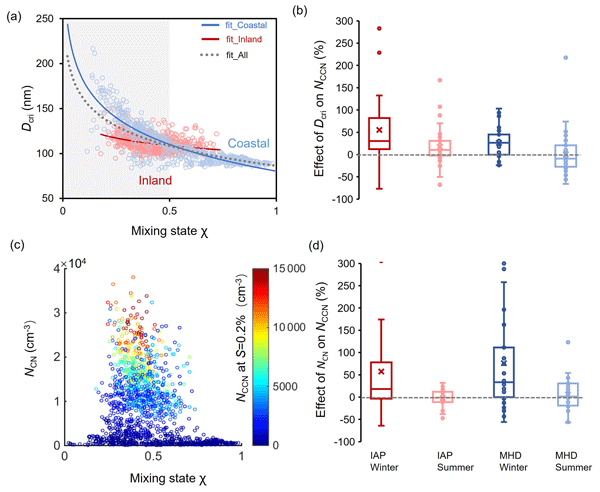
Impact of mixing state on cloud condensation nuclei (CCN) activity was incorporated in very limited modeling with typically simplified assumption. This study derived a mixing state index from hygroscopicity and systematically investigated its impacts on CCN activity in inland and coastal air. An entropy-based parameterization proposed here offers a novel approach to reduce model complexity in representing aerosol CCN activation, enabling more accurate simulations of aerosol CCN capacity.
Jingye Ren, Songjian Zou, Honghao Xu, Guiquan Liu, Zhe Wang, Anran Zhang, Chuanfeng Zhao, Min Hu, Dongjie Shang, Lizi Tang, Ru-Jin Huang, Yele Sun, and Fang Zhang
EGUsphere, https://doi.org/10.5194/egusphere-2025-1483, https://doi.org/10.5194/egusphere-2025-1483, 2025
Preprint archived
Short summary
Short summary
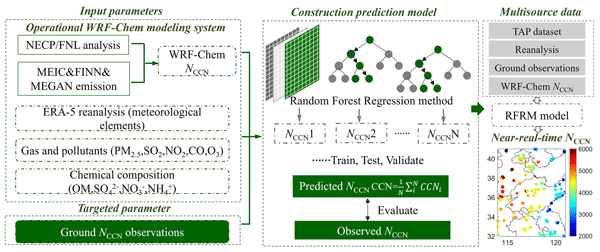
In this study, a new framework of cloud condensation nuclei (CCN) prediction in polluted region has been developed and it achieves well prediction of hourly-to-yearly scale across North China Plain. The study reveals a significant long-term decreasing trend of CCN concentration at typical supersaturations due to a rapid reduction in aerosol concentrations from 2014 to 2018. This improvement of our new model would be helpful to aerosols climate effect assessment in models.
Jieyao Liu, Fang Zhang, Jingye Ren, Lu Chen, Anran Zhang, Zhe Wang, Songjian Zou, Honghao Xu, and Xingyan Yue
Atmos. Chem. Phys., 25, 5075–5086, https://doi.org/10.5194/acp-25-5075-2025, https://doi.org/10.5194/acp-25-5075-2025, 2025
Short summary
Short summary
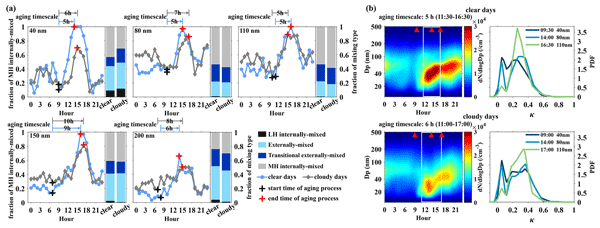
Particle mixing states and aging timescales are important for the evaluation of aerosol climate effects, but they are poorly parameterized in current models. We unravel the evolution of real-time mixing states and the aging timescale of size-resolved particles based on field measurements in urban Beijing. This study provides an observational basis for accurately parameterizing the aging timescale of aerosol particles in climate models.
Jingye Ren, Lu Chen, Jieyao Liu, and Fang Zhang
Atmos. Chem. Phys., 23, 4327–4342, https://doi.org/10.5194/acp-23-4327-2023, https://doi.org/10.5194/acp-23-4327-2023, 2023
Short summary
Short summary
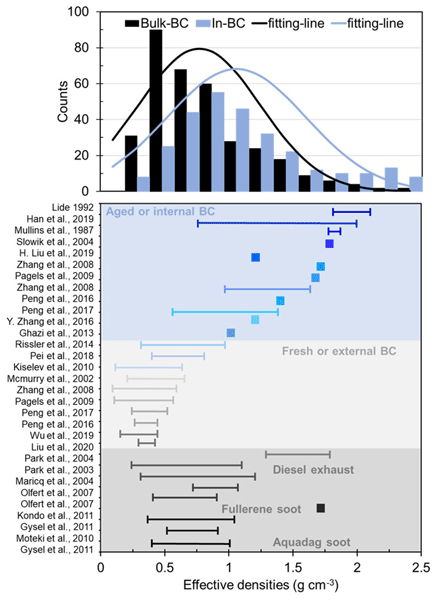
The density of black carbon (BC) is linked to its morphology and mixing state and could cause uncertainty in evaluating cloud condensation nuclei (CCN) activity. A method for retrieving the mixing state and density of BC in the urban atmosphere is developed. The mean retrieval density of internally mixed BC was lower, assuming void-free spherical structures. Our study suggests the importance of accounting for variable BC density in models when assessing its climate effect in urban atmosphere.
Lu Chen, Fang Zhang, Dongmei Zhang, Xinming Wang, Wei Song, Jieyao Liu, Jingye Ren, Sihui Jiang, Xue Li, and Zhanqing Li
Atmos. Chem. Phys., 22, 6773–6786, https://doi.org/10.5194/acp-22-6773-2022, https://doi.org/10.5194/acp-22-6773-2022, 2022
Short summary
Short summary
Aerosol hygroscopicity is critical when evaluating its effect on visibility and climate. Here, the size-resolved particle hygroscopicity at five sites in China is characterized using field measurements. We show the distinct behavior of hygroscopic particles during pollution evolution among the five sites. Moreover, different hygroscopic behavior during NPF events were also observed. The dataset is helpful for understanding the spatial variability in particle composition and formation mechanisms.
Lu Chen, Fang Zhang, Don Collins, Jingye Ren, Jieyao Liu, Sihui Jiang, and Zhanqing Li
Atmos. Chem. Phys., 22, 2293–2307, https://doi.org/10.5194/acp-22-2293-2022, https://doi.org/10.5194/acp-22-2293-2022, 2022
Short summary
Short summary
Understanding the volatility and mixing state of atmospheric aerosols is important for elucidating their formation. Here, the size-resolved volatility of fine particles is characterized using field measurements. On average, the particles are more volatile in the summer. The retrieved mixing state shows that black carbon (BC)-containing particles dominate and contribute 67–77 % toward the total number concentration in the winter, while the non-BC particles accounted for 52–69 % in the summer.
Sihui Jiang, Fang Zhang, Jingye Ren, Lu Chen, Xing Yan, Jieyao Liu, Yele Sun, and Zhanqing Li
Atmos. Chem. Phys., 21, 14293–14308, https://doi.org/10.5194/acp-21-14293-2021, https://doi.org/10.5194/acp-21-14293-2021, 2021
Short summary
Short summary
New particle formation (NPF) can be a large source of CCN and affect weather and climate. Here we show that the NPF contributes largely to cloud droplet number concentration (Nd) but is suppressed at high particle number concentrations in Beijing due to water vapor competition. We also reveal a considerable impact of primary sources on the evaluation in the urban atmosphere. Our study has great significance for assessing NPF-associated effects on climate in polluted regions.
Cited articles
Ackerman, A. S., Kirkpatrick, M. P., Stevens, D. E., and Toon, O. B.: The impact of humidity above stratiform clouds on indirect aerosol climate forcing, Nature, 432, 1014–1017, https://doi.org/10.1038/nature03174, 2004.
Bai, Y. and Liu, M.: Multi-scale spatiotemporal trends and corresponding disparities of PM2.5 exposure in China, Env. Pollution, 340, 122857, https://doi.org/10.1016/j.envpol.2023.122857, 2024.
Bastin, S., Drobinski, P., Chiriaco, M., Bock, O., Roehrig, R., Gallardo, C., Conte, D., Domínguez Alonso, M., Li, L., Lionello, P., and Parracho, A. C.: Impact of humidity biases on light precipitation occurrence: observations versus simulations, Atmos. Chem. Phys., 19, 1471–1490, https://doi.org/10.5194/acp-19-1471-2019, 2019.
Bretherton, C. S., Blossey, P. N., and Uchida, J.: Cloud droplet sedimentation, entrainment efficiency, and subtropical stratocumulus albedo, Geophys. Res. Lett., 34, https://doi.org/10.1029/2006GL027648, 2007.
Chen, L., Zhang, F., Ren, J., Li, Z., Xu, W., Sun, Y., Liu, L., and Wang, X.: Changes in wintertime visibility across China over 2013–2019 and the drivers: A comprehensive assessment using machine learning method, Sci. Total Environ., 912, 169516, https://doi.org/10.1016/j.scitotenv.2023.169516, 2024.
Chen, S., Liu, M., Zou, S., Xu, H., and Zhang F.: Unveiling the dual role of rainfall in governing ambient aerosol particles: From washout-dominated scavenging to production dynamics, Atmos. Environ., 361, https://doi.org/10.1016/j.atmosenv.2025.121513, 2025.
Chen, T. and Guestrin, C.: XGBoost: A Scalable Tree Boosting System, in: KDD '16: Proceedings of the 22nd ACM SIGKDD International Conference on Knowledge Discovery and Data Mining, 785–794, https://doi.org/10.1145/2939672.2939785, 2016.
Chen, Y., Li, Z., Fan, Y., Wang, H., and Fang, G.: Research progress on the impact of climate change on water resources in the arid region of Northwest China, Acta Geographica Sinica, 69, 1295–1304, https://doi.org/10.11821/dlxb201409005, 2014.
Cheng, Y., Zhu, Q., Peng, Y., Huang, X., and He, L.: Multiple strategies for a novel hybrid forecasting algorithm of ozone based on data-driven models, J. Cleaner Prod., 326, 129451, https://doi.org/10.1016/j.jclepro.2021.129451, 2021.
Cheng, Y., Huang, X., Peng, Y., Tang, M., Zhu, B., Xia, S., and He, L.: A novel machine learning method for evaluating the impact of emission sources on ozone formation, Environ. Pollut., 316, 120685, https://doi.org/10.1016/j.envpol.2022.120685, 2023.
Choi, Y., Ho, C., Kim, J., Gong, D., and Park, R. J.: The Impact of Aerosols on the Summer Rainfall Frequency in China, J. Appl. Meteorol. Climatol., 47, 1802–1813, https://doi.org/10.1175/2007JAMC1745.1, 2008.
Cong, Z. T., Yang, D. W., and Ni, G. H.: Does evaporation paradox exist in China?, Hydrol. Earth Syst. Sci., 13, 357–366, https://doi.org/10.5194/hess-13-357-2009, 2009.
Dunkerley, D. L.: Light and low-intensity rainfalls: A review of their classification, occurrence, and importance in landsurface, ecological and environmental processes, Earth-Sci. Rev., 214, 103529, https://doi.org/10.1016/j.earscirev.2021.103529, 2021.
Fan, J., Rosenfeld, D., Yang, Y., Zhao, C., Leung, L. R., and Li, Z.: Substantial contribution of anthropogenic air pollution to catastrophic floods in Southwest China: AIR POLLUTION TO CATASTROPHIC FLOODS, Geophys. Res. Lett., 42, 6066–6075, https://doi.org/10.1002/2015GL064479, 2015.
Fan, T., Ren, J., Liu, C., Li, Z., Liu, J., Sun, Y., Wang, Y., Jin, X., and Zhang, F.: Evidence of Surface-Tension Lowering of Atmospheric Aerosols by Organics from Field Observations in an Urban Atmosphere: Relation to Particle Size and Chemical Composition, Environ. Sci. Technol. 58, 11363–11375, https://doi.org/10.1021/acs.est.4c03141, 2024.
Fons, E., Runge, J., Neubauer, D., and Lohmann, U.: Stratocumulus adjustments to aerosol perturbations disentangled with a causal approach, npj Clim. Atmos. Sci., 6, 130, https://doi.org/10.1038/s41612-023-00452-w, 2023.
Fu, C. and Dan, L.: Trends in the different grades of precipitation over South China during 1960–2010 and the possible link with anthropogenic aerosols, Adv. Atmos. Sci., 31, 480–491, https://doi.org/10.1007/s00376-013-2102-7, 2014.
Fu, J., Qian, W., Lin, X., and Chen, D.: Trends in graded precipitation in China from 1961 to 2000, Adv. Atmos. Sci., 25, 267–278, https://doi.org/10.1007/s00376-008-0267-2, 2008.
Ganjurjav, H., Gornish, E., Hu, G., Wu, J., Wan, Y., Li, Y., and Gao, Q.: Phenological changes offset the warming effects on biomass production in an alpine meadow on the Qinghai–Tibetan Plateau, J. Ecol., 109, 1014–1025, https://doi.org/10.1111/1365-2745.13531, 2021.
Gao, W., Sui, C., Fan, J., Hu, Z., and Zhong, L.: A study of cloud microphysics and precipitation over the Tibetan Plateau by radar observations and cloud-resolving model simulations, J. Geophys. Res. Atmos., 121, 13735–13752, https://doi.org/10.1002/2015JD024196, 2016.
Gui, K., Che, H., Zeng, Z., Wang, Y., Zhai, S., Wang, Z., Luo, M., Zhang, L., Liao, T., Zhao, H., Li, L., Zheng, Y., and Zhang, X.: Construction of a virtual PM2.5 observation network in China based on high-density surface meteorological observations using the Extreme Gradient Boosting model, Environ. Int., 141, 105801, https://doi.org/10.1016/j.envint.2020.105801, 2020.
Guo, J., Su, T., Chen, D., Wang, J., Li, Z., Lv, Y., Guo, X., Liu, H., Cribb, M., and Zhai, P.: Declining Summertime Local-Scale Precipitation Frequency Over China and the United States, 1981–2012: The Disparate Roles of Aerosols, Geophys. Res. Lett., 46, 13281–13289, https://doi.org/10.1029/2019GL085442, 2019.
Hansen, J., Sato, M., and Ruedy, R.: Radiative forcing and climate response, J. Geophys. Res. Atmos., 102, 6831–6864, https://doi.org/10.1029/96JD03436, 1997.
Huang, G. and Wen, G.: Spatial and temporal variations of light rain events over China and the mid-high latitudes of the Northern Hemisphere, Chin. Sci. Bull., 58, 1402–1411, https://doi.org/10.1007/s11434-012-5593-1, 2013.
Huang, J., Wang, T., Wang, W., Li, Z., and Yan, H.: Climate effects of dust aerosols over East Asian arid and semiarid regions, J. Geophys. Res. Atmos., 119, 11398–11416, https://doi.org/10.1002/2014JD021796, 2014.
IPCC: AR6 Synthesis Report: Climate Change 2023, Intergovernmental Panel on Climate Change, 2023, https://www.ipcc.ch/report/ar6/syr/, last access: 5 February 2025.
Jiang, S., Zhang, F., Ren, J., Chen, L., Yan, X., Liu, J., Sun, Y., and Li, Z.: Evaluation of the contribution of new particle formation to cloud droplet number concentration in the urban atmosphere, Atmos. Chem. Phys., 21, 14293–14308, https://doi.org/10.5194/acp-21-14293-2021, 2021.
Jiang, S., Ren, J., Chen, L., Cheng, Y., Zhao, J., Sun, Y., and Zhang, F.: Source apportionment of cloud nuclei at 260 m and ground level in urban Beijing. Journal of Geophysical Research: Atmospheres, 128, e2022JD038339, https://doi.org/10.1029/2022JD038339, 2023.
Jiang, Z., Shen, Y., Ma, T., Zhai, P., and Fang, S.: Changes of precipitation intensity spectra in different regions of mainland China during 1961–2006, J. Meteorol. Res., 28, 1085–1098, https://doi.org/10.1007/s13351-014-3233-1, 2014.
Johnson, B. T., Shine, K. P., and Forster, P. M.: The semi-direct aerosol effect: Impact of absorbing aerosols on marine stratocumulus, Q. J. R. Meteorol. Soc., 130, 1407–1422, https://doi.org/10.1256/qj.03.61, 2004.
Lamb, E. G., Mengersen, K. L., Stewart, K. J., Attanayake, U., and Siciliano, S. D.: Spatially explicit structural equation modeling, Ecology, 95, 2434–2442, https://doi.org/10.1890/13-1997.1, 2014.
Li, H., Zhou, T., and Yu, R.: Analysis of July-August Daily Precipitation Characteristics Variation in Eastern China during 1958–2000, Chinese J. Atmos. Sci., 32, 358–370, https://doi.org/10.3878/j.issn.1006-9895.2008.02.14, 2008.
Li, Z., Niu, F., Fan, J., Liu, Y., Rosenfeld, D., and Ding, Y.: Long-term impacts of aerosols on the vertical development of clouds and precipitation, Nat. Geosci., 4, 888–894, https://doi.org/10.1038/ngeo1313, 2011.
Li, Z., Rosenfeld, D., and Fan, J.: Aerosols and Their Impact on Radiation, Clouds, Precipitation, and Severe Weather Events, in: Oxford Research Encyclopedia of Environmental Science, Oxford University Press, https://doi.org/10.1093/acrefore/9780199389414.013.126, 2017.
Liu, B., Xu, M., and Henderson, M.: Where have all the showers gone? Regional declines in light precipitation events in China, 1960–2000, Int. J. Climatol., 31, 1177–1191, https://doi.org/10.1002/joc.2144, 2011.
Liu, J., Zhang, F., Xu, W., Chen, L., Ren, J., Jiang, S., Sun, Y., and Li, Z.: A large impact of cooking organic aerosol (COA) on particle hygroscopicity and CCN activity in urban atmosphere, J. Geophys. Res.-Atmos., 126, e2020JD033628, https://doi.org/10.1029/2020JD033628, 2021.
Liu, J., Zhao, C., Lin, Y., Zhang, Q., Liu, H., Xiao, Q., and Peng, Y.: Potential Impacts of Aerosol on Diurnal Variation of Precipitation in Autumn Over the Sichuan Basin, China, J. Geophys. Res.-Atmos., 127, e2022JD036674, https://doi.org/10.1029/2022JD036674, 2022.
Lu, E., Zeng, Y., Luo, Y., Ding, Y., Zhao, W., Liu, S., Gong, L., Jiang, Y., Jiang, Z., and Chen, H.: Changes of summer precipitation in China: The dominance of frequency and intensity and linkage with changes in moisture and air temperature, J. Geophys. Res.-Atmos., 119, https://doi.org/10.1002/2014JD022456, 2014.
Lundberg, S. and Lee, S. I.: A Unified Approach to Interpreting Model Predictions, Adv. Neural Inf. Process. Syst., https://doi.org/10.48550/arXiv.1705.07874, 2017.
Luo, F., Wang, S., Wang, H., Shu, X., and Huang, J.: Differing Contributions of Anthropogenic Aerosols and Greenhouse Gases on Precipitation Intensity Percentiles Over the Middle and Lower Reaches of the Yangtze River, J. Geophys. Res.-Atmos., 129, e2023JD040202, https://doi.org/10.1029/2023JD040202, 2024.
Ma, S., Zhou, T., Dai, A., and Han, Z.: Observed Changes in the Distributions of Daily Precipitation Frequency and Amount over China from 1960 to 2013, J. Climate, 28, 6960–6978, https://doi.org/10.1175/JCLI-D-15-0011.1, 2015.
Ma, W., Ding, J., Wang, J., and Zhang, J.: Effects of aerosol on terrestrial gross primary productivity in Central Asia, Atmos. Environ, 288, 119294, https://doi.org/10.1016/j.atmosenv.2022.119294, 2022.
Niu, F., Li, Z., Li, C., Lee, K., and Wang, M.: Increase of wintertime fog in China: Potential impacts of weakening of the Eastern Asian monsoon circulation and increasing aerosol loading, J. Geophys. Res, 115, https://doi.org/10.1029/2009JD013484, 2010.
Qian, W., Fu, J., and Yan, Z.: Decrease of light rain events in summer associated with a warming environment in China during 1961–2005, Geophys. Res. Lett., 34, https://doi.org/10.1029/2007GL029631, 2007.
Qian, Y., Gong, D., Fan, J., Leung, L. R., Bennartz, R., Chen, D., and Wang, W.: Heavy pollution suppresses light rain in China: Observations and modeling, J. Geophys. Res., 114, D00K02, https://doi.org/10.1029/2008JD011575, 2009.
Ramanathan, V., Crutzen, P. J., Kiehl, J. T., and Rosenfeld, D.: Aerosols, Climate, and the Hydrological Cycle, Science, 294, 2119–2124, https://doi.org/10.1126/science.1064034, 2001.
Ren, J., Zhang, F., Wang, Y., Collins, D., Fan, X., Jin, X., Xu, W., Sun, Y., Cribb, M., and Li, Z.: Using different assumptions of aerosol mixing state and chemical composition to predict CCN concentrations based on field measurements in urban Beijing, Atmos. Chem. Phys., 18, 6907–6921, https://doi.org/10.5194/acp-18-6907-2018, 2018.
Ren, J., Chen, L., Fan, T., Liu, J., Jiang, S., and Zhang F.: The NPF effect on CCN number concentrations: a review and re-evaluation of observations from 35 sites worldwide, Geophys. Res. Lett., 48, e2021GL095190, https://doi.org/10.1029/2021GL095190, 2021.
Ren, J., Chen, L., Liu, J., and Zhang, F.: The density of ambient black carbon retrieved by a new method: implications for cloud condensation nuclei prediction, Atmos. Chem. Phys., 23, 4327–4342, https://doi.org/10.5194/acp-23-4327-2023, 2023a.
Ren, J., Zhang, F., Chen, L., Cao, G., Liu, M., Li, X., Wu, H., Cheng, Y., and Li, Z.: Identifying the hygroscopic properties of fine aerosol particles from diverse sources in urban atmosphere and the applicability in prediction of cloud nuclei, Atmos. Environ., 298, 119615, https://doi.org/10.1016/j.atmosenv.2023.119615, 2023b.
Rosenfeld, D., Lohmann, U., Raga, G. B., O'Dowd, C. D., Kulmala, M., Fuzzi, S., Reissell, A., and Andreae, M. O.: Flood or Drought: How Do Aerosols Affect Precipitation?, Science, 321, 1309–1313, https://doi.org/10.1126/science.1160606, 2008.
Schreiber, J. B., Nora, A., Stage, F. K., Barlow, E. A., and King, J.: Reporting Structural Equation Modeling and Confirmatory Factor Analysis Results: A Review. Int. J. Educ. Res., 99, 323–338, https://doi.org/10.3200/JOER.99.6.323-338, 2006.
Shao, T., Liu, Y., Wang, R., Zhu, Q., Tan, Z., and Luo, R.: Role of anthropogenic aerosols in affecting different-grade precipitation over eastern China: A case study, Sci. Total Environ., 807, 150886, https://doi.org/10.1016/j.scitotenv.2021.150886, 2022.
Si, M. and Du, K.: Development of a predictive emissions model using a gradient boosting machine learning method, Environ. Technol. Innov., 20, 101028, https://doi.org/10.1016/j.eti.2020.101028, 2020.
Song, S., Jing, C., and Hu, Z.: Opposite Trends in Light Rain Days over Western and Eastern China from 1960 to 2014, Atmosphere, 8, 54, https://doi.org/10.3390/atmos8030054, 2017.
Trenberth, K. E., Dai, A., Rasmussen, R. M., and Parsons, D. B.: The Changing Character of Precipitation, Bull. Amer. Meteorol. Soc., 84, 1205–1218, https://doi.org/10.1175/BAMS-84-9-1205, 2003.
Twomey, S.: The Influence of Pollution on the Shortwave Albedo of Clouds, J. Atmos. Sci., 34, 1149–1152, https://doi.org/10.1175/1520-0469(1977)034<1149:TIOPOT>2.0.CO;2, 1977.
Wang, S., Wang, Q., and Feingold, G.: Turbulence, Condensation, and Liquid Water Transport in Numerically Simulated Nonprecipitating Stratocumulus Clouds, J. Atmos. Sci., 60, 262–278, https://doi.org/10.1175/1520-0469(2003)060<0262:TCALWT>2.0.CO;2, 2003.
Wang, Y., Ma, P., Jiang, J., Su, H., and Rasch, P. J.: Toward reconciling the influence of atmospheric aerosols and greenhouse gases on light precipitation changes in Eastern China, J. Geophys. Res. Atmos., 121, 5878–5887, https://doi.org/10.1002/2016JD024845, 2016.
Wang, Y., Shen, X., and Jiang, M.: Spatial-Temporal Variation Characteristics of Different Grades of Precipitation in Changbai Mountain from 1961 to 2018, Clim. Environ. Res., 26, 227–238, 2021.
Wei, J. and Li, Z.: ChinaHighPM2.5: Daily Seamless 1 km Ground-Level PM2.5 Dataset for China (2000–Present) (Version 4), Zenodo [data set], https://doi.org/10.5281/zenodo.6398971, 2019.
Wei, J. and Li, Z.: ChinaHighPM2.5: High-resolution and High-quality Ground-level PM2.5 Dataset for China (2000–2023), Zenodo [data set], https://doi.org/10.5281/zenodo.3539349, 2024.
Wei, J., Huang, W., Li, Z., Xue, W., Peng, Y., Sun, L., and Cribb, M.: Estimating 1-km-resolution PM2.5 concentrations across China using the space-time random forest approach, Remote Sens. Environ., 231, 111221, https://doi.org/10.1016/j.rse.2019.111221, 2019.
Wei, J., Li, Z., Lyapustin, A., Sun, L., Peng, Y., Xue, W., Su, T., and Cribb, M.: Reconstructing 1-km-resolution high-quality PM2.5 data records from 2000 to 2018 in China: spatiotemporal variations and policy implications, Remote Sens. Environ., 252, 112136, https://doi.org/10.1016/j.rse.2020.112136, 2021.
Williams, A. S. and Igel, A. L.: Cloud Top Radiative Cooling Rate Drives Non-Precipitating Stratiform Cloud Responses to Aerosol Concentration, Geophys. Res. Lett., 48, e2021GL094740, https://doi.org/10.1029/2021GL094740, 2021.
Wu, J., Zhang, L., Zhao, D., and Tang, J.: Impacts of warming and water vapor content on the decrease in light rain days during the warm season over eastern China, Clim. Dyn., 45, 1841–1857, https://doi.org/10.1007/s00382-014-2438-4, 2015.
Wu, J., Ling, C., Zhao, D., and Zhao, B.: A counterexample of aerosol suppressing light rain in Southwest China during 1951–2011, Atmos. Sci. Lett., 17, 1–7, https://doi.org/10.1002/asl.682, 2016.
Wu, J., Zhang, L., Gao, Y., Zhao, D., Zha, J., and Yang, Q.: Impacts of cloud cover on long-term changes in light rain in Eastern China, Int. J. Climatol., 37, 4409–4416, https://doi.org/10.1002/joc.5095, 2017.
Wu, S.: Changing characteristics of precipitation for the contiguous United States, Clim. Change, 132, 677–692, https://doi.org/10.1007/s10584-015-1453-8, 2015.
Xie, P., A. Yatagai, M. Chen, T. Hayasaka, Y. Fukushima, C. Liu, and S. Yang: A gauge-based analysis of daily precipitation over East Asia, J. Hydrometeorol., 8, 607–626, https://doi.org/10.1175/JHM583.1, 2007.
Xue, H., Feingold, G., and Stevens, B.: Aerosol Effects on Clouds, Precipitation, and the Organization of Shallow Cumulus Convection, J. Atmos. Sci., 65, 392–406, https://doi.org/10.1175/2007JAS2428.1, 2008.
Yang, X., Zhao, C., Zhou, L., Wang, Y., and Liu, X.: Distinct impact of different types of aerosols on surface solar radiation in China, J. Geophys. Res. Atmos., 121, 6459–6471, https://doi.org/10.1002/2016JD024938, 2016.
Yang, Y., Zhang, C., Zhang, J., and Wang, Y.: Changes in soil moisture and dryness and their response to climate change in the Guanzhong region, Arid Zone Research, 41, 261–271, https://doi.org/10.13866/j.azr.2024.02.09, 2024.
Yuan, Z., Zhang, Z., Yan, J., Liu, J., Hu, Z., Wang, Y., and Cai, M.: Spatiotemporal characteristics of different grades of precipitation in Yellow River Basin from 1960 to 2020, Arid Zone Research, 41, 1259–1271, 2024.
Zhang, F., Li, Y., Li, Z., Sun, L., Li, R., Zhao, C., Wang, P., Sun, Y., Liu, X., Li, J., Li, P., Ren, G., and Fan, T.: Aerosol hygroscopicity and cloud condensation nuclei activity during the AC3Exp campaign: implications for cloud condensation nuclei parameterization, Atmos. Chem. Phys., 14, 13423–13437, https://doi.org/10.5194/acp-14-13423-2014, 2014.
Zhang, F., Li, Z., Li, Y., Sun, Y., Wang, Z., Li, P., Sun, L., Wang, P., Cribb, M., Zhao, C., Fan, T., Yang, X., and Wang, Q.: Impacts of organic aerosols and its oxidation level on CCN activity from measurement at a suburban site in China, Atmos. Chem. Phys., 16, 5413–5425, https://doi.org/10.5194/acp-16-5413-2016, 2016.
Zhang, F., Wang, Y., Peng, J., Ren, J., Collins, D., Zhang, R., and Li, Z.: Uncertainty in predicting CCN activity of aged and primary aerosols, J. Geophys. Res. Atmos., 122, 11723–11736, https://doi.org/10.1002/2017JD027058, 2017.
Zhang, F., Ren, J., Fan, T., Chen, L., Xu, W., Sun, Y. Zhang, R., Liu, J., Jiang, S., Jin, X., Wu, H., Li, S., Cribb, M., and Li, Z.: Signi?cantly enhanced aerosol CCN activity and number concentrations by nucleation-initiated haze events: A case study in urban Beijing, J. Geophys. Res. Atmos., 124, 14102–14113, https://doi.org/10.1029/2019JD031457, 2019a.
Zhang, F., Wang, Y., Peng, J., Chen, L., Sun, Y., Duan, L., Ge, X., Li, Y., Zhao, J., Liu, C., Zhang, X., Zhang, G., Pan, Y., Wang, Y., Zhang, A. L., Ji, Y., Wang, G., Hu, M., Molina, M. J., and Zhang, R.: An unexpected catalyst dominates formation and radiative forcing of regional haze, PNAS, 117, 3960–3966, https://doi.org/10.1073/pnas.1919343117, 2020.
Zhang, R., Zhu, S., Zhang, Z., Zhang, H., Tian, C., Wang, S., Wang, P., and Zhang, H.: Long-term variations of air pollutants and public exposure in China during 2000–2020, Sci. Total Environ., 2024, 930, https://doi.org/10.1016/j.scitotenv.2024.172606, 2024.
Zhang, R.: XGBoost for Meteorological Applications (v1.0), Zenodo [code], https://doi.org/10.5281/zenodo.17784649, 2025.
Zhang, S., Wu, J., Zhao, D., and Xia, L.: Characteristics and reasons for light rain reduction in Southwest China in recent decades, Prog. Phys. Geogr., 43, 643–665, https://doi.org/10.1177/0309133319861828, 2019b.
Zhang, Y., Liu, C., You, Q., Chen, C., Xie, W., Ye, Z., Li, X., and He, Q.: Decrease in light precipitation events in Huai River Eco-economic Corridor, a climate transitional zone in eastern China, Atmos. Res., 226, 240–254, https://doi.org/10.1016/j.atmosres.2019.04.027, 2019c.
Zhang, Z. and Wang, K.: Quantifying and adjusting the impact of urbanization on the observed surface wind speed over China from 1985 to 2017, Fundamental Res., 1, 785–791, https://doi.org/10.1016/j.fmre.2021.09.006, 2021.
Zhao, C., Tie, X., and Lin, Y.: A possible positive feedback of reduction of precipitation and increase in aerosols over eastern central China, Geophys. Res. Lett., 33, https://doi.org/10.1029/2006GL025959, 2006.
Zhou, J., Zhi, R., Li, Y., Zhao, J., Xiang, B., Wu, Y., and Feng, G.: Possible causes of the significant decrease in the number of summer days with light rain in the east of southwestern China, Atmos. Res., 236, 104804, https://doi.org/10.1016/j.atmosres.2019.104804, 2020.
Short summary
This study reveals aerosol-driven light rain shifts in China's Emission Control Era (2000–2022). The dominant role of aerosol-cloud microphysical processes is further quantified, with PM2.5 changes explaining 59-63 % of the decadal trends of light rain. This offers critical insights for aligning air pollution mitigation with climate adaptation strategies.
This study reveals aerosol-driven light rain shifts in China's Emission Control Era (2000–2022)....
Altmetrics
Final-revised paper
Preprint