
Articles | Volume 26, issue 13
https://doi.org/10.5194/acp-26-9295-2026
© Author(s) 2026. This work is distributed under
the Creative Commons Attribution 4.0 License.
the Creative Commons Attribution 4.0 License.
https://doi.org/10.5194/acp-26-9295-2026
© Author(s) 2026. This work is distributed under
the Creative Commons Attribution 4.0 License.
the Creative Commons Attribution 4.0 License.
Research article
| 
02 Jul 2026
Research article |
| 02 Jul 2026
| 02 Jul 2026
Drivers of diurnal and seasonal dynamics of triple oxygen isotopes in atmospheric water vapor and precipitation at a Mediterranean forest site
Claudia Voigt
CORRESPONDING AUTHOR

Aix-Marseille University, CNRS, IRD, INRAE, CEREGE, 13545 Aix-en-Provence, France
Department of Biology and Geology, University of Almería, 04120 Almería, Spain
Analusian Center for Global Change – Hermelindo Castro (ENGLOBA), University of Almería, 04120 Almería, Spain
Chair of Forest Sites and Hydrology, Institute of Soil Science and Site Ecology, TU Dresden, 01737 Tharandt, Germany
Christine Vallet-Coulomb
Aix-Marseille University, CNRS, IRD, INRAE, CEREGE, 13545 Aix-en-Provence, France
Clément Piel
ECOTRON Européen de Montpellier, UAR 3248, Montpellier University, CNRS, 34980 Montferrier-sur-Lez, France
Joana Sauze
ECOTRON Européen de Montpellier, UAR 3248, Montpellier University, CNRS, 34980 Montferrier-sur-Lez, France
Ilja M. Reiter
Research Federation ECCOREV, FR3098, CNRS, 13545 Aix-en-Provence, France
Jean-Philippe Orts
IMBE, CNRS, University of Avignon, Aix-Marseille University, IRD, 13397 Marseille, France
Françoise Chalié
Aix-Marseille University, CNRS, IRD, INRAE, CEREGE, 13545 Aix-en-Provence, France
Christophe Cassou
CECI, Université de Toulouse, Cerfacs, CNRS, Toulouse, France
Irène Xueref-Remy
IMBE, CNRS, University of Avignon, Aix-Marseille University, IRD, 13397 Marseille, France
Anne Alexandre
Aix-Marseille University, CNRS, IRD, INRAE, CEREGE, 13545 Aix-en-Provence, France
Related authors
Christine Vallet-Coulomb, Christophe Peugeot, Diego Chávez-Espinoza, Alexandre Zappelli, David Au Yang, Claudia Voigt, Alassane Abdoukarim, Valerie Kotchoni, Rita Houngue, Theodore Ouani, Simon Afouda, Maxime Wubda, Houegnon Géraud Vinel Gbewezoun, and Anne Alexandre
EGUsphere, https://doi.org/10.5194/egusphere-2026-5233, https://doi.org/10.5194/egusphere-2026-5233, 2026
This preprint is open for discussion and under review for Atmospheric Chemistry and Physics (ACP).
Short summary
Short summary
A seven-year precipitation isotope record from the West African Monsoon reveals that triple oxygen isotope composition is strongly influenced by convective organization, while also retaining a weaker signature of continental moisture recycling. The combined use of δ¹⁸O, d-excess and ¹⁷O-excess provides new observational constraints on the processes shaping tropical precipitation isotopes.
Claudia Voigt, Fernando Gázquez, Lucía Martegani, Ana Isabel Sánchez Villanueva, Antonio Medina, Rosario Jiménez-Espinosa, Juan Jiménez-Millán, and Miguel Rodríguez-Rodríguez
Hydrol. Earth Syst. Sci., 29, 1783–1806, https://doi.org/10.5194/hess-29-1783-2025, https://doi.org/10.5194/hess-29-1783-2025, 2025
Short summary
Short summary
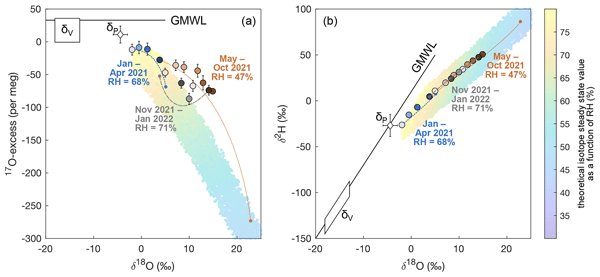
This research explores the use of a new isotope tracer, 17O excess, to better understand how hydrological processes drive large seasonal water level changes in small lakes in semiarid regions. The study shows that triple oxygen isotopes offer a more detailed understanding of these changes compared to traditional methods. These findings are valuable for reconstructing past climates and predicting how climate change, influenced by human activity, will affect small lakes in these dry areas.
Claudia Voigt, Anne Alexandre, Ilja M. Reiter, Jean-Philippe Orts, Christine Vallet-Coulomb, Clément Piel, Jean-Charles Mazur, Julie C. Aleman, Corinne Sonzogni, Helene Miche, and Jérôme Ogée
Biogeosciences, 20, 2161–2187, https://doi.org/10.5194/bg-20-2161-2023, https://doi.org/10.5194/bg-20-2161-2023, 2023
Short summary
Short summary
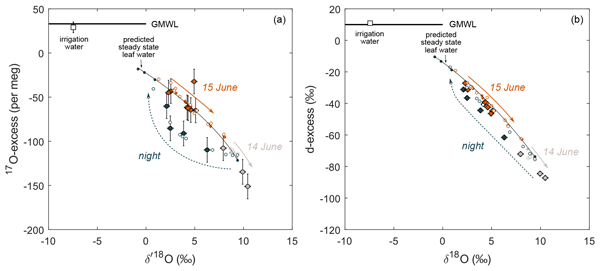
Data on past relative humidity (RH) ARE needed to improve its representation in Earth system models. A novel isotope parameter (17O-excess) of plant silica has been developed to quantify past RH. Using comprehensive monitoring and novel methods, we show how environmental and plant physiological parameters influence the 17O-excess of plant silica and leaf water, i.e. its source water. The insights gained from this study will help to improve estimates of RH from fossil plant silica deposits.
Rémy Bonnet, Julien Boé, Emilia Sanchez-Gomez, and Christophe Cassou
Earth Syst. Dynam., 17, 1299–1314, https://doi.org/10.5194/esd-17-1299-2026, https://doi.org/10.5194/esd-17-1299-2026, 2026
Short summary
Short summary
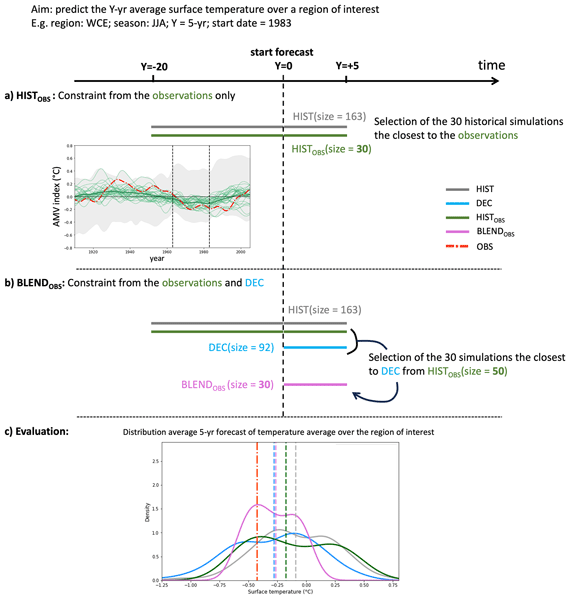
Near-term climate change projections are strongly affected by the uncertainty from internal climate variability. Here, we present a novel approach to reduce this uncertainty by combining information from both observations and decadal predictions to constrain climate projections. This new method can outperform decadal predictions and unconstrained ensemble temperature forecasts in some regions. This improved regional climate information could support more near-term targeted adaptation strategies.
Christine Vallet-Coulomb, Christophe Peugeot, Diego Chávez-Espinoza, Alexandre Zappelli, David Au Yang, Claudia Voigt, Alassane Abdoukarim, Valerie Kotchoni, Rita Houngue, Theodore Ouani, Simon Afouda, Maxime Wubda, Houegnon Géraud Vinel Gbewezoun, and Anne Alexandre
EGUsphere, https://doi.org/10.5194/egusphere-2026-5233, https://doi.org/10.5194/egusphere-2026-5233, 2026
This preprint is open for discussion and under review for Atmospheric Chemistry and Physics (ACP).
Short summary
Short summary
A seven-year precipitation isotope record from the West African Monsoon reveals that triple oxygen isotope composition is strongly influenced by convective organization, while also retaining a weaker signature of continental moisture recycling. The combined use of δ¹⁸O, d-excess and ¹⁷O-excess provides new observational constraints on the processes shaping tropical precipitation isotopes.
Nathan Rispal, Bruno Arfib, Philippe Audra, Pierre Henry, Benoît Viguier, Alexandre Zappelli, Ludovic Mocochain, Marianna Jagercikova, Christine Vallet-Coulomb, Hélène Miche, Laurent Cadilhac, Vianney Sivelle, and Olivier Delestre
Hydrol. Earth Syst. Sci., 30, 4699–4720, https://doi.org/10.5194/hess-30-4699-2026, https://doi.org/10.5194/hess-30-4699-2026, 2026
Short summary
Short summary
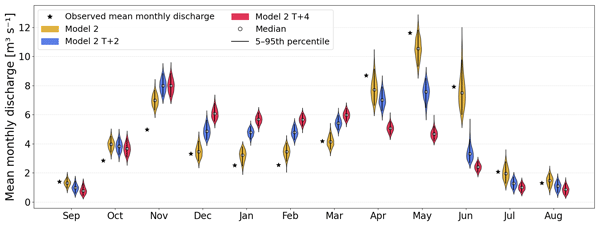
In mountain karst regions, seasonal snow is a key component of groundwater recharge, making them highly vulnerable to climate change. Using a rainfall-snow-discharge model in the southern French Alps, we show that warming shifts high-flow periods and causes a strong summer flow decline. Rapid karst flow paths lead to quick spring responses, limiting storage above the base level and increasing sensitivity to future hydrological change.
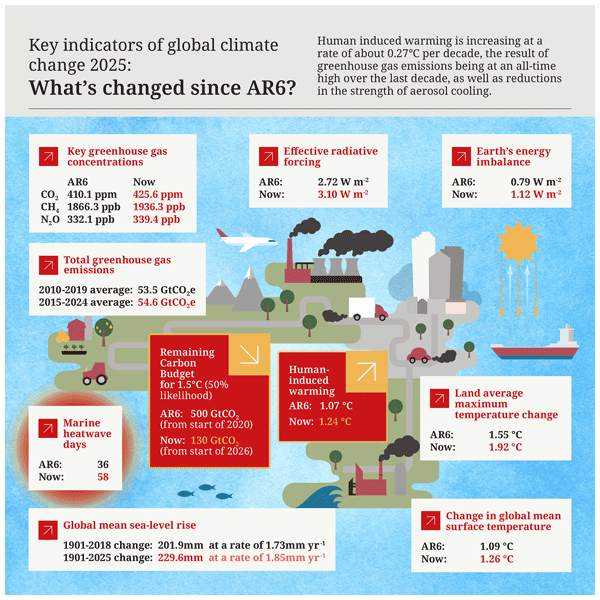
Piers M. Forster, Tristram Walsh, Chris Smith, William F. Lamb, Robin Lamboll, Christophe Cassou, Mathias Hauser, Zeke Hausfather, June-Yi Lee, Matthew D. Palmer, Karina von Schuckmann, Aimée B. A. Slangen, Sophie Szopa, Blair Trewin, Jeongeun Yun, Nathan P. Gillett, Stuart Jenkins, H. Damon Matthews, Krishnan Raghavan, Aurélien Ribes, Joeri Rogelj, Debbie Rosen, Xuebin Zhang, Myles Allen, Robbie M. Andrew, Chris Atkinson, Richard A. Betts, Antonio Bombelli, Samantha N. Burgess, Lijing Cheng, Helen E. Claxton, Pierre Friedlingstein, Thomas L. Frölicher, Catia M. Domingues, Thomas Gasser, Catherine H. Gregory, Rachel M. Hoesly, Daniel Huppmann, Masayoshi Ishii, Christopher Kadow, Alexia Karwat, John Kennedy, Rachel E. Killick, Mahesh V. M. Kovilakam, Paul B. Krummel, Xin Lan, Jean-François Lamarque, Aurélien Liné, Belén Martín-Míguez, Didier P. Monselesan, Colin Morice, Jens Mühle, Pino Mussak, Glen P. Peters, Anna Pirani, Julia Pongratz, Matthew Rigby, Robert Rohde, Abhishek Savita, Sonia I. Seneviratne, Steven J. Smith, Ghassan Taha, Caterina Tassone, Peter Thorne, Christopher Wells, Luke M. Western, Guido R. van der Werf, Susan E. Wijffels, Marco Zecchetto, Junting Zhong, Xiao-Ye Zhang, Valérie Masson-Delmotte, and Panmao Zhai
Earth Syst. Sci. Data, 18, 3889–3933, https://doi.org/10.5194/essd-18-3889-2026, https://doi.org/10.5194/essd-18-3889-2026, 2026
Short summary
Short summary
We give our annual update of key climate indicators. Our work quantifies the human contribution to global warming and the pace of climate change. This represents a large effort by the international community akin to an Intergovernmental Panel on Climate Change (IPCC) report.
Nicolas Bienville, Amaelle Landais, Sarah Fiorini, Clément Piel, Joana Sauze, Benoit Lemaire, Nicolas Geyskens, Frederic Prie, Olivier Jossoud, Clémence Paul, Justin Chaillot, Thomas Lauwers, Simon Chollet, Samuel Abiven, and Arnaud Dapoigny
EGUsphere, https://doi.org/10.5194/egusphere-2026-1369, https://doi.org/10.5194/egusphere-2026-1369, 2026
Short summary
Short summary
This study describes an instrumented system of 4 closed aquatic biological chambers that allows determination of the oxygen isotopic fractionation factors of aquatic biosphere in controlled realistic conditions. We validated our system with a freshwater algae species and determined its ¹⁸O/¹⁶O isotopic discrimination during respiration to be −30 ‰, in the upper range of previously published values.
Joana Sauze, Marie-Laure Tiouchichine, Alexandru Milcu, and Clément Piel
Atmos. Meas. Tech., 19, 2265–2277, https://doi.org/10.5194/amt-19-2265-2026, https://doi.org/10.5194/amt-19-2265-2026, 2026
Short summary
Short summary
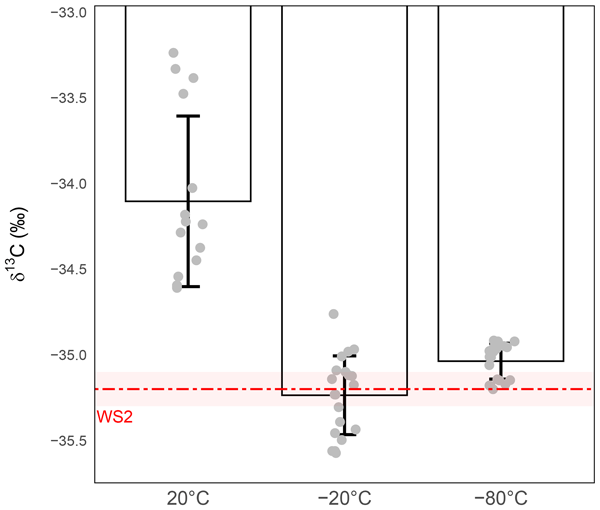
We present a simple workflow for high-precision δ¹³C-CO₂ analysis from 1 mL air samples using cryogenic pre-concentration and continuous-flow isotope-ratio mass spectrometry (IRMS). The method combines vial conditioning, dual sealing, and −80 °C storage to minimise gas loss. It achieves ±0.1 ‰ precision and stable isotopic values for up to one week of storage. This low-cost approach enables high-frequency δ¹³C-CO₂ measurements in volume-limited systems such as microcosm or chamber experiments.
Quentin Gunti, Benjamin Chazeau, Brice Temime-Roussel, Irène Xueref-Remy, Alexandre Armengaud, Henri Wortham, and Barbara D'Anna
Atmos. Chem. Phys., 26, 2893–2919, https://doi.org/10.5194/acp-26-2893-2026, https://doi.org/10.5194/acp-26-2893-2026, 2026
Short summary
Short summary
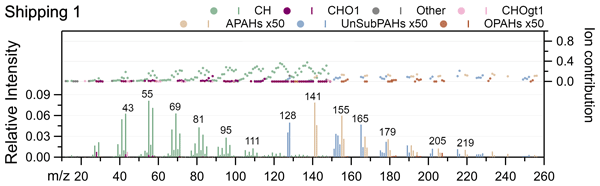
A measurement campaign in Toulon's port in 2021 showed a strong decrease in sulfur-related emissions after IMO2020, while black carbon, organics and polycyclic aromatic hydrocarbons (PAHs) remained at previous levels, as confirmed by their emission factors. Source analysis indicated that ships contributed notably to organic aerosol and alkylated PAHs, and dominated ultrafine particles. These results support continued monitoring as the Mediterranean becomes a sulfur emission control area in 2025.
Peter W. Thorne, John M. Nicklas, John J. Kennedy, Bruce Calvert, Baylor Fox-Kemper, Mark T. Richardson, Adrian Simmons, Ed Hawkins, Robert Rhode, Kathryn Cowtan, Nerilie J. Abram, Axel Andersson, Simon Noone, Phillipe Marbaix, Nathan Lenssen, Dirk Olonscheck, Tristram Walsh, Stephen Outten, Ingo Bethke, Bjorn H. Samset, Chris Smith, Anna Pirani, Jan Fuglestvedt, Lavanya Rajamani, Richard A. Betts, Elizabeth C. Kent, Blair Trewin, Colin Morice, Tim Osborn, Samantha N. Burgess, Oliver Geden, Andrew Parnell, Piers M. Forster, Chris Hewitt, Zeke Hausfather, Valerie Masson-Delmotte, Jochem Marotzke, Nathan Gillett, Sonia I. Seneviratne, Gavin A. Schmidt, Duo Chan, Stefan Brönnimann, Andy Reisinger, Matthew Menne, Maisa Rojas Corradi, Christopher Kadow, Peter Huybers, David B. Stephenson, Emily Wallis, Joeri Rogelj, Andrew Schurer, Karen McKinnon, Panmao Zhai, Fatima Driouech, Wilfran Moufouma Okia, Saeed Vazifehkhah, Sophie Szopa, Christopher J. Merchant, Shoji Hirahara, Masayoshi Ishii, Francois A. Engelbrecht, Qingxiang Li, June-Yi Lee, Alex J. Cannon, Christophe Cassou, Karina von Schuckmann, Amir H. Delju, and Ellie Murtagh
Earth Syst. Sci. Data Discuss., https://doi.org/10.5194/essd-2025-825, https://doi.org/10.5194/essd-2025-825, 2026
Revised manuscript has not been submitted
Short summary
Short summary
We reassess the basis for determining the present level of long-term global warming. Unbiased estimates of both realised warming and anthropogenic warming are possible that approximate a 20-year retrospective mean. Our resulting estimates of 1.40 [1.23–1.58] °C (realised) and 1.34 [1.18–1.50] °C (anthropogenic) as at end of 2024 highlight the urgency of immediate, far-reaching and sustained climate mitigation actions if we are to meet the long term temperature goal of the Paris Agreement.
Liang Feng, Paul I. Palmer, Luke Smallman, Jingfeng Xiao, Paolo Cristofanelli, Ove Hermansen, John Lee, Casper Labuschagne, Simonetta Montaguti, Steffen M. Noe, Stephen M. Platt, Xinrong Ren, Martin Steinbacher, and Irène Xueref-Remy
Atmos. Chem. Phys., 25, 13053–13076, https://doi.org/10.5194/acp-25-13053-2025, https://doi.org/10.5194/acp-25-13053-2025, 2025
Short summary
Short summary
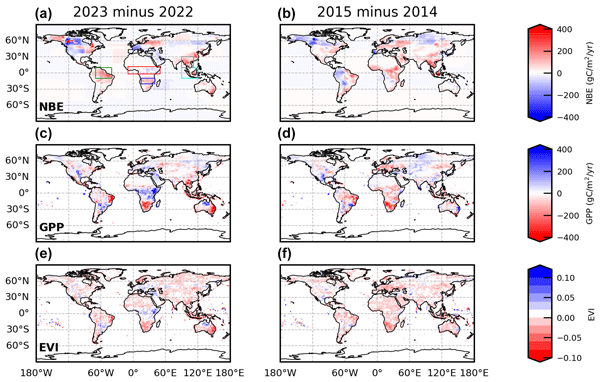
The year 2023 saw unexpectedly large global atmospheric CO2 growth. Satellite data reveal a role for increased tropical emissions. Larger emissions over eastern Brazil can be explained by warmer temperatures, which has led to exceptional drought, while hydrological changes play more of a role in emission increases elsewhere in the tropics. Broadly, we find that this situation continues into 2024.
Yosuke Niwa, Yasunori Tohjima, Yukio Terao, Tazu Saeki, Akihiko Ito, Taku Umezawa, Kyohei Yamada, Motoki Sasakawa, Toshinobu Machida, Shin-Ichiro Nakaoka, Hideki Nara, Hiroshi Tanimoto, Hitoshi Mukai, Yukio Yoshida, Shinji Morimoto, Shinya Takatsuji, Kazuhiro Tsuboi, Yousuke Sawa, Hidekazu Matsueda, Kentaro Ishijima, Ryo Fujita, Daisuke Goto, Xin Lan, Kenneth Schuldt, Michal Heliasz, Tobias Biermann, Lukasz Chmura, Jarsolaw Necki, Irène Xueref-Remy, and Damiano Sferlazzo
Atmos. Chem. Phys., 25, 6757–6785, https://doi.org/10.5194/acp-25-6757-2025, https://doi.org/10.5194/acp-25-6757-2025, 2025
Short summary
Short summary
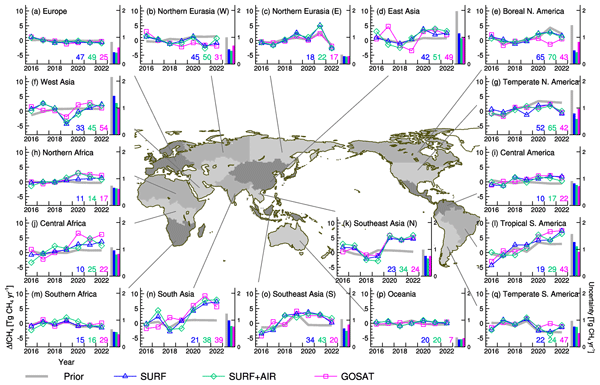
This study estimated regional and sectoral emission contributions to the unprecedented surge of atmospheric methane for 2020–2022. The methane is the second most important greenhouse gas, and its emissions reduction is urgently required to mitigate global warming. Numerical modeling-based estimates with three different sets of atmospheric observations consistently suggested large contributions of biogenic emissions from South Asia and Southeast Asia to the surge of atmospheric methane.
Piers M. Forster, Chris Smith, Tristram Walsh, William F. Lamb, Robin Lamboll, Christophe Cassou, Mathias Hauser, Zeke Hausfather, June-Yi Lee, Matthew D. Palmer, Karina von Schuckmann, Aimée B. A. Slangen, Sophie Szopa, Blair Trewin, Jeongeun Yun, Nathan P. Gillett, Stuart Jenkins, H. Damon Matthews, Krishnan Raghavan, Aurélien Ribes, Joeri Rogelj, Debbie Rosen, Xuebin Zhang, Myles Allen, Lara Aleluia Reis, Robbie M. Andrew, Richard A. Betts, Alex Borger, Jiddu A. Broersma, Samantha N. Burgess, Lijing Cheng, Pierre Friedlingstein, Catia M. Domingues, Marco Gambarini, Thomas Gasser, Johannes Gütschow, Masayoshi Ishii, Christopher Kadow, John Kennedy, Rachel E. Killick, Paul B. Krummel, Aurélien Liné, Didier P. Monselesan, Colin Morice, Jens Mühle, Vaishali Naik, Glen P. Peters, Anna Pirani, Julia Pongratz, Jan C. Minx, Matthew Rigby, Robert Rohde, Abhishek Savita, Sonia I. Seneviratne, Peter Thorne, Christopher Wells, Luke M. Western, Guido R. van der Werf, Susan E. Wijffels, Valérie Masson-Delmotte, and Panmao Zhai
Earth Syst. Sci. Data, 17, 2641–2680, https://doi.org/10.5194/essd-17-2641-2025, https://doi.org/10.5194/essd-17-2641-2025, 2025
Short summary
Short summary
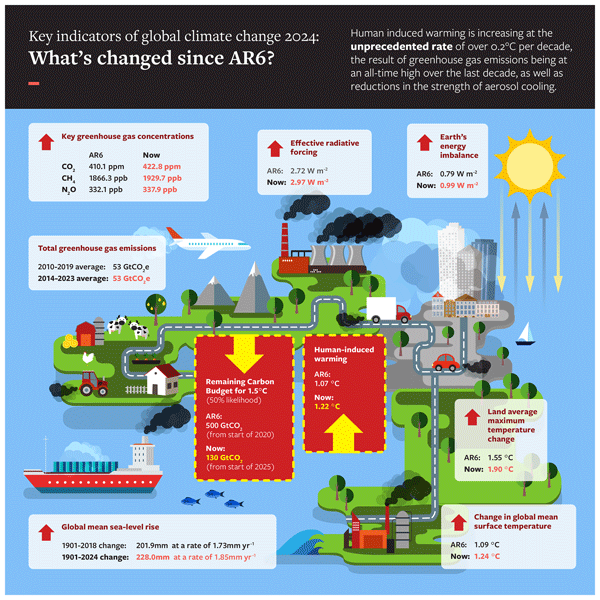
In a rapidly changing climate, evidence-based decision-making benefits from up-to-date and timely information. Here we compile monitoring datasets to track real-world changes over time. To make our work relevant to policymakers, we follow methods from the Intergovernmental Panel on Climate Change (IPCC). Human activities are increasing the Earth's energy imbalance and driving faster sea-level rise compared to the IPCC assessment.
Clémence Paul, Clément Piel, Joana Sauze, Olivier Jossoud, Arnaud Dapoigny, Daniele Romanini, Frédéric Prié, Sébastien Devidal, Roxanne Jacob, Alexandru Milcu, and Amaëlle Landais
Geosci. Instrum. Method. Data Syst., 14, 91–101, https://doi.org/10.5194/gi-14-91-2025, https://doi.org/10.5194/gi-14-91-2025, 2025
Short summary
Short summary
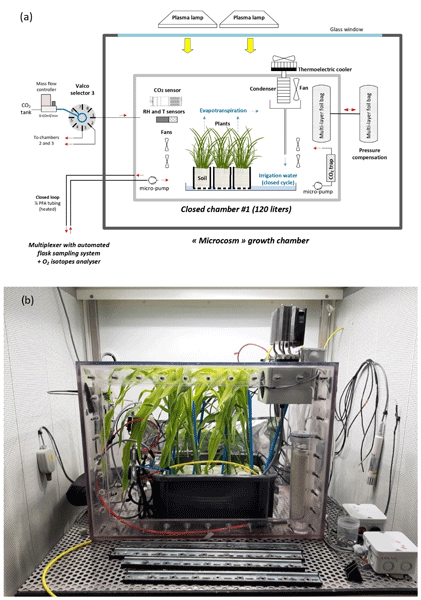
Our study investigated the influence of plant processes on oxygen dynamics, crucial for paleoclimatology. By examining maize respiration and photosynthesis using advanced techniques, we enhanced our understanding of past climates through ice core analysis.
Claudia Voigt, Fernando Gázquez, Lucía Martegani, Ana Isabel Sánchez Villanueva, Antonio Medina, Rosario Jiménez-Espinosa, Juan Jiménez-Millán, and Miguel Rodríguez-Rodríguez
Hydrol. Earth Syst. Sci., 29, 1783–1806, https://doi.org/10.5194/hess-29-1783-2025, https://doi.org/10.5194/hess-29-1783-2025, 2025
Short summary
Short summary
This research explores the use of a new isotope tracer, 17O excess, to better understand how hydrological processes drive large seasonal water level changes in small lakes in semiarid regions. The study shows that triple oxygen isotopes offer a more detailed understanding of these changes compared to traditional methods. These findings are valuable for reconstructing past climates and predicting how climate change, influenced by human activity, will affect small lakes in these dry areas.
Lilian Vallet, Charbel Abdallah, Thomas Lauvaux, Lilian Joly, Michel Ramonet, Philippe Ciais, Morgan Lopez, Irène Xueref-Remy, and Florent Mouillot
Biogeosciences, 22, 213–242, https://doi.org/10.5194/bg-22-213-2025, https://doi.org/10.5194/bg-22-213-2025, 2025
Short summary
Short summary
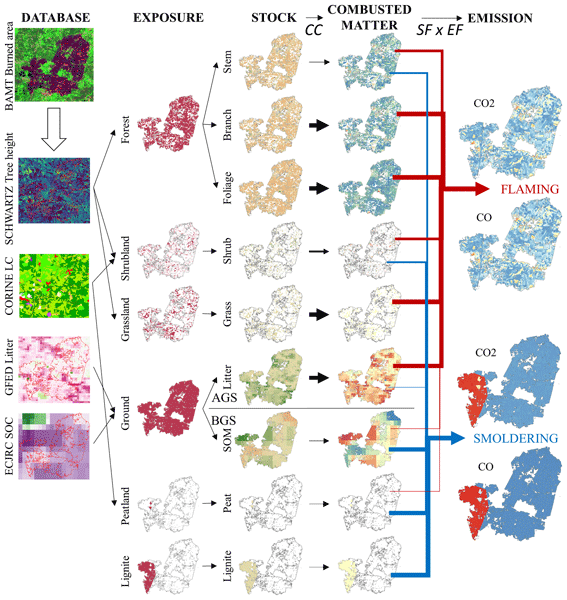
The 2022 fire season had a huge impact on European temperate forest, with several large fires exhibiting prolonged soil combustion reported. We analyzed CO and CO2 concentration recorded at nearby atmospheric towers, revealing intense smoldering combustion. We refined a fire emission model to incorporate this process. We estimated 7.95 Mteq CO2 fire emission, twice the global estimate. Fires contributed to 1.97 % of France's annual carbon footprint, reducing forest carbon sink by 30 % this year.
Clément Piel, Daniele Romanini, Morgane Farradèche, Justin Chaillot, Clémence Paul, Nicolas Bienville, Thomas Lauwers, Joana Sauze, Kévin Jaulin, Frédéric Prié, and Amaëlle Landais
Atmos. Meas. Tech., 17, 6647–6658, https://doi.org/10.5194/amt-17-6647-2024, https://doi.org/10.5194/amt-17-6647-2024, 2024
Short summary
Short summary
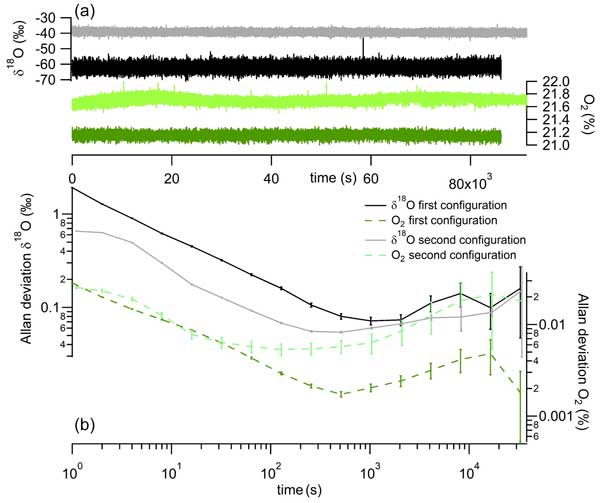
This paper introduces a new optical gas analyzer based on an optical-feedback cavity-enhanced absorption spectroscopy (OF-CEAS) technique enabling high-temporal-resolution and high-precision measurements of oxygen isotopes (δ18O) and dioxygen (O2) concentration of atmospheric O2 (respectively 0.06 ‰ and 0.002 % over 10 min integration). The results underscore the good agreement with isotope ratio mass spectrometry measurements and the ability of the instrument to monitor biological processes.
Maëlie Chazette, Patrick Chazette, Ilja M. Reiter, Xiaoxia Shang, Julien Totems, Jean-Philippe Orts, Irène Xueref-Remy, and Nicolas Montes
Biogeosciences, 21, 3289–3303, https://doi.org/10.5194/bg-21-3289-2024, https://doi.org/10.5194/bg-21-3289-2024, 2024
Short summary
Short summary
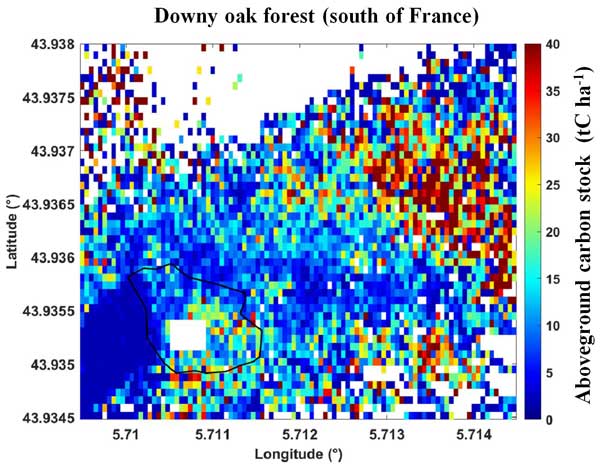
The approach presented is original in its coupling between field observations and airborne lidar observations. It has been applied to an instrumented reference forest site in the south of France, which is heavily impacted by climate change. It leads to the evaluation of tree heights and ends with assessments of aerial and root carbon stocks. A detailed assessment of uncertainties is presented to add a level of reliability to the scientific products delivered.
Philip Meister, Anne Alexandre, Hannah Bailey, Philip Barker, Boris K. Biskaborn, Ellie Broadman, Rosine Cartier, Bernhard Chapligin, Martine Couapel, Jonathan R. Dean, Bernhard Diekmann, Poppy Harding, Andrew C. G. Henderson, Armand Hernandez, Ulrike Herzschuh, Svetlana S. Kostrova, Jack Lacey, Melanie J. Leng, Andreas Lücke, Anson W. Mackay, Eniko Katalin Magyari, Biljana Narancic, Cécile Porchier, Gunhild Rosqvist, Aldo Shemesh, Corinne Sonzogni, George E. A. Swann, Florence Sylvestre, and Hanno Meyer
Clim. Past, 20, 363–392, https://doi.org/10.5194/cp-20-363-2024, https://doi.org/10.5194/cp-20-363-2024, 2024
Short summary
Short summary
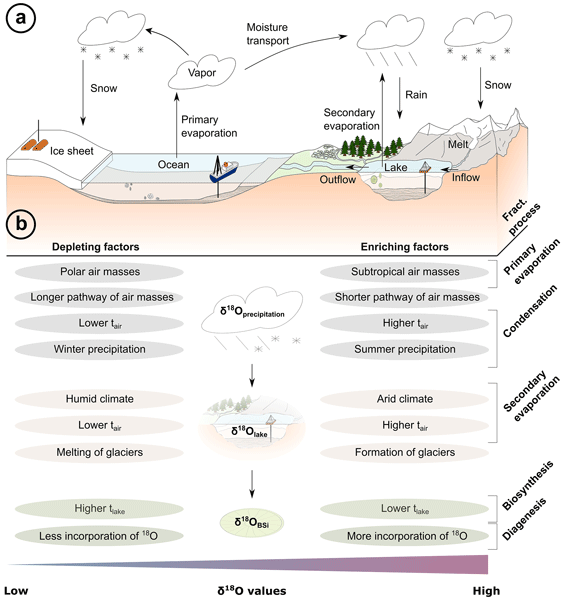
This paper presents the first comprehensive compilation of diatom oxygen isotope records in lake sediments (δ18OBSi), supported by lake basin parameters. We infer the spatial and temporal coverage of δ18OBSi records and discuss common hemispheric trends on centennial and millennial timescales. Key results are common patterns for hydrologically open lakes in Northern Hemisphere extratropical regions during the Holocene corresponding to known climatic epochs, i.e. the Holocene Thermal Maximum.
Jérôme Texier, Julio Gonçalvès, Thomas Stieglitz, Christine Vallet-Coulomb, Jérôme Labille, Vincent Marc, Angélique Poulain, and Philippe Dussouillez
Hydrol. Earth Syst. Sci. Discuss., https://doi.org/10.5194/hess-2023-239, https://doi.org/10.5194/hess-2023-239, 2024
Manuscript not accepted for further review
Short summary
Short summary
Understanding the relationship between rivers and alluvial aquifers is crucial, yet challenging. Through a combined approach of tracing and modeling in a French Rhône River site, we reveal significant insights. We quantify the impact of pumping on water flow and identify the primary water sources. Our findings aid sustainable water management in regions facing similar challenges, offering practical guidance for policymakers on groundwater use.
Claudia Voigt, Anne Alexandre, Ilja M. Reiter, Jean-Philippe Orts, Christine Vallet-Coulomb, Clément Piel, Jean-Charles Mazur, Julie C. Aleman, Corinne Sonzogni, Helene Miche, and Jérôme Ogée
Biogeosciences, 20, 2161–2187, https://doi.org/10.5194/bg-20-2161-2023, https://doi.org/10.5194/bg-20-2161-2023, 2023
Short summary
Short summary
Data on past relative humidity (RH) ARE needed to improve its representation in Earth system models. A novel isotope parameter (17O-excess) of plant silica has been developed to quantify past RH. Using comprehensive monitoring and novel methods, we show how environmental and plant physiological parameters influence the 17O-excess of plant silica and leaf water, i.e. its source water. The insights gained from this study will help to improve estimates of RH from fossil plant silica deposits.
Clémence Paul, Clément Piel, Joana Sauze, Nicolas Pasquier, Frédéric Prié, Sébastien Devidal, Roxanne Jacob, Arnaud Dapoigny, Olivier Jossoud, Alexandru Milcu, and Amaëlle Landais
Biogeosciences, 20, 1047–1062, https://doi.org/10.5194/bg-20-1047-2023, https://doi.org/10.5194/bg-20-1047-2023, 2023
Short summary
Short summary
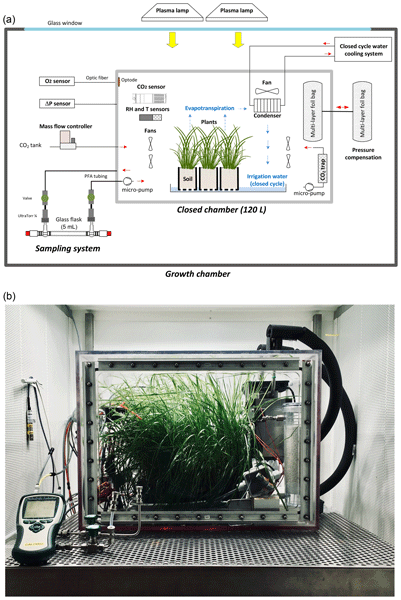
To improve the interpretation of the δ18Oatm and Δ17O of O2 in air bubbles in ice cores, we need to better quantify the oxygen fractionation coefficients associated with biological processes. We performed a simplified analogue of the terrestrial biosphere in a closed chamber. We found a respiration fractionation in agreement with the previous estimates at the microorganism scale, and a terrestrial photosynthetic fractionation was found. This has an impact on the estimation of the Dole effect.
Constantin Ardilouze, Damien Specq, Lauriane Batté, and Christophe Cassou
Weather Clim. Dynam., 2, 1033–1049, https://doi.org/10.5194/wcd-2-1033-2021, https://doi.org/10.5194/wcd-2-1033-2021, 2021
Short summary
Short summary
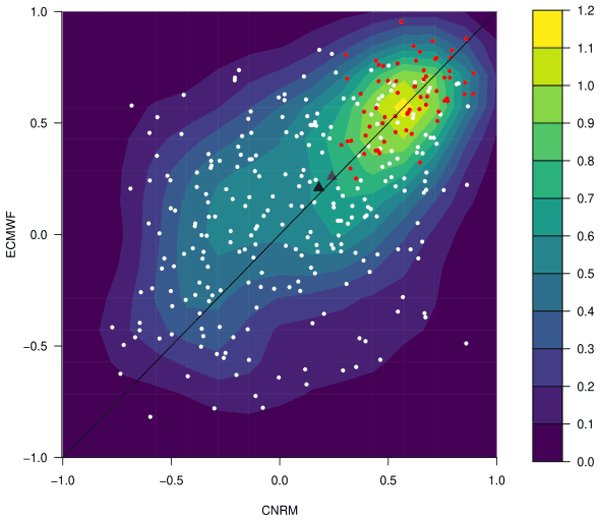
Forecasting temperature patterns beyond 2 weeks is very challenging, although occasionally, forecasts show more skill over Europe. Our study indicates that the level of skill varies concurrently for two distinct forecast systems. It also shows that higher skill occurs when forecasts are issued during specific patterns of atmospheric circulation that tend to be particularly persistent.
These results could help forecasters estimate a priori how trustworthy extended-range forecasts will be.
Cited articles
Aemisegger, F. and Sjolte, J.: A climatology of strong large-scale ocean evaporation events. Part II: Relevance for the deuterium excess signature of the evaporation flux, J. Climate, 31, 7313–7336, https://doi.org/10.1175/JCLI-D-17-0592.1, 2018.
Aemisegger, F., Pfahl, S., Sodemann, H., Lehner, I., Seneviratne, S. I., and Wernli, H.: Deuterium excess as a proxy for continental moisture recycling and plant transpiration, Atmos. Chem. Phys., 14, 4029–4054, https://doi.org/10.5194/acp-14-4029-2014, 2014.
Aemisegger, F., Spiegel, J. K., Pfahl, S., Sodemann, H., Eugster, W., and Wernli, H.: Isotope meteorology of cold front passages: A case study combining observations and modelling, Geophys. Res. Lett., 42, 5652–5660, https://doi.org/10.1002/2015GL063988, 2015.
Affolter, S., Häuselmann, A. D., Fleitmann, D., Häuselmann, P., and Leuenberger, M.: Triple isotope (δD, δ17O, δ18O) study on precipitation, drip water and speleothem fluid inclusions for a Western Central European cave (NW Switzerland), Quaternary Sci. Rev., 127, 73–89, https://doi.org/10.1016/j.quascirev.2015.08.030, 2015.
Alexandre, A., Landais, A., Vallet-Coulomb, C., Piel, C., Devidal, S., Pauchet, S., Sonzogni, C., Couapel, M., Pasturel, M., Cornuault, P., Xin, J., Mazur, J.-C., Prié, F., Bentaleb, I., Webb, E., Chalié, F., and Roy, J.: The triple oxygen isotope composition of phytoliths as a proxy of continental atmospheric humidity: insights from climate chamber and climate transect calibrations, Biogeosciences, 15, 3223–3241, https://doi.org/10.5194/bg-15-3223-2018, 2018.
Alexandre, A., Webb, E., Landais, A., Piel, C., Devidal, S., Sonzogni, C., Couapel, M., Mazur, J.-C., Pierre, M., Prié, F., Vallet-Coulomb, C., Outrequin, C., and Roy, J.: Effects of leaf length and development stage on the triple oxygen isotope signature of grass leaf water and phytoliths: insights for a proxy of continental atmospheric humidity, Biogeosciences, 16, 4613–4625, https://doi.org/10.5194/bg-16-4613-2019, 2019.
Arellano, L. N., Beverly, E. J., Voarintsoa, N. R. G., Skinner, C. B., Schauer, A. J., and Steig, E. J.: Triple oxygen isotope variability of precipitation in a tropical mountainous region, Geochim. Cosmochim. Ac., 385, 1–15, https://doi.org/10.1016/j.gca.2024.09.024, 2024.
Arnault, J., Jung, G., Haese, B., Fersch, B., Rummler, T., Wei, J., Zhang, Z., and Kunstmann, H.: A Joint Soil-Vegetation-Atmospheric Modeling Procedure of Water Isotopologues: Implementation and Application to Different Climate Zones With WRF-Hydro-Iso, J. Adv. Model. Earth Sy., 13, e2021MS002562, https://doi.org/10.1029/2021MS002562, 2021.
Aron, P. G., Levin, N. E., Beverly, E. J., Huth, T. E., Passey, B. H., Pelletier, E. M., Poulsen, C. J., Winkelstern, I. Z., and Yarian, D. A.: Triple oxygen isotopes in the water cycle, Chem. Geol., 565, 120026, https://doi.org/10.1016/j.chemgeo.2020.120026, 2021.
Baldini, L. M., McDermott, F., Foley, A. M., and Baldani, J. U. L.: Spatial variability in the European winter precipitation δ18O-NAO relationship: Implications for reconstructing NAO-mode climate variability in the Holocene, Geophys. Res. Lett., 35, L04709, https://doi.org/10.1029/2007GL032027, 2008.
Barkan, E. and Luz, B.: High precision measurements of
Bartsch, S., Stegehuis, A. I., Boissard, C., Lathière, J., Peterschmitt, J. Y., Reiter, I. M., Gauquelin, T., Baldy, V., Genesio, L., Matteucci, G., Fernandez, C., and Guenet, B.: Impact of precipitation, air temperature and abiotic emissions on gross primary production in Mediterranean ecosystems in Europe, Eur. J. For. Res., 139, 111–126, https://doi.org/10.1007/s10342-019-01246-7, 2020.
Bastrikov, V., Steen-Larsen, H. C., Masson-Delmotte, V., Gribanov, K., Cattani, O., Jouzel, J., and Zakharov, V.: Continuous measurements of atmospheric water vapour isotopes in western Siberia (Kourovka), Atmos. Meas. Tech., 7, 1763–1776, https://doi.org/10.5194/amt-7-1763-2014, 2014.
Berkelhammer, M., Hu, J., Bailey, A., Noone, D., Still, C. J., Barnard, H., Gochis, D., Hsiao, G. S., Rahn, T., and Turnipseed, A.: The nocturnal water cycle in an open-canopy forest, J. Geophys. Res.-Atmos., 118, 10225–10242, https://doi.org/10.1002/jgrd.50701, 2013.
Bershaw, J., Penny, S. M., and Garzione, C. N.: Stable isotopes of modern water across the Himalaya and eastern Tibetan Plateau: Implications for estimates of paleoelevation and paleoclimate, J. Geophys. Res.-Atmos., 117, 1–18, https://doi.org/10.1029/2011JD016132, 2012.
Bland, J. M. and Altman, D. G.: Multiple significance tests: the Bonferroni method, Brit. Med. J., 310, 170, https://doi.org/10.1136/bmj.310.6973.170, 1995.
Casellas, E., Latron, J., Cayuela, C., Bech, J., Udina, M., Sola, Y., Lee, K. O., and Llorens, P.: Moisture origin and characteristics of the isotopic signature of rainfall in a Mediterranean mountain catchment (Vallcebre, eastern Pyrenees), J. Hydrol., 575, 767–779, https://doi.org/10.1016/j.jhydrol.2019.05.060, 2019.
Cassou, C.: Intraseasonal interaction between the Madden-Julian Oscillation and the North Atlantic Oscillation, Nature, 455, 523–527, https://doi.org/10.1038/nature07286, 2008.
Cassou, C., Hurrell, J. W., and Deser, C.: North Atlantic Winter Climate Regimes: Spatial Asymmetry, Stationarity with Time, and Oceanic Forcing, J. Climate, 17, 1055–1068, https://doi.org/10.1175/1520-0442(2004)017<1055:NAWCRS>2.0.CO;2, 2004.
Cassou, C., Terray, L., and Phillips, A. S.: Tropical Atlantic Influence on European Heat Waves, J. Climate, 18, 2805–2811, https://doi.org/10.1175/JCLI3506.1, 2005.
Celle-Jeanton, H., Travi, Y., and Blavoux, B.: Isotopic typology of the precipitation in the Western Mediterranean region at the three different time scales, Geophys. Res. Lett., 28, 1215–1218, https://doi.org/10.1029/2000GL012407, 2001.
Craig, H. and Gordon, L. I.: Deuterium and oxygen 18 variations in the ocean and the marine atmosphere, in: Stable Isotopes in Oceanographic Studies and Paleotemperatures, edited by: E. Tongiorgi, Consiglio Nazionale delle Ricerche Laboratorio du Geologia Nucleare, Pisa, Italy, 9–130, http://yncenter.sites.yale.edu/sites/default/files/shen_jing_jan_2013.pdf (last access: 29 June 2026), 1965.
Cruz-San Julian, J., Araguas-Araguas, L., Rozanski, K., Benavente, J., Cardenal, J., Hidalgo, M. C., Garcia-Lopez, S., Martinez-Garrido, J. C., Moral, F., and Olias, M.: Sources of precipitation over South-Eastern Spain and groundwater recharge. An isotopic study, Tellus B, 44, 226–236, https://doi.org/10.1034/j.1600-0889.1992.t01-2-00005.x, 1992.
Dansgaard, W.: Stable isotopes in precipitation, Tellus, 16, 436–468, https://doi.org/10.3402/tellusa.v16i4.8993, 1964.
Deininger, M., Werner, M., and McDermott, F.: North Atlantic Oscillation controls on oxygen and hydrogen isotope gradients in winter precipitation across Europe; implications for palaeoclimate studies, Clim. Past, 12, 2127–2143, https://doi.org/10.5194/cp-12-2127-2016, 2016.
Delattre, H., Vallet-Coulomb, C., and Sonzogni, C.: Deuterium excess in the atmospheric water vapour of a Mediterranean coastal wetland: regional vs. local signatures, Atmos. Chem. Phys., 15, 10167–10181, https://doi.org/10.5194/acp-15-10167-2015, 2015.
Desphande, R. D., Maurya, A. S., Kumar, B., Sarkar, A., and Gupta, S. K.: Rain-vapor interaction and vapor source identification using stable isotopes from semiarid western India, J. Geophys. Res.-Atmos., 115, D23311, https://doi.org/10.1029/2010JD014458, 2010.
Dütsch, M., Pfahl, S., and Sodemann, H.: The impact of nonequilibrium and equilibrium fractionation on two different deuterium excess definitions, J. Geophys. Res.-Atmos., 122, 12732–12746, https://doi.org/10.1002/2017JD027085, 2017.
Dütsch, M., Fairall, C. W., Blossey, P. N., and Fiorella, R. P.: A new theoretical framework for parameterizing nonequilibrium fractionation during evaporation from the ocean, J. Adv. Model. Earth Syst., 18, e2025MS005229, https://doi.org/10.1029/2025MS005229, 2026.
Field, R. D.: Observed and modeled controls on precipitation δ18O over Europe: From local temperature to the Northern Annular Mode, J. Geophys. Res., 115, D12101, https://doi.org/10.1029/2009JD013370, 2010.
Galewsky, J., Steen-Larsen, H. C., Field, R. D., Worden, J., Risi, C., and Schneider, M.: Stable isotopes in atmospheric water vapor and applications to the hydrologic cycle, Rev. Geophys., 54, 809–865, https://doi.org/10.1002/2015RG000512, 2016.
Gat, J. R.: Oxygen and Hydrogen Isotopes in the Hydrologic Cycle, Annu. Rev. Earth Pl. Sc., 24, 225–262, https://doi.org/10.1146/annurev.earth.24.1.225, 1996.
Gázquez, F., Morellón, M., Bauska, T., Herwartz, D., Surma, J., Moreno, A., Staubwasser, M., Valero-Garcés, B., Delgado-Huertas, A., and Hodell, D. A.: Triple oxygen and hydrogen isotopes of gypsum hydration water for quantitative paleo-humidity reconstruction, Earth Planet. Sc. Lett., 481, 177–188, https://doi.org/10.1016/j.epsl.2017.10.020, 2018.
Gázquez, F., Jiménez-Espejo, F., Rodríguez-Rodríguez, M., Martegani, L., Voigt, C., Ruíz-Lara, D., Moreno, A., Valero-Garcés, B., Morellón, M., and Martín-Puertas, C.: Roman water management impacted the hydrological functioning of wetlands during drought periods, Sci. Rep.-UK, 13, 18815, https://doi.org/10.1038/s41598-023-46010-5, 2023.
Giménez, R., Bartolomé, M., Gázquez, F., Iglesias, M., and Moreno, A.: Underlying Climate Controls in Triple Oxygen (16O, 17O, 18O) and Hydrogen (1H, 2H) Isotopes Composition of Rainfall (Central Pyrenees), Front. Earth Sci., 9, 633698, https://doi.org/10.3389/feart.2021.633698, 2021.
Graf, P., Wernli, H., Pfahl, S., and Sodemann, H.: A new interpretative framework for below-cloud effects on stable water isotopes in vapour and rain, Atmos. Chem. Phys., 19, 747–765, https://doi.org/10.5194/acp-19-747-2019, 2019.
Griffis, T. J., Wood, J. D., Baker, J. M., Lee, X., Xiao, K., Chen, Z., Welp, L. R., Schultz, N. M., Gorski, G., Chen, M., and Nieber, J.: Investigating the source, transport, and isotope composition of water vapor in the planetary boundary layer, Atmos. Chem. Phys., 16, 5139–5157, https://doi.org/10.5194/acp-16-5139-2016, 2016.
Gröning, M., Lutz, H. O., Roller-Lutz, Z., Kralik, M., Gourcy, L., and Pöltenstein, L.: A simple rain collector preventing water re-evaporation dedicated for δ18O and δ2H analysis of cumulative precipitation samples, J. Hydrol., 448–449, 195–200, https://doi.org/10.1016/j.jhydrol.2012.04.041, 2012.
Guo, J., Zhang, J., Shao, J., Chen, T., Bai, K., Sun, Y., Li, N., Wu, J., Li, R., Li, J., Guo, Q., Cohen, J. B., Zhai, P., Xu, X., and Hu, F.: A merged continental planetary boundary layer height dataset based on high-resolution radiosonde measurements, ERA5 reanalysis, and GLDAS, Earth Syst. Sci. Data, 16, 1–14, https://doi.org/10.5194/essd-16-1-2024, 2024.
He, S., Jackisch, D., Samanta, D., Yi, P. K. Y., Liu, G., Wang, X., and Goodkin, N. F.: Understanding Tropical Convection Through Triple Oxygen Isotopes of Precipitation From the Maritime Continent, J. Geophys. Res.-Atmos., 126, e2020JD033418, https://doi.org/10.1029/2020JD033418, 2021.
Hersbach, H., Bell, B., Berrisford, P., Hirahara, S., Horányi, A., Muñoz-Sabater, J., Nicolas, J., Peubey, C., Radu, R., Schepers, D., Simmons, A., Soci, C., Abdalla, S., Abellan, X., Balsamo, G., Bechtold, P., Biavati, G., Bidlot, J., Bonavita, M., De Chiara, G., Dahlgren, P., Dee, D., Diamantakis, M., Dragani, R., Flemming, J., Forbes, R., Fuentes, M., Geer, A., Haimberger, L., Healy, S., Hogan, R. J., Hólm, E., Janisková, M., Keeley, S., Laloyaux, P., Lopez, P., Lupu, C., Radnoti, G., de Rosnay, P., Rozum, I., Vamborg, F., Villaume, S., and Thépaut, J. N.: The ERA5 global reanalysis, Q. J. Roy. Meteor. Soc., 146, 1999–2049, https://doi.org/10.1002/qj.3803, 2020.
Horita, J., Rozanski, K., and Cohen, S.: Isotope effects in the evaporation of water: a status report of the Craig–Gordon model, Isot. Environ. Health Stud., 44, 23–49, https://doi.org/10.1080/10256010801887174, 2008.
Huang, L. and Wen, X.: Temporal variations of atmospheric water vapor δD and δ18O above an arid artificial oasis cropland in the Heihe River Basin, J. Geophys. Res.-Atmos., 119, 11456–11476, https://doi.org/10.1002/2014JD021891, 2014.
IAEA/WMO: The Global Network of Isotopes in Precipitation database, https://www.iaea.org/services/networks/gnip, last access: 26 November 2025.
Lai, C. T. and Ehleringer, J. R.: Deuterium excess reveals diurnal sources of water vapor in forest air, Oecologia, 165, 213–223, https://doi.org/10.1007/s00442-010-1721-2, 2011.
Landais, A., Barkan, E., Yakir, D., and Luz, B.: The triple isotopic composition of oxygen in leaf water, Geochim. Cosmochim. Ac., 70, 4105–4115, https://doi.org/10.1016/j.gca.2006.06.1545, 2006.
Landais, A., Risi, C., Bony, S., Vimeux, F., Descroix, L., Falourd, S., and Bouygues, A.: Combined measurements of 17Oexcess and d-excess in African monsoon precipitation: Implications for evaluating convective parameterizations, Earth Planet. Sc. Lett., 298, 104–112, https://doi.org/10.1016/j.epsl.2010.07.033, 2010.
Landais, A., Steen-Larsen, H. C., Guillevic, M., Masson-Delmotte, V., Vinther, B., and Winkler, R.: Triple isotopic composition of oxygen in surface snow and water vapor at NEEM (Greenland), Geochim. Cosmochim. Ac., 77, 304–316, https://doi.org/10.1016/j.gca.2011.11.022, 2012.
Leuenberger, M. C. and Ranjan, S.: Disentangle Kinetic From Equilibrium Fractionation Using Primary (δ17O, δ18O, δD) and Secondary (Δ17O, dex) Stable Isotope Parameters on Samples From the Swiss Precipitation Network, Front. Earth Sci., 9, 598061, https://doi.org/10.3389/feart.2021.598061, 2021.
Li, S., Levin, N. E., and Chesson, L. A.: Continental scale variation in 17O-excess of meteoric waters in the United States, Geochim. Cosmochim. Ac., 164, 110–126, https://doi.org/10.1016/j.gca.2015.04.047, 2015.
Li, S., Levin, N. E., Soderberg, K., Dennis, K. J., and Caylor, K. K.: Triple oxygen isotope composition of leaf waters in Mpala, central Kenya, Earth Planet. Sc. Lett., 468, 38–50, https://doi.org/10.1016/j.epsl.2017.02.015, 2017.
Liang, Q. S., Sha, L. J., Li, J. Y., Zhang, J., Wang, X. J., Zhou, S. L., Lin, F. Y., Xue, Y. X., Duan, R., He, Y. T., Li, H. Y., Wang, C. Y., Liu, B., Hou, Y. K., Chen, C. J., Cheng, H., and Li, T. Y.: Seasonal Variations and Controls on Triple Oxygen and Hydrogen Isotopes in Precipitation – A Case Study From Monitoring in Southwest China, J. Geophys. Res.-Atmos., 129, e2023JD040654, https://doi.org/10.1029/2023JD040654, 2024.
Lin, Y., Clayton, R. N., Huang, L., Nakamura, N., and Lyons, J. R.: Oxygen isotope anomaly observed in water vapor from Alert, Canada and the implication for the stratosphere, P. Natl. Acad. Sci. USA, 110, 15608–15613, https://doi.org/10.1073/pnas.1313014110, 2013.
Lin, Y., Wu, N., Ta, K., Landais, A., and Peng, X.: Triple Oxygen Isotopic Compositions of Ocean Water from the Mariana Trench, ACS Earth Space Chem., 5, 3087–3096, https://doi.org/10.1021/acsearthspacechem.1c00187, 2021.
Luz, B. and Barkan, E.: Variations of
Majoube, M.: Fractionnement en oxygène 18 et en deutérium entre l'eau et sa vapeur, J. Chim. Phys., 68, 1423–1436, https://doi.org/10.1051/jcp/1971681423, 1971.
Mercer, J. J., Liefert, D. T., and Williams, D. G.: Atmospheric vapour and precipitation are not in isotopic equilibrium in a continental mountain environment, Hydrol. Process., 34, 3078–3101, https://doi.org/10.1002/hyp.13775, 2020.
Merlivat, L. and Jouzel, J.: Global climatic interpretation of the deuterium-oxygen 18 relationship for precipitation, J. Geophys. Res., 84, 5029–5033, https://doi.org/10.1029/JC084iC08p05029, 1979.
Michelangeli, P.-A., Vautard, R., and Legras, B.: Weather regimes: Recurrence and Quasi Stationarity, J. Atmos. Sci., 52, 1237–1256, https://doi.org/10.1175/1520-0469(1995)052<1237:WRRAQS>2.0.CO;2, 1995.
NASA/GES DISC: GLDAS Land/Sea Mask Dataset, 1° resolution, Global Land Data Assimilation System (GLDAS), based on MOD44W MODIS water mask (Carroll et al., 2009), https://ldas.gsfc.nasa.gov/gldas/vegetation-class-mask (last access: 19 March 2026), 2026.
Natali, S., Baneschi, I., Doveri, M., Giannecchini, R., Selmo, E., and Zanchetta, G.: Meteorological and geographical control on stable isotopic signature of precipitation in a western Mediterranean area (Tuscany, Italy): Disentangling a complex signal, J. Hydrol., 603, 126944, https://doi.org/10.1016/j.jhydrol.2021.126944, 2021.
Natali, S., Doveri, M., Giannecchini, R., Baneschi, I., and Zanchetta, G.: Is the deuterium excess in precipitation a reliable tracer of moisture sources and water resources fate in the western Mediterranean? New insights from Apuan Alps (Italy), J. Hydrol., 614, 128497, https://doi.org/10.1016/j.jhydrol.2022.128497, 2022.
Obermann, A., Bastin, S., Belamari, S., Conte, D., Gaertner, M. A., Li, L., and Ahrens, B.: Mistral and Tramontane wind speed and wind direction patterns in regional climate simulations, Clim. Dynam., 51, 1059–1076, https://doi.org/10.1007/s00382-016-3053-3, 2018.
Outrequin, C., Alexandre, A., Vallet-Coulomb, C., Piel, C., Devidal, S., Landais, A., Couapel, M., Mazur, J.-C., Peugeot, C., Pierre, M., Prié, F., Roy, J., Sonzogni, C., and Voigt, C.: The triple oxygen isotope composition of phytoliths, a new proxy of atmospheric relative humidity: controls of soil water isotope composition, temperature, CO2 concentration and relative humidity, Clim. Past, 17, 1881–1902, https://doi.org/10.5194/cp-17-1881-2021, 2021.
Penchenat, T., Vimeux, F., Daux, V., Cattani, O., Viale, M., Villalba, R., Srur, A., and Outrequin, C.: Isotopic Equilibrium Between Precipitation and Water Vapor in Northern Patagonia and Its Consequences on
Pfahl, S. and Sodemann, H.: What controls deuterium excess in global precipitation?, Clim. Past, 10, 771–781, https://doi.org/10.5194/cp-10-771-2014, 2014.
Pfahl, S. and Wernli, H.: Air parcel trajectory analysis of stable isotopes in water vapor in the eastern Mediterranean, J. Geophys. Res.-Atmos., 113, 1–16, https://doi.org/10.1029/2008JD009839, 2008.
Pierchala, A., Rozanski, K., Dulinski, M., and Gorczyca, Z.: Triple-isotope mass balance of mid-latitude, groundwater controlled lake, Sci. Total Environ., 814, 151935, https://doi.org/10.1016/j.scitotenv.2021.151935, 2021.
Ranjan, S., Ramanathan, A. L., Keesari, T., Singh, V. B., Kumar, N., Pandey, M., and Leuenberger, M. C.: Triple Water Vapour–Isotopologues Record from Chhota Shigri, Western Himalaya, India: A Unified Interpretation based on δ17O, δ18O, δD and Comparison to Meteorological Parameters, Front. Earth Sci., 8, 1–16, https://doi.org/10.3389/feart.2020.599632, 2021.
Reiter, I. M., Castagnoli, G., and Rotereau, A.: COOPERATE database [data set], https://cooperate.eccorev.fr/db (last access: 10 January 2022), 2015.
Risi, C., Noone, D., Worden, J., Frankenberg, C., Stiller, G., Kiefer, M., Funke, B., Walker, K., Bernath, P., Schneider, M., Bony, S., Lee, J., Brown, D., and Sturm, C.: Process-evaluation of tropospheric humidity simulated by general circulation models using water vapor isotopic observations: 2. Using isotopic diagnostics to understand the mid and upper tropospheric moist bias in the tropics and subtropics, J. Geophys. Res.-Atmos., 117, D05304, https://doi.org/10.1029/2011JD016623, 2012.
Rothfuss, Y., Quade, M., Brüggemann, N., Graf, A., Vereecken, H., and Dubbert, M.: Reviews and syntheses: Gaining insights into evapotranspiration partitioning with novel isotopic monitoring methods, Biogeosciences, 18, 3701–3732, https://doi.org/10.5194/bg-18-3701-2021, 2021.
Rozanski, K., Araguás-Araguás, L., and Gonfiantini, R.: Isotopic Patterns in Modern Global Precipitation, in: Climate Change in Continental Isotopic Records, vol. 78, edited by: Swart, K., Lohmann, K. C., Mckenzie, J., and Savin, S., 1–36, https://doi.org/10.1029/gm078p0001, 1993.
Saighi, O.: Isotopic composition of precipitation from Algiers and Assekrem, in: Isotopic composition of precipitation in the Mediterranean Basin in relation to air circulation patterns and climate: final report of a coordinated research project, 2000–2004, edited by: International Atomic Energy Agency, Vienna, Austria, 5–17, ISBN 92-0-105305-3, 2005.
Salamalikis, V., Argiriou, A. A., and Dotsika, E.: Stable isotopic composition of atmospheric water vapor in Patras, Greece: A concentration weighted trajectory approach, Atmos. Res., 152, 93–104, https://doi.org/10.1016/j.atmosres.2014.02.021, 2015.
Salmon, O. E., Welp, L. R., Baldwin, M. E., Hajny, K. D., Stirm, B. H., and Shepson, P. B.: Vertical profile observations of water vapor deuterium excess in the lower troposphere, Atmos. Chem. Phys., 19, 11525–11543, https://doi.org/10.5194/acp-19-11525-2019, 2019.
Sharp, Z. D., Wostbrock, J. A. G., and Pack, A.: Mass-dependent triple oxygen isotope variations in terrestrial materials, Geochem. Perspect. Lett., 7, 27–31, https://doi.org/10.7185/geochemlet.1815, 2018.
Simonin, K. A., Link, P., Rempe, D., Miller, S., Oshun, J., Bode, C., Dietrich, W. E., Fung, I., and Dawson, T. E.: Vegetation induced changes in the stable isotope composition of near surface humidity, Ecohydrology, 7, 936–949, https://doi.org/10.1002/eco.1420, 2014.
Sodemann, H. and Zuber, E.: Seasonal and inter-annual variability of the moisture sources for Alpine precipitation during 1995–2002, Int. J. Climatol., 30, 947–961, https://doi.org/10.1002/joc.1932, 2010.
Sodemann, H., Schwierz, C., and Wernli, H.: Interannual variability of Greenland winter precipitation sources: Lagrangian moisture diagnostic and North Atlantic Oscillation influence, J. Geophys. Res.-Atmos., 113, 1–17, https://doi.org/10.1029/2007JD008503, 2008.
Sodemann, H., Aemisegger, F., Pfahl, S., Bitter, M., Corsmeier, U., Feuerle, T., Graf, P., Hankers, R., Hsiao, G., Schulz, H., Wieser, A., and Wernli, H.: The stable isotopic composition of water vapour above Corsica during the HyMeX SOP1 campaign: insight into vertical mixing processes from lower-tropospheric survey flights, Atmos. Chem. Phys., 17, 6125–6151, https://doi.org/10.5194/acp-17-6125-2017, 2017.
Stein, A. F., Draxler, R. R., Rolph, G. D., Stunder, B. J. B., Cohen, M. D., and Ngan, F.: NOAA's HYSPLIT atmospheric transport and dispersion modeling system, B. Am. Meteorol. Soc., 96, 2059–2077, https://doi.org/10.1175/BAMS-D-14-00110.1, 2015.
Surma, J., Assonov, S., Bolourchi, M. J., and Staubwasser, M.: Triple oxygen isotope signatures in evaporated water bodies from the Sistan Oasis, Iran, Geophys. Res. Lett., 42, 8456–8462, https://doi.org/10.1002/2015GL066475, 2015.
Surma, J., Assonov, S., Herwartz, D., Voigt, C., and Staubwasser, M.: The evolution of 17O-excess in surface water of the arid environment during recharge and evaporation, Sci. Rep.-UK, 8, 1–10, https://doi.org/10.1038/s41598-018-23151-6, 2018.
Surma, J., Assonov, S., and Staubwasser, M.: Triple Oxygen Isotope Systematics in the Hydrologic Cycle, Rev. Mineral. Geochem., 86, 401–428, https://doi.org/10.2138/rmg.2021.86.12, 2021.
Tada, M., Yoshimura, K., and Toride, K.: Improving weather forecasting by assimilation of water vapor isotopes, Sci. Rep.-UK, 11, 18067, https://doi.org/10.1038/s41598-021-97476-0, 2021.
Terzer-Wassmuth, S., Araguás-Araguás, L. J., Wassenaar, L. I., and Stumpp, C.: Global and local meteoric water lines for
Tian, C., Wang, L., Kaseke, K. F., and Bird, B. W.: Stable isotope compositions (δ2H, δ18O and δ17O) of rainfall and snowfall in the central United States, Sci. Rep., 8, 6712, https://doi.org/10.1038/s41598-018-25102-7, 2018.
Tremoy, G., Vimeux, F., Soumana, S., Souley, I., Risi, C., Favreau, G., and Oï, M.: Clustering mesoscale convective systems with laser-based water vapor δ18O monitoring in niamey (Niger), J. Geophys. Res., 119, 5079–5103, https://doi.org/10.1002/2013JD020968, 2014.
Tsujimura, M., Sasaki, L., Yamanaka, T., Sugimoto, A., Li, S. G., Matsushima, D., Kotani, A., and Saandar, M.: Vertical distribution of stable isotopic composition in atmospheric water vapor and subsurface water in grassland and forest sites, eastern Mongolia, J. Hydrol., 333, 35–46, https://doi.org/10.1016/j.jhydrol.2006.07.025, 2007.
Uechi, Y. and Uemura, R.: Dominant influence of the humidity in the moisture source region on the 17O-excess in precipitation on a subtropical island, Earth Planet. Sc. Lett., 513, 20–28, https://doi.org/10.1016/j.epsl.2019.02.012, 2019.
Uemura, R., Barkan, E., Abe, O., and Luz, B.: Triple isotope composition of oxygen in atmospheric water vapor, Geophys. Res. Lett., 37, 1–4, https://doi.org/10.1029/2009GL041960, 2010.
Vallet-Coulomb, C., Couapel, M., and Sonzogni, C.: Improving memory effect correction to achieve high precision analysis of δ17O, δ18O δ2H, 17O-excess and d-excess in water using cavity ring-down laser spectroscopy, Rapid Commun. Mass Sp., 35, e9108, https://doi.org/10.1002/rcm.9108, 2021.
Vautard, R.: Multiple weather regimes over the North Atlantic: Analysis of Precursors and Successors, Mon. Weather Rev., 118, 2056–2081, https://doi.org/10.1175/1520-0493(1990)118<2056:MWROTN>2.0.CO;2, 1990.
Voarintsoa, N. R. G.: A 3.5-year rainfall isotope records from northwestern Madagascar featuring 17Oexcess and implication for paleoclimate research, Appl. Geochem., 184, 106335, https://doi.org/10.1016/j.apgeochem.2025.106335, 2025.
Voigt, C.: Triple oxygen and hydrogen isotope data of atmospheric water vapor and precipitation in 2021 at the AnaEE platform O3HP in the French Mediterranean, Zenodo [data set], https://doi.org/10.5281/zenodo.20639179, 2026a.
Voigt, C.: Monte Carlo simulation to determine the precision of calibrated isotope data of atmospheric water vapor (Version 1), Zenodo [code], https://doi.org/10.5281/zenodo.19854015, 2026b.
Voigt, C.: Quantitative moisture source analysis for O3HP 2021, Zenodo [code], https://doi.org/10.5281/zenodo.19855037, 2026c.
Voigt, C., Herwartz, D., Dorador, C., and Staubwasser, M.: Triple oxygen isotope systematics of evaporation and mixing processes in a dynamic desert lake system, Hydrol. Earth Syst. Sci., 25, 1211–1228, https://doi.org/10.5194/hess-25-1211-2021, 2021.
Voigt, C., Vallet-Coulomb, C., Piel, C., and Alexandre, A.: 17O-excess and d-excess of atmospheric water vapor measured by cavity ring-down spectrometry: Evidence of a matrix effect and implication for the calibration procedure, Rapid Commun. Mass Spectrom., 36, e9227, https://doi.org/10.1002/rcm.9227, 2022.
Voigt, C., Alexandre, A., Reiter, I. M., Orts, J.-P., Vallet-Coulomb, C., Piel, C., Mazur, J.-C., Aleman, J. C., Sonzogni, C., Miche, H., and Ogée, J.: Examination of the parameters controlling the triple oxygen isotope composition of grass leaf water and phytoliths at a Mediterranean site: a model–data approach, Biogeosciences, 20, 2161–2187, https://doi.org/10.5194/bg-20-2161-2023, 2023.
Voigt, C., Gázquez, F., Martegani, L., Sánchez Villanueva, A. I., Medina, A., Jiménez-Espinosa, R., Jiménez-Millán, J., and Rodríguez-Rodríguez, M.: How seasonal hydroclimate variability drives the triple oxygen and hydrogen isotope composition of small lake systems in semiarid environments, Hydrol. Earth Syst. Sci., 29, 1783–1806, https://doi.org/10.5194/hess-29-1783-2025, 2025.
waterisotopes-CISE-LOCEAN: Water isotopes of sea water analyzed since 1998 at LOCEAN, SEANOE [data set], https://doi.org/10.17882/71186, 2025.
Welp, L. R., Lee, X., Griffis, T. J., Wen, X. F., Xiao, W., Li, S., Sun, X., Hu, Z., Val Martin, M., and Huang, J.: A meta-analysis of water vapor deuterium-excess in the midlatitude atmospheric surface layer, Global Biogeochem. Cy., 26, 1–12, https://doi.org/10.1029/2011GB004246, 2012.
Wen, X. F., Zhang, S. C., Sun, X., Yu, G., and Lee, X.: Water vapor and precipitation isotope ratios in Beijing, China, J. Geophys. Res.-Atmos., 115, D01103, https://doi.org/10.1029/2009JD012408, 2010.
Xia, Z., Welker, J. M., and Winnick, M. J.: The Seasonality of Deuterium Excess in Non-Polar Precipitation, Global Biogeochem. Cy., 36, e2021GB007245, https://doi.org/10.1029/2021GB007245, 2022.
Xia, Z., Surma, J., and Winnick, M. J.: The response and sensitivity of deuterium and 17O-excess parameters in precipitation to hydroclimate processes, Earth-Sci. Rev., 242, 104432, https://doi.org/10.1016/j.earscirev.2023.104432, 2023.
Zannoni, D., Steen-Larsen, H. C., Stenni, B., Dreossi, G., and Rampazzo, G.: Synoptic to mesoscale processes affecting the water vapor isotopic daily cycle over a coastal lagoon, Atmos. Environ., 197, 118–130, https://doi.org/10.1016/j.atmosenv.2018.10.032, 2019.
Zannoni, D., Steen-Larsen, H. C., Peters, A. J., Wahl, S., Sodemann, H., and Sveinbjörnsdóttir, A. E.: Non-equilibrium fractionation factors for
Zhang, Y., Legrande, A. N., Goodkin, N., Nusbaumer, J., He, S., Schmidt, G. A., and Wang, X.: Exploring Precipitation Triple Oxygen Isotope Dynamics: Insights from GISS-E2.1 Simulations, J. Adv. Model. Earth Sy., 17, e2024MS004509, https://doi.org/10.1029/2024MS004509, 2025.
Zhao, L., Wang, L., Liu, X., Xiao, H., Ruan, Y., and Zhou, M.: The patterns and implications of diurnal variations in the d-excess of plant water, shallow soil water and air moisture, Hydrol. Earth Syst. Sci., 18, 4129–4151, https://doi.org/10.5194/hess-18-4129-2014, 2014.
Short summary
Triple oxygen isotopes (17O-excess) are an upcoming tool in hydrological studies. We present the first one-year high-resolution record of 17O-excess in atmospheric water vapor from a Mediterranean forest site. The dataset provides insights into the processes driving variability of 17O-excess in atmospheric water vapor and precipitation across seasonal, diurnal, and event scales. These findings support model validation efforts and enhance the interpretation of paleoclimate archives.
Triple oxygen isotopes (17O-excess) are an upcoming tool in hydrological studies. We present the...


Altmetrics
Final-revised paper
Preprint