
Articles | Volume 26, issue 10
https://doi.org/10.5194/acp-26-7261-2026
© Author(s) 2026. This work is distributed under
the Creative Commons Attribution 4.0 License.
the Creative Commons Attribution 4.0 License.
https://doi.org/10.5194/acp-26-7261-2026
© Author(s) 2026. This work is distributed under
the Creative Commons Attribution 4.0 License.
the Creative Commons Attribution 4.0 License.
Technical note
| 
27 May 2026
Technical note |
| 27 May 2026
| 27 May 2026
Technical note: A flexible framework for precision reduction of WRF inputs and outputs to balance storage efficiency and scientific fidelity
Shang Wu
State Key Laboratory of Climate System Prediction and Risk Management, China Meteorological Administration Aerosol-Cloud and Precipitation Key Laboratory, and Collaborative Innovation Center on Forecast and Evaluation of Meteorological Disasters (CIC-FEMD), Nanjing University of Information Science and Technology, Nanjing 210044, China
David C. Wong
CORRESPONDING AUTHOR

Applied Science & Environmental Methods Division, Office of Applied Science and Environmental Solutions, US Environmental Protection Agency, Research Triangle Park, NC 27711, USA
State Key Laboratory of Climate System Prediction and Risk Management, China Meteorological Administration Aerosol-Cloud and Precipitation Key Laboratory, and Collaborative Innovation Center on Forecast and Evaluation of Meteorological Disasters (CIC-FEMD), Nanjing University of Information Science and Technology, Nanjing 210044, China
Yuzhi Jin
State Key Laboratory of Climate System Prediction and Risk Management, China Meteorological Administration Aerosol-Cloud and Precipitation Key Laboratory, and Collaborative Innovation Center on Forecast and Evaluation of Meteorological Disasters (CIC-FEMD), Nanjing University of Information Science and Technology, Nanjing 210044, China
Junjun Li
National Institute of Education (NIE), Nanyang Technological University (NTU), 637616, Singapore
Chunsong Lu
State Key Laboratory of Climate System Prediction and Risk Management, China Meteorological Administration Aerosol-Cloud and Precipitation Key Laboratory, and Collaborative Innovation Center on Forecast and Evaluation of Meteorological Disasters (CIC-FEMD), Nanjing University of Information Science and Technology, Nanjing 210044, China
Related authors
Yuzhi Jin, Jiandong Wang, Chao Liu, David C. Wong, Golam Sarwar, Kathleen M. Fahey, Shang Wu, Jiaping Wang, Jing Cai, Zeyuan Tian, Zhouyang Zhang, Jia Xing, Aijun Ding, and Shuxiao Wang
Atmos. Chem. Phys., 25, 2613–2630, https://doi.org/10.5194/acp-25-2613-2025, https://doi.org/10.5194/acp-25-2613-2025, 2025
Short summary
Short summary
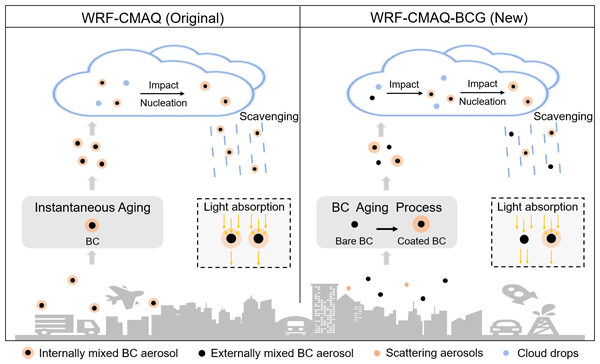
Black carbon (BC) affects climate and the environment, and its aging process alters its properties. Current models, like WRF-CMAQ, lack full accounting for it. We developed the WRF-CMAQ-BCG model to better represent BC aging by introducing bare and coated BC species and their conversion. The WRF-CMAQ-BCG model introduces the capability to simulate BC mixing states and bare and coated BC wet deposition, and it improves the accuracy of BC mass concentration and aerosol optics.
Chongzhi Yin, Shin-Ichiro Shima, and Chunsong Lu
Geosci. Model Dev., 19, 9993–10022, https://doi.org/10.5194/gmd-19-9993-2026, https://doi.org/10.5194/gmd-19-9993-2026, 2026
Short summary
Short summary
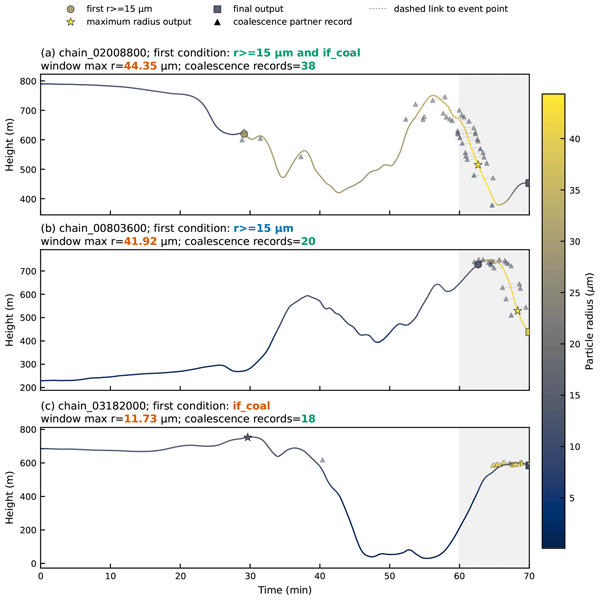
We developed and tested a way to trace selected cloud particles in a simulation, including how they grow and merge. One run identifies particles that meet chosen conditions, and a second reconstructs only their saved histories. In a three-dimensional test, the saved data were estimated to be one-fifth of what would be needed to keep all particle histories. Larger reductions are possible when fewer particles are selected, making such studies more practical in large simulations.
Qihao Lin, Jiandong Wang, Chenxi Li, Dian Ding, Jiaping Wang, Wei Nie, Ximeng Qi, Yuliang Liu, Xuguang Chi, and Xin Huang
EGUsphere, https://doi.org/10.5194/egusphere-2026-3636, https://doi.org/10.5194/egusphere-2026-3636, 2026
Short summary
Short summary
We focused on nanoparticle growth because it affects climate and health. Current models often merge these particles with background aerosol populations, missing key details. We developed an improved model that explicitly tracks these particles from formation through subsequent growth. Our model matched observations better than standard approaches, captured early growth more realistically, and added minimal computational cost, making it promising for three-dimensional atmospheric simulations.
Jing Cai, Yongchun Liu, Feixue Zheng, Dian Ding, Wei Du, Liang Yuan, Yingjie Zou, Lazong Suolang, Rongxiang Lu, Wanwei Li, Chao Liu, Xiaolong Fan, Qiaozhi Zha, Mengxiao Luan, and Jiandong Wang
EGUsphere, https://doi.org/10.5194/egusphere-2026-4106, https://doi.org/10.5194/egusphere-2026-4106, 2026
Short summary
Short summary
Characterizing organic aerosol (OA) molecular composition, sources and toxicity in the North China Plain remains difficult. Through comprehensive online and offline measurements in Weifang, a representative medium-sized city, we identify combustion-derived OA with a moderate oxidation state as the key drivers of oxidative potential (OP). These insights are critical for health risk assessments amidst the region’s ongoing reduction in particulate mass due to emission controls.
Jiaxing Zhang, Suying Yang, Chunsong Lu, Yiran Peng, Guan Ming, and Jinbei Li
EGUsphere, https://doi.org/10.5194/egusphere-2026-3376, https://doi.org/10.5194/egusphere-2026-3376, 2026
Short summary
Short summary
Using aircraft measurements from three ocean field campaigns, we studied how low-level marine clouds change when the lower atmosphere becomes disconnected from the cloud layer above. This usually makes clouds thinner and less reflective. Dry air from above speeds cloud loss, while moist air helps clouds persist and form larger droplets. Depending on moisture and rainfall, clouds may dissipate, persist, or recover. These results improve understanding of how marine clouds affect climate.
Jie Hu, David C. Wong, Jiaying Li, Tingting Fang, and Steve H. L. Yim
EGUsphere, https://doi.org/10.5194/egusphere-2026-2148, https://doi.org/10.5194/egusphere-2026-2148, 2026
Short summary
Short summary
We investigated how ground-level ozone, a harmful pollutant and greenhouse gas, forms across Southeast Asia. By using advanced atmospheric model, we found that most of the region's ozone is driven by nitrogen oxides from human activity reacting with natural gases from vegetation. Crucially, up to 98 % of ozone pollution travels across national borders. These results show that cities cannot fix air quality alone; countries must work together to protect public health and the climate.
Qingfang Su, Yifei Chen, Yangjun Wang, David C. Wong, Havala O. T. Pye, Ling Huang, Golam Sarwar, Benjamin Murphy, Bryan Place, and Li Li
Geosci. Model Dev., 19, 2531–2550, https://doi.org/10.5194/gmd-19-2531-2026, https://doi.org/10.5194/gmd-19-2531-2026, 2026
Short summary
Short summary
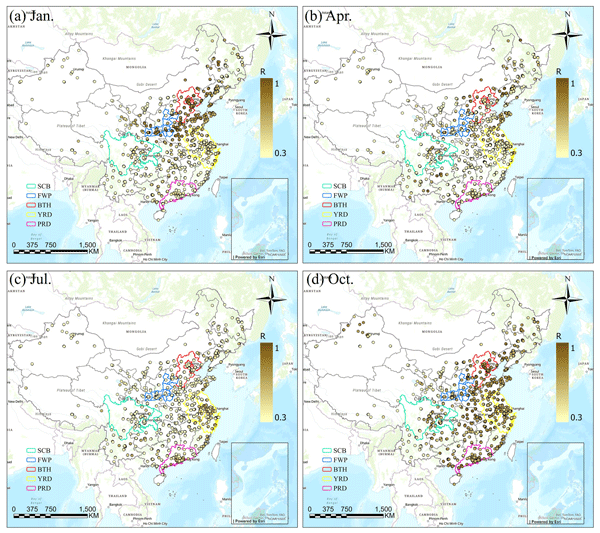
This study evaluated the PM2.5 simulation by the latest Community Regional Atmospheric Chemistry Multiphase Mechanism (CRACMM) mechanism coupled with the Community Multiscale Air Quality (CMAQ) model, covering different seasons and specific regions over China. Modelling results derived by CRACMM are compared with two well-established chemical mechanisms. The research findings provide a solid foundation for the further application of CRACMM in understanding and regulating air pollution globally.
Jialu Xu, Yingjie Zhang, Yuying Wang, Xing Yan, Bin Zhu, Chunsong Lu, Yuanjian Yang, Yele Sun, Junhui Zhang, Xiaofan Zuo, Zhanghanshu Han, and Rui Zhang
Atmos. Chem. Phys., 25, 18599–18616, https://doi.org/10.5194/acp-25-18599-2025, https://doi.org/10.5194/acp-25-18599-2025, 2025
Short summary
Short summary
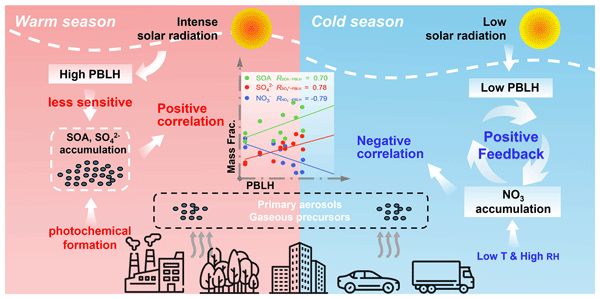
We conducted a year-long study in Nanjing to explore how the height of the atmospheric boundary layer affects fine particle pollution. We found that low boundary layers in winter trap pollutants like nitrate and primary particles, while higher layers in summer help form secondary pollutants like sulfate and organic aerosols. These findings show that boundary layer dynamics are key to understanding and managing seasonal air pollution.
Xiaochun Zhu, Le Cao, Xin Yang, Simeng Li, Jiandong Wang, and Tianliang Zhao
Atmos. Chem. Phys., 25, 12159–12176, https://doi.org/10.5194/acp-25-12159-2025, https://doi.org/10.5194/acp-25-12159-2025, 2025
Short summary
Short summary
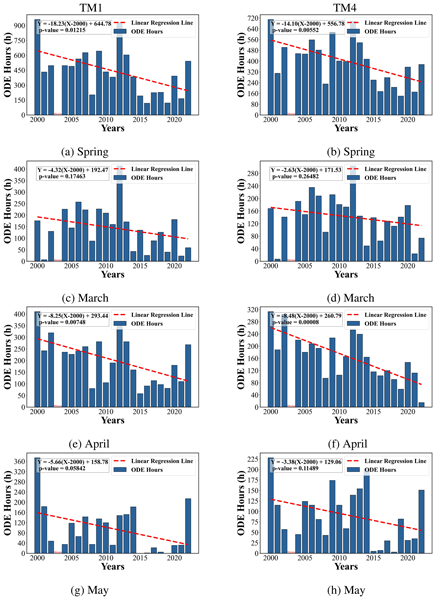
We applied various criteria to identify springtime ozone depletion events (ODEs) at Utqiaġvik, Arctic, and investigated the influence of using different criteria on conclusions regarding the characteristics of ODEs. We found that criteria using fixed thresholds or monthly average-based thresholds were more suitable for identifying ODEs than the others. Applying a threshold that varies with the monthly average or stricter fixed thresholds also indicated a more significant reduction in ODE occurrences.
Pan Wang, Yue Zhao, Jiandong Wang, Veli-Matti Kerminen, Jingkun Jiang, and Chenxi Li
Atmos. Chem. Phys., 25, 7431–7446, https://doi.org/10.5194/acp-25-7431-2025, https://doi.org/10.5194/acp-25-7431-2025, 2025
Short summary
Short summary
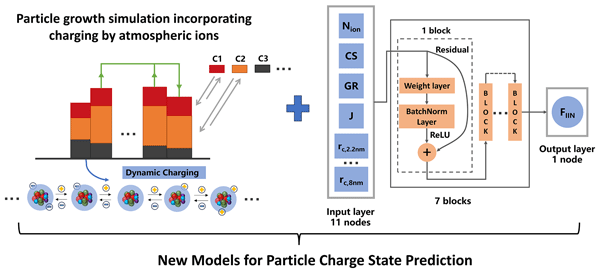
We developed a numerical model to investigate the evolution of the charge state of newly formed atmospheric particles. Based on the simulation results, we successfully employed neural networks to predict particle charge states and estimate ion-induced nucleation rates. This study provides new insights into the dynamics of particle charging and introduces advanced methods for evaluating ion-induced nucleation in atmospheric research.
Zeyuan Tian, Jiandong Wang, Jiaping Wang, Chao Liu, Jia Xing, Jinbo Wang, Zhouyang Zhang, Yuzhi Jin, Sunan Shen, Bin Wang, Wei Nie, Xin Huang, and Aijun Ding
Atmos. Meas. Tech., 18, 1149–1162, https://doi.org/10.5194/amt-18-1149-2025, https://doi.org/10.5194/amt-18-1149-2025, 2025
Short summary
Short summary
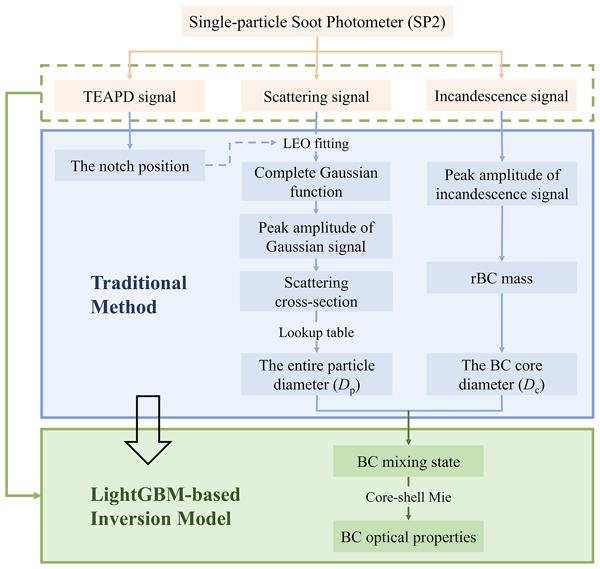
The radiative effect of black carbon (BC) is substantially modulated by its mixing state, which is challenging to derive physically with a single-particle soot photometer. This study establishes a machine-learning-based inversion model which can accurately and efficiently acquire the BC mixing state. Compared to the widely used leading-edge-only method, our model utilizes a broader scattering signal coverage to more accurately capture diverse particle characteristics.
Yuzhi Jin, Jiandong Wang, Chao Liu, David C. Wong, Golam Sarwar, Kathleen M. Fahey, Shang Wu, Jiaping Wang, Jing Cai, Zeyuan Tian, Zhouyang Zhang, Jia Xing, Aijun Ding, and Shuxiao Wang
Atmos. Chem. Phys., 25, 2613–2630, https://doi.org/10.5194/acp-25-2613-2025, https://doi.org/10.5194/acp-25-2613-2025, 2025
Short summary
Short summary
Black carbon (BC) affects climate and the environment, and its aging process alters its properties. Current models, like WRF-CMAQ, lack full accounting for it. We developed the WRF-CMAQ-BCG model to better represent BC aging by introducing bare and coated BC species and their conversion. The WRF-CMAQ-BCG model introduces the capability to simulate BC mixing states and bare and coated BC wet deposition, and it improves the accuracy of BC mass concentration and aerosol optics.
Ruiyu Song, Bin Zhu, Lina Sha, Peng Qian, Fei Wang, Chunsong Lu, Yan Yin, and Yuying Wang
EGUsphere, https://doi.org/10.5194/egusphere-2025-43, https://doi.org/10.5194/egusphere-2025-43, 2025
Preprint withdrawn
Short summary
Short summary
This study examines how anthropogenic aerosols affect rainfall during the early summer in China’s Yangtze River Delta. Using the WRF-Chem model, we found that moderate emissions increase rainfall by boosting cloud formation. However, high emissions reduce rainfall due to smaller cloud droplets, which hinder their growth. These findings highlight the complex impact of aerosol concentrations on precipitation and provide valuable data for future research on aerosol-cloud-precipitation interactions.
Zhouyang Zhang, Jiandong Wang, Jiaping Wang, Nicole Riemer, Chao Liu, Yuzhi Jin, Zeyuan Tian, Jing Cai, Yueyue Cheng, Ganzhen Chen, Bin Wang, Shuxiao Wang, and Aijun Ding
Atmos. Chem. Phys., 25, 1869–1881, https://doi.org/10.5194/acp-25-1869-2025, https://doi.org/10.5194/acp-25-1869-2025, 2025
Short summary
Short summary
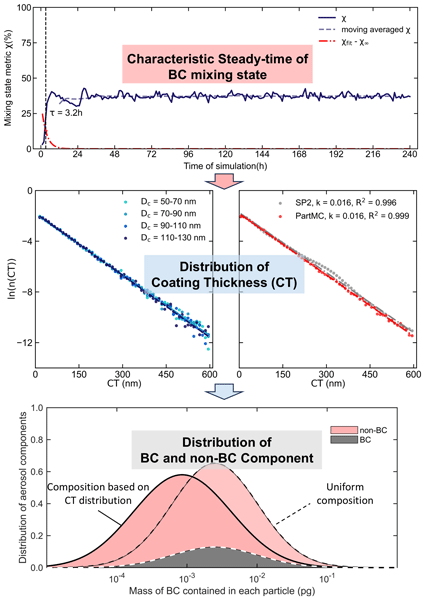
Black carbon (BC) exerts notable warming effects. We use a particle-resolved model to investigate the long-term behavior of the BC mixing state, revealing its compositions, coating thickness distribution, and optical properties all stabilize with a characteristic time of less than 1 d. This study can effectively simplify the description of the BC mixing state, which facilitates the precise assessment of the optical properties of BC aerosols in global and chemical transport models.
David C. Wong, Jeff Willison, Jonathan E. Pleim, Golam Sarwar, James Beidler, Russ Bullock, Jerold A. Herwehe, Rob Gilliam, Daiwen Kang, Christian Hogrefe, George Pouliot, and Hosein Foroutan
Geosci. Model Dev., 17, 7855–7866, https://doi.org/10.5194/gmd-17-7855-2024, https://doi.org/10.5194/gmd-17-7855-2024, 2024
Short summary
Short summary
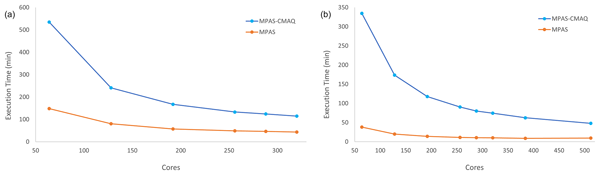
This work describe how we linked the meteorological Model for Prediction Across Scales – Atmosphere (MPAS-A) with the Community Multiscale Air Quality (CMAQ) air quality model to form a coupled modelling system. This could be used to study air quality or climate and air quality interaction at a global scale. This new model scales well in high-performance computing environments and performs well with respect to ground surface networks in terms of ozone and PM2.5.
Christos I. Efstathiou, Elizabeth Adams, Carlie J. Coats, Robert Zelt, Mark Reed, John McGee, Kristen M. Foley, Fahim I. Sidi, David C. Wong, Steven Fine, and Saravanan Arunachalam
Geosci. Model Dev., 17, 7001–7027, https://doi.org/10.5194/gmd-17-7001-2024, https://doi.org/10.5194/gmd-17-7001-2024, 2024
Short summary
Short summary
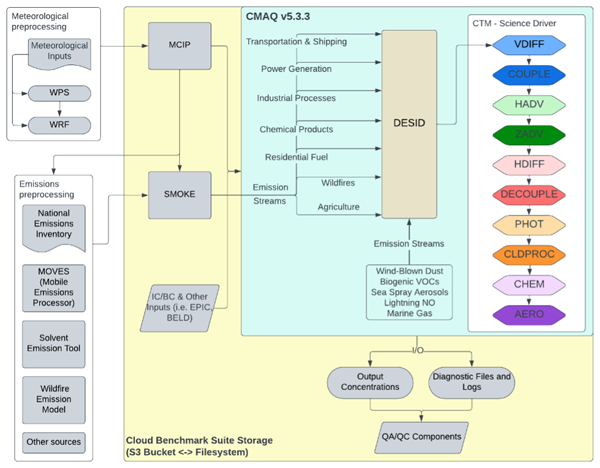
We present a summary of enabling high-performance computing of the Community Multiscale Air Quality Model (CMAQ) – a state-of-the-science community multiscale air quality model – on two cloud computing platforms through documenting the technologies, model performance, scaling and relative merits. This may be a new paradigm for computationally intense future model applications. We initiated this work due to a need to leverage cloud computing advances and to ease the learning curve for new users.
Chongzhi Yin, Shin-ichiro Shima, Lulin Xue, and Chunsong Lu
Geosci. Model Dev., 17, 5167–5189, https://doi.org/10.5194/gmd-17-5167-2024, https://doi.org/10.5194/gmd-17-5167-2024, 2024
Short summary
Short summary
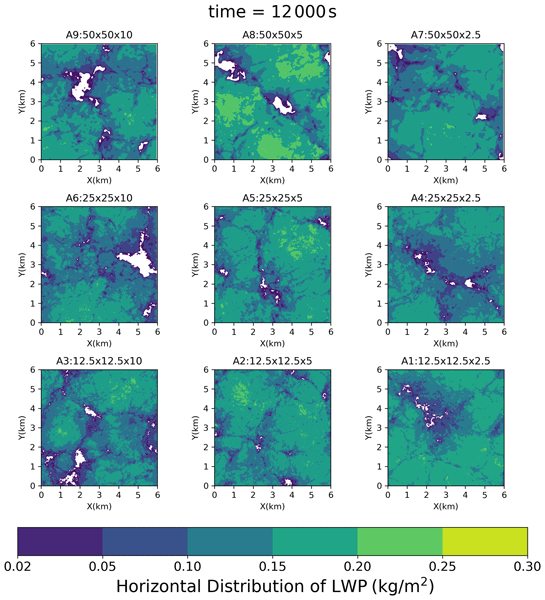
We investigate numerical convergence properties of a particle-based numerical cloud microphysics model (SDM) and a double-moment bulk scheme for simulating a marine stratocumulus case, compare their results with model intercomparison project results, and present possible explanations for the different results of the SDM and the bulk scheme. Aerosol processes can be accurately simulated using SDM, and this may be an important factor affecting the behavior and morphology of marine stratocumulus.
Yueyue Cheng, Chao Liu, Jiandong Wang, Jiaping Wang, Zhouyang Zhang, Li Chen, Dafeng Ge, Caijun Zhu, Jinbo Wang, and Aijun Ding
Atmos. Chem. Phys., 24, 3065–3078, https://doi.org/10.5194/acp-24-3065-2024, https://doi.org/10.5194/acp-24-3065-2024, 2024
Short summary
Short summary
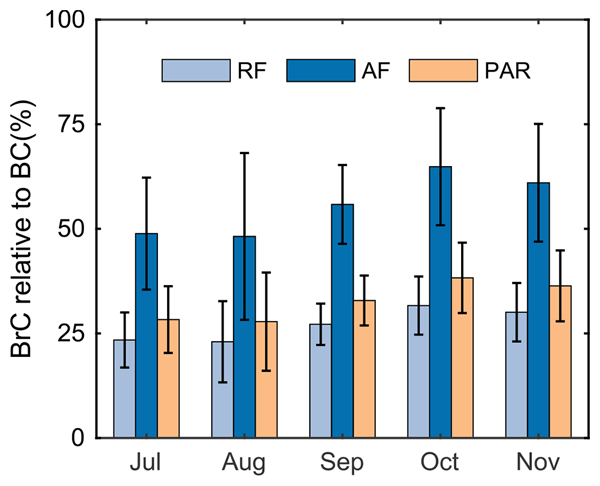
Brown carbon (BrC), a light-absorbing aerosol, plays a pivotal role in influencing global climate. However, assessing BrC radiative effects remains challenging because the required observational data are hardly accessible. Here we develop a new BrC radiative effect estimation method combining conventional observations and numerical models. Our findings reveal that BrC absorbs up to a third of the sunlight at 370 nm that black carbon does, highlighting its importance in aerosol radiative effects.
Michael S. Walters and David C. Wong
Geosci. Model Dev., 16, 1179–1190, https://doi.org/10.5194/gmd-16-1179-2023, https://doi.org/10.5194/gmd-16-1179-2023, 2023
Short summary
Short summary
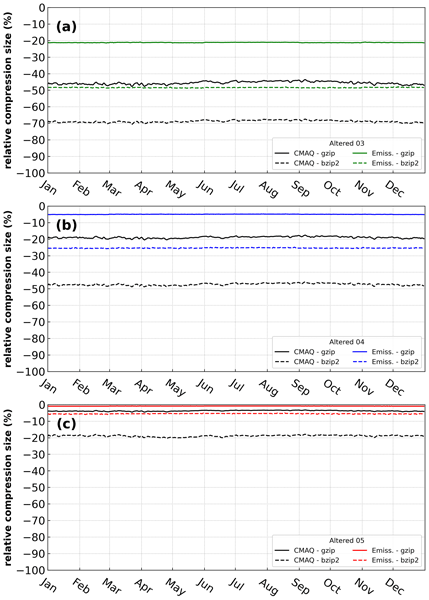
A typical numerical simulation that associates with a large amount of input and output data, applying popular compression software, gzip or bzip2, on data is one good way to mitigate data storage burden. This article proposes a simple technique to alter input, output, or input and output by keeping a specific number of significant digits in data and demonstrates an enhancement in compression efficiency on the altered data but maintains similar statistical performance of the numerical simulation.
Jiandong Wang, Jia Xing, Shuxiao Wang, Rohit Mathur, Jiaping Wang, Yuqiang Zhang, Chao Liu, Jonathan Pleim, Dian Ding, Xing Chang, Jingkun Jiang, Peng Zhao, Shovan Kumar Sahu, Yuzhi Jin, David C. Wong, and Jiming Hao
Atmos. Chem. Phys., 22, 5147–5156, https://doi.org/10.5194/acp-22-5147-2022, https://doi.org/10.5194/acp-22-5147-2022, 2022
Short summary
Short summary
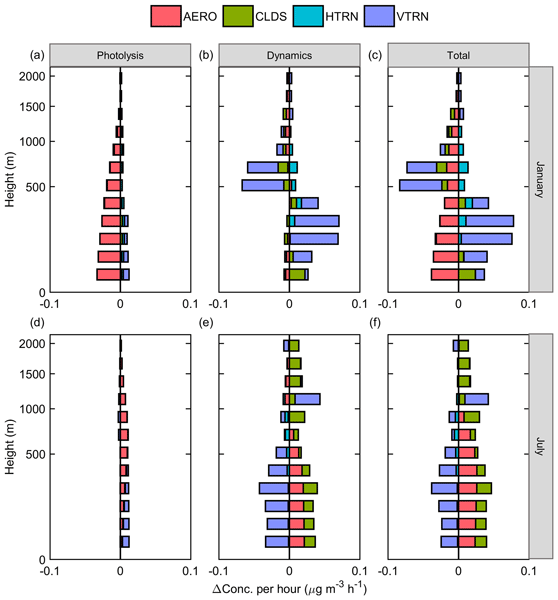
Aerosols reduce surface solar radiation and change the photolysis rate and planetary boundary layer stability. In this study, the online coupled meteorological and chemistry model was used to explore the detailed pathway of how aerosol direct effects affect secondary inorganic aerosol. The effects through the dynamics pathway act as an equally or even more important route compared with the photolysis pathway in affecting secondary aerosol concentration in both summer and winter.
Jing Cai, Cheng Wu, Jiandong Wang, Wei Du, Feixue Zheng, Simo Hakala, Xiaolong Fan, Biwu Chu, Lei Yao, Zemin Feng, Yongchun Liu, Yele Sun, Jun Zheng, Chao Yan, Federico Bianchi, Markku Kulmala, Claudia Mohr, and Kaspar R. Daellenbach
Atmos. Chem. Phys., 22, 1251–1269, https://doi.org/10.5194/acp-22-1251-2022, https://doi.org/10.5194/acp-22-1251-2022, 2022
Short summary
Short summary
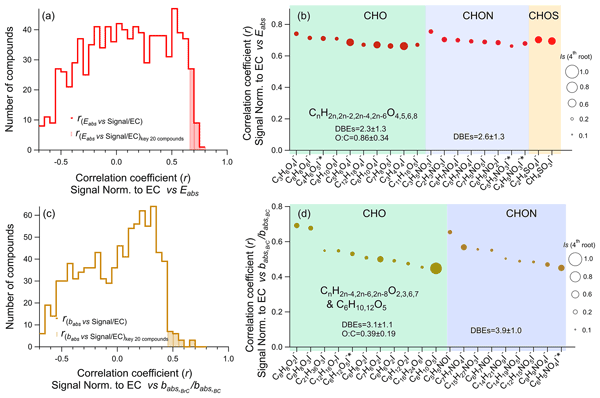
This study investigates the connection between organic aerosol (OA) molecular composition and particle absorptive properties in autumn in Beijing. We find that the molecular properties of OA compounds in different episodes influence particle light absorption properties differently: the light absorption enhancement of black carbon and light absorption coefficient of brown carbon were mostly related to more oxygenated OA (low C number and four O atoms) and aromatics/nitro-aromatics, respectively.
Amir H. Souri, Kelly Chance, Juseon Bak, Caroline R. Nowlan, Gonzalo González Abad, Yeonjin Jung, David C. Wong, Jingqiu Mao, and Xiong Liu
Atmos. Chem. Phys., 21, 18227–18245, https://doi.org/10.5194/acp-21-18227-2021, https://doi.org/10.5194/acp-21-18227-2021, 2021
Short summary
Short summary
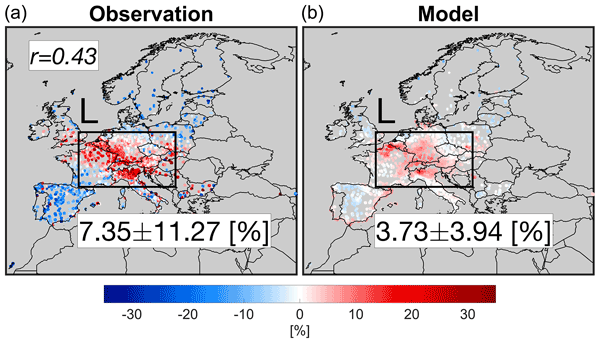
The global pandemic is believed to have an impact on emissions of air pollutants such as nitrogen dioxide (NO2) and formaldehyde (HCHO). This study quantifies the changes in the amount of NOx and VOC emissions via state-of-the-art inverse modeling technique using satellite observations during the lockdown 2020 with respect to a baseline over Europe, which in turn, it permits unraveling atmospheric processes being responsible for ozone formation in a less cloudy month.
Kai Wang, Yang Zhang, Shaocai Yu, David C. Wong, Jonathan Pleim, Rohit Mathur, James T. Kelly, and Michelle Bell
Geosci. Model Dev., 14, 7189–7221, https://doi.org/10.5194/gmd-14-7189-2021, https://doi.org/10.5194/gmd-14-7189-2021, 2021
Short summary
Short summary
The two-way coupled WRF-CMAQ model accounting for complex chemistry–meteorology feedbacks has been applied to the long-term predictions of regional meteorology and air quality over the US. The model results show superior performance and importance of chemistry–meteorology feedbacks when compared to the offline coupled WRF and CMAQ simulations, which suggests that feedbacks should be considered along with other factors in developing future model applications to inform policy making.
Cited articles
Abdulla, N., Demirci, M., and Ozdemir, S.: Design and evaluation of adaptive deep learning models for weather forecasting, Eng. Appl. Artif. Intel., 116, 105440, https://doi.org/10.1016/j.engappai.2022.105440, 2022.
Akbar, M., Aliabadi, S., Patel, R., and Watts, M.: A fully automated and integrated multi-scale forecasting scheme for emergency preparedness, Environ. Model. Softw., 39, 24–38, https://doi.org/10.1016/j.envsoft.2011.12.006, 2013.
Baker, A. H., Hammerling, D. M., Mickelson, S. A., Xu, H., Stolpe, M. B., Naveau, P., Sanderson, B., Ebert-Uphoff, I., Samarasinghe, S., De Simone, F., Carbone, F., Gencarelli, C. N., Dennis, J. M., Kay, J. E., and Lindstrom, P.: Evaluating lossy data compression on climate simulation data within a large ensemble, Geosci. Model Dev., 9, 4381–4403, https://doi.org/10.5194/gmd-9-4381-2016, 2016.
Baker, A. H., Hammerling, D. M., and Turton, T. L.: Evaluating image quality measures to assess the impact of lossy data compression applied to climate simulation data, Comput. Graph. Forum, 38, 517–528, https://doi.org/10.1111/cgf.13707, 2019.
Balaji, V., Taylor, K. E., Juckes, M., Lawrence, B. N., Durack, P. J., Lautenschlager, M., Blanton, C., Cinquini, L., Denvil, S., Elkington, M., Guglielmo, F., Guilyardi, E., Hassell, D., Kharin, S., Kindermann, S., Nikonov, S., Radhakrishnan, A., Stockhause, M., Weigel, T., and Williams, D.: Requirements for a global data infrastructure in support of CMIP6, Geosci. Model Dev., 11, 3659–3680, https://doi.org/10.5194/gmd-11-3659-2018, 2018.
Burrows, M. and Wheeler, D. J.: A block-sorting lossless data compression algorithm, Digital Equipment Corporation SRC Research Report 124, https://www.cs.jhu.edu/~langmea/resources/burrows_wheeler.pdf (last access: 25 May 2026), 1994.
Collet, Y. and Kucherawy, M.: Zstandard Compression and the `application/zstd' Media Type, Internet Engineering Task Force (IETF), RFC 8878, https://doi.org/10.17487/RFC8878, 2021.
Davenport, F. V., Burke, M., and Diffenbaugh, N. S.: Contribution of historical precipitation change to US flood damages, P. Natl. Acad. Sci., 118, e2017524118, https://doi.org/10.1073/pnas.2017524118, 2021.
Delaunay, X., Courtois, A., and Gouillon, F.: Evaluation of lossless and lossy algorithms for the compression of scientific datasets in netCDF-4 or HDF5 files, Geosci. Model Dev., 12, 4099–4113, https://doi.org/10.5194/gmd-12-4099-2019, 2019.
Frich, P., Alexander, L. V., Della-Marta, P., Gleason, B., Haylock, M., Tank, A. K., and Peterson, T.: Observed coherent changes in climatic extremes during the second half of the twentieth century, Clim. Res., 19, 193–212, https://doi.org/10.3354/cr019193, 2002.
Han, T., Chen, Z., Guo, S., Xu, W., and Bai, L.: CRA5: Extreme Compression of ERA5 for Portable Global Climate and Weather Research via an Efficient Variational Transformer, arXiv [preprint], https://doi.org/10.48550/arXiv.2405.03376, 2024.
Huang, L. and Hoefler, T.: Compressing multidimensional weather and climate data into neural networks, arXiv [preprint], https://doi.org/10.48550/arXiv.2210.12538, 2023.
Huffman, G. J., Stocker, E. F., Bolvin, D. T., Nelkin, E. J., and Tan, J.: GPM IMERG Final Precipitation L3 Half Hourly 0.1 degree × 0.1 degree V07, EarthData [data set], https://doi.org/10.5067/GPM/IMERG/3B-HH/07, 2023a.
Huffman, G. J., Stocker, E. F., Bolvin, D. T., Nelkin, E. J., and Tan, J.: GPM IMERG Final Precipitation L3 1 day 0.1 degree × 0.1 degree V07, EarthData [data set], https://doi.org/10.5067/GPM/IMERGDF/DAY/07, 2023b.
Iacono, M. J., Delamere, J. S., Mlawer, E. J., Shephard, M. W., Clough, S. A., and Collins, W. D.: Radiative forcing by long-lived greenhouse gases: Calculations with the AER radiative transfer models, J. Geophys. Res.-Atmos., 113, 8, https://doi.org/10.1029/2008jd009944, 2008.
Institute of Electrical and Electronics Engineers (IEEE): IEEE Standard for Binary Floating-Point Arithmetic, 1–20, https://ieeexplore.ieee.org/document/30711/ (last access: 25 May 2026), 1985.
Jam-Jalloh, S. U., Liu, J., Wang, Y., and Liu, Y.: Coupling WRF with HEC-HMS and WRF-Hydro for flood forecasting in typical mountainous catchments of northern China, Nat. Hazards Earth Syst. Sci., 24, 3155–3172, https://doi.org/10.5194/nhess-24-3155-2024, 2024.
Karl, T. R. and Koss, W. J.: Regional and national monthly, seasonal, and annual temperature weighted by area, 1895–1983, Historical Climatology Series 4-3, National Climatic Data Center, Asheville, NC, 38, https://repository.library.noaa.gov/view/noaa/10238 (last access: 25 May 2026), 1984.
Klöwer, M., Razinger, M., Dominguez, J. J., Düben, P. D., and Palmer, T. N.: Compressing atmospheric data into its real information content, Nat. Comput. Sci., 1, 713–724, https://doi.org/10.1038/s43588-021-00156-2, 2021.
Mirowski, P., Warde-Farley, D., Rosca, M., Grimes, M. K., Hasson, Y., Kim, H., Rey, M., Osindero, S., Ravuri, S., and Mohamed, S.: Neural Compression of Atmospheric States, arXiv [preprint], https://doi.org/10.48550/arXiv.2407.11666, 2024.
Morrison, H., Thompson, G., and Tatarskii, V.: Impact of cloud microphysics on the development of trailing stratiform precipitation in a simulated squall line: Comparison of one-and two-moment schemes, Mon. Weather Rev., 137, 991–1007, https://doi.org/10.1175/2008MWR2556.1, 2009.
Nastos, P., Kapsomenakis, J., and Douvis, K.: Analysis of precipitation extremes based on satellite and high-resolution gridded data set over Mediterranean basin, Atmos. Res., 131, 46–59, https://doi.org/10.1016/j.atmosres.2013.04.009, 2013.
NOAA National Centers for Environmental Information (NCEI): U.S. Billion-dollar Weather and Climate Disasters, 1980–present (NCEI Accession 0209268), https://doi.org/10.25921/stkw-7w73.
Overpeck, J. T., Meehl, G. A., Bony, S., and Easterling, D. R.: Climate data challenges in the 21st century, Science, 331, 700–702, https://doi.org/10.1126/science.1197869, 2011.
Ozer, P. and Mahamoud, A.: Recent extreme precipitation and temperature changes in Djibouti City (1966–2011), J. Climatol., 2013, 928501, https://doi.org/10.1155/2013/928501, 2013.
Pleim, J. E.: A simple, efficient solution of flux–profile relationships in the atmospheric surface layer, J. Appl. Meteorol. Climatol, 45, 341–347, https://doi.org/10.1175/JAM2339.1, 2006.
Pleim, J. E.: A combined local and nonlocal closure model for the atmospheric boundary layer. Part I: Model description and testing, J. Appl. Meteorol. Climatol, 46, 1383–1395, https://doi.org/10.1175/JAM2539.1, 2007.
Pleim, J. E. and Gilliam, R.: An indirect data assimilation scheme for deep soil temperature in the Pleim–Xiu land surface model, J. Appl. Meteorol. Climatol, 48, 1362–1376, https://doi.org/10.1175/2009JAMC2053.1, 2009.
Poppick, A., Nardi, J., Feldman, N., Baker, A. H., Pinard, A., and Hammerling, D. M.: A statistical analysis of lossily compressed climate model data, Comput. Geosci., 145, 104599, https://doi.org/10.1016/j.cageo.2020.104599, 2020.
Powers, J. G., Klemp, J. B., Skamarock, W. C., Davis, C. A., Dudhia, J., Gill, D. O., Coen, J. L., Gochis, D. J., Ahmadov, R., and Peckham, S. E.: The weather research and forecasting model: Overview, system efforts, and future directions, Bull. Am. Meteorol. Soc., 98, 1717–1737, https://doi.org/10.1175/BAMS-D-15-00308.1, 2017.
Prein, A. F., Langhans, W., Fosser, G., Ferrone, A., Ban, N., Goergen, K., Keller, M., Tölle, M., Gutjahr, O., and Feser, F.: A review on regional convection-permitting climate modeling: Demonstrations, prospects, and challenges, Rev. Geophys., 53, 323–361, https://doi.org/10.1002/2014RG000475, 2015.
Roebber, P. J.: Visualizing multiple measures of forecast quality, Weather Forecast., 24, 601–608, https://doi.org/10.1175/2008WAF2222159.1, 2009.
Seneviratne, S. I., Zhang, X., Adnan, M., Badi, W., Dereczynski, C., Di Luca, A., Ghosh, S., Iskandar, I., Kossin, J., Lewis, S., Otto, F., Pinto, I., Satoh, M., Vicente-Serrano, S. M., Wehner, M., and Zhou, B.: Weather and Climate Extreme Events in a Changing Climate, in: Climate Change 2021: The Physical Science Basis. Contribution of Working Group I to the Sixth Assessment Report of the Intergovernmental Panel on Climate Change, edited by: Masson-Delmotte, V., Zhai, P., Pirani, A., Connors, S. L., Péan, C., Berger, S., Caud, N., Chen, Y., Goldfarb, L., Gomis, M. I., Huang, M., Leitzell, K., Lonnoy, E., Matthews, J. B. R., Maycock, T. K., Waterfield, T., Yelekçi, O., Yu, R., and Zhou, B., Cambridge University Press, Cambridge, United Kingdom and New York, NY, USA, 1513–1766, https://doi.org/10.1017/9781009157896.013, 2021.
Silver, J. D. and Zender, C. S.: The compression–error trade-off for large gridded data sets, Geosci. Model Dev., 10, 413–423, https://doi.org/10.5194/gmd-10-413-2017, 2017.
Skamarock, W. C., Klemp, J. B., Dudhia, J., Gill, D. O., Liu, Z., Berner, J., Wang, W., Powers, J. G., Duda, M. G., and Barker, D. M.: A description of the advanced research WRF version 4, National Centers for Atmospheric Research, Boulder, CO, USA, https://doi.org/10.5065/1dfh-6p97, 2019.
Underwood, R., Bessac, J., Di, S., and Cappello, F.: Understanding the effects of modern compressors on the community earth science model, 2022 IEEE/ACM 8th International Workshop on Data Analysis and Reduction for Big Scientific Data (DRBSD), https://ieeexplore.ieee.org/document/10025480/ (last access: 25 May 2026), 2022.
Walters, M. S. and Wong, D. C.: The impact of altering emission data precision on compression efficiency and accuracy of simulations of the community multiscale air quality model, Geosci. Model Dev., 16, 1179–1190, https://doi.org/10.5194/gmd-16-1179-2023, 2023.
Wang, Z., Bovik, A. C., Sheikh, H. R., and Simoncelli, E. P.: Image quality assessment: from error visibility to structural similarity, IEEE Transactions on Image Processing, 13, 600–612, https://ieeexplore.ieee.org/document/1284395/ (last access: 25 May 2026), 2004.
Waqas, M., Humphries, U. W., Chueasa, B., and Wangwongchai, A.: Artificial intelligence and numerical weather prediction models: A technical survey, Nat. Hazards Res., 5, 306–320, https://doi.org/10.1016/j.nhres.2024.11.004, 2025.
Wong, D. C. and Wu, S.: Precision Reduction tool for the paper `A Flexible Framework for Precision Reduction of WRF Inputs and Outputs to Balance Storage Efficiency and Scientific Fidelity', Zenodo [data set], https://doi.org/10.5281/zenodo.19199806, 2026.
Wu, S. and Wong, D. C.: Dataset for the paper “A Flexible Framework for Precision Reduction of WRF Inputs and Outputs to Balance Storage Efficiency and Scientific Fidelity”, Zenodo [data set], https://doi.org/10.5281/zenodo.19781791, 2026.
Young, A., Bhattacharya, B., Daniëls, E., and Zevenbergen, C.: Integrating WRF forecasts at different scales for pluvial flood forecasting using a rainfall threshold approach and a real-time flood model, J. Hydrol., 656, 132891, https://doi.org/10.1016/j.jhydrol.2025.132891, 2025.
Zender, C. S.: Bit Grooming: statistically accurate precision-preserving quantization with compression, evaluated in the netCDF Operators (NCO, v4.4.8+), Geosci. Model Dev., 9, 3199–3211, https://doi.org/10.5194/gmd-9-3199-2016, 2016.
Zhang, Y., Deng, C., Xu, W., Zhuang, Y., Jiang, L., Jiang, C., Guan, X., Wei, J., Ma, M., and Chen, Y.: Long-term variability of extreme precipitation with WRF model at a complex terrain River Basin, Sci. Rep., 15, 156, https://doi.org/10.1038/s41598-024-84076-x, 2025.
Short summary
High-resolution weather and climate simulations produce massive amounts of data, creating major storage challenges. This study explores a method that reduces unnecessary numerical detail by keeping only a limited number of significant digits. The results show that substantial data reduction can be achieved while preserving key physical features.
High-resolution weather and climate simulations produce massive amounts of data, creating major...


Altmetrics
Final-revised paper
Preprint