Articles | Volume 26, issue 10
https://doi.org/10.5194/acp-26-7127-2026
Research article
 | 
26 May 2026
Research article |  | 26 May 2026

A satellite observation-based analysis of cirrus ice crystal number concentrations and underlying cirrus formation mechanisms over the Tibetan Plateau

Kai Wang, Xiaocong Wang, Qianshan He, Hong Nie, Yanyu Wang, and Yonghang Chen

Related authors

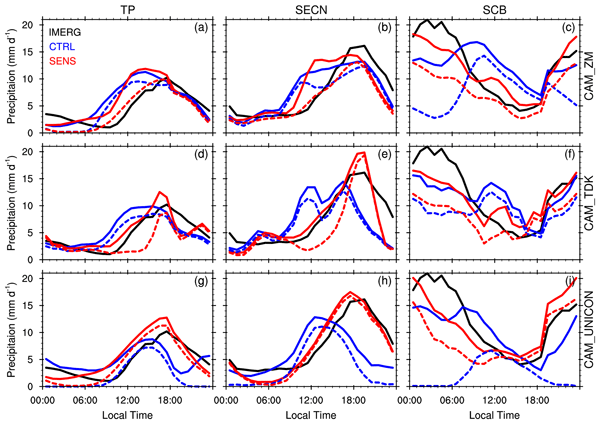
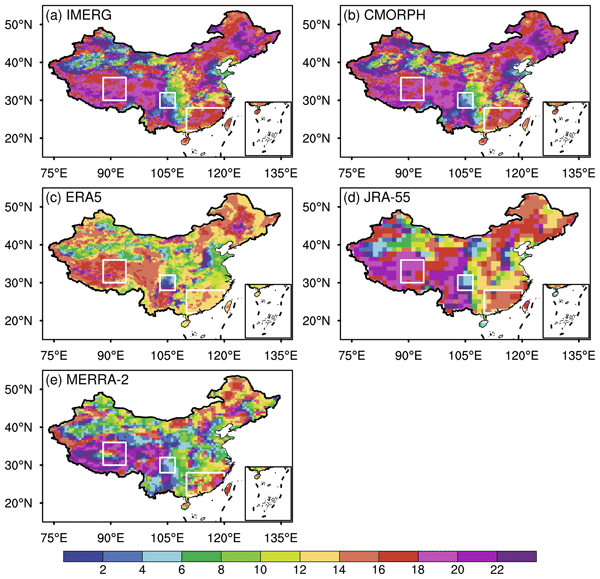
A process-oriented analysis of the summertime diurnal cycle of precipitation and diabatic heating over China in three reanalyses
Yanjie Liu, Xiaocong Wang, Yimin Liu, Shuaiqi Tang, and Hao Miao
Atmos. Chem. Phys., 26, 6763–6779, https://doi.org/10.5194/acp-26-6763-2026,https://doi.org/10.5194/acp-26-6763-2026, 2026
Short summary
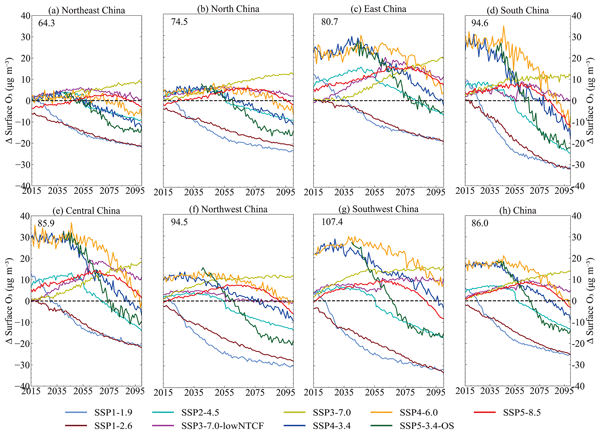
Historical and future changes of surface ozone over China from CMIP6 models, including an assessment of present-day uncertainties in model prediction
Shuai Li, Hua Zhang, Qi Chen, Yonghang Chen, Qi An, Zhili Wang, and Xinping Wu
Atmos. Chem. Phys., 26, 3669–3695, https://doi.org/10.5194/acp-26-3669-2026,https://doi.org/10.5194/acp-26-3669-2026, 2026
Short summary
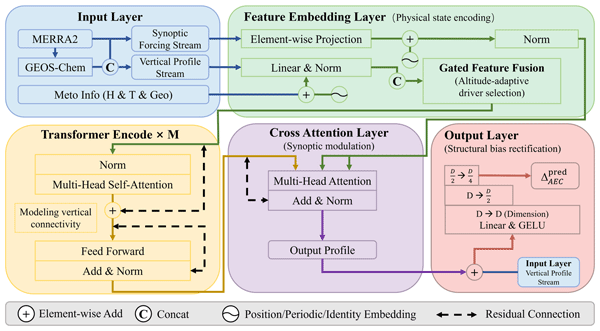
Correcting Aerosol Extinction Coefficient Vertical Structure Biases in GEOS-Chem via a Physics-Informed Transformer with Physical Mechanism Diagnosis
Jiajun Xiong, Yi Wang, Jun Wang, Yanyu Wang, Meng Zhou, Minghui Tao, Wenhui Dong, Jhoon Kim, and Lunche Wang
EGUsphere, https://doi.org/10.5194/egusphere-2026-397,https://doi.org/10.5194/egusphere-2026-397, 2026
Short summary
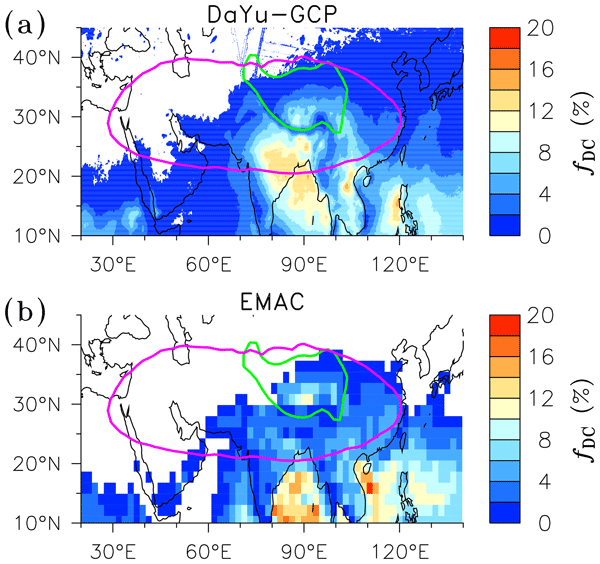
Modelling the deep convective transport of trace gases (CO, NH3 and SO2) from the planetary boundary layer to the Asian summer monsoon anticyclone
Jianzhong Ma, Bin Chen, Qianshan He, Xiaolu Yan, Gaili Wang, Siyang Cheng, Benedikt Steil, Christoph Brühl, Andrea Pozzer, and Jos Lelieveld
EGUsphere, https://doi.org/10.5194/egusphere-2025-5587,https://doi.org/10.5194/egusphere-2025-5587, 2025
Short summary
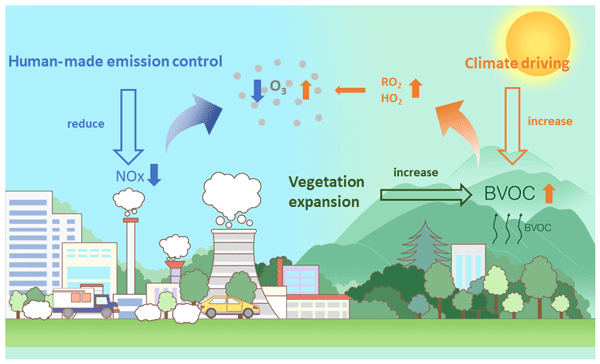
Climate-driven biogenic emissions alleviate the impact of human-made emission reductions on O3 control in the Pearl River Delta region, southern China
Nan Wang, Song Liu, Jiawei Xu, Yanyu Wang, Chun Li, Yuning Xie, Hua Lu, and Fumo Yang
Atmos. Chem. Phys., 25, 8859–8870, https://doi.org/10.5194/acp-25-8859-2025,https://doi.org/10.5194/acp-25-8859-2025, 2025
Short summary

Cited articles

Ansmann, A., Jimenez, C., Knopf, D. A., Roschke, J., Bühl, J., Ohneiser, K., and Engelmann, R.: Impact of wildfire smoke on Arctic cirrus formation – Part 2: Simulation of MOSAiC 2019–2020 cases, Atmos. Chem. Phys., 25, 4867–4884, https://doi.org/10.5194/acp-25-4867-2025, 2025. 
Austin, R. T.: Level 2B radar-only cloud water content (2B-CWC-RO) process description document, Data Processing Center, 24, https://www.cloudsat.cira.colostate.edu/cloudsat-static/info/dl/2b-cwc-ro/2B-CWC-RO_PDICD.P_R04.20071021.pdf (last access: 2 April 2025), 2007. 
Austin, R. T., Heymsfield, A. J., and Stephens, G. L.: Retrieval of ice cloud microphysical parameters using the CloudSat millimeter-wave radar and temperature, J. Geophys. Res., 114, https://doi.org/10.1029/2008JD010049, 2009. 
Barahona, D. and Nenes, A.: Parameterizing the competition between homogeneous and heterogeneous freezing in ice cloud formation – polydisperse ice nuclei, Atmos. Chem. Phys., 9, 5933–5948, https://doi.org/10.5194/acp-9-5933-2009, 2009. 
Baran, A. J.: From the single-scattering properties of ice crystals to climate prediction: A way forward, Atmos. Res., 112, 45–69, 2012. 
Download
Short summary
We analyzed ten years of satellite data to study ice particle numbers in cirrus clouds over the Tibetan Plateau. The north has fewer particles than the south due to weaker convection and differences in dust and smoke. Ice particles form through freezing, producing a ‘V’ shaped profile, but weak upward winds in the north shift this peak lower. These findings help understand climate characteristics in the Plateau regions.
Share
Altmetrics
Final-revised paper
Preprint