
Articles | Volume 26, issue 1
https://doi.org/10.5194/acp-26-647-2026
© Author(s) 2026. This work is distributed under
the Creative Commons Attribution 4.0 License.
the Creative Commons Attribution 4.0 License.
https://doi.org/10.5194/acp-26-647-2026
© Author(s) 2026. This work is distributed under
the Creative Commons Attribution 4.0 License.
the Creative Commons Attribution 4.0 License.
Research article
| 
14 Jan 2026
Research article |
| 14 Jan 2026
| 14 Jan 2026
Northern Hemisphere stratospheric temperature response to external forcing in decadal climate simulations

Global Modeling and Assimilation Office, NASA Goddard Space Flight Center, 8800 Greenbelt Rd, Greenbelt, 20771, MD, USA
ESSIC, University of Maryland, 5825 University Research Ct suite 4001, College Park, 20740, MD, USA
Andrea Molod
Global Modeling and Assimilation Office, NASA Goddard Space Flight Center, 8800 Greenbelt Rd, Greenbelt, 20771, MD, USA
Krzysztof Wargan
Global Modeling and Assimilation Office, NASA Goddard Space Flight Center, 8800 Greenbelt Rd, Greenbelt, 20771, MD, USA
Science Systems and Applications, Inc., 10210 Greenbelt Rd., Suite 600, Lanham, 20706, MD, USA
Dimitris Menemenlis
Jet Propulsion Laboratory, California Institute of Technology, 4800 Oak Grove Dr, Pasadena, 91109, CA, USA
Patrick Heimbach
Jackson School of Geosciences, University of Texas at Austin, 2305 Speedway Stop C1160, Austin, TX, USA
Atanas Trayanov
Global Modeling and Assimilation Office, NASA Goddard Space Flight Center, 8800 Greenbelt Rd, Greenbelt, 20771, MD, USA
Science Systems and Applications, Inc., 10210 Greenbelt Rd., Suite 600, Lanham, 20706, MD, USA
Ehud Strobach
Agricultural Research Organization, Rishon LeTsiyon, Israel
Lawrence Coy
Global Modeling and Assimilation Office, NASA Goddard Space Flight Center, 8800 Greenbelt Rd, Greenbelt, 20771, MD, USA
Science Systems and Applications, Inc., 10210 Greenbelt Rd., Suite 600, Lanham, 20706, MD, USA
Related authors
No articles found.
Sean M. Davis, William T. Ball, Yue Jia, Gabriel Chiodo, Justin A. Alsing, James Keeble, Hideharu Akiyoshi, Carlo Arosio, Ewa M. Bednarz, Andreas Chrysanthou, Melanie Coldewey-Egbers, Robert Damadeo, Sandip Dhomse, Mohamadou A. Diallo, Simone Dietmuller, Roland Eichinger, Stacey Frith, Birgit Hassler, Michaela I. Hegglin, Daan Hubert, Patrick Jöckel, Béatrice Josse, Natalya Kramarova, Diego Loyola, Eliane Maillard Barras, Marion Marchand, Olaf Morgenstern, David Plummer, Robert W. Portmann, Karen H. Rosenlof, Alexei Rozanov, Viktoria F. Sofieva, Johannes Staehelin, Timofei Sukhodolov, Kleareti Tourpali, Ronald J. Van der A, H. J. Ray Wang, Krzysztof Wargan, Shingo Watanabe, Mark Weber, Jeannette D. Wild, Yousuke Yamashita, and Jerry Ziemke
Atmos. Chem. Phys., 26, 13817–13843, https://doi.org/10.5194/acp-26-13817-2026, https://doi.org/10.5194/acp-26-13817-2026, 2026
Short summary
Short summary
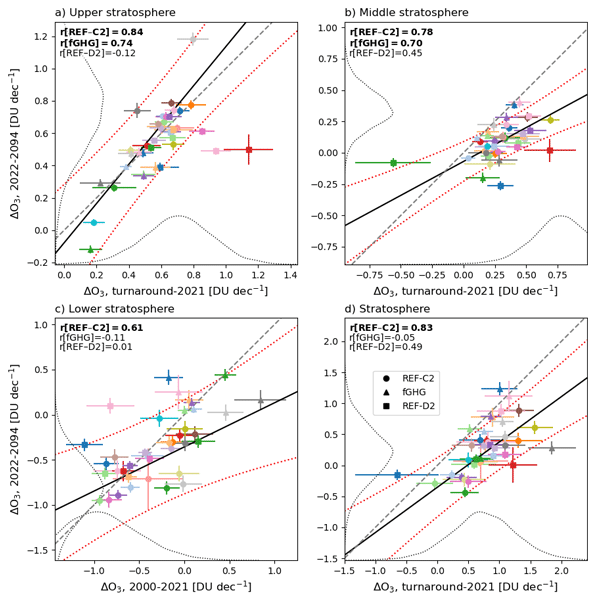
This study investigates tropical ozone changes in models and satellite observations to determine how well they agree and whether observations can constrain model projections. At some levels, satellite records disagree significantly on the magnitude of ozone changes. While early and late 21st century trends are correlated across models, suggesting a potential emergent constraint, the spread in observations means they are unable to provide guidance on the credibility of model projections.
Joseph K. Ansong, Brian K. Arbic, Romain Bourdalle-Badié, Clément Bricaud, Jérôme Chanut, Dimitris Menemenlis, Richard D. Ray, Michael Schindelegger, Alan J. Wallcraft, He Wang, Alistair J. Adcroft, Frédéric Briol, Maarten C. Buijsman, Loren Carrère, Eric P. Chassignet, Gerald Dibarboure, Robert W. Hallberg, Christopher N. Hill, Ariane Koch-Larrouy, Florent Lyard, Matthew R. Mazloff, An T. Nguyen, Nicolas Picot, Rui M. Ponte, and Jay F. Shriver
EGUsphere, https://doi.org/10.5194/egusphere-2026-5064, https://doi.org/10.5194/egusphere-2026-5064, 2026
This preprint is open for discussion and under review for Ocean Science (OS).
Short summary
Short summary
We assess how well four high-resolution global ocean models reproduce surface and internal tides compared with satellite observations. Some models produce internal tides that are too strong, but including energy loss over rough seafloor improves their accuracy. Longer model records and higher resolution also improve agreement with observations. We further identify errors in the tidal forcing of widely used MITgcm simulations that reduce the accuracy of their simulated tides.
Amanda R. Fay, Dustin Carroll, Galen A. McKinley, Nicole S. Lovenduski, Dimitris Menemenlis, and Hong Zhang
EGUsphere, https://doi.org/10.5194/egusphere-2026-2870, https://doi.org/10.5194/egusphere-2026-2870, 2026
Short summary
Short summary
The ocean helps slow climate change by absorbing carbon dioxide, but our research shows this process weakens quickly when we reduce emissions. Using a sophisticated model, we found that the ocean’s carbon uptake drops within just a few years of mitigation. This change is most visible in the North Atlantic and Southern Ocean. To accurately track our progress in addressing climate change, we must focus global monitoring efforts on these specific, sensitive regions of the open sea.
Babita Jangir and Ehud Strobach
Biogeosciences, 23, 4271–4286, https://doi.org/10.5194/bg-23-4271-2026, https://doi.org/10.5194/bg-23-4271-2026, 2026
Short summary
Short summary
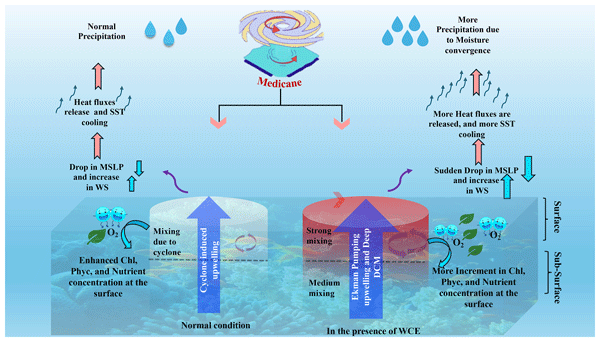
This study examines Medicane Daniel, showing how a warm-core eddy (WCE), high ocean heat content (OHC), and a marine heatwave (MHW) sustained its intensity near Libya. Using high-resolution Surface Water and Ocean Topography (SWOT) observations, we reveal fine-scale eddy dynamics and larger WCE structures than those captured by conventional datasets, highlighting their role in air–sea interactions. Enhanced moisture convergence supported storm intensification, while storm-induced mixing and upwelling increased chlorophyll, nutrient, and oxygen concentrations.
Daniele Minganti, Simon Chabrillat, Sean Davis, Quentin Errera, Marc Op de beeck, Eric Ray, Sarah Vervalcke, Krzysztof Wargan, and Catherine Wespes
EGUsphere, https://doi.org/10.5194/egusphere-2026-3449, https://doi.org/10.5194/egusphere-2026-3449, 2026
Short summary
Short summary
In early 2019, an unusual increase of nitrous oxide concentrations occurred in the northern lower stratosphere (around 20 km). We show that unprecedented circulation pattern rapidly moved nitrous oxide from the tropical region to the northern mid-latitudes. This work reveals how stratospheric mid-latitudes can respond to special wind conditions in the Tropics and subtropics. Such extreme event helps improving our understanding of future changes of stratospheric transport in a warming climate.
Michael D. Himes, Natalya A. Kramarova, Krzysztof Wargan, Sean M. Davis, and Glen Jaross
Atmos. Meas. Tech., 19, 3601–3624, https://doi.org/10.5194/amt-19-3601-2026, https://doi.org/10.5194/amt-19-3601-2026, 2026
Short summary
Short summary
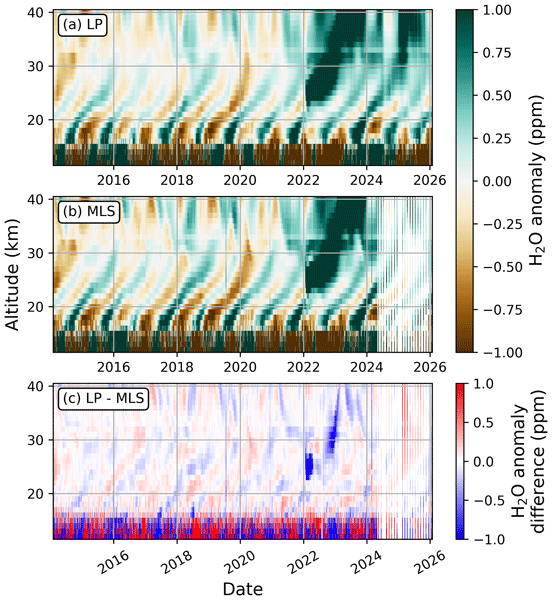
Stratospheric water vapor (SWV) influences various atmospheric processes. While the Ozone Mapping and Profiler Suite Limb Profiler (OMPS LP) was not designed to measure SWV, we utilized near-coincident measurements by the Aura Microwave Limb Sounder (MLS) and OMPS LP to develop a machine learning method to measure SWV between 11.5–40.5 km. The LP-derived SWV closely agrees with MLS. Our results suggest OMPS LP can continue the global water vapor record following the MLS mission.
Anna Borovikov, Andrea Molod, Young-Kwon Lim, Siegfried Schubert, and Priyanka Yadav
EGUsphere, https://doi.org/10.5194/egusphere-2026-1340, https://doi.org/10.5194/egusphere-2026-1340, 2026
Short summary
Short summary
Short term climate (subseasonal to seasonal) forecasts rely on a collection ("ensemble") of forecasts that are meant to span likely estimates of the evolution of the earth system. We present a strategy for generating ensembles that uses perturbed initial conditions of the atmosphere, ocean, and cryosphere. We show that the perturbations consist of physically realistic atmosphere and ocean modes of variability that are highly relevant for spanning the likely estimates of the future.
Claire K. Yung, Xylar S. Asay-Davis, Alistair Adcroft, Christopher Y. S. Bull, Jan De Rydt, Michael S. Dinniman, Benjamin K. Galton-Fenzi, Daniel Goldberg, David E. Gwyther, Robert Hallberg, Matthew Harrison, Tore Hattermann, David M. Holland, Denise Holland, Paul R. Holland, James R. Jordan, Nicolas C. Jourdain, Kazuya Kusahara, Gustavo Marques, Pierre Mathiot, Dimitris Menemenlis, Adele K. Morrison, Yoshihiro Nakayama, Olga Sergienko, Robin S. Smith, Alon Stern, Ralph Timmermann, and Qin Zhou
The Cryosphere, 20, 2053–2088, https://doi.org/10.5194/tc-20-2053-2026, https://doi.org/10.5194/tc-20-2053-2026, 2026
Short summary
Short summary
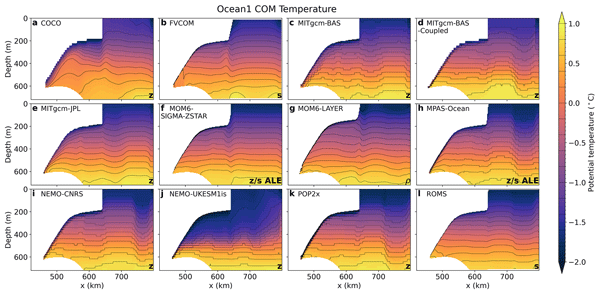
The second Ice Shelf-Ocean Model Intercomparison Project, ISOMIP+, compares 12 ice shelf-ocean models with a common, idealised, static configuration, aiming to assess inter-model variability. Models show similar basal melt rate patterns, ocean profiles and circulation but differ in ice-ocean boundary layer properties. Ice-ocean boundary layer representation is a key area for future work, as are realistic-domain ice sheet-ocean model intercomparisons.
Padmavathi Bevara and Ehud Strobach
EGUsphere, https://doi.org/10.21203/rs.3.rs-8796665/v2, https://doi.org/10.21203/rs.3.rs-8796665/v2, 2026
Short summary
Short summary
Farmers and water managers need early warnings of dry or wet seasons, but forecasts can miss local soil conditions. We tested a leading seasonal forecasting system against a high-quality historical record across Mediterranean and European regions from 1981 to 2024, for several soil depths and up to six months ahead. Skill varies by place and season, and reconstructing the main patterns improves agreement. Soil moisture changes also track wheat and maize yield swings, supporting better planning.

Hinne F. van der Zant, Olivier Sulpis, Jack J. Middelburg, Matthew P. Humphreys, Raphaël Savelli, Dustin Carroll, Dimitris Menemenlis, Kay Sušelj, and Vincent Le Fouest
Geosci. Model Dev., 19, 1965–1989, https://doi.org/10.5194/gmd-19-1965-2026, https://doi.org/10.5194/gmd-19-1965-2026, 2026
Short summary
Short summary
We developed a model to simulate seafloor biogeochemical processes across a wide range of marine environments, from shallow coastal zones to deep-sea sediments. From this model, we derived a set of simple equations that predict how carbon, oxygen, and alkalinity are exchanged between sediments and overlying waters. These equations provide an efficient way to improve how ocean models represent seafloor interactions, which are often missing or overly simplified.

Robert J. D. Spurr, Matt Christi, Nickolay A. Krotkov, Won-Ei Choi, Simon Carn, Can Li, Natalya Kramarova, David Haffner, Eun-Su Yang, Nick Gorkavyi, Alexander Vasilkov, Krzysztof Wargan, Omar Torres, Diego Loyola, Serena Di Pede, J. Pepijn Veefkind, Parker Case, Thomas Schroeder, and Pawan K. Bhartia
Atmos. Meas. Tech., 19, 993–1021, https://doi.org/10.5194/amt-19-993-2026, https://doi.org/10.5194/amt-19-993-2026, 2026
Short summary
Short summary
The submarine eruption of the Hunga volcano released water vapor and sulfur dioxide directly into the stratosphere. The sulfur dioxide formed sulfuric acid aerosols leading to increased scattering of solar ultraviolet radiation (UV), interfering with satellite ozone retrievals. We present a new satellite technique for deriving the amount and height of Hunga aerosols from UV measurements, revealing an unusually low sulfuric acid concentration due to the water-rich conditions in the fresh plume.
Ofer Cohen, Assaf Hochman, Ehud Strobach, Dorita Rostkier-Edelstein, Hezi Gildor, and Ori Adam
Weather Clim. Dynam., 7, 263–275, https://doi.org/10.5194/wcd-7-263-2026, https://doi.org/10.5194/wcd-7-263-2026, 2026
Short summary
Short summary
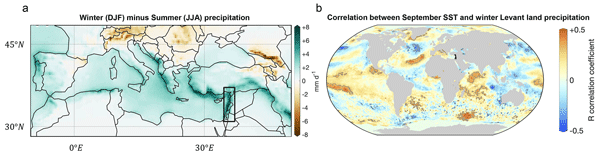
Severe warming and drying in the Eastern Mediterranean makes seasonal prediction of regional rain imperative. The study explores the observed relation of Mediterranean Sea variability to Levant winter precipitation. Ocean heat uptake in the Aegean Sea during summer is found to be a strong predictor of winter Levant precipitation. This connection is mediated by changes in the subtropical jet, which create more favorable conditions for precipitating storms in the Levant during winter.

Raphaël Savelli, Dustin Carroll, Dimitris Menemenlis, Jonathan M. Lauderdale, Clément Bertin, Stephanie Dutkiewicz, Manfredi Manizza, A. Anthony Bloom, Karel Castro-Morales, Charles E. Miller, Marc Simard, Kevin W. Bowman, and Hong Zhang
Geosci. Model Dev., 19, 867–885, https://doi.org/10.5194/gmd-19-867-2026, https://doi.org/10.5194/gmd-19-867-2026, 2026
Short summary
Short summary
Accounting for carbon and nutrients in rivers is essential for resolving carbon dioxide (CO2) exchanges between the ocean and the atmosphere. In this study, we add the effect of present-day rivers to a pioneering global-ocean biogeochemistry model. This study highlights the challenge for global ocean numerical models to cover the complexity of the flow of water and carbon across the Land-to-Ocean Aquatic Continuum.
Ci Song, Daniel McCoy, Andrea Molod, Travis Aerenson, and Donifan Barahona
Atmos. Chem. Phys., 25, 15567–15592, https://doi.org/10.5194/acp-25-15567-2025, https://doi.org/10.5194/acp-25-15567-2025, 2025
Short summary
Short summary
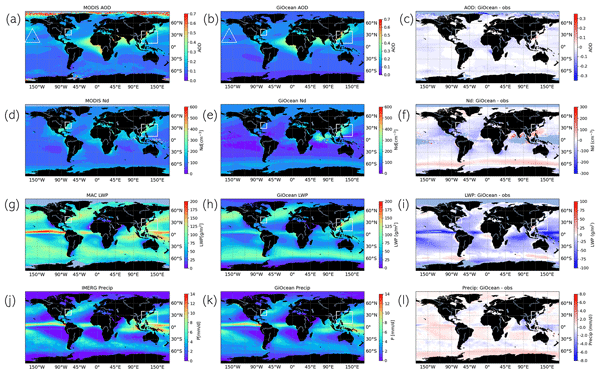
Uncertainty in how clouds respond to aerosols limits predictions of future warming. This study uses GiOcean, a global reanalysis with detailed cloud microphysics to represent aerosol–cloud interactions (ACI). We assess warm cloud responses by comparing variables important for ACI between GiOcean and satellite observations and further evaluate changes in cloud properties using a source–sink budget framework.
Clément Bertin, Vincent Le Fouest, Dustin Carroll, Stephanie Dutkiewicz, Dimitris Menemenlis, Atsushi Matsuoka, Manfredi Manizza, and Charles E. Miller
Biogeosciences, 22, 6607–6629, https://doi.org/10.5194/bg-22-6607-2025, https://doi.org/10.5194/bg-22-6607-2025, 2025
Short summary
Short summary
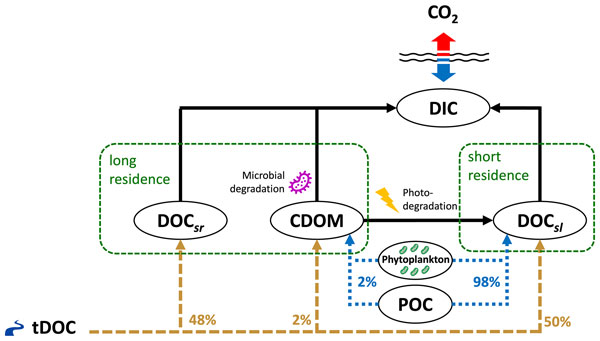
We adjusted a model of the Mackenzie River region to account for the riverine export of organic matter that affects light in the water. We show that such export causes a delay in the phytoplankton growth by two weeks and raises the water surface temperature by 1.7 °C. We found that temperature increase turns this coastal region from a sink of carbon dioxide to an emitter. Our findings suggest that rising exports of organic matter can significantly affect the carbon cycle in Arctic coastal areas.
Huisheng Bian, Sarah Strode, Mian Chin, Fan Li, Andrea Molad, Peter R. Colarco, and Hongbin Yu
EGUsphere, https://doi.org/10.5194/egusphere-2025-4501, https://doi.org/10.5194/egusphere-2025-4501, 2025
Preprint archived
Short summary
Short summary
We study the North Pacific westerly jet (NPWJ) using four reanalysis datasets and eight CMIP6 models. Our results show that between 1980 and 2019, the NPWJ core oscillates seasonally between north and south, weakening and shifting northward in summer and autumn. Single-forcing simulations further reveal aerosol forcing as the main driver. Incorporating interacting chemistry and time-varying ozone radiative forcing into Earth system models is crucial for simulating long-term atmospheric dynamics.
Yuna Lim, Andrea M. Molod, Randal D. Koster, and Joseph A. Santanello
Hydrol. Earth Syst. Sci., 29, 3435–3445, https://doi.org/10.5194/hess-29-3435-2025, https://doi.org/10.5194/hess-29-3435-2025, 2025
Short summary
Short summary
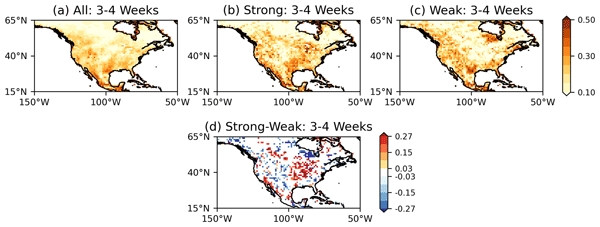
To better utilize a given set of predictions, identifying “forecasts of opportunity” is valuable as this helps anticipate when prediction skill will be higher. This study shows that when strong land–atmosphere (L–A) coupling is detected 3–4 weeks into a forecast, the surface air temperature prediction skill at this lead time increases across the Midwest and northern Great Plains. Regions experiencing strong L–A coupling exhibit warm and dry anomalies, enhancing predictions of abnormally warm events.
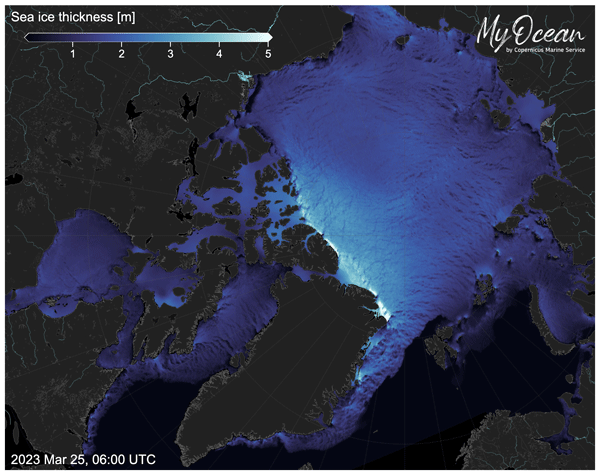
Laurent Bertino, Patrick Heimbach, Ed Blockley, and Einar Ólason
State Planet, 5-opsr, 14, https://doi.org/10.5194/sp-5-opsr-14-2025, https://doi.org/10.5194/sp-5-opsr-14-2025, 2025
Short summary
Short summary
Forecasts of sea ice are in high demand in the polar regions, and they are also quickly improving and becoming more easily accessible to non-experts. We provide here a brief status of the short-term forecasting services – typically 10 d ahead – and an outlook of their upcoming developments.
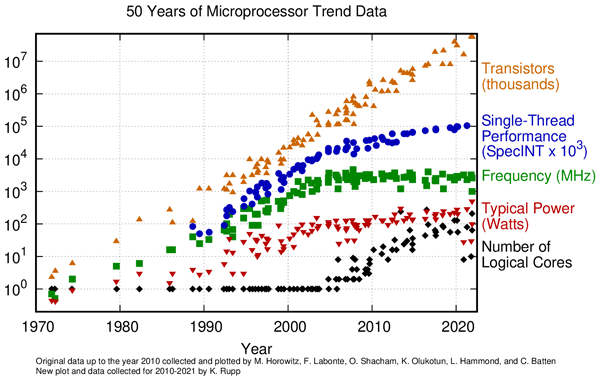
Andrew R. Porter and Patrick Heimbach
State Planet, 5-opsr, 23, https://doi.org/10.5194/sp-5-opsr-23-2025, https://doi.org/10.5194/sp-5-opsr-23-2025, 2025
Short summary
Short summary
Numerical ocean forecasting is a key part of accurate models of the Earth system. However, they require powerful computing resources, and the architectures of the necessary computers are evolving rapidly. Unfortunately, this is a disruptive change – an ocean model must be modified to enable it to make use of this new computing hardware. This paper reviews what has been done in this area and identifies solutions to enable operational ocean forecasts to make use of the new computing hardware.
Patrick Heimbach, Fearghal O'Donncha, Timothy A. Smith, Jose Maria Garcia-Valdecasas, Alain Arnaud, and Liying Wan
State Planet, 5-opsr, 22, https://doi.org/10.5194/sp-5-opsr-22-2025, https://doi.org/10.5194/sp-5-opsr-22-2025, 2025
Short summary
Short summary
Operational ocean prediction relies on computationally expensive numerical models and complex workflows, known as data assimilation, in which models are fit to observations to produce optimal initial conditions for prediction. Machine learning has the potential to vastly accelerate ocean prediction, improve uncertainty quantification through massive surrogate model-based ensembles, and render simulations more accurate through better model calibration. We review the developments and challenges.
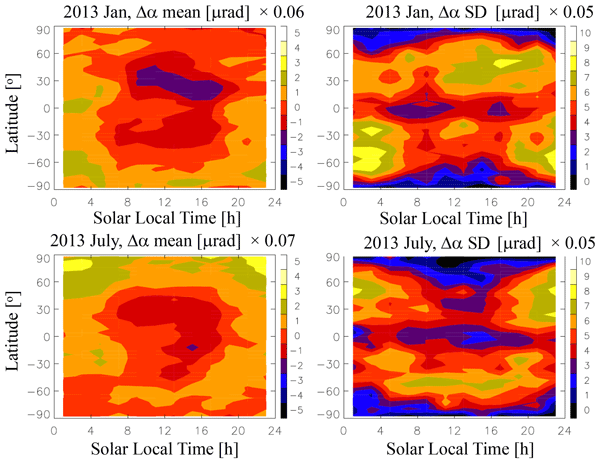
Dong L. Wu, Valery A. Yudin, Kyu-Myong Kim, Mohar Chattopadhyay, Lawrence Coy, Ruth S. Lieberman, C. C. Jude H. Salinas, Jae N. Lee, Jie Gong, and Guiping Liu
Atmos. Meas. Tech., 18, 843–863, https://doi.org/10.5194/amt-18-843-2025, https://doi.org/10.5194/amt-18-843-2025, 2025
Short summary
Short summary
Global Navigation Satellite System radio occultation data help monitor climate and weather prediction but are affected by residual ionospheric errors (RIEs). A new excess-phase-gradient method detects and corrects RIEs, showing both positive and negative values, varying by latitude, time, and solar activity. Tests show that RIE impacts polar stratosphere temperatures in models, with differences up to 3–4 K. This highlights the need for RIE correction to improve the accuracy of data assimilation.
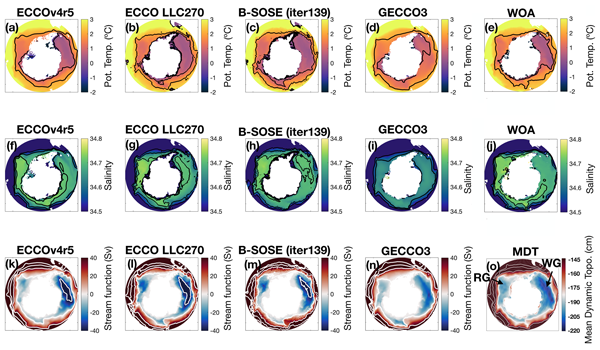
Yoshihiro Nakayama, Alena Malyarenko, Hong Zhang, Ou Wang, Matthis Auger, Yafei Nie, Ian Fenty, Matthew Mazloff, Armin Köhl, and Dimitris Menemenlis
Geosci. Model Dev., 17, 8613–8638, https://doi.org/10.5194/gmd-17-8613-2024, https://doi.org/10.5194/gmd-17-8613-2024, 2024
Short summary
Short summary
Global- and basin-scale ocean reanalyses are becoming easily accessible. However, such ocean reanalyses are optimized for their entire model domains and their ability to simulate the Southern Ocean requires evaluation. We conduct intercomparison analyses of Massachusetts Institute of Technology General Circulation Model (MITgcm)-based ocean reanalyses. They generally perform well for the open ocean, but open-ocean temporal variability and Antarctic continental shelves require improvements.
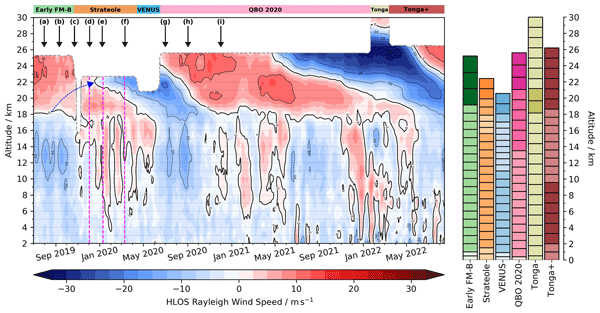
Timothy P. Banyard, Corwin J. Wright, Scott M. Osprey, Neil P. Hindley, Gemma Halloran, Lawrence Coy, Paul A. Newman, Neal Butchart, Martina Bramberger, and M. Joan Alexander
Atmos. Chem. Phys., 24, 2465–2490, https://doi.org/10.5194/acp-24-2465-2024, https://doi.org/10.5194/acp-24-2465-2024, 2024
Short summary
Short summary
In 2019/2020, the tropical stratospheric wind phenomenon known as the quasi-biennial oscillation (QBO) was disrupted for only the second time in the historical record. This was poorly forecasted, and we want to understand why. We used measurements from the first Doppler wind lidar in space, Aeolus, to observe the disruption in an unprecedented way. Our results reveal important differences between Aeolus and the ERA5 reanalysis that affect the timing of the disruption's onset and its evolution.
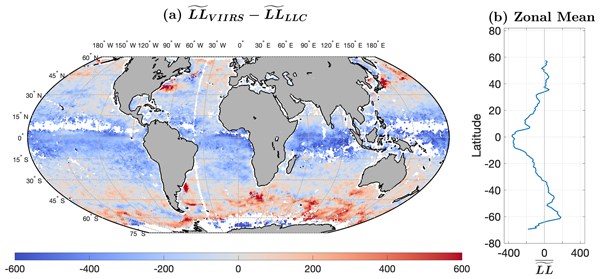
Katharina Gallmeier, J. Xavier Prochaska, Peter Cornillon, Dimitris Menemenlis, and Madolyn Kelm
Geosci. Model Dev., 16, 7143–7170, https://doi.org/10.5194/gmd-16-7143-2023, https://doi.org/10.5194/gmd-16-7143-2023, 2023
Short summary
Short summary
This paper introduces an approach to evaluate numerical models of ocean circulation. We compare the structure of satellite-derived sea surface temperature anomaly (SSTa) instances determined by a machine learning algorithm at 10–80 km scales to those output by a high-resolution MITgcm run. The simulation over much of the ocean reproduces the observed distribution of SSTa patterns well. This general agreement, alongside a few notable exceptions, highlights the potential of this approach.
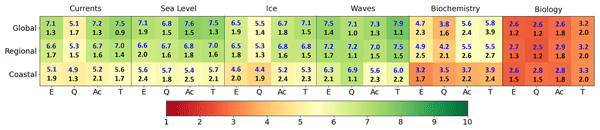
Stefania A. Ciliberti, Enrique Alvarez Fanjul, Jay Pearlman, Kirsten Wilmer-Becker, Pierre Bahurel, Fabrice Ardhuin, Alain Arnaud, Mike Bell, Segolene Berthou, Laurent Bertino, Arthur Capet, Eric Chassignet, Stefano Ciavatta, Mauro Cirano, Emanuela Clementi, Gianpiero Cossarini, Gianpaolo Coro, Stuart Corney, Fraser Davidson, Marie Drevillon, Yann Drillet, Renaud Dussurget, Ghada El Serafy, Katja Fennel, Marcos Garcia Sotillo, Patrick Heimbach, Fabrice Hernandez, Patrick Hogan, Ibrahim Hoteit, Sudheer Joseph, Simon Josey, Pierre-Yves Le Traon, Simone Libralato, Marco Mancini, Pascal Matte, Angelique Melet, Yasumasa Miyazawa, Andrew M. Moore, Antonio Novellino, Andrew Porter, Heather Regan, Laia Romero, Andreas Schiller, John Siddorn, Joanna Staneva, Cecile Thomas-Courcoux, Marina Tonani, Jose Maria Garcia-Valdecasas, Jennifer Veitch, Karina von Schuckmann, Liying Wan, John Wilkin, and Romane Zufic
State Planet, 1-osr7, 2, https://doi.org/10.5194/sp-1-osr7-2-2023, https://doi.org/10.5194/sp-1-osr7-2-2023, 2023
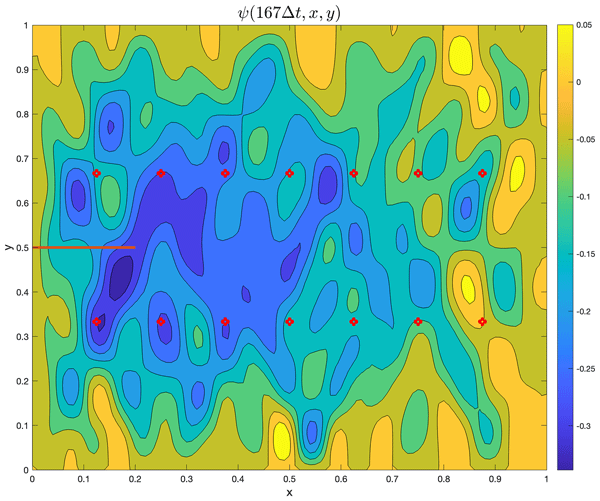
Carl Wunsch, Sarah Williamson, and Patrick Heimbach
Ocean Sci., 19, 1253–1275, https://doi.org/10.5194/os-19-1253-2023, https://doi.org/10.5194/os-19-1253-2023, 2023
Short summary
Short summary
Data assimilation methods that couple observations with dynamical models are essential for understanding climate change. Here,
climateincludes all sub-elements (ocean, atmosphere, ice, etc.). A common form of combination arises from sequential estimation theory, a methodology susceptible to a variety of errors that can accumulate through time for long records. Using two simple analogs, examples of these errors are identified and discussed, along with suggestions for accommodating them.
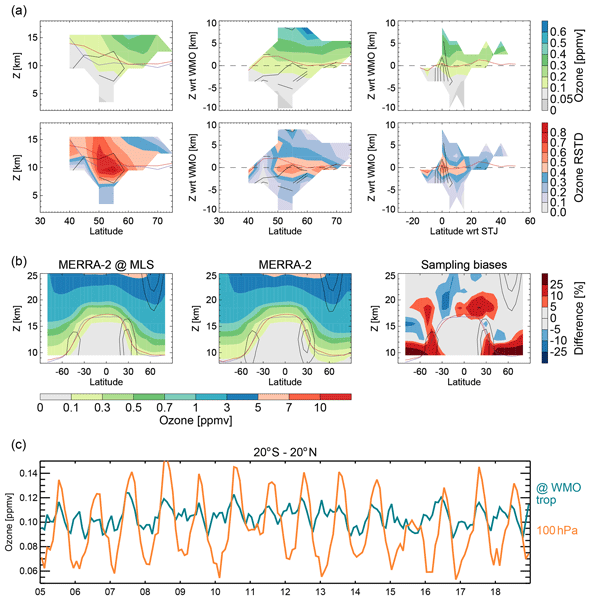
Luis F. Millán, Gloria L. Manney, Harald Boenisch, Michaela I. Hegglin, Peter Hoor, Daniel Kunkel, Thierry Leblanc, Irina Petropavlovskikh, Kaley Walker, Krzysztof Wargan, and Andreas Zahn
Atmos. Meas. Tech., 16, 2957–2988, https://doi.org/10.5194/amt-16-2957-2023, https://doi.org/10.5194/amt-16-2957-2023, 2023
Short summary
Short summary
The determination of atmospheric composition trends in the upper troposphere and lower stratosphere (UTLS) is still highly uncertain. We present the creation of dynamical diagnostics to map several ozone datasets (ozonesondes, lidars, aircraft, and satellite measurements) in geophysically based coordinate systems. The diagnostics can also be used to analyze other greenhouse gases relevant to surface climate and UTLS chemistry.
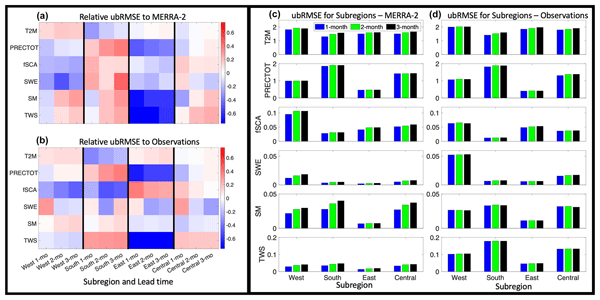
Elias C. Massoud, Lauren Andrews, Rolf Reichle, Andrea Molod, Jongmin Park, Sophie Ruehr, and Manuela Girotto
Earth Syst. Dynam., 14, 147–171, https://doi.org/10.5194/esd-14-147-2023, https://doi.org/10.5194/esd-14-147-2023, 2023
Short summary
Short summary
In this study, we benchmark the forecast skill of the NASA’s Goddard Earth Observing System subseasonal-to-seasonal (GEOS-S2S version 2) hydrometeorological forecasts in the High Mountain Asia (HMA) region. Hydrometeorological forecast skill is dependent on the forecast lead time, the memory of the variable within the physical system, and the validation dataset used. Overall, these results benchmark the GEOS-S2S system’s ability to forecast HMA hydrometeorology on the seasonal timescale.
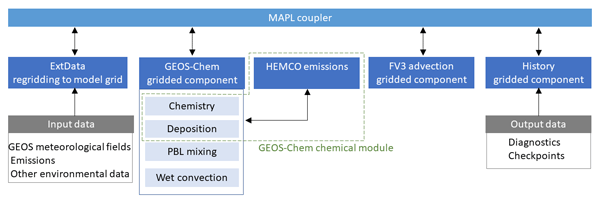
Randall V. Martin, Sebastian D. Eastham, Liam Bindle, Elizabeth W. Lundgren, Thomas L. Clune, Christoph A. Keller, William Downs, Dandan Zhang, Robert A. Lucchesi, Melissa P. Sulprizio, Robert M. Yantosca, Yanshun Li, Lucas Estrada, William M. Putman, Benjamin M. Auer, Atanas L. Trayanov, Steven Pawson, and Daniel J. Jacob
Geosci. Model Dev., 15, 8731–8748, https://doi.org/10.5194/gmd-15-8731-2022, https://doi.org/10.5194/gmd-15-8731-2022, 2022
Short summary
Short summary
Atmospheric chemistry models must be able to operate both online as components of Earth system models and offline as standalone models. The widely used GEOS-Chem model operates both online and offline, but the classic offline version is not suitable for massively parallel simulations. We describe a new generation of the offline high-performance GEOS-Chem (GCHP) that enables high-resolution simulations on thousands of cores, including on the cloud, with improved access, performance, and accuracy.
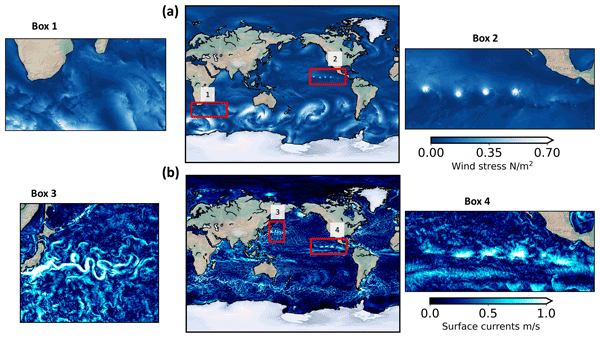
Hector S. Torres, Patrice Klein, Jinbo Wang, Alexander Wineteer, Bo Qiu, Andrew F. Thompson, Lionel Renault, Ernesto Rodriguez, Dimitris Menemenlis, Andrea Molod, Christopher N. Hill, Ehud Strobach, Hong Zhang, Mar Flexas, and Dragana Perkovic-Martin
Geosci. Model Dev., 15, 8041–8058, https://doi.org/10.5194/gmd-15-8041-2022, https://doi.org/10.5194/gmd-15-8041-2022, 2022
Short summary
Short summary
Wind work at the air-sea interface is the scalar product of winds and currents and is the transfer of kinetic energy between the ocean and the atmosphere. Using a new global coupled ocean-atmosphere simulation performed at kilometer resolution, we show that all scales of winds and currents impact the ocean dynamics at spatial and temporal scales. The consequential interplay of surface winds and currents in the numerical simulation motivates the need for a winds and currents satellite mission.
David S. Trossman, Caitlin B. Whalen, Thomas W. N. Haine, Amy F. Waterhouse, An T. Nguyen, Arash Bigdeli, Matthew Mazloff, and Patrick Heimbach
Ocean Sci., 18, 729–759, https://doi.org/10.5194/os-18-729-2022, https://doi.org/10.5194/os-18-729-2022, 2022
Short summary
Short summary
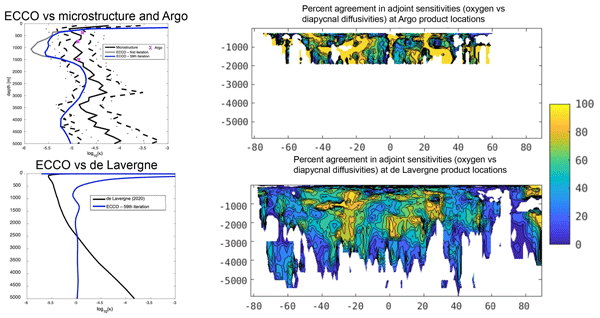
How the ocean mixes is not yet adequately represented by models. There are many challenges with representing this mixing. A model that minimizes disagreements between observations and the model could be used to fill in the gaps from observations to better represent ocean mixing. But observations of ocean mixing have large uncertainties. Here, we show that ocean oxygen, which has relatively small uncertainties, and observations of ocean mixing provide information similar to the model.
Irina Petropavlovskikh, Koji Miyagawa, Audra McClure-Beegle, Bryan Johnson, Jeannette Wild, Susan Strahan, Krzysztof Wargan, Richard Querel, Lawrence Flynn, Eric Beach, Gerard Ancellet, and Sophie Godin-Beekmann
Atmos. Meas. Tech., 15, 1849–1870, https://doi.org/10.5194/amt-15-1849-2022, https://doi.org/10.5194/amt-15-1849-2022, 2022
Short summary
Short summary
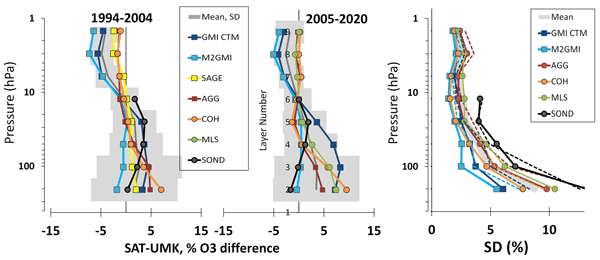
The Montreal Protocol and its amendments assure the recovery of the stratospheric ozone layer that protects the Earth from harmful ultraviolet radiation. To monitor ozone recovery, multiple satellites and ground-based observational platforms collect ozone data. The changes in instruments can influence the continuation of the ozone data. We discuss a method to remove instrumental artifacts from ozone records to improve the internal consistency among multiple observational records.
Ehud Strobach, Andrea Molod, Donifan Barahona, Atanas Trayanov, Dimitris Menemenlis, and Gael Forget
Geosci. Model Dev., 15, 2309–2324, https://doi.org/10.5194/gmd-15-2309-2022, https://doi.org/10.5194/gmd-15-2309-2022, 2022
Short summary
Short summary
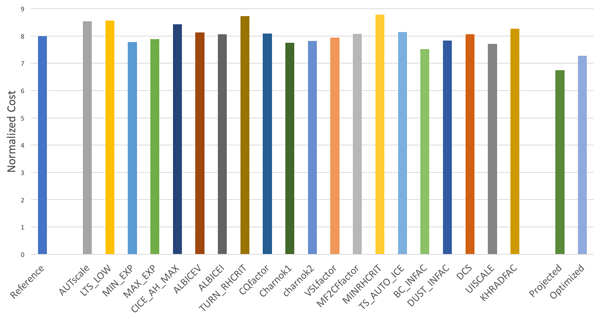
The Green's functions methodology offers a systematic, easy-to-implement, computationally cheap, scalable, and extendable method to tune uncertain parameters in models accounting for the dependent response of the model to a change in various parameters. Herein, we successfully show for the first time that long-term errors in earth system models can be considerably reduced using Green's functions methodology. The method can be easily applied to any model containing uncertain parameters.
Olivier Sulpis, Matthew P. Humphreys, Monica M. Wilhelmus, Dustin Carroll, William M. Berelson, Dimitris Menemenlis, Jack J. Middelburg, and Jess F. Adkins
Geosci. Model Dev., 15, 2105–2131, https://doi.org/10.5194/gmd-15-2105-2022, https://doi.org/10.5194/gmd-15-2105-2022, 2022
Short summary
Short summary
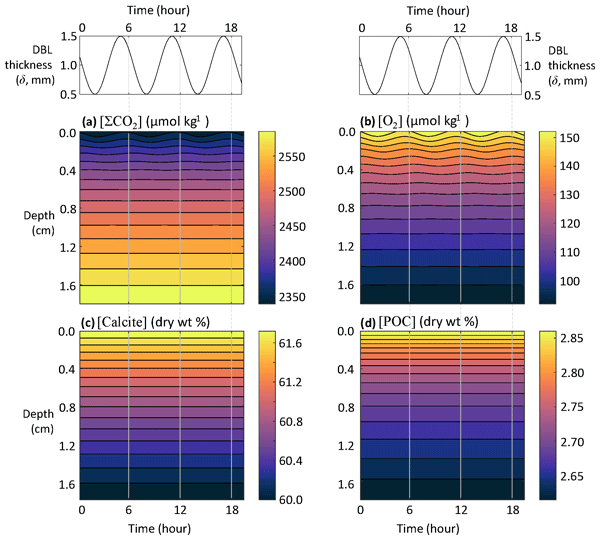
A quarter of the surface of the Earth is covered by marine sediments rich in calcium carbonates, and their dissolution acts as a giant antacid tablet protecting the ocean against human-made acidification caused by massive CO2 emissions. Here, we present a new model of sediment chemistry that incorporates the latest experimental findings on calcium carbonate dissolution kinetics. This model can be used to predict how marine sediments evolve through time in response to environmental perturbations.
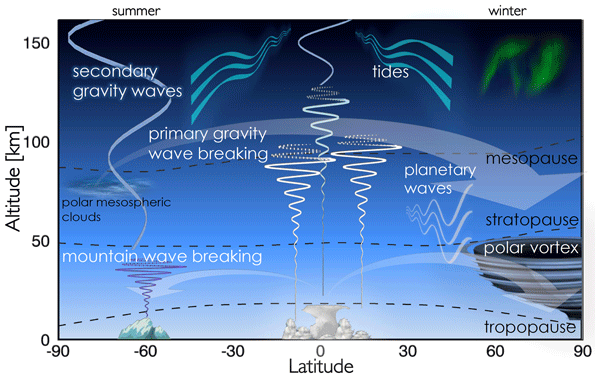
John P. McCormack, V. Lynn Harvey, Cora E. Randall, Nicholas Pedatella, Dai Koshin, Kaoru Sato, Lawrence Coy, Shingo Watanabe, Fabrizio Sassi, and Laura A. Holt
Atmos. Chem. Phys., 21, 17577–17605, https://doi.org/10.5194/acp-21-17577-2021, https://doi.org/10.5194/acp-21-17577-2021, 2021
Short summary
Short summary
In order to have confidence in atmospheric predictions, it is important to know how well different numerical model simulations of the Earth’s atmosphere agree with one another. This work compares four different data assimilation models that extend to or beyond the mesosphere. Results shown here demonstrate that while the models are in close agreement below ~50 km, large differences arise at higher altitudes in the mesosphere and lower thermosphere that will need to be reconciled in the future.
Cited articles
Abalos, M., Polvani, L., Calvo, N., Kinnison, D., Ploeger, F., Randel, W., and Solomon, S.: New insights on the impact of ozone-depleting substances on the Brewer-Dobson circulation, Journal of Geophysical Research: Atmospheres, 124, 2435–2451, 2019. a
Abalos, M., Calvo, N., Benito-Barca, S., Garny, H., Hardiman, S. C., Lin, P., Andrews, M. B., Butchart, N., Garcia, R., Orbe, C., Saint-Martin, D., Watanabe, S., and Yoshida, K.: The Brewer–Dobson circulation in CMIP6, Atmospheric Chemistry and Physics, 21, 13571–13591, https://doi.org/10.5194/acp-21-13571-2021, 2021. a
Adcroft, A. and Campin, J.-M.: Rescaled height coordinates for accurate representation of free-surface flows in ocean circulation models, Ocean Modelling, 7, 269–284, https://doi.org/10.1016/j.ocemod.2003.09.003, 2004. a
Alexander, M. A., Bhatt, U. S., Walsh, J. E., Timlin, M. S., Miller, J. S., and Scott, J. D.: The atmospheric response to realistic Arctic sea ice anomalies in an AGCM during winter, Journal of Climate, 17, 890–905, 2004. a
Austin, J., Shindell, D., Beagley, S. R., Brühl, C., Dameris, M., Manzini, E., Nagashima, T., Newman, P., Pawson, S., Pitari, G., Rozanov, E., Schnadt, C., and Shepherd, T. G.: Uncertainties and assessments of chemistry-climate models of the stratosphere, Atmospheric Chemistry and Physics, 3, 1–27, https://doi.org/10.5194/acp-3-1-2003, 2003. a
Barahona, D., Molod, A., Bacmeister, J., Nenes, A., Gettelman, A., Morrison, H., Phillips, V., and Eichmann, A.: Development of two-moment cloud microphysics for liquid and ice within the NASA Goddard Earth Observing System Model (GEOS-5), Geoscientific Model Development, 7, 1733–1766, https://doi.org/10.5194/gmd-7-1733-2014, 2014. a
Bauer, S. E., Tsigaridis, K., Faluvegi, G., Kelley, M., Lo, K. K., Miller, R. L., Nazarenko, L., Schmidt, G. A., and Wu, J.: Historical (1850–2014) aerosol evolution and role on climate forcing using the GISS ModelE2. 1 contribution to CMIP6, Journal of Advances in Modeling Earth Systems, 12, e2019MS001978, https://doi.org/10.1029/2019MS001978, 2020. a
Birner, T. and Bönisch, H.: Residual circulation trajectories and transit times into the extratropical lowermost stratosphere, Atmospheric Chemistry and Physics, 11, 817–827, https://doi.org/10.5194/acp-11-817-2011, 2011. a, b
Bönisch, H., Engel, A., Birner, Th., Hoor, P., Tarasick, D. W., and Ray, E. A.: On the structural changes in the Brewer-Dobson circulation after 2000, Atmospheric Chemistry and Physics, 11, 3937–3948, https://doi.org/10.5194/acp-11-3937-2011, 2011. a
Bosilovich, M. G.: MERRA-2: Initial evaluation of the climate, National Aeronautics and Space Administration, Goddard Space Flight Center, https://gmao.gsfc.nasa.gov/pubs/docs/Bosilovich803.pdf (last access: 8 January 2026), 2015. a
Brasseur, G. and Granier, C.: Mount Pinatubo aerosols, chlorofluorocarbons, and ozone depletion, Science, 257, 1239–1242, 1992. a
Butchart, N.: The Brewer-Dobson circulation, Reviews of Geophysics, 52, 157–184, 2014. a
Charlton-Perez, A. J., Baldwin, M. P., Birner, T., Black, R. X., Butler, A. H., Calvo, N., Davis, N. A., Gerber, E. P., Gillett, N., Hardiman, S., Kim, J., Krüger, K., Lee, Y.-Y., Manzini, E., McDaniel, B. A., Polvani, L., Reichler, T., Shaw, T. A., Sigmond, M., Son, S.-W., Toohey, M., Wilcox, L., Yoden, S., Christiansen, B., Lott, F., Shindell, D., Yukimoto, S., and Watanabe, S.: On the lack of stratospheric dynamical variability in low-top versions of the CMIP5 models, Journal of Geophysical Research: Atmospheres, 118, 2494–2505, https://doi.org/10.1002/jgrd.50125, 2013. a
Chin, M., Ginoux, P., Kinne, S., Torres, O., Holben, B. N., Duncan, B. N., Martin, R. V., Logan, J. A., Higurashi, A., and Nakajima, T.: Tropospheric Aerosol Optical Thickness from the GOCART Model and Comparisons with Satellite and Sun Photometer Measurements, Journal of the Atmospheric Sciences, 59, 461–483, https://doi.org/10.1175/1520-0469(2002)059<0461:TAOTFT>2.0.CO;2, 2002. a
Cionni, I., Eyring, V., Lamarque, J. F., Randel, W. J., Stevenson, D. S., Wu, F., Bodeker, G. E., Shepherd, T. G., Shindell, D. T., and Waugh, D. W.: Ozone database in support of CMIP5 simulations: results and corresponding radiative forcing, Atmospheric Chemistry and Physics, 11, 11267–11292, https://doi.org/10.5194/acp-11-11267-2011, 2011. a
Colarco, P., da Silva, A., Chin, M., and Diehl, T.: Online simulations of global aerosol distributions in the NASA GEOS-4 model and comparisons to satellite and ground-based aerosol optical depth, J. Geophys. Res. Atmos., 115, https://doi.org/10.1029/2009JD012820, 2010. a
Edmon Jr., H., Hoskins, B., and McIntyre, M.: Eliassen-Palm cross sections for the troposphere, Journal of Atmospheric Sciences, 37, 2600–2616, https://doi.org/10.1175/1520-0469(1980)037<2600:EPCSFT>2.0.CO;2, 1980. a, b
Eyring, V., Waugh, D. W., Bodeker, G. E., Cordero, E., Akiyoshi, H., Austin, J., Beagley, S. R., Boville, B. A., Braesicke, P., Brühl, C., Butchart, N., Chipperfield, M. P., Dameris, M., Deckert, R., Deushi, M., Frith, S. M., Garcia, R. R., Gettelman, A., Giorgetta, M. A., Kinnison, D. E., Mancini, E., Manzini, E., Marsh, D. R., Nagashima, T., Newman, P. A., Nielsen, J. E., Pawson, S., Pitari, G., Plummer, D. A., Rozanov, E., Schraner, M., Scinocca, J. F., Semeniuk, K., Shepherd, T. G., Shibata, K., Steil, B., Stolarski, R. S., Tian, W., and Yoshiki, M.: Multimodel projections of stratospheric ozone in the 21st century, Journal of Geophysical Research: Atmospheres, 112, https://doi.org/10.1029/2006JD008332, 2007. a
Eyring, V., Bony, S., Meehl, G. A., Senior, C. A., Stevens, B., Stouffer, R. J., and Taylor, K. E.: Overview of the Coupled Model Intercomparison Project Phase 6 (CMIP6) experimental design and organization, Geoscientific Model Development, 9, 1937–1958, https://doi.org/10.5194/gmd-9-1937-2016, 2016. a, b
Fahad, A. A., Burls, N. J., and Strasberg, Z.: How will southern hemisphere subtropical anticyclones respond to global warming? Mechanisms and seasonality in CMIP5 and CMIP6 model projections, Climate Dynamics, 55, 703–718, https://doi.org/10.1007/s00382-020-05290-7, 2020. a
Forget, G., Campin, J.-M., Heimbach, P., Hill, C. N., Ponte, R. M., and Wunsch, C.: ECCO version 4: an integrated framework for non-linear inverse modeling and global ocean state estimation, Geoscientific Model Development, 8, 3071–3104, https://doi.org/10.5194/gmd-8-3071-2015, 2015. a, b
Fu, Q., Solomon, S., Pahlavan, H. A., and Lin, P.: Observed changes in Brewer–Dobson circulation for 1980–2018, Environmental Research Letters, 14, 114026, https://doi.org/10.1088/1748-9326/ab4de7, 2019. a, b
Fujiwara, M., Manney, G. L., Gray, L. J., and Wright, J. S.: SPARC Reanalysis Intercomparison Project (S-RIP) Final Report, Tech. rep., SPARC, https://doi.org/10.17874/800dee57d13, 2022. a, b
Garfinkel, C. I., Aquila, V., Waugh, D. W., and Oman, L. D.: Time-varying changes in the simulated structure of the Brewer–Dobson Circulation, Atmospheric Chemistry and Physics, 17, 1313–1327, https://doi.org/10.5194/acp-17-1313-2017, 2017. a
Gelaro, R., McCarty, W., Suárez, M. J., Todling, R., Molod, A., Takacs, L., Randles, C. A., Darmenov, A., Bosilovich, M. G., Reichle, R., Wargan, K., Coy, L., Cullather, R., Draper, C., Akella, S., Buchard, V., Conaty, A., da Silva, A. M., Gu, W., Kim, G.-K., Koster, R., Lucchesi, R., Merkova, D., Nielsen, J. E., Partyka, G., Pawson, S., Putman, W., Rienecker, M., Schubert, S. D., Sienkiewicz, M., and Zhao, B.: The Modern-Era Retrospective Analysis for Research and Applications, Version 2 (MERRA-2), Journal of Climate, 30, 5419–5454, https://doi.org/10.1175/JCLI-D-16-0758.1, 2017. a, b
Gillett, N., Allen, M., and Williams, K.: Modelling the atmospheric response to doubled CO2 and depleted stratospheric ozone using a stratosphere-resolving coupled GCM, Quarterly Journal of the Royal Meteorological Society: A Journal of the Atmospheric Sciences, Applied Meteorology and Physical Oceanography, 129, 947–966, https://doi.org/10.1256/qj.02.102, 2003. a
GMAO: MERRA-2 instM_3d_ana_Np: 3d, Monthly mean, Instantaneous, Pressure-Level, Analysis, Analyzed Meteorological Fields V5. 12.4, NASA Goddard Earth Sciences Data and Information Services Center (DAAC) [data set], https://doi.org/10.5067/2E096JV59PK7, 2015. a
Hall, R. J., Mitchell, D. M., Seviour, W. J., and Wright, C. J.: Persistent model biases in the CMIP6 representation of stratospheric polar vortex variability, Journal of Geophysical Research: Atmospheres, 126, e2021JD034759, https://doi.org/10.1029/2021JD034759, 2021. a
Hardiman, S., Butchart, N., Hinton, T., Osprey, S., and Gray, L.: The effect of a well-resolved stratosphere on surface climate: Differences between CMIP5 simulations with high and low top versions of the Met Office climate model, Journal of Climate, 25, 7083–7099, https://doi.org/10.1175/JCLI-D-11-00579.1, 2012. a
Hersbach, H., Bell, B., Berrisford, P., Hirahara, S., Horányi, A., Muñoz‐Sabater, J., Nicolas, J., Peubey, C., Radu, R., Schepers, D., Simmons, A., Soci, C., Abdalla, S., Abellan, X., Balsamo, G., Bechtold, P., Biavati, G., Bidlot, J., Bonavita, M., De Chiara, G., Dahlgren, P., Dee, D., Diamantakis, M., Dragani, R., Flemming, J., Forbes, R., Fuentes, M., Geer, A., Haimberger, L., Healy, S., Hogan, R. J., Hólm, E., Janisková, M., Keeley, S., Laloyaux, P., Lopez, P., Lupu, C., Radnoti, G., de Rosnay, P., Rozum, I., Vamborg, F., Villaume, S., and Thépaut, J.-N.: The ERA5 global reanalysis, Quarterly Journal of the Royal Meteorological Society, 146, 1999–2049, https://doi.org/10.1002/qj.3803, 2020. a
Holton, J. R. and Hakim, G. J.: An introduction to dynamic meteorology: Fifth edition, Academic Press, ISBN 9780123848666, https://doi.org/10.1016/C2009-0-63394-8, 2012. a
Keenlyside, N. S., Latif, M., Jungclaus, J., Kornblueh, L., and Roeckner, E.: Advancing decadal-scale climate prediction in the North Atlantic sector, Nature, 453, 84–88, https://doi.org/10.1038/nature06921, 2008. a
Kelley, M., Schmidt, G. A., Nazarenko, L. S., Bauer, S. E., Ruedy, R., Russell, G. L., Ackerman, A. S., Aleinov, I., Bauer, M., Bleck, R., Canuto, V., Cesana, G., Cheng, Y., Clune, T. L., Cook, B. I., Cruz, C. A., Del Genio, A. D., Elsaesser, G. S., Faluvegi, G., Kiang, N. Y., Kim, D., Lacis, A. A., Leboissetier, A., LeGrande, A. N., Lo, K. K., Marshall, J., Matthews, E. E., McDermid, S., Mezuman, K., Miller, R. L., Murray, L. T., Oinas, V., Orbe, C., Pérez García-Pando, C., Perlwitz, J. P., Puma, M. J., Rind, D., Romanou, A., Shindell, D. T., Sun, S., Tausnev, N., Tsigaridis, K., Tselioudis, G., Weng, E., Wu, J., and Yao, M.-S.: GISS-E2. 1: Configurations and climatology, Journal of Advances in Modeling Earth Systems, 12, e2019MS002025, https://doi.org/10.1029/2019MS002025, 2020. a
Kirtman, B.,Power, S. B., Adedoyin, J. A., Boer, G. J., Bojariu, R., Camilloni, I., Doblas-Reyes, F. J., Fiore, A. M., Kimoto, M., Meehl, G. A., Prather, M., Sarr, A., Schär, C., Sutton, R., van Oldenborgh, G. J., Vecchi, G., and Wang, H. J.: Near-term Climate Change: Projections and Predictability. In: Climate Change 2013: The Physical Science Basis. Contribution of Working Group I to the Fifth Assessment Report of the Intergovernmental Panel on Climate Change, edited by: Stocker, T. F., Qin, D., Plattner, G.-K., Tignor, M., Allen, S. K., Boschung, J., Nauels, A., Xia, Y., Bex, V., and Midgley, P. M., Cambridge University Press, Cambridge, United Kingdom and New York, NY, USA, 2013. a
Kolstad, E. W., Breiteig, T., and Scaife, A. A.: The association between stratospheric weak polar vortex events and cold air outbreaks in the Northern Hemisphere, Quarterly Journal of the Royal Meteorological Society, 136, 886–893, https://doi.org/10.1002/qj.620, 2010. a, b, c
Koster, R. D., Suarez, M. J., Ducharne, A., Stieglitz, M., and Kumar, P.: A Catchment-based Approach to Modeling Land Surface Processes in a General Circulation Model: 1. Model Structure, Journal of Geophysical Research: Atmosphere, 105, 24809–24822, 2000. a
Long, C. S., Fujiwara, M., Davis, S., Mitchell, D. M., and Wright, C. J.: Climatology and interannual variability of dynamic variables in multiple reanalyses evaluated by the SPARC Reanalysis Intercomparison Project (S-RIP), Atmospheric Chemistry and Physics, 17, 14593–14629, https://doi.org/10.5194/acp-17-14593-2017, 2017. a
Manabe, S. and Wetherald, R. T.: Thermal Equilibrium of the Atmosphere with a Given Distribution of Relative Humidity, Journal of Atmospheric Sciences, 24, 241–259, https://doi.org/10.1175/1520-0469(1967)024<0241:TEOTAW>2.0.CO;2, 1967. a, b
Manzini, E., Karpechko, A. Y., Anstey, J., Baldwin, M. P., Black, R. X., Cagnazzo, C., Calvo, N., Charlton-Perez, A., Christiansen, B., Davini, P., Gerber, E., Giorgetta, M., Gray, L., Hardiman, S. C., Lee, Y.-Y., Marsh, D. R., McDaniel, B. A., Purich, A., Scaife, A. A., Shindell, D., Son, S.-W., Watanabe, S., and Zappa, G. TS21 Marotzke, J., Müller, W. A., Vamborg, F. S., Becker, P., Cubasch, U., Feldmann, H., Kaspar, F., Kottmeier, C., Marini, C., Polkova, I., Prömmel, K., Rust, H. W., Stammer, D., Ulbrich, U., Kadow, C., Köhl, A., Kröger, J., Kruschke, T., Pinto, J. G., Pohlmann, H., Reyers, M., Schröder, M., Seneviratne, S. I., Tost, H., Wilson, C., and Ziese, M.: Northern winter climate change: Assessment of uncertainty in CMIP5 projections related to stratosphere-troposphere coupling, Journal of Geophysical Research: Atmospheres, 119, 7979–7998, 2014. a
Marotzke, J., Müller, W. A., Vamborg, F. S., Becker, P., Cubasch, U., Feldmann, H., Kaspar, F., Kottmeier, C., Marini, C., Polkova, I., Prömmel, K., Rust, H. W., Stammer, D., Ulbrich, U., Kadow, C., Köhl, A., Kröger, J., Kruschke, T., Pinto, J. G., Pohlmann, H., Reyers, M., Schröder, M., Sienz, F., Timmreck, C., and Ziese, M.: MiKlip: a national research project on decadal climate prediction, Bulletin of the American Meteorological Society, 97, 2379–2394, 2016. a
Marshall, J., Adcroft, A., Hill, C., Perelman, L., and Heisey, C.: A finite-volume, incompressible Navier Stokes model for studies of the ocean on parallel computers, Journal of Geophysical Research: Oceans, 102, 5753–5766, https://doi.org/10.1029/96JC02775, 1997. a
Meehl, G. A., Goddard, L., Boer, G., Burgman, R., Branstator, G., Cassou, C., Corti, S., Danabasoglu, G., Doblas-Reyes, F., Hawkins, E., Karspeck, A., Kimoto, M., Kumar, A., Matei, D., Mignot, J., Msadek, R., Pohlmann, H., Rienecker, M., Rosati, T., Schneider, E., Smith, D., Sutton, R., Teng, H., van Oldenborgh, G. J., Vecchi, G., and Yeager, S.: Decadal climate prediction: an update from the trenches, Bulletin of the American Meteorological Society, 95, 243–267, 2014. a, b, c
Meehl, G. A., Hu, A., Santer, B. D., and Xie, S.-P.: Contribution of the Interdecadal Pacific Oscillation to twentieth-century global surface temperature trends, Nature Climate Change, 6, 1005–1008, 2016. a
Molod, A., Takacs, L., Suarez, M., and Bacmeister, J.: Development of the GEOS-5 atmospheric general circulation model: evolution from MERRA to MERRA2, Geoscientific Model Development, 8, 1339–1356, https://doi.org/10.5194/gmd-8-1339-2015, 2015. a
Norton, W.: Sensitivity of Northern Hemisphere surface climate to simulation of the stratospheric polar vortex, Geophysical Research Letters, 30, 1627, https://doi.org/10.1029/2003GL016958, 2003. a, b
Oberländer-Hayn, S., Gerber, E. P., Abalichin, J., Akiyoshi, H., Kerschbaumer, A., Kubin, A., Kunze, M., Langematz, U., Meul, S., Michou, M., Morgenstern, O., and Oman, L. D.: Is the Brewer-Dobson circulation increasing or moving upward?, Geophysical Research Letters, 43, 1772–1779, 2016. a
Orbe, C., Rind, D., Jonas, J., Nazarenko, L., Faluvegi, G., Murray, L. T., Shindell, D. T., Tsigaridis, K., Zhou, T., Kelley, M., and Schmidt, G. A.: GISS Model E2. 2: A Climate Model Optimized for the Middle Atmosphere – 2. Validation of Large-Scale Transport and Evaluation of Climate Response, Journal of Geophysical Research: Atmospheres, 125, e2020JD033151, https://doi.org/10.1029/2020JD033151, 2020. a
Peixóto, J. P. and Oort, A. H.: Physics of climate, Reviews of Modern Physics, 56, 365, https://doi.org/10.1103/RevModPhys.56.365, 1984. a
Ploeger, F. and Garny, H.: Hemispheric asymmetries in recent changes in the stratospheric circulation, Atmospheric Chemistry and Physics, 22, 5559–5576, https://doi.org/10.5194/acp-22-5559-2022, 2022. a
Pohlmann, H., Jungclaus, J. H., Köhl, A., Stammer, D., and Marotzke, J.: Initializing Decadal Climate Predictions with the GECCO Oceanic Synthesis: Effects on the North Atlantic, Journal of Climate, 22, 3926–3938, https://doi.org/10.1175/2009JCLI2535.1, 2009. a
Polvani, L. M., Abalos, M., Garcia, R., Kinnison, D., and Randel, W. J.: Significant weakening of Brewer-Dobson circulation trends over the 21st century as a consequence of the Montreal Protocol, Geophysical Research Letters, 45, 401–409, 2018. a
Portal, A., Pasquero, C., D’andrea, F., Davini, P., Hamouda, M. E., and Rivière, G.: Influence of reduced winter land–sea contrast on the midlatitude atmospheric circulation, Journal of Climate, 35, 6237–6251, 2022. a
Putman, W. and Lin, S.-J.: Finite-volume transport on various cubed-sphere grids, Journal of Computational Physics, 227, 55–78, https://doi.org/10.1016/j.jcp.2007.07.022, 2007. a
Ramaswamy, V., Chanin, M.-L., Angell, J., Barnett, J., Gaffen, D., Gelman, M., Keckhut, P., Koshelkov, Y., Labitzke, K., Lin, J.-J., O'Neill, A., Nash, J., Randel, W., Rood, R., Shine, K., Shiotani, M., and Swinbank, R.: Stratospheric temperature trends: Observations and model simulations, Reviews of Geophysics, 39, 71–122, 2001. a, b, c
Randel, W. J., Wu, F., Russell III, J., Waters, J., and Froidevaux, L.: Ozone and temperature changes in the stratosphere following the eruption of Mount Pinatubo, Journal of Geophysical Research: Atmospheres, 100, 16753–16764, 1995. a
Randel, W. J., Shine, K. P., Austin, J., Barnett, J., Claud, C., Gillett, N. P., Keckhut, P., Langematz, U., Lin, R., Long, C., Mears, C., Miller, A., Nash, J., Seidel, D. J., Thompson, D. W. J., Wu, F., and Yoden, S.: An update of observed stratospheric temperature trends, Journal of Geophysical Research: Atmospheres, 114, D02107, https://doi.org/10.1029/2008JD010421, 2009. a, b
Randel, W. J., Smith, A. K., Wu, F., Zou, C.-Z., and Qian, H.: Stratospheric temperature trends over 1979–2015 derived from combined SSU, MLS, and SABER satellite observations, Journal of Climate, 29, 4843–4859, 2016. a
Randles, C. A., da Silva, A. M., Buchard, V., Colarco, P. R., Darmenov, A., Govindaraju, R., Smirnov, A., Holben, B., Ferrare, R., Hair, J., Shinozuka, Y., and Flynn, C. J.: The MERRA-2 aerosol reanalysis, 1980 onward. Part I: System description and data assimilation evaluation, Journal of Climate, 30, 6823–6850, 2017. a
Rao, J. and Garfinkel, C. I.: CMIP5/6 models project little change in the statistical characteristics of sudden stratospheric warmings in the 21st century, Environmental Research Letters, 16, 034024, https://doi.org/10.1088/1748-9326/abd4fe, 2021. a
Rex, M., Salawitch, R., von der Gathen, P., Harris, N., Chipperfield, M., and Naujokat, B.: Arctic ozone loss and climate change, Geophysical Research Letters, 31, L04116, https://doi.org/10.1029/2003GL018844, 2004. a
Rieder, H. E. and Polvani, L. M.: Are recent Arctic ozone losses caused by increasing greenhouse gases?, Geophysical Research Letters, 40, 4437–4441, 2013. a
Rieder, H. E., Polvani, L. M., and Solomon, S.: Distinguishing the impacts of ozone-depleting substances and well-mixed greenhouse gases on Arctic stratospheric ozone and temperature trends, Geophysical Research Letters, 41, 2652–2660, 2014. a
Santer, B. D., Po-Chedley, S., Zhao, L., Zou, C.-Z., Fu, Q., Solomon, S., Thompson, D. W., Mears, C., and Taylor, K. E.: Exceptional stratospheric contribution to human fingerprints on atmospheric temperature, Proceedings of the National Academy of Sciences, 120, e2300758120, https://doi.org/10.1073/pnas.2300758120, 2023. a, b
Seidel, D. J., Li, J., Mears, C., Moradi, I., Nash, J., Randel, W. J., Saunders, R., Thompson, D. W., and Zou, C.-Z.: Stratospheric temperature changes during the satellite era, Journal of Geophysical Research: Atmospheres, 121, 664–681, 2016. a
Smith, D. M., Cusack, S., Colman, A. W., Folland, C. K., Harris, G. R., and Murphy, J. M.: Improved Surface Temperature Prediction for the Coming Decade from a Global Climate Model, Science, 317, 796–799, https://doi.org/10.1126/science.1139540, 2007. a
Stenchikov, G., Robock, A., Ramaswamy, V., Schwarzkopf, M. D., Hamilton, K., and Ramachandran, S.: Arctic Oscillation response to the 1991 Mount Pinatubo eruption: Effects of volcanic aerosols and ozone depletion, Journal of Geophysical Research: Atmospheres, 107, 4803, https://doi.org/10.1029/2002JD002090, 2002. a
Stiller, G. P., von Clarmann, T., Haenel, F., Funke, B., Glatthor, N., Grabowski, U., Kellmann, S., Kiefer, M., Linden, A., Lossow, S., and López-Puertas, M.: Observed temporal evolution of global mean age of stratospheric air for the 2002 to 2010 period, Atmospheric Chemistry and Physics, 12, 3311–3331, https://doi.org/10.5194/acp-12-3311-2012, 2012. a
Stiller, G. P., Fierli, F., Ploeger, F., Cagnazzo, C., Funke, B., Haenel, F. J., Reddmann, T., Riese, M., and von Clarmann, T.: Shift of subtropical transport barriers explains observed hemispheric asymmetry of decadal trends of age of air, Atmospheric Chemistry and Physics, 17, 11177–11192, https://doi.org/10.5194/acp-17-11177-2017, 2017. a
Strobach, E., Molod, A., Barahona, D., Trayanov, A., Menemenlis, D., and Forget, G.: Earth system model parameter adjustment using a Green's functions approach, Geoscientific Model Development, 15, 2309–2324, https://doi.org/10.5194/gmd-15-2309-2022, 2022. a
von der Gathen, P., Kivi, R., Wohltmann, I., Salawitch, R. J., and Rex, M.: Climate change favours large seasonal loss of Arctic ozone, Nature Communications, 12, 1–17, 2021. a
Wunsch, C. and Heimbach, P.: Practical global oceanic state estimation, Physica D: Nonlinear Phenomena, 230, 197–208, 2007. a
Zhou, T., DallaSanta, K. J., Orbe, C., Rind, D. H., Jonas, J. A., Nazarenko, L., Schmidt, G. A., and Russell, G.: Exploring the ENSO modulation of the QBO periods with GISS E2.2 models, Atmospheric Chemistry and Physics, 24, 509–532, https://doi.org/10.5194/acp-24-509-2024, 2024. a
Zhou, X., Chen, Q., Xie, F., Li, J., Li, M., Ding, R., Li, Y., Xia, X., and Cheng, Z.: Nonlinear response of Northern Hemisphere stratospheric polar vortex to the Indo–Pacific warm pool (IPWP) Niño, Scientific Reports, 9, 1–12, 2019. a
Short summary
This study used reanalysis datasets and a 1-degree coupled General Circulation Model to analyze the Northern Hemisphere stratospheric temperature response in a decadal simulation. Results show that the polar stratospheric temperature increased from 1992 to 2000, contrary to the expectation of stratospheric cooling due to rising CO2. The study concluded that changes in ozone and CO2 drive the meridional eddy heat transport, dictating polar stratospheric temperature behavior.
This study used reanalysis datasets and a 1-degree coupled General Circulation Model to analyze...


Altmetrics
Final-revised paper
Preprint