
Articles | Volume 26, issue 7
https://doi.org/10.5194/acp-26-4863-2026
© Author(s) 2026. This work is distributed under
the Creative Commons Attribution 4.0 License.
the Creative Commons Attribution 4.0 License.
https://doi.org/10.5194/acp-26-4863-2026
© Author(s) 2026. This work is distributed under
the Creative Commons Attribution 4.0 License.
the Creative Commons Attribution 4.0 License.
Research article
| 
14 Apr 2026
Research article |
| 14 Apr 2026
| 14 Apr 2026
Idealized particle-resolved large-eddy simulations to evaluate the impact of emissions spatial heterogeneity on CCN activity

Department of Climate, Meteorology, and Atmospheric Sciences, University of Illinois Urbana–Champaign, 1301 W. Green St., Urbana, IL 61801, USA
Matin Mohebalhojeh
Department of Mechanical Science and Engineering, University of Illinois Urbana–Champaign, 1206 W. Green St., Urbana, IL 61801,USA
Jeffrey H. Curtis
Department of Climate, Meteorology, and Atmospheric Sciences, University of Illinois Urbana–Champaign, 1301 W. Green St., Urbana, IL 61801, USA
Department of Mechanical Science and Engineering, University of Illinois Urbana–Champaign, 1206 W. Green St., Urbana, IL 61801,USA
Matthew West
Department of Mechanical Science and Engineering, University of Illinois Urbana–Champaign, 1206 W. Green St., Urbana, IL 61801,USA
Department of Climate, Meteorology, and Atmospheric Sciences, University of Illinois Urbana–Champaign, 1301 W. Green St., Urbana, IL 61801, USA
Related authors
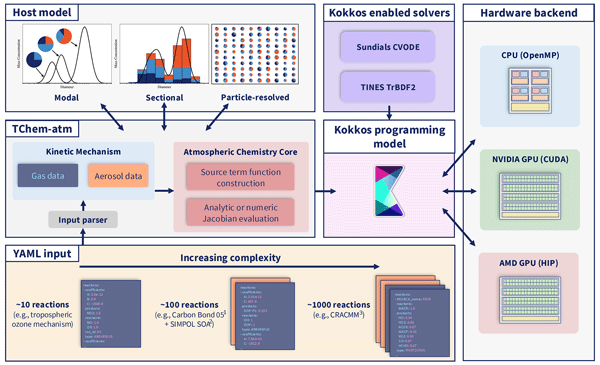
Oscar H. Díaz-Ibarra, Samuel G. Frederick, Jeffrey H. Curtis, Zachary D'Aquino, Peter A. Bosler, Lekha Patel, Cosmin Safta, Matthew West, and Nicole Riemer
Geosci. Model Dev., 19, 1281–1299, https://doi.org/10.5194/gmd-19-1281-2026, https://doi.org/10.5194/gmd-19-1281-2026, 2026
Short summary
Short summary
We developed TChem-atm, a new open-source tool for simulating atmospheric chemistry and aerosols. As models become more detailed, traditional methods are too slow. TChem-atm runs on both standard processors and graphics processors, making these simulations faster and more efficient. The tool provides a foundation for next-generation models that improve predictions of air quality and climate.
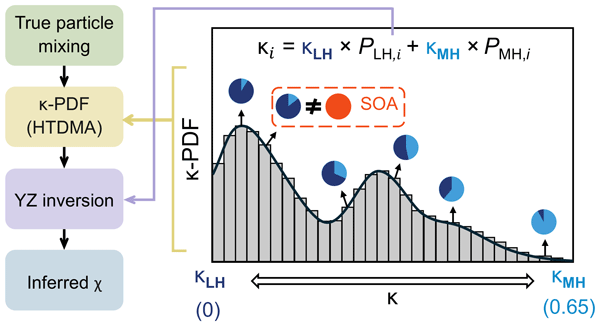
Yicen Liu, Jian Wang, and Nicole Riemer
Atmos. Chem. Phys., 26, 10965–10978, https://doi.org/10.5194/acp-26-10965-2026, https://doi.org/10.5194/acp-26-10965-2026, 2026
Short summary
Short summary
Airborne particles affect clouds, climate, and air quality, but it is difficult to determine how their chemical components are mixed within individual particles. We tested a method that estimates this mixing from water-uptake measurements using detailed computer simulations. The method works well in many cases, but can overestimate particle mixing when moderately water-attracting material exists in separate particle types. We then applied this uncertainty framework to long-term observations.
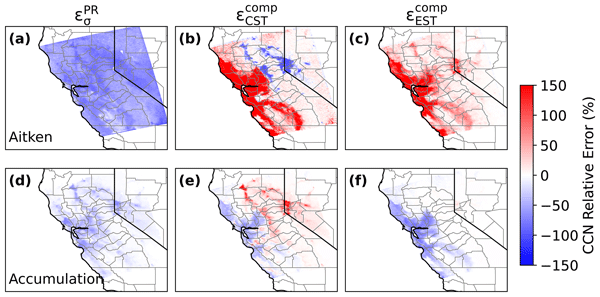
Xiaotian Xu, Jeffrey H. Curtis, Matthew West, and Nicole Riemer
Atmos. Chem. Phys., 26, 10647–10659, https://doi.org/10.5194/acp-26-10647-2026, https://doi.org/10.5194/acp-26-10647-2026, 2026
Short summary
Short summary
This study examines how common simplifications in atmospheric models affect predictions of particles that form cloud droplets. Using a detailed simulation that tracks individual particles, we compare it with simplified approaches. We find that these simplifications can produce seemingly accurate results because different errors cancel each other. However, this masks incorrect physical processes. Including surfactants effect improves predictions, highlighting a pathway to better climate modeling.
Yicen Liu, Shengqian Zhou, Jian Wang, and Nicole Riemer
EGUsphere, https://doi.org/10.5194/egusphere-2026-4216, https://doi.org/10.5194/egusphere-2026-4216, 2026
Short summary
Short summary
Airborne particles contain different chemicals, and their distribution among particles influences cloud formation and climate. Given limited long-term evidence, we combined measurements from eight locations to examine changes across particle sizes, seasons, and environments. Larger particles were more similar in composition, while smaller particles and those influenced by urban or marine air varied more. The results provide observational benchmarks for improving atmospheric and climate models.
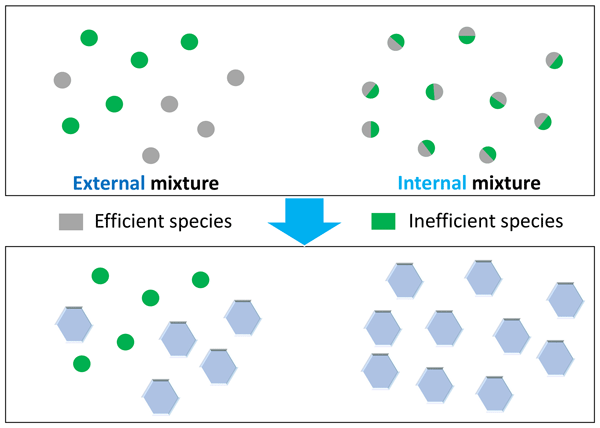
Wenhan Tang, Sylwester Arabas, Jeffrey H. Curtis, Daniel A. Knopf, Matthew West, and Nicole Riemer
Atmos. Chem. Phys., 26, 9221–9255, https://doi.org/10.5194/acp-26-9221-2026, https://doi.org/10.5194/acp-26-9221-2026, 2026
Short summary
Short summary
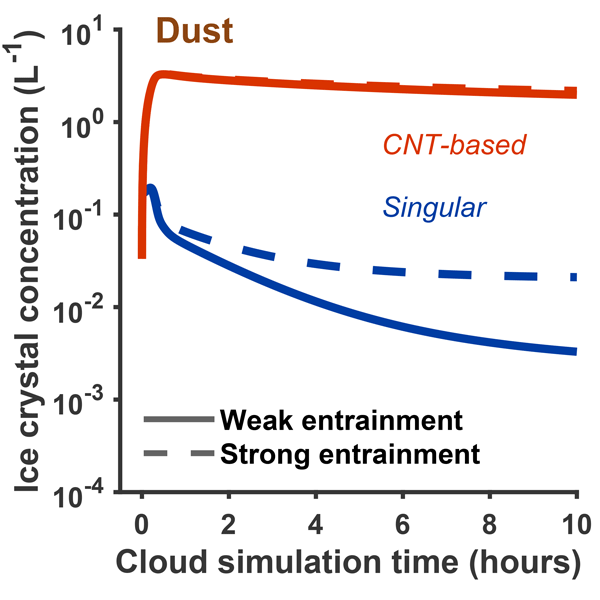
We studied how aerosol particles help form ice in clouds. Using new theory and detailed computer simulations, we found that the way different materials are mixed within these particles has a strong impact on how much ice forms. When ice-forming material is spread across all particles, more droplets freeze than when it is only in a few. This result means that to better predict clouds and climate, models need to account for how particle materials are mixed.
Yijia Sun, Ann M. Fridlind, Israel Silber, Nicole Riemer, and Daniel A. Knopf
Geosci. Model Dev., 19, 1581–1617, https://doi.org/10.5194/gmd-19-1581-2026, https://doi.org/10.5194/gmd-19-1581-2026, 2026
Short summary
Short summary
The role of Arctic clouds in the regional climate remains uncertain due to insufficient understanding of the amount of liquid droplets and ice crystals present in these clouds. An aerosol-cloud model is employed to examine the role of different aerosol types and freezing parameterizations on the number of ice crystals. The choice of freezing parameterization significantly changes the number of ice crystals impacting the interpretation of the evolution and warming effect of Arctic clouds.
Oscar H. Díaz-Ibarra, Samuel G. Frederick, Jeffrey H. Curtis, Zachary D'Aquino, Peter A. Bosler, Lekha Patel, Cosmin Safta, Matthew West, and Nicole Riemer
Geosci. Model Dev., 19, 1281–1299, https://doi.org/10.5194/gmd-19-1281-2026, https://doi.org/10.5194/gmd-19-1281-2026, 2026
Short summary
Short summary
We developed TChem-atm, a new open-source tool for simulating atmospheric chemistry and aerosols. As models become more detailed, traditional methods are too slow. TChem-atm runs on both standard processors and graphics processors, making these simulations faster and more efficient. The tool provides a foundation for next-generation models that improve predictions of air quality and climate.
Zhouyang Zhang, Jiandong Wang, Jiaping Wang, Nicole Riemer, Chao Liu, Yuzhi Jin, Zeyuan Tian, Jing Cai, Yueyue Cheng, Ganzhen Chen, Bin Wang, Shuxiao Wang, and Aijun Ding
Atmos. Chem. Phys., 25, 1869–1881, https://doi.org/10.5194/acp-25-1869-2025, https://doi.org/10.5194/acp-25-1869-2025, 2025
Short summary
Short summary
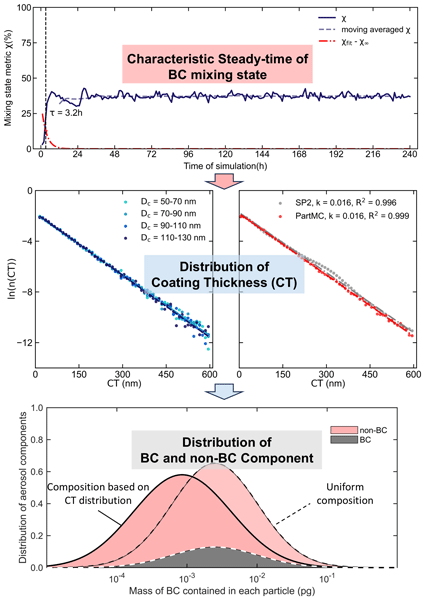
Black carbon (BC) exerts notable warming effects. We use a particle-resolved model to investigate the long-term behavior of the BC mixing state, revealing its compositions, coating thickness distribution, and optical properties all stabilize with a characteristic time of less than 1 d. This study can effectively simplify the description of the BC mixing state, which facilitates the precise assessment of the optical properties of BC aerosols in global and chemical transport models.
Jeffrey H. Curtis, Nicole Riemer, and Matthew West
Geosci. Model Dev., 17, 8399–8420, https://doi.org/10.5194/gmd-17-8399-2024, https://doi.org/10.5194/gmd-17-8399-2024, 2024
Short summary
Short summary
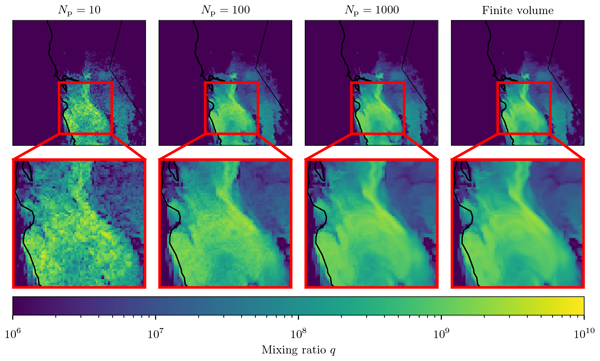
This paper introduces a numerical method for simulating particle-based aerosol transport in atmospheric models. We detail the various numerical properties of the advection order method and demonstrate its implementation in a 3D weather prediction model (WRF) for the first time. Particle-based techniques improve the accuracy of aerosol size and composition predictions, which are key for aerosol–cloud and aerosol–radiation interactions.
Sudipta Ghosh, Sagnik Dey, Sushant Das, Nicole Riemer, Graziano Giuliani, Dilip Ganguly, Chandra Venkataraman, Filippo Giorgi, Sachchida Nand Tripathi, Srikanthan Ramachandran, Thazhathakal Ayyappen Rajesh, Harish Gadhavi, and Atul Kumar Srivastava
Geosci. Model Dev., 16, 1–15, https://doi.org/10.5194/gmd-16-1-2023, https://doi.org/10.5194/gmd-16-1-2023, 2023
Short summary
Short summary
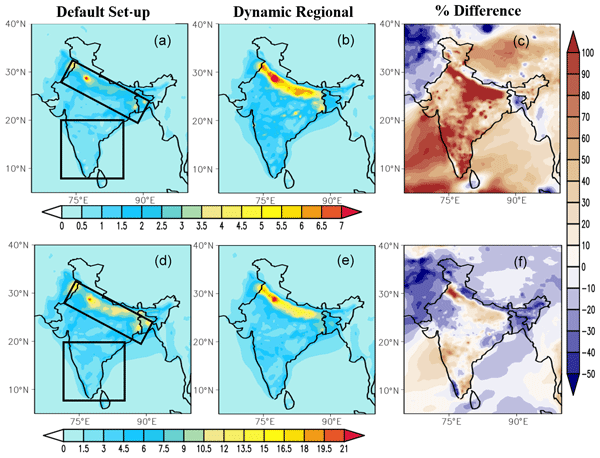
Accurate representation of aerosols in climate models is critical for minimizing the uncertainty in climate projections. Here, we implement region-specific emission fluxes and a more accurate scheme for carbonaceous aerosol ageing processes in a regional climate model (RegCM4) and show that it improves model performance significantly against in situ, reanalysis, and satellite data over the Indian subcontinent. We recommend improving the model performance before using them for climate studies.
Yu Yao, Jeffrey H. Curtis, Joseph Ching, Zhonghua Zheng, and Nicole Riemer
Atmos. Chem. Phys., 22, 9265–9282, https://doi.org/10.5194/acp-22-9265-2022, https://doi.org/10.5194/acp-22-9265-2022, 2022
Short summary
Short summary
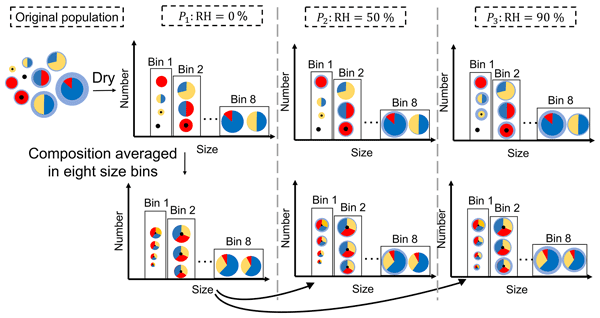
Investigating the impacts of aerosol mixing state on aerosol optical properties has a long history from both the modeling and experimental perspective. In this study, we used particle-resolved simulations as a benchmark to determine the error in optical properties when using simplified aerosol representations. We found that errors in single scattering albedo due to the internal mixture assumptions can have substantial effects on calculating aerosol direct radiative forcing.
Matthew L. Dawson, Christian Guzman, Jeffrey H. Curtis, Mario Acosta, Shupeng Zhu, Donald Dabdub, Andrew Conley, Matthew West, Nicole Riemer, and Oriol Jorba
Geosci. Model Dev., 15, 3663–3689, https://doi.org/10.5194/gmd-15-3663-2022, https://doi.org/10.5194/gmd-15-3663-2022, 2022
Short summary
Short summary
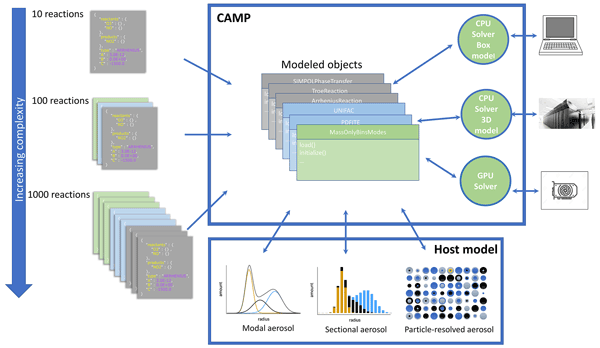
Progress in identifying complex, mixed-phase physicochemical processes has resulted in an advanced understanding of the evolution of atmospheric systems but has also introduced a level of complexity that few atmospheric models were designed to handle. We present a flexible treatment for multiphase chemical processes for models of diverse scale, from box up to global models. This enables users to build a customized multiphase mechanism that is accessible to a much wider community.
Zhonghua Zheng, Matthew West, Lei Zhao, Po-Lun Ma, Xiaohong Liu, and Nicole Riemer
Atmos. Chem. Phys., 21, 17727–17741, https://doi.org/10.5194/acp-21-17727-2021, https://doi.org/10.5194/acp-21-17727-2021, 2021
Short summary
Short summary
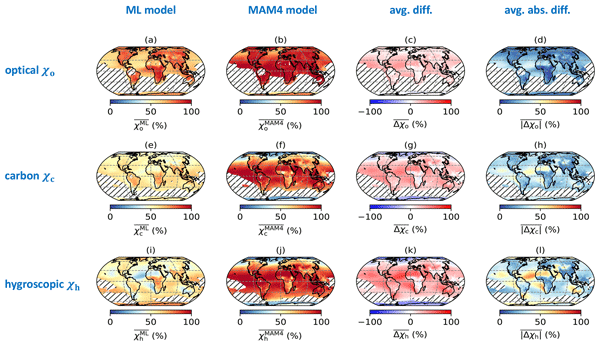
Aerosol mixing state is an important emergent property that affects aerosol radiative forcing and aerosol–cloud interactions, but it has not been easy to constrain this property globally. We present a framework for evaluating the error in aerosol mixing state induced by aerosol representation assumptions, which is one of the important contributors to structural uncertainty in aerosol models. Our study provides insights into potential improvements to model process representation for aerosols.
Cited articles
Brasseur, G. P., Barth, M., Kazil, J., Patton, E. G., and Wang, Y.: Segregation of Fast-Reactive Species in Atmospheric Turbulent Flow, Atmosphere, 14, 1136, https://doi.org/10.3390/atmos14071136, 2023. a
Burkhardt, U. and Kärcher, B.: Process-Based Simulation of Contrail Cirrus in a Global Climate Model, J. Geophys. Res.-Atmos., 114, https://doi.org/10.1029/2008JD011491, 2009. a
Ching, J., Riemer, N., and West, M.: Impacts of Black Carbon Mixing State on Black Carbon Nucleation Scavenging: Insights from a Particle-Resolved Model, J. Geophys. Res.-Atmos., 117, https://doi.org/10.1029/2012JD018269, 2012. a
Ching, J., Fast, J., West, M., and Riemer, N.: Metrics to quantify the importance of mixing state for CCN activity, Atmos. Chem. Phys., 17, 7445–7458, https://doi.org/10.5194/acp-17-7445-2017, 2017. a, b
Crippa, P., Sullivan, R. C., Thota, A., and Pryor, S. C.: The impact of resolution on meteorological, chemical and aerosol properties in regional simulations with WRF-Chem, Atmos. Chem. Phys., 17, 1511–1528, https://doi.org/10.5194/acp-17-1511-2017, 2017. a
Curtis, J. H., Riemer, N., and West, M.: A single-column particle-resolved model for simulating the vertical distribution of aerosol mixing state: WRF-PartMC-MOSAIC-SCM v1.0, Geosci. Model Dev., 10, 4057–4079, https://doi.org/10.5194/gmd-10-4057-2017, 2017. a, b
Curtis, J. H., Riemer, N., and West, M.: Explicit stochastic advection algorithms for the regional-scale particle-resolved atmospheric aerosol model WRF-PartMC (v1.0), Geosci. Model Dev., 17, 8399–8420, https://doi.org/10.5194/gmd-17-8399-2024, 2024. a, b, c, d
Deardorff, J. W.: Stratocumulus-capped mixed layers derived from a three-dimensional model, Bound.-Lay. Meteorol., 18, 495–527, https://doi.org/10.1007/BF00119502, 1980. a
de Bruine, M., Krol, M., Vilà-Guerau de Arellano, J., and Röckmann, T.: Explicit aerosol–cloud interactions in the Dutch Atmospheric Large-Eddy Simulation model DALES4.1-M7, Geosci. Model Dev., 12, 5177–5196, https://doi.org/10.5194/gmd-12-5177-2019, 2019. a
Fierce, L., Riemer, N., and Bond, T. C.: When is cloud condensation nuclei activity sensitive to particle characteristics at emission?, J. Geophys. Res.-Atmos., 118, 13476–13488, https://doi.org/10.1002/2013JD020608, 2013. a
Fierce, L., Riemer, N., and Bond, T. C.: Explaining variance in black carbon's aging timescale, Atmos. Chem. Phys., 15, 3173–3191, https://doi.org/10.5194/acp-15-3173-2015, 2015. a
Fierce, L., Yao, Y., Easter, R., Ma, P.-L., Sun, J., Wan, H., and Zhang, K.: Quantifying structural errors in cloud condensation nuclei activity from reduced representation of aerosol size distributions, J. Aerosol Sci., 181, 106388, https://doi.org/10.1016/j.jaerosci.2024.106388, 2024. a
Forster, P., Storelvmo, T., Armour, K., Collins, W., Dufresne, J.-L., Frame, D., Lunt, D., Mauritsen, T., Palmer, M., Watanabe, M., Wild, M., and Zhang, H.: The Earth’s Energy Budget, Climate Feedbacks, and Climate Sensitivity, Cambridge University Press, Cambridge, United Kingdom and New York, NY, USA, 923–1054, https://doi.org/10.1017/9781009157896.009, 2021. a
Frederick, S., Mohebalhojeh, M., Curtis, J., West, M., and Riemer, N.: WRF-PartMC-MOSAIC-LES, Zenodo [code], https://doi.org/10.5281/zenodo.18644307, 2026a. a
Frederick, S., Mohebalhojeh, M., Curtis, J., West, M., and Riemer, N.: Data for “Idealized Particle-Resolved Large-Eddy Simulations to Evaluate the Impact of Emissions Spatial Heterogeneity on CCN Activity”, University of Illinois Urbana-Champaign [data set], https://doi.org/10.13012/B2IDB-9622921_V3, 2026b. a
Golaz, J., Van Roekel, L. P., Zheng, X., Roberts, A. F., Wolfe, J. D., Lin, W., Bradley, A. M., Tang, Q., Maltrud, M. E., Forsyth, R. M., Zhang, C., Zhou, T., Zhang, K., Zender, C. S., Wu, M., Wang, H., Turner, A. K., Singh, B., Richter, J. H., Qin, Y., Petersen, M. R., Mametjanov, A., Ma, P., Larson, V. E., Krishna, J., Keen, N. D., Jeffery, N., Hunke, E. C., Hannah, W. M., Guba, O., Griffin, B. M., Feng, Y., Engwirda, D., Di Vittorio, A. V., Dang, C., Conlon, L. M., Chen, C., Brunke, M. A., Bisht, G., Benedict, J. J., Asay‐Davis, X. S., Zhang, Y., Zhang, M., Zeng, X., Xie, S., Wolfram, P. J., Vo, T., Veneziani, M., Tesfa, T. K., Sreepathi, S., Salinger, A. G., Reeves Eyre, J. E. J., Prather, M. J., Mahajan, S., Li, Q., Jones, P. W., Jacob, R. L., Huebler, G. W., Huang, X., Hillman, B. R., Harrop, B. E., Foucar, J. G., Fang, Y., Comeau, D. S., Caldwell, P. M., Bartoletti, T., Balaguru, K., Taylor, M. A., McCoy, R. B., Leung, L. R., and Bader, D. C.: The DOE E3SM Model Version 2: Overview of the Physical Model and Initial Model Evaluation, J. Adv. Model. Earth Sy., 14, e2022MS003156, https://doi.org/10.1029/2022MS003156, 2022. a
Gustafson Jr., W. I., Qian, Y., and Fast, J. D.: Downscaling aerosols and the impact of neglected subgrid processes on direct aerosol radiative forcing for a representative global climate model grid spacing, J. Geophys. Res.-Atmos., 116, https://doi.org/10.1029/2010JD015480, 2011. a, b
Huszar, P., Cariolle, D., Paoli, R., Halenka, T., Belda, M., Schlager, H., Miksovsky, J., and Pisoft, P.: Modeling the regional impact of ship emissions on NOx and ozone levels over the Eastern Atlantic and Western Europe using ship plume parameterization, Atmos. Chem. Phys., 10, 6645–6660, https://doi.org/10.5194/acp-10-6645-2010, 2010. a
Kaser, L., Karl, T., Yuan, B., Mauldin III, R. L., Cantrell, C. A., Guenther, A. B., Patton, E. G., Weinheimer, A. J., Knote, C., Orlando, J., Emmons, L., Apel, E., Hornbrook, R., Shertz, S., Ullmann, K., Hall, S., Graus, M., de Gouw, J., Zhou, X., and Ye, C.: Chemistry-turbulence interactions and mesoscale variability influence the cleansing efficiency of the atmosphere, Geophys. Res. Lett., 42, 10894–10903, https://doi.org/10.1002/2015GL066641, 2015. a
Kokkola, H., Korhonen, H., Lehtinen, K. E. J., Makkonen, R., Asmi, A., Järvenoja, S., Anttila, T., Partanen, A.-I., Kulmala, M., Järvinen, H., Laaksonen, A., and Kerminen, V.-M.: SALSA – a Sectional Aerosol module for Large Scale Applications, Atmos. Chem. Phys., 8, 2469–2483, https://doi.org/10.5194/acp-8-2469-2008, 2008. a
Kurppa, M., Hellsten, A., Roldin, P., Kokkola, H., Tonttila, J., Auvinen, M., Kent, C., Kumar, P., Maronga, B., and Järvi, L.: Implementation of the sectional aerosol module SALSA2.0 into the PALM model system 6.0: model development and first evaluation, Geosci. Model Dev., 12, 1403–1422, https://doi.org/10.5194/gmd-12-1403-2019, 2019. a
Li, Y., Barth, M. C., Patton, E. G., and Steiner, A. L.: Impact of In-Cloud Aqueous Processes on the Chemistry and Transport of Biogenic Volatile Organic Compounds, J. Geophys. Res.-Atmos., 122, 11131–11153, https://doi.org/10.1002/2017JD026688, 2017. a
Lin, G., Qian, Y., Yan, H., Zhao, C., Ghan, S. J., Easter, R., and Zhang, K.: Quantification of marine aerosol subgrid variability and its correlation with clouds based on high-resolution regional modeling, J. Geophys. Res.-Atmos., 122, 6329–6346, https://doi.org/10.1002/2017JD026567, 2017. a
Liu, Y., Yao, Y., Curtis, J. H., West, M., and Riemer, N.: The impacts of aerosol mixing state on heterogeneous N2O5 hydrolysis, Aerosol Sci. Technol., 59, 402–423, https://doi.org/10.1080/02786826.2024.2443587, 2025. a
Ma, P.-L., Rasch, P. J., Wang, M., Wang, H., Ghan, S. J., Easter, R. C., Gustafson Jr., W. I., Liu, X., Zhang, Y., and Ma, H.-Y.: How does increasing horizontal resolution in a global climate model improve the simulation of aerosol-cloud interactions?, Geophys. Res. Lett., 42, 5058–5065, https://doi.org/10.1002/2015GL064183, 2015. a
Mohebalhojeh, M., Frederick, S., Riemer, N., and West, M.: A Metric for Quantifying Spatial Heterogeneity in Gridded Atmospheric Fields, ESS Open Archive [preprint], https://doi.org/10.22541/essoar.176805046.69348251/v1, 2026. a, b
Ouwersloot, H. G., Vilà-Guerau de Arellano, J., van Heerwaarden, C. C., Ganzeveld, L. N., Krol, M. C., and Lelieveld, J.: On the segregation of chemical species in a clear boundary layer over heterogeneous land surfaces, Atmos. Chem. Phys., 11, 10681–10704, https://doi.org/10.5194/acp-11-10681-2011, 2011. a
Qian, Y., Gustafson Jr., W. I., and Fast, J. D.: An investigation of the sub-grid variability of trace gases and aerosols for global climate modeling, Atmos. Chem. Phys., 10, 6917–6946, https://doi.org/10.5194/acp-10-6917-2010, 2010. a, b
Salmon, L. G., Nazaroff, W. W., Ligocki, M. P., Jones, M. C., and Cass, G. R.: Nitric acid concentrations in southern California museums, Environ. Sci. Technol., 24, 1004–1013, https://doi.org/10.1021/es00077a009, 1990. a
Skamarock, C., Klemp, B., Dudhia, J., Gill, O., Barker, D., Duda, G., Huang, X.-Y., Wang, W., and Powers, G.: A Description of the Advanced Research WRF Version 3, NCAR Technical Notes, https://doi.org/10.5065/D68S4MVH, 2008. a
Tilmes, S., Mills, M. J., Zhu, Y., Bardeen, C. G., Vitt, F., Yu, P., Fillmore, D., Liu, X., Toon, B., and Deshler, T.: Description and performance of a sectional aerosol microphysical model in the Community Earth System Model (CESM2), Geosci. Model Dev., 16, 6087–6125, https://doi.org/10.5194/gmd-16-6087-2023, 2023. a
Tonttila, J., Maalick, Z., Raatikainen, T., Kokkola, H., Kühn, T., and Romakkaniemi, S.: UCLALES–SALSA v1.0: a large-eddy model with interactive sectional microphysics for aerosol, clouds and precipitation, Geosci. Model Dev., 10, 169–188, https://doi.org/10.5194/gmd-10-169-2017, 2017. a
Topping, D. O. and McFiggans, G.: Tight coupling of particle size, number and composition in atmospheric cloud droplet activation, Atmos. Chem. Phys., 12, 3253–3260, https://doi.org/10.5194/acp-12-3253-2012, 2012. a
Toro, C., Sonntag, D., Bash, J., Burke, G., Murphy, B. N., Seltzer, K. M., Simon, H., Shephard, M. W., and Cady-Pereira, K. E.: Sensitivity of Air Quality to Vehicle Ammonia Emissions in the United States, Atmos. Environ., 327, 120484, https://doi.org/10.1016/j.atmosenv.2024.120484, 2024. a
Vignati, E., Wilson, J., and Stier, P.: M7: An efficient size-resolved aerosol microphysics module for large-scale aerosol transport models, J. Geophys. Res.-Atmos., 109, https://doi.org/10.1029/2003JD004485, 2004. a
Weigum, N., Schutgens, N., and Stier, P.: Effect of aerosol subgrid variability on aerosol optical depth and cloud condensation nuclei: implications for global aerosol modelling, Atmos. Chem. Phys., 16, 13619–13639, https://doi.org/10.5194/acp-16-13619-2016, 2016. a, b
Zaveri, R. A. and Peters, L. K.: A new lumped structure photochemical mechanism for large-scale applications, J. Geophys. Res.-Atmos., 104, 30387–30415, https://doi.org/10.1029/1999JD900876, 1999. a
Zaveri, R. A., Easter, R. C., and Peters, L. K.: A computationally efficient Multicomponent Equilibrium Solver for Aerosols (MESA), J. Geophys. Res.-Atmos., 110, https://doi.org/10.1029/2004JD005618, 2005a. a
Zaveri, R. A., Easter, R. C., and Wexler, A. S.: A new method for multicomponent activity coefficients of electrolytes in aqueous atmospheric aerosols, J. Geophys. Res.-Atmos., 110, https://doi.org/10.1029/2004JD004681, 2005b. a
Zaveri, R. A., Easter, R. C., Fast, J. D., and Peters, L. K.: Model for Simulating Aerosol Interactions and Chemistry (MOSAIC), J. Geophys. Res.-Atmos., 113, https://doi.org/10.1029/2007JD008782, 2008. a, b, c
Zaveri, R. A., Barnard, J. C., Easter, R. C., Riemer, N., and West, M.: Particle-resolved simulation of aerosol size, composition, mixing state, and the associated optical and cloud condensation nuclei activation properties in an evolving urban plume, J. Geophys. Res.-Atmos., 115, https://doi.org/10.1029/2009JD013616, 2010. a
Zaveri, R. A., Easter, R. C., Singh, B., Wang, H., Lu, Z., Tilmes, S., Emmons, L. K., Vitt, F., Zhang, R., Liu, X., Ghan, S. J., and Rasch, P. J.: Development and Evaluation of Chemistry-Aerosol-Climate Model CAM5-Chem-MAM7-MOSAIC: Global Atmospheric Distribution and Radiative Effects of Nitrate Aerosol, J. Adv. Model. Earth Sy., 13, e2020MS002346, https://doi.org/10.1029/2020MS002346, 2021. a
Short summary
We show with detailed computer simulations that spatial patterns of emissions strongly affect aerosols and their ability to seed clouds. Highly variable emissions can raise cloud-forming particle concentrations in the boundary layer by up to 25 %. Because clouds regulate climate and precipitation, these findings underscore the need to represent realistic emission patterns to improve climate predictions.
We show with detailed computer simulations that spatial patterns of emissions strongly affect...


Altmetrics
Final-revised paper
Preprint