Corradini, S., Guerrieri, L., Stelitano, D., Salerno, G., Scollo, S., Merucci, L., Prestifilippo, M., Musacchio, M., Silvestri, M., Lombardo, V., and Caltabiano, T.: Near Real-Time Monitoring of the Christmas 2018 Etna Eruption Using SEVIRI and Products Validation, Remote Sens., 12,
https://doi.org/10.3390/rs12081336, 2020.
a,
b
Corradini, S., Guerrieri, L., Brenot, H., Clarisse, L., Merucci, L., Pardini, F., Prata, A. J., Realmuto, V. J., Stelitano, D., and Theys, N.: Tropospheric Volcanic SO
2 Mass and Flux Retrievals from Satellite. The Etna December 2018 Eruption, Remote Sens., 13,
https://doi.org/10.3390/rs13112225, 2021.
a
Corradino, C., Jouve, P., La Spina, A., and Del Negro, C.: Monitoring Earth's atmosphere with Sentinel-5 TROPOMI and Artificial Intelligence: Quantifying volcanic SO2 emissions, Remote Sens. Environ., 315, 114463,
https://doi.org/10.1016/j.rse.2024.114463, 2024.
a
Costa, A., Suzuki, Y., Cerminara, M., Devenish, B., Ongaro, T. E., Herzog, M., Van Eaton, A., Denby, L., Bursik, M., de' Michieli Vitturi, M., Engwell, S., Neri, A., Barsotti, S., Folch, A., Macedonio, G., Girault, F., Carazzo, G., Tait, S., Kaminski, E., Mastin, L., Woodhouse, M., Phillips, J., Hogg, A., Degruyter, W., and Bonadonna, C.: Results of the eruptive column model inter-comparison study, J. Volcanol. Geoth. Res., 326, 2–25,
https://doi.org/10.1016/j.jvolgeores.2016.01.017, 2016.
a
Devenish, B. J., Francis, P. N., Johnson, B. T., Sparks, R. S. J., and Thomson, D. J.: Sensitivity analysis of dispersion modeling of volcanic ash from Eyjafjallajökull in May 2010, J. Geophys. Res.-Atmos., 117,
https://doi.org/10.1029/2011JD016782, 2012.
a
Doucet, A., de Freitas, N., and Gordon, N.: An Introduction to Sequential Monte Carlo Methods, in: Sequential Monte Carlo Methods in Practice, edited by: Doucet, A., de Freitas, N., and Gordon, N., 3–14, Springer, New York,
https://doi.org/10.1007/978-1-4757-3437-9_1, 2001.
a
European Commission: Field exercises for EUCPT and TAST “Cycle 12” – Lot 4: EU-MODE
X Tenerife, Project brief, Union Civil Protection Knowledge Network,
https://civil-protection-knowledge-network.europa.eu/projects/field-exercises-eucpt-and-tast-cycle-12 (last access: 9 November 2026), 2025. a
Folch, A. and Mingari, L.: Data Assimilation of Volcanic Clouds: Recent Advances and Implications on Operational Forecasts, in: Applications of Data Assimilation and Inverse Problems in the Earth Sciences, edited by: Ismail-Zadeh, A., Castelli, F., Jones, D., and Sanchez, S., Special Publications of the International Union of Geodesy and Geophysics, 144–156, Cambridge University Press, Cambridge,
https://doi.org/10.1017/9781009180412.010, 2023.
a
Folch, A., Mingari, L., Gutierrez, N., Hanzich, M., Macedonio, G., and Costa, A.: FALL3D-8.0: a computational model for atmospheric transport and deposition of particles, aerosols and radionuclides – Part 1: Model physics and numerics, Geosci. Model Dev., 13, 1431–1458,
https://doi.org/10.5194/gmd-13-1431-2020, 2020.
a,
b,
c
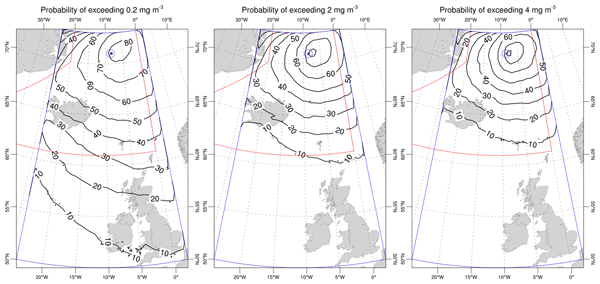
Folch, A., Mingari, L., and Prata, A.: Ensemble-based forecast of volcanic clouds using FALL3D-8.1, Front. Earth Sci., 9, 741841,
https://doi.org/10.3389/feart.2021.741841, 2022.
a,
b
Folch, A., Abril, C., Afanasiev, M., Amati, G., Bader, M., Badia, R. M., Bayraktar, H. B., Barsotti, S., Basili, R., Bernardi, F., Boehm, C., Brizuela, B., Brogi, F., Cabrera, E., Casarotti, E., Castro, M. J., Cerminara, M., Cirella, A., Cheptsov, A., Conejero, J., Costa, A., de la Asunción, M., de la Puente, J., Djuric, M., Dorozhinskii, R., Espinosa, G., Esposti-Ongaro, T., Farnós, J., Favretto-Cristini, N., Fichtner, A., Fournier, A., Gabriel, A.-A., Gallard, J.-M., Gibbons, S. J., Glimsdal, S., González-Vida, J. M., Gracia, J., Gregorio, R., Gutierrez, N., Halldorsson, B., Hamitou, O., Houzeaux, G., Jaure, S., Kessar, M., Krenz, L., Krischer, L., Laforet, S., Lanucara, P., Li, B., Lorenzino, M. C., Lorito, S., Løvholt, F., Macedonio, G., Macías, J., Marín, G., Martínez Montesinos, B., Mingari, L., Moguilny, G., Montellier, V., Monterrubio-Velasco, M., Moulard, G. E., Nagaso, M., Nazaria, M., Niethammer, C., Pardini, F., Pienkowska, M., Pizzimenti, L., Poiata, N., Rannabauer, L., Rojas, O., Rodriguez, J. E., Romano, F., Rudyy, O., Ruggiero, V., Samfass, P., Sánchez-Linares, C., Sanchez, S., Sandri, L., Scala, A., Schaeffer, N., Schuchart, J., Selva, J., Sergeant, A., Stallone, A., Taroni, M., Thrastarson, S., Titos, M., Tonelllo, N., Tonini, R., Ulrich, T., Vilotte, J.-P., Vöge, M., Volpe, M., Aniko Wirp, S., and Wössner, U.: The EU Center of Excellence for Exascale in Solid Earth (ChEESE): Implementation, results, and roadmap for the second phase, Future Gener. Comp. Sy., 146, 47–61,
https://doi.org/10.1016/j.future.2023.04.006, 2023.
a
Folch, A., Costa, A., Macedonio, G., Mingari, L., and Pascual Saldaña, H.: FALL3D (Version 9.1.0), Zenodo [code],
https://doi.org/10.5281/zenodo.17737081, 2025.
a,
b
Fu, G., Heemink, A., Lu, S., Segers, A., Weber, K., and Lin, H.-X.: Model-based aviation advice on distal volcanic ash clouds by assimilating aircraft in situ measurements, Atmos. Chem. Phys., 16, 9189–9200,
https://doi.org/10.5194/acp-16-9189-2016, 2016.
a
Fu, G., Prata, F., Lin, H. X., Heemink, A., Segers, A., and Lu, S.: Data assimilation for volcanic ash plumes using a satellite observational operator: a case study on the 2010 Eyjafjallajökull volcanic eruption, Atmos. Chem. Phys., 17, 1187–1205,
https://doi.org/10.5194/acp-17-1187-2017, 2017.
a
Gordon, N., Salmond, D., and Smith, A.: Novel approach to nonlinear/non-Gaussian Bayesian state estimation, IEE Proc.-F, Radar Signal Process., 140, 107–113,
https://doi.org/10.1049/ip-f-2.1993.0015, 1993.
a
Hunt, B. R., Kostelich, E. J., and Szunyogh, I.: Efficient data assimilation for spatiotemporal chaos: A local ensemble transform Kalman filter, Physica D, 230, 112–126,
https://doi.org/10.1016/j.physd.2006.11.008, 2007.
a
Husak, G. J., Michaelsen, J., and Funk, C.: Use of the gamma distribution to represent monthly rainfall in Africa for drought monitoring applications, Int. J. Climatol., 27, 935–944,
https://doi.org/10.1002/joc.1441, 2007.
a
Kliewer, A. J., Fletcher, S. J., Jones, A. S., and Forsythe, J. M.: Comparison of Gaussian, logarithmic transform and mixed Gaussian–log-normal distribution based 1DVAR microwave temperature–water-vapour mixing ratio retrievals, Q. J. Roy. Meteor. Soc., 142, 274–286,
https://doi.org/10.1002/qj.2651, 2016.
a
Madankan, R., Pouget, S., Singla, P., Bursik, M., Dehn, J., Jones, M., Patra, A., Pavolonis, M., Pitman, E., Singh, T., and Webley, P.: Computation of probabilistic hazard maps and source parameter estimation for volcanic ash transport and dispersion, J. Comput. Phys., 271, 39–59,
https://doi.org/10.1016/j.jcp.2013.11.032, 2014.
a
Marzocchi, W., Sandri, L., and Furlan, C.: A quantitative model for volcanic hazard assessment, in: Statistics in Volcanology, Geological Society of London,
https://doi.org/10.1144/IAVCEI001.3, 2006.
a
Mingari, L., Folch, A., Prata, A. T., Pardini, F., Macedonio, G., and Costa, A.: Data assimilation of volcanic aerosol observations using FALL3D+PDAF, Atmos. Chem. Phys., 22, 1773–1792,
https://doi.org/10.5194/acp-22-1773-2022, 2022.
a
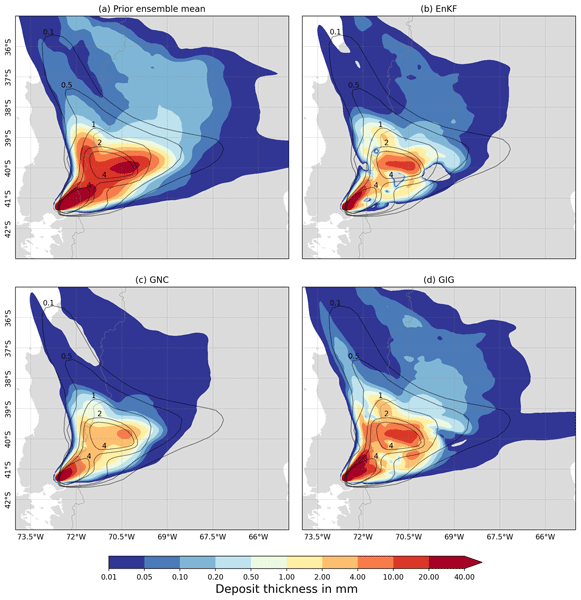
Mingari, L., Costa, A., Macedonio, G., and Folch, A.: Reconstructing tephra fall deposits via ensemble-based data assimilation techniques, Geosci. Model Dev., 16, 3459–3478,
https://doi.org/10.5194/gmd-16-3459-2023, 2023.
a,
b
O'Neill, N. T., Ignatov, A., Holben, B. N., and Eck, T. F.: The lognormal distribution as a reference for reporting aerosol optical depth statistics; Empirical tests using multi-year, multi-site AERONET Sunphotometer data, Geophys. Res. Lett., 27, 3333–3336,
https://doi.org/10.1029/2000GL011581, 2000.
a
Osores, S., Ruiz, J., Folch, A., and Collini, E.: Volcanic ash forecast using ensemble-based data assimilation: an ensemble transform Kalman filter coupled with the FALL3D-7.2 model (ETKF–FALL3D version 1.0), Geosci. Model Dev., 13, 1–22,
https://doi.org/10.5194/gmd-13-1-2020, 2020.
a
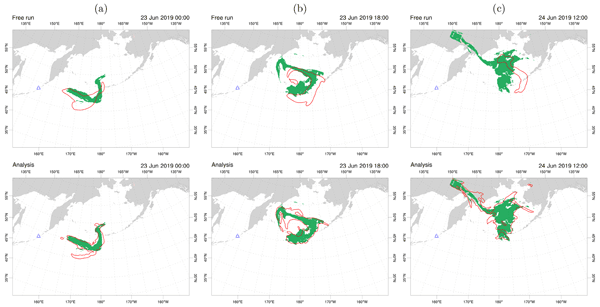
Pardini, F., Corradini, S., Costa, A., Esposti Ongaro, T., Merucci, L., Neri, A., Stelitano, D., and de' Michieli Vitturi, M.: Ensemble-Based Data Assimilation of Volcanic Ash Clouds from Satellite Observations: Application to the 24 December 2018 Mt. Etna Explosive Eruption, Atmosphere, 11,
https://doi.org/10.3390/atmos11040359, 2020.
a,
b
Pasmans, I., Chen, Y., Sebastian Finn, T., Bocquet, M., and Carrassi, A.: Ensemble Kalman filter in latent space using a variational autoencoder pair, Q. J. Roy. Meteor. Soc., 152,
https://doi.org/10.1002/qj.70070, 2026.
a,
b,
c
Paszke, A., Gross, S., Massa, F., Lerer, A., Bradbury, J., Chanan, G., Killeen, T., Lin, Z., Gimelshein, N., Antiga, L., Desmaison, A., Köpf, A., Yang, E., DeVito, Z., Raison, M., Tejani, A., Chilamkurthy, S., Steiner, B., Fang, L., Bai, J., and Chintala, S.: PyTorch: An Imperative Style, High-Performance Deep Learning Library, arXiv [preprint],
https://doi.org/10.48550/arXiv.1912.01703, 2019.
a
Pfeiffer, T., Costa, A., and Macedonio, G.: A model for the numerical simulation of tephra fall deposits, J. Volcanol. Geoth. Res., 140, 273–294,
https://doi.org/10.1016/j.jvolgeores.2004.09.001, 2005.
a
Poulidis, A. P., Phillips, J. C., Renfrew, I. A., Barclay, J., Hogg, A., Jenkins, S. F., Robertson, R., and Pyle, D. M.: Meteorological Controls on Local and Regional Volcanic Ash Dispersal, Sci. Rep., 8, 6873,
https://doi.org/10.1038/s41598-018-24651-1, 2018.
a
Prata, A. T., Mingari, L., Folch, A., Macedonio, G., and Costa, A.: FALL3D-8.0: a computational model for atmospheric transport and deposition of particles, aerosols and radionuclides – Part 2: Model validation, Geosci. Model Dev., 14, 409–436,
https://doi.org/10.5194/gmd-14-409-2021, 2021.
a,
b,
c
Ridal, M., Bazile, E., Le Moigne, P., Randriamampianina, R., Schimanke, S., Andrae, U., Berggren, L., Brousseau, P., Dahlgren, P., Edvinsson, L., El-Said, A., Glinton, M., Hagelin, S., Hopsch, S., Isaksson, L., Medeiros, P., Olsson, E., Unden, P., and Wang, Z. Q.: CERRA, the Copernicus European Regional Reanalysis system, Q. J. Roy. Meteor. Soc., 150, 3385–3411,
https://doi.org/10.1002/qj.4764, 2024.
a
Sandri, L., Tierz, P., and Loughlin, S. C.: From Eruptive Histories to Volcano Monitoring: Probabilistic Eruption Forecasting and Volcanic Hazard Assessment at Varying Temporal and Spatial Scales, in: Modern Volcano Monitoring, edited by: Spica, Z. and Caudron, C., 365–397, Springer Nature Switzerland, Cham,
https://doi.org/10.1007/978-3-031-86841-2_12, 2025.
a
Schimanke, S., Ridal, M., Le Moigne, P., Berggren, L., Undén, P., Randriamampianina, R., Andrae, U., Bazile, E., Bertelsen, A., Brousseau, P., Dahlgren, P., Edvinsson, L., El Said, A., Glinton, M., Hopsch, S., Isaksson, L., Mladek, R., Olsson, E., Verrelle, A., and Wang, Z. Q.: CERRA sub-daily regional reanalysis data for Europe on single levels from 1984 to present, Copernicus Climate Change Service (C3S) Climate Data Store (CDS) [data set],
https://doi.org/10.24381/cds.622a565a, 2021.
a
Stefanescu, E. R., Patra, A. K., Bursik, M. I., Madankan, R., Pouget, S., Jones, M., Singla, P., Singh, T., Pitman, E. B., Pavolonis, M., Morton, D., Webley, P., and Dehn, J.: Temporal, probabilistic mapping of ash clouds using wind field stochastic variability and uncertain eruption source parameters: Example of the 14 April 2010 Eyjafjallajökull eruption, J. Adv. Model. Earth Sy., 6, 1173–1184,
https://doi.org/10.1002/2014MS000332, 2014.
a
Titos, M., Martínez Montesinos, B., Barsotti, S., Sandri, L., Folch, A., Mingari, L., Macedonio, G., and Costa, A.: Long-term hazard assessment of explosive eruptions at Jan Mayen (Norway) and implications for air traffic in the North Atlantic, Nat. Hazards Earth Syst. Sci., 22, 139–163,
https://doi.org/10.5194/nhess-22-139-2022, 2022.
a
Torrisi, F., Corradino, C., Cariello, S., and Del Negro, C.: Enhancing detection of volcanic ash clouds from space with convolutional neural networks, J. Volcanol. Geoth. Res., 448, 108046,
https://doi.org/10.1016/j.jvolgeores.2024.108046, 2024.
a
Woodhouse, M. J., Hogg, A. J., and Phillips, J. C.: A global sensitivity analysis of the PlumeRise model of volcanic plumes, J. Volcanol. Geoth. Res., 326, 54–76,
https://doi.org/10.1016/j.jvolgeores.2016.02.019, 2016.
a
Zidikheri, M. J. and Lucas, C.: A Computationally Efficient Ensemble Filtering Scheme for Quantitative Volcanic Ash Forecasts, J. Geophys. Res.-Atmos., 126,
https://doi.org/10.1029/2020JD033094, 2021a.
a
Zidikheri, M. J. and Lucas, C.: Improving Ensemble Volcanic Ash Forecasts by Direct Insertion of Satellite Data and Ensemble Filtering, Atmosphere, 12,
https://doi.org/10.3390/atmos12091215, 2021b.
a