Articles | Volume 26, issue 20
https://doi.org/10.5194/acp-26-14559-2026
© Author(s) 2026. This work is distributed under
the Creative Commons Attribution 4.0 License.
https://doi.org/10.5194/acp-26-14559-2026
© Author(s) 2026. This work is distributed under
the Creative Commons Attribution 4.0 License.
Shifting patterns of Ozone Season due to policy and human activity in Beijing between 2013 and 2023

Qian Li
Beijing Municipal Ecological and Environmental Monitoring Center, Beijing, 100048, China
Xiaofei Dong
Beijing Municipal Ecological and Environmental Monitoring Center, Beijing, 100048, China
Yuanxi Guo
Beijing Municipal Ecological and Environmental Monitoring Center, Beijing, 100048, China
Xiue Shen
CORRESPONDING AUTHOR
Beijing Municipal Ecological and Environmental Monitoring Center, Beijing, 100048, China
Zhang Zhang
Beijing Municipal Ecological and Environmental Monitoring Center, Beijing, 100048, China
Chunsheng Zhao
Department of Atmospheric and Oceanic Sciences, School of Physics, Peking University, Beijing, 100871, China
Related authors
No articles found.
Xinlei Lv, Jie Sun, Bishuo He, Fengjun Shen, Gang Zhao, Tong Liu, Qiqi Mo, Linghan Zeng, Ziye Zhang, Yunxiao Li, Batu Alaxi, Weili Lin, and Chunsheng Zhao
EGUsphere, https://doi.org/10.5194/egusphere-2026-4877, https://doi.org/10.5194/egusphere-2026-4877, 2026
This preprint is open for discussion and under review for Atmospheric Chemistry and Physics (ACP).
Short summary
Short summary
We studied how tiny airborne particles change sunlight and, in turn, the breakdown of nitrogen dioxide, an important step in ozone formation. Using optical calculations, a radiation model, and a new sensitivity method, we found that light scattering and absorption, surface reflection, particle coatings, soot absorption, humidity, and particle height all matter. Better measurements of these factors could improve air-quality predictions.
Shuqi Guo, Chengyi Fan, and Chunsheng Zhao
EGUsphere, https://doi.org/10.5194/egusphere-2026-3646, https://doi.org/10.5194/egusphere-2026-3646, 2026
Short summary
Short summary
Water transport in aerosols affects cloud formation and atmospheric chemical reactions. Traditional direct measurements of water diffusion coefficients are time-consuming in highly viscous systems. We developed a universal method that derives water diffusion coefficients from the characteristic diffusion time, shortening observation time. This approach can be adapted to different experimental platforms, supporting further investigation of highly viscous aerosols and their atmospheric impacts.
Chengyi Fan and Chunsheng Zhao
Atmos. Meas. Tech., 19, 323–332, https://doi.org/10.5194/amt-19-323-2026, https://doi.org/10.5194/amt-19-323-2026, 2026
Short summary
Short summary
Aerosols change their size and optical properties with humidity, influencing clouds and climate. Traditional instruments only capture the average behavior of many particles, missing how individual ones grow. We developed a precise optical method that traps and measures single particles as humidity varies, accurately determining their dry size and water uptake. This versatile approach applies to diverse particle types and enhances understanding of their roles in air quality and climate systems.
Bishuo He and Chunsheng Zhao
Atmos. Chem. Phys., 25, 7765–7776, https://doi.org/10.5194/acp-25-7765-2025, https://doi.org/10.5194/acp-25-7765-2025, 2025
Short summary
Short summary
Factor uncertainty analysis helps us understand the impacts of factors on complex systems. Traditional methods have many limitations. This study introduces a new method to measure how each factor contributes to uncertainty. It gains insights into the role of each variable and works for all multi-factor systems. As an application, we analyzed how aerosols affect solar radiation and identified the key factors. These analyses can improve our understanding of the role of aerosols in climate change.
Chengyi Fan, Bishuo He, Shuqi Guo, Jie Qiu, and Chunsheng Zhao
Atmos. Chem. Phys., 25, 5761–5771, https://doi.org/10.5194/acp-25-5761-2025, https://doi.org/10.5194/acp-25-5761-2025, 2025
Short summary
Short summary
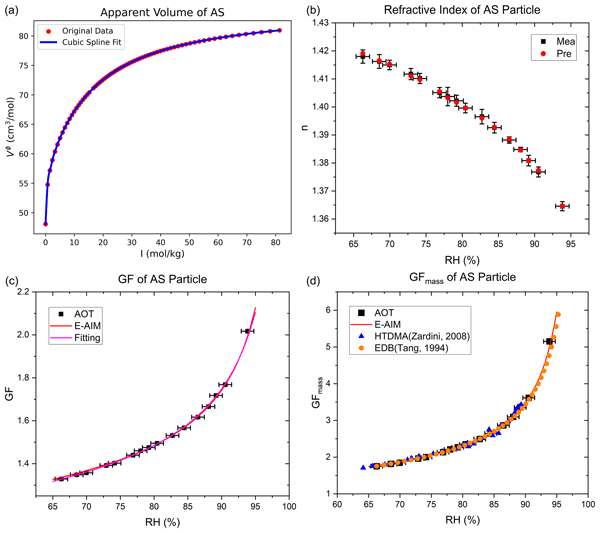
Marine aerosols play a critical role in weather and climate, and their real part of the refractive index (RRI) is a key factor in their radiative effects. We present a study of RRI measurements using optical tweezer technology and find that the calculated results of RRI using the traditional method disagree with the measurements. A parameterization of the RRI and relative humidity relationship is proposed, and it will improve the radiation calculation in numerical models.
Ye Kuang, Jiangchuan Tao, Hanbing Xu, Li Liu, Pengfei Liu, Wanyun Xu, Weiqi Xu, Yele Sun, and Chunsheng Zhao
Atmos. Chem. Phys., 25, 1163–1174, https://doi.org/10.5194/acp-25-1163-2025, https://doi.org/10.5194/acp-25-1163-2025, 2025
Short summary
Short summary
This study presents a novel optical framework to measure supersaturation, a fundamental parameter in cloud physics, by observing the scattering properties of particles that have or have not grown into cloud droplets. The technique offers high-resolution measurements, capturing essential fluctuations in supersaturation necessary for understanding cloud physics.
Weilun Zhao, Ying Li, Gang Zhao, Song Guo, Nan Ma, Shuya Hu, and Chunsheng Zhao
Atmos. Chem. Phys., 23, 14889–14902, https://doi.org/10.5194/acp-23-14889-2023, https://doi.org/10.5194/acp-23-14889-2023, 2023
Short summary
Short summary
Studies have concentrated on particles containing black carbon (BC) smaller than 700 nm because of technical limitations. In this study, BC-containing particles larger than 700 nm (BC>700) were measured, highlighting their importance to total BC mass and absorption. The contribution of BC>700 to the BC direct radiative effect was estimated, highlighting the necessity to consider the whole size range of BC-containing particles in the model estimation of BC radiative effects.
Liang Yuan and Chunsheng Zhao
Atmos. Chem. Phys., 23, 3195–3205, https://doi.org/10.5194/acp-23-3195-2023, https://doi.org/10.5194/acp-23-3195-2023, 2023
Short summary
Short summary
Chemical compositions vary between and within particles due to the complex sources and aging processes, causing particle-to-particle heterogeneity in aerosol hygroscopicity, which is of great importance to aerosol climatic and environmental effects. This study proposes an algorithm to quantify the heterogeneity from in situ measurements, sheds light on the reanalysis of the existing H-TDMA datasets, and could have a large impact on how we use and think about these datasets.
Weilun Zhao, Gang Zhao, Ying Li, Song Guo, Nan Ma, Lizi Tang, Zirui Zhang, and Chunsheng Zhao
Atmos. Meas. Tech., 15, 6807–6817, https://doi.org/10.5194/amt-15-6807-2022, https://doi.org/10.5194/amt-15-6807-2022, 2022
Short summary
Short summary
A new method to determine black carbon mass size distribution (BCMSD) was proposed using the size-resolved absorption coefficient measured by an aerodynamic aerosol classifier in tandem with an aethalometer. This new method fills the gap in the high-time-resolution measurement of BCMSD ranging from upper submicron particle sizes to larger than 1 µm. This method can be applied to field measurement of BCMSD extensively for better understanding BC aging and better estimating the BC climate effect.
Gang Zhao, Tianyi Tan, Yishu Zhu, Min Hu, and Chunsheng Zhao
Atmos. Chem. Phys., 21, 18055–18063, https://doi.org/10.5194/acp-21-18055-2021, https://doi.org/10.5194/acp-21-18055-2021, 2021
Short summary
Short summary
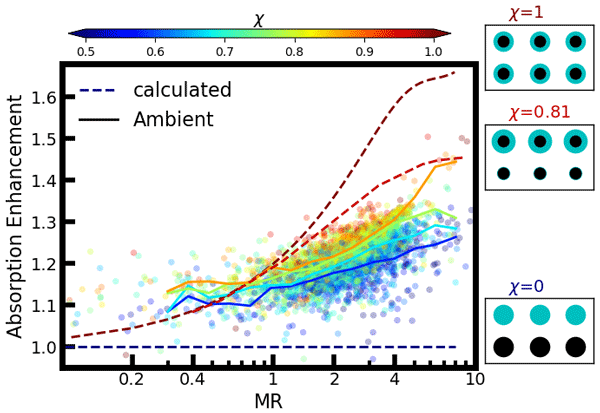
In this study, the black carbon (BC) mixing state index (χ) is developed to quantify the dispersion of ambient black carbon aerosol mixing states based on binary systems of BC and other non-black carbon components. We demonstrate that the BC light absorption enhancement increases with χ for the same MR, which indicates that χ can be employed as a factor to constrain the light absorption enhancement of ambient BC.
Cited articles
Bais, A. F., Lucas, R. M., Bornman, J. F., Williamson, C. E., Sulzberger, B., Austin, A. T., Wilson, S. R., Andrady, A. L., Bernhard, G., and McKenzie, R. L.: Environmental effects of ozone depletion, UV radiation and interactions with climate change: UNEP Environmental Effects Assessment Panel, update 2017, Photochem. Photobiol. Sci., 17, 127–179, https://doi.org/10.1039/C7PP90043K, 2018.
Bernhard, G. H., Bais, A. F., Aucamp, P. J., Klekociuk, A. R., Liley, J. B., and McKenzie, R. L.: Stratospheric ozone, UV radiation, and climate interactions, Photochem. Photobiol. Sci., 22, 937–989, https://doi.org/10.1007/s43630-023-00371-y, 2023.
Byun, G., Choi, Y., Kim, S., and Lee, J.-T.: Long-term exposure to ambient ozone and mortality in a population-based cohort of South Korea: considering for an alternative exposure time metric, Environ. Pollut., 314, 120300, https://doi.org/10.1016/j.envpol.2022.120300, 2022.
Cao, T., Wang, H., Li, L., Lu, X., Liu, Y., and Fan, S.: Fast spreading of surface ozone in both temporal and spatial scale in Pearl River Delta, J. Environ. Sci., 137, 540–552, https://doi.org/10.1016/j.jes.2023.02.025, 2024.
Cardelino, C., Chang, M., John, J. S., Murphey, B., Cordle, J., Ballagas, R., Patterson, L., Powell, K., Stogner, J., and Zimmer-Dauphinee, S.: Ozone Predictions in Atlanta, Georgia: Analysis of the 1999 Ozone Season, J. Air Waste Manag. Assoc., 51, 1227–1236, https://doi.org/10.1080/10473289.2001.10464342, 2001.
Chen, S., Wang, H., Lu, K., Zeng, L., Hu, M., and Zhang, Y.: The trend of surface ozone in Beijing from 2013 to 2019: Indications of the persisting strong atmospheric oxidation capacity, Atmos. Environ., 242, 117801, https://doi.org/10.1016/j.atmosenv.2020.117801, 2020.
Chen, Z., Zhuang, Y., Xie, X., Chen, D., Cheng, N., Yang, L., and Li, R.: Understanding long-term variations of meteorological influences on ground ozone concentrations in Beijing During 2006–2016, Environ. Pollut., 245, 29–37, https://doi.org/10.1016/j.envpol.2018.10.117, 2019.
Christiansen, A., Mickley, L. J., Liu, J., Oman, L. D., and Hu, L.: Multidecadal increases in global tropospheric ozone derived from ozonesonde and surface site observations: can models reproduce ozone trends?, Atmos. Chem. Phys., 22, 14751–14782, https://doi.org/10.5194/acp-22-14751-2022, 2022.
Cox, W. M. and Shao-Hang, C.: Assessment of interannual ozone variation in urban areas from a climatological perspective, Atmos. Environ., 30, 2615–2625, https://doi.org/10.1016/1352-2310(95)00346-0, 1996.
Crouse, D. L., Peters, P. A., Hystad, P., Brook, J. R., van Donkelaar, A., Martin, R. V., Villeneuve, P. J., Jerrett, M., Goldberg, M. S., Pope, C. A., Brauer, M., Brook, R. D., Robichaud, A., Menard, R., and Burnett, R. T.: Ambient PM2.5, O3, and NO2 Exposures and Associations with Mortality over 16 Years of Follow-Up in the Canadian Census Health and Environment Cohort (CanCHEC), Environ. Health Persp., 123, 1180–1186, https://doi.org/10.1289/ehp.1409276, 2015.
Doherty, R., Wild, O., Shindell, D., Zeng, G., MacKenzie, I., Collins, W., Fiore, A. M., Stevenson, D., Dentener, F., and Schultz, M.: Impacts of climate change on surface ozone and intercontinental ozone pollution: A multi‐model study, J. Geophys. Res.-Atmos., 118, 3744–3763, 2013.
Gao, D., Xie, M., Liu, J., Wang, T., Ma, C., Bai, H., Chen, X., Li, M., Zhuang, B., and Li, S.: Ozone variability induced by synoptic weather patterns in warm seasons of 2014–2018 over the Yangtze River Delta region, China, Atmos. Chem. Phys., 21, 5847–5864, https://doi.org/10.5194/acp-21-5847-2021, 2021.
Gilbert, R. O.: Statistical methods for environmental pollution monitoring, Van Nostrand Reinhold, New York, 320 pp., ISBN 978-0-442-23050-4, 1987.
Gu, Y., Li, Y., Li, J., Li, H., Wang, Y., Liu, Y., Li, H., Liu, J., Guo, W., and Li, W.: Ozone vertical profile and its formation regime at the top of the planetary boundary layer in a coastal megacity of eastern China, Sci. Total Environ., 921, 170506, https://doi.org/10.1016/j.scitotenv.2024.170506, 2024.
He, H., Liang, X. Z., Sun, C., Tao, Z., and Tong, D. Q.: The long-term trend and production sensitivity change in the US ozone pollution from observations and model simulations, Atmos. Chem. Phys., 20, 3191–3208, https://doi.org/10.5194/acp-20-3191-2020, 2020.
He, G., He, C., Wang, H., Lu, X., Pei, C., Qiu, X., Liu, C., Wang, Y., Liu, N., Zhang, J., Lei, L., Liu, Y., Wang, H., Deng, T., Fan, Q., and Fan, S.: Nighttime ozone in the lower boundary layer: insights from 3-year tower-based measurements in South China and regional air quality modeling, Atmos. Chem. Phys., 23, 13107–13124, https://doi.org/10.5194/acp-23-13107-2023, 2023.
Huang, D., Liu, Z., Zhao, X., and Zhao, P.: Emerging polycentric megacity in China: An examination of employment subcenters and their influence on population distribution in Beijing, Cities, 69, 36–45, https://doi.org/10.1016/j.cities.2017.05.013, 2017.
Kang, M., Zhang, J., Zhang, H., and Ying, Q.: On the relevancy of observed ozone increase during COVID-19 lockdown to summertime ozone and PM2.5 control policies in China, Environ. Sci. Technol. Lett., 8, 289–294, https://doi.org/10.1021/acs.estlett.1c00036.s001,2021.
Kaser, L., Patton, E. G., Pfister, G. G., Weinheimer, A. J., Montzka, D. D., Flocke, F., Thompson, A. M., Stauffer, R. M., and Halliday, H. S.: The effect of entrainment through atmospheric boundary layer growth on observed and modeled surface ozone in the Colorado Front Range, J. Geophys. Res.-Atmos., 122, 6075–6093, https://doi.org/10.1002/2016JD026245, 2017.
Kendall, M. G.: Rank correlation methods, 4th edn., Charles Griffin, London, 202 pp., ISBN 978-0-852-64199-6, 1975.
Li, K., Jacob, D. J., Liao, H., Shen, L., Zhang, Q., and Bates, K. H.: A two-pollutant strategy for improving ozone and particulate air quality in China, Nat. Geosci., 12, 906–910, https://doi.org/10.1038/s41561-019-0464-x, 2019.
Li, M., Dong, H., Wang, B., Zhao, W., Sakhvidi, M. J. Z., Li, L., Lin, G., and Yang, J.: Association between ambient ozone pollution and mortality from a spectrum of causes in Guangzhou, China, Sci. Total Environ., 754, 142110, https://doi.org/10.1016/j.scitotenv.2020.142110, 2021a.
Li, M., Yu, S., Chen, X., Li, Z., Zhang, Y., Wang, L., Liu, W., Li, P., Lichtfouse, E., Rosenfeld, D., and Seinfeld, J. H.: Large scale control of surface ozone by relative humidity observed during warm seasons in China, Environ. Chem. Lett., 19, 3981–3989, https://doi.org/10.1007/s10311-021-01265-0, 2021b.
Li, M., Zhang, Q., Zheng, B., Tong, D., Lei, Y., Liu, F., Hong, C., Kang, S., Yan, L., Zhang, Y., Bo, Y., Su, H., Cheng, Y., and He, K.: Persistent growth of anthropogenic non-methane volatile organic compound (NMVOC) emissions in China during 1990–2017: drivers, speciation and ozone formation potential, Atmos. Chem. Phys., 19, 8897–8913, https://doi.org/10.5194/acp-19-8897-2019, 2019.
Li, S., Feng, K., and Li, M.: Identifying the main contributors of air pollution in Beijing, J. Clean. Prod., 163, S359–S365, https://doi.org/10.1016/j.jclepro.2015.10.127, 2017.
Li, W., Shao, L., Wang, W., Li, H., Wang, X., Li, Y., Li, W., Jones, T., and Zhang, D.: Air quality improvement in response to intensified control strategies in Beijing during 2013–2019, Sci. Total Environ., 744, 140776, https://doi.org/10.1016/j.scitotenv.2020.140776, 2020.
Liu, H., Liu, S., Xue, B., Lv, Z., Meng, Z., Yang, X., Xue, T., Yu, Q., and He, K.: Ground-level ozone pollution and its health impacts in China, Atmos. Environ., 173, 223–230, https://doi.org/10.1016/j.atmosenv.2017.11.014, 2018.
Lu, X., Zhang, L., Wang, X., Gao, M., Li, K., Zhang, Y., Yue, X., and Zhang, Y.: Rapid Increases in Warm-Season Surface Ozone and Resulting Health Impact in China Since 2013, Environ. Sci. Technol. Lett., 7, 240–247, https://doi.org/10.1021/acs.estlett.0c00171, 2020.
Mann, H. B.: Nonparametric tests against trend, Econometrica, 245–259, https://doi.org/10.2307/1907187, 1945.
Ministry of Ecology and Environment of the People's Republic of China: Ambient air quality standards, GB 3095-2012, 2012.
Niu, Y., Zhou, Y., Chen, R., Yin, P., Meng, X., Wang, W., Liu, C., Ji, J. S., Qiu, Y., and Kan, H.: Long-term exposure to ozone and cardiovascular mortality in China: a nationwide cohort study, Lancet Planetary Health, 6, e496–e503, https://doi.org/10.1016/s2542-5196(22)00093-6, 2022.
Nuvolone, D., Petri, D., and Voller, F.: The effects of ozone on human health, Environ. Sci. Pollut. Res., 25, 8074–8088, https://doi.org/10.1007/s11356-017-9239-3, 2018.
Climate and Clean Air Coalition: Beijing's air quality improvements are a model for other cities. https://www.ccacoalition.org/news/beijings-air-quality-improvements-are-model-other-cities, last access: 9 March 2019.
Qiang, H. and Hu, L.: Population and capital flows in metropolitan Beijing, China: Empirical evidence from the past 30 years, Cities, 120, 103464, https://doi.org/10.1016/j.cities.2021.103464, 2022.
Qin, Y., Tonnesen, G. S., and Wang, Z.: Weekend/weekday differences of ozone, NOx , Co, VOCs, PM10 and the light scatter during ozone season in southern California, Atmos. Environ., 38, 3069–3087, https://doi.org/10.1016/j.atmosenv.2004.01.035, 2004.
Qiu, Y., Li, X., Chai, W., Liu, Y., Song, M., Tian, X., Zou, Q., Lou, W., Zhang, W., Li, J., and Zhang, Y.: Insights into ozone pollution control in urban areas by decoupling meteorological factors based on machine learning, Atmos. Chem. Phys., 25, 1749–1763, https://doi.org/10.5194/acp-25-1749-2025, 2025.
Schnell, J. L., Prather, M. J., Josse, B., Naik, V., Horowitz, L. W., Zeng, G., Shindell, D. T., and Faluvegi, G.: Effect of climate change on surface ozone over North America, Europe, and East Asia, Geophys. Res. Lett., 43, 3509–3518, https://doi.org/10.1002/2016gl068060, 2016.
Sen, P. K.: Estimates of the regression coefficient based on Kendall's tau, J. Am. Stat. Assoc., 63, 1379–1389, https://doi.org/10.1080/01621459.1968.10480934,1968.
Sicard, P.: Ground-level ozone over time: An observation-based global overview, Curr. Opin. Environ. Sci. Health, 19, 100226, https://doi.org/10.1016/j.coesh.2020.100226, 2021.
Sitch, S., Cox, P. M., Collins, W. J., and Huntingford, C.: Indirect radiative forcing of climate change through ozone effects on the land-carbon sink, Nature, 448, 791–794, https://doi.org/10.1038/nature06059, 2007.
Streets, D. G., Fu, J. S., Jang, C. J., Hao, J., He, K., Tang, X., Zhang, Y., Wang, Z., Li, Z., Zhang, Q., Wang, L., Wang, B., and Yu, C.: Air quality during the 2008 Beijing Olympic Games, Atmos. Environ., 41, 480–492, https://doi.org/10.1016/j.atmosenv.2006.08.046, 2007.
Song, X., Li, X.-B., Yuan, B., He, X., Chen, Y., Wang, S., Huangfu, Y., Peng, Y., Zhang, C., Liu, A., Yang, H., Liu, C., Li, J., and Shao, M.: Elucidating key factors in regulating budgets of ozone and its precursors in atmospheric boundary layer, npj Clim. Atmos. Sci., 7, 281, https://doi.org/10.1038/s41612-024-00818-8, 2024.
Theil, H.: A rank-invariant method of linear and polynomial regression analysis, Indag. Math., 12, 85–91, 1950.
Wang, J., Gao, A., Li, S., Liu, Y., Zhao, W., Wang, P., and Zhang, H.: Regional joint PM2.5-O3 control policy benefits further air quality improvement and human health protection in Beijing-Tianjin-Hebei and its surrounding areas, J. Environ. Sci., 130, 75–84, https://doi.org/10.1016/j.jes.2022.06.036, 2023.
Wang, T., Xue, L., Brimblecombe, P., Lam, Y. F., Li, L., and Zhang, L.: Ozone pollution in China: A review of concentrations, meteorological influences, chemical precursors, and effects, Sci. Total Environ., 575, 1582–1596, https://doi.org/10.1016/j.scitotenv.2016.10.081, 2017.
Wang, W., Parrish, D. D., Li, X., Shao, M., Liu, Y., Mo, Z., Lu, S., Hu, M., Fang, X., and Wu, Y.: Exploring the drivers of the increased ozone production in Beijing in summertime during 2005–2016, Atmos. Chem. Phys., 20, 15617–15633, https://doi.org/10.5194/acp-20-15617-2020, 2020a.
Wang, W., Parrish, D. D., Wang, S., Bao, F., Ni, R., Li, X., Yang, S., Wang, H., Cheng, Y., and Su, H.: Long-term trend of ozone pollution in China during 2014–2020: distinct seasonal and spatial characteristics and ozone sensitivity, Atmos. Chem. Phys., 22, 8935–8949, https://doi.org/10.5194/acp-22-8935-2022, 2022.
Wang, X., Fu, T. M., Zhang, L., Crounse, J. D., Wennberg, P. O., Palmer, P. I., and Cohen, R. C.: Sensitivities of ozone air pollution in the Beijing–Tianjin–Hebei area to local and upwind precursor emissions using adjoint modeling, Environ. Sci. Technol., 55, 5752–5762, https://doi.org/10.1021/acs.est.1c00131, 2021.
Wang, X., Zhu, J., Jiao, G., Chen, X., Yang, Z., Chen, L., Jin, X., and Liao, H.: Meteorological influence on surface ozone trends in China: assessing uncertainties caused by multi-dataset and multi-method, Atmos. Chem. Phys., 25, 13863–13878, https://doi.org/10.5194/acp-25-13863-2025, 2025.
Wang, Y., Wild, O., Chen, X., Wu, Q., Gao, M., Chen, H., Qi, Y., and Wang, Z.: Health impacts of long-term ozone exposure in China over 2013–2017, Environ. Int., 144, 106030, https://doi.org/10.1016/j.envint.2020.106030, 2020b.
Wang, Z.-B., Li, J.-X., and Liang, L.-W.: Spatio-temporal evolution of ozone pollution and its influencing factors in the Beijing-Tianjin-Hebei Urban Agglomeration, Environ. Pollut., 256, 113419, https://doi.org/10.1016/j.envpol.2019.113419, 2020c.
Wang, Z., Li, Y., Chen, T., Zhang, D., Sun, F., Wei, Q., Dong, X., Sun, R., Huan, N., and Pan, L.: Ground-level ozone in urban Beijing over a 1-year period: Temporal variations and relationship to atmospheric oxidation, Atmos. Res., 164/165, 110–117, https://doi.org/10.1016/j.atmosres.2015.05.005, 2015.
Weatherhead, E. C., Reinsel, G. C., Tiao, G. C., Meng, X.-L., Choi, D., Cheang, W.-K., Keller, T., DeLuisi, J., Wuebbles, D. J., Kerr, J. B., Miller, A. J., Oltmans, S. J., and Frederick, J. E.: Factors affecting the detection of trends: statistical considerations and applications to environmental data, J. Geophys. Res.-Atmos., 103, 17149–17161, https://doi.org/10.1029/98JD00995, 1998.
Wen, Z., Wang, C., Li, Q., Xu, W., Lu, L., Li, X., Tang, A., Collett Jr, J. L., and Liu, X.: Winter air quality improvement in Beijing by clean air actions from 2014 to 2018, Atmos. Res., 259, 105674, https://doi.org/10.1016/j.atmosres.2021.105674, 2021.
Wu, T., Cui, Y., Lian, A., Tian, Y., Li, R., Liu, X., Yan, J., Xue, Y., Liu, H., and Wu, B.: Vehicle emissions of primary air pollutants from 2009 to 2019 and projection for the 14th Five-Year Plan period in Beijing, China, J. Environ. Sci., 124, 513–521, https://doi.org/10.1016/j.jes.2021.11.038, 2023.
Xu, J., Ma, J., Zhang, X., Xu, X., Xu, X., Lin, W., Wang, Y., Meng, W., and Ma, Z.: Measurements of ozone and its precursors in Beijing during summertime: impact of urban plumes on ozone pollution in downwind rural areas, Atmos. Chem. Phys., 11, 12241–12252, https://doi.org/10.5194/acp-11-12241-2011, 2011.
Xue, Y., Cao, X., Ai, Y., Xu, K., and Zhang, Y.: Primary air pollutants emissions variation characteristics and future control strategies for transportation sector in Beijing, China, Sustainability, 12, 4111, https://doi.org/10.3390/su12104111, 2020.
Yan, Y., Pozzer, A., Ojha, N., Lin, J., and Lelieveld, J.: Analysis of European ozone trends in the period 1995–2014, Atmos. Chem. Phys., 18, 5589–5605, https://doi.org/10.5194/acp-18-5589-2018, 2018.
Yin, P., Chen, R., Wang, L., Meng, X., Liu, C., Niu, Y., Lin, Z., Liu, Y., Liu, J., and Qi, J.: Ambient ozone pollution and daily mortality: a nationwide study in 272 Chinese cities, Environmental health perspectives, 125, 117006, https://doi.org/10.1289/ehp1849, 2017.
Zhan, J., Feng, Z., Liu, P., He, X., He, Z., Chen, T., Wang, Y., He, H., Mu, Y., and Liu, Y.: Ozone and SOA formation potential based on photochemical loss of VOCs during the Beijing summer, Environ. Pollut., 285, 117444, https://doi.org/10.1016/j.envpol.2021.117444, 2021.
Zhang, H., Wang, S., Hao, J., Wang, X., Wang, S., Chai, F., and Li, M.: Air pollution and control action in Beijing, J. Clean. Prod., 112, 1519–1527, https://doi.org/10.1016/j.jclepro.2015.04.092, 2016.
Zhang, J., Wei, Y., and Fang, Z.: Ozone pollution: a major health hazard worldwide, Front. Immun., 10, 2518, https://doi.org/10.3389/fimmu.2019.02518, 2019.
Zhang, X., Li, H., Wang, X., Zhang, Y., Bi, F., Wu, Z., Liu, Y., Zhang, H., Gao, R., and Xue, L.: Heavy ozone pollution episodes in urban Beijing during the early summertime from 2014 to 2017: Implications for control strategy, Environ. Pollut., 285, 117162, https://doi.org/10.1016/j.envpol.2021.117162, 2021.
Zhao, H., Zheng, Y., Li, T., Wei, L., and Guan, Q.: Temporal and spatial variation in, and population exposure to, summertime ground-level ozone in Beijing, Int. J. Environ. Re. Publ. H., 15, 628, https://doi.org/10.3390/ijerph15040628, 2018.
Zheng, B., Cheng, J., Geng, G., Wang, X., Li, M., Shi, Q., Qi, J., Lei, Y., Zhang, Q., and He, K.: Mapping anthropogenic emissions in China at 1 km spatial resolution and its application in air quality modeling, Sci. Bull., 66, 612–620, https://doi.org/10.1016/j.scib.2020.12.008, 2021.
Zheng, B., Tong, D., Li, M., Liu, F., Hong, C., Geng, G., Li, H., Li, X., Peng, L., and Qi, J.: Trends in China's anthropogenic emissions since 2010 as the consequence of clean air actions, Atmos. Chem. Phys., 18, 14095–14111, https://doi.org/10.5194/acp-18-14095-2018, 2018.
Short summary
Beijing's ozone trends (2013–2023) show a lengthening Ozone Season despite strict emission controls. While low-percentile ozone levels rose, mean and high-percentile values remained stable. Key shifts include a later daily exposure window, flattened diurnal cycles (lower peaks, higher troughs), and reduced ozone production/loss rates. These findings establish a baseline for urban pollution evolution and provide critical insights for future policy formulation and public health protection.
Beijing's ozone trends (2013–2023) show a lengthening Ozone Season despite strict emission...
Altmetrics
Final-revised paper
Preprint