
Articles | Volume 26, issue 14
https://doi.org/10.5194/acp-26-10533-2026
© Author(s) 2026. This work is distributed under
the Creative Commons Attribution 4.0 License.
the Creative Commons Attribution 4.0 License.
https://doi.org/10.5194/acp-26-10533-2026
© Author(s) 2026. This work is distributed under
the Creative Commons Attribution 4.0 License.
the Creative Commons Attribution 4.0 License.
Research article
| 
28 Jul 2026
Research article |
| 28 Jul 2026
| 28 Jul 2026
Surface PM2.5 air pollution in 2022 India: emission updates, WRF-Chem model evaluation, and source attribution

Department of Civil and Environmental Engineering, Princeton University, USA
Center for Policy Research on Energy and the Environment, Princeton School of Public and International Affairs, Princeton University, USA
Denise L. Mauzerall
CORRESPONDING AUTHOR
Department of Civil and Environmental Engineering, Princeton University, USA
Center for Policy Research on Energy and the Environment, Princeton School of Public and International Affairs, Princeton University, USA
Viswanath Velamuri
Department of Civil and Environmental Engineering, Indian Institute of Technology, Delhi, India
Sri Harsha Kota
Department of Civil and Environmental Engineering, Indian Institute of Technology, Delhi, India
Malini Nambiar
Center for Policy Research on Energy and the Environment, Princeton School of Public and International Affairs, Princeton University, USA
Yuanyu Xie
Center for Policy Research on Energy and the Environment, Princeton School of Public and International Affairs, Princeton University, USA
Related authors
No articles found.
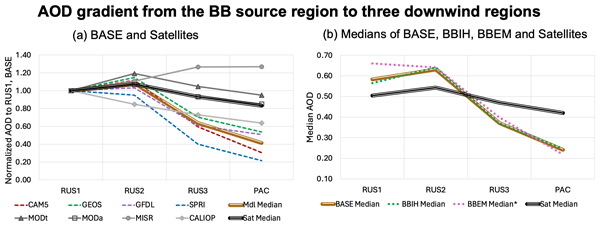
Xiaohua Pan, Mian Chin, Ralph A. Kahn, Hitoshi Matsui, Toshihiko Takemura, Meiyun Lin, Yuanyu Xie, Dongchul Kim, and Maria Val Martin
Atmos. Chem. Phys., 26, 171–196, https://doi.org/10.5194/acp-26-171-2026, https://doi.org/10.5194/acp-26-171-2026, 2026
Short summary
Short summary
Wildfire smoke can travel far from its source, affecting air quality far from the fire itself. This study looks at how two key factors – how much smoke is emitted & how high it rises – affect how smoke spreads. Using data from a major 2008 Siberian wildfire, four models were tested. Results show that models often inject smoke too low & remove it too quickly, missing high-altitude smoke seen by satellites. Better estimates of smoke height and removal are crucial to improve air quality forecasts.
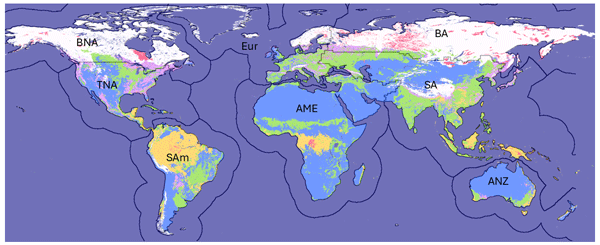
Cynthia H. Whaley, Tim Butler, Jose A. Adame, Rupal Ambulkar, Steve R. Arnold, Rebecca R. Buchholz, Benjamin Gaubert, Douglas S. Hamilton, Min Huang, Hayley Hung, Johannes W. Kaiser, Jacek W. Kaminski, Christoph Knote, Gerbrand Koren, Jean-Luc Kouassi, Meiyun Lin, Tianjia Liu, Jianmin Ma, Kasemsan Manomaiphiboon, Elisa Bergas Masso, Jessica L. McCarty, Mariano Mertens, Mark Parrington, Helene Peiro, Pallavi Saxena, Saurabh Sonwani, Vanisa Surapipith, Damaris Y. T. Tan, Wenfu Tang, Veerachai Tanpipat, Kostas Tsigaridis, Christine Wiedinmyer, Oliver Wild, Yuanyu Xie, and Paquita Zuidema
Geosci. Model Dev., 18, 3265–3309, https://doi.org/10.5194/gmd-18-3265-2025, https://doi.org/10.5194/gmd-18-3265-2025, 2025
Short summary
Short summary
The multi-model experiment design of the HTAP3 Fires project takes a multi-pollutant approach to improving our understanding of transboundary transport of wildland fire and agricultural burning emissions and their impacts. The experiments are designed with the goal of answering science policy questions related to fires. The options for the multi-model approach, including inputs, outputs, and model setup, are discussed, and the official recommendations for the project are presented.
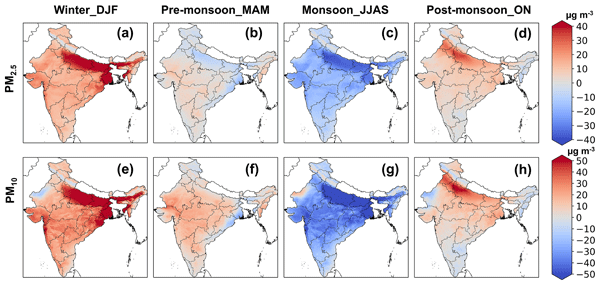
Shuai Wang, Mengyuan Zhang, Hui Zhao, Peng Wang, Sri Harsha Kota, Qingyan Fu, Cong Liu, and Hongliang Zhang
Earth Syst. Sci. Data, 16, 3565–3577, https://doi.org/10.5194/essd-16-3565-2024, https://doi.org/10.5194/essd-16-3565-2024, 2024
Short summary
Short summary
Long-term, open-source, gap-free daily ground-level PM2.5 and PM10 datasets for India (LongPMInd) were reconstructed using a robust machine learning model to support health assessment and air quality management.
Cited articles
Agarwal, P., Stevenson, D. S., and Heal, M. R.: Evaluation of WRF-Chem-simulated meteorology and aerosols over northern India during the severe pollution episode of 2016, Atmos. Chem. Phys., 24, 2239–2266, https://doi.org/10.5194/acp-24-2239-2024, 2024.
Apte, J. S. and Pant, P.: Toward cleaner air for a billion Indians, Proc. Natl. Acad. Sci. USA, 116, 10614–10616, https://doi.org/10.1073/pnas.1905458116, 2019.
Asharaf, N. and Tol, R. S. J.: The impact of Pradhan Mantri Ujjwala Yojana on Indian households, Econ. Anal. Policy, 84, 878–897, https://doi.org/10.1016/j.eap.2024.09.026, 2024.
Bhaskar, U.: NDA Ujjwala surpasses targets, provides 80.33 million LPG connections, https://www.livemint.com/news/india/nda-ujjwala-surpasses-targets-provides-80-33-million-lpg (last access: 15 July 2026), 2019.
Chapman, E. G., Gustafson Jr., W. I., Easter, R. C., Barnard, J. C., Ghan, S. J., Pekour, M. S., and Fast, J. D.: Coupling aerosol-cloud-radiative processes in the WRF-Chem model: Investigating the radiative impact of elevated point sources, Atmos. Chem. Phys., 9, 945–964, https://doi.org/10.5194/acp-9-945-2009, 2009.
Chatterjee, D., McDuffie, E. E., Smith, S. J., Bindle, L., van Donkelaar, A., Hammer, M. S., Venkataraman, C., Brauer, M., and Martin, R. V.: Source Contributions to Fine Particulate Matter and Attributable Mortality in India and the Surrounding Region, Environ. Sci. Technol., 57, 10263–10275, https://doi.org/10.1021/acs.est.2c07641, 2023.
Chowdhury, S., Dey, S., Guttikunda, S., Pillarisetti, A., Smith, K. R., and Di Girolamo, L.: Indian annual ambient air quality standard is achievable by completely mitigating emissions from household sources, Proc. Natl. Acad. Sci. USA, 116, 10711–10716, https://doi.org/10.1073/pnas.1900888116, 2019.
Conibear, L., Butt, E. W., Knote, C., Arnold, S. R., and Spracklen, D. V.: Residential energy use emissions dominate health impacts from exposure to ambient particulate matter in India, Nat. Commun., 9, 617, https://doi.org/10.1038/s41467-018-02986-7, 2018.
Crippa, M., Guizzardi, D., Muntean, M., Schaaf, E., Dentener, F., van Aardenne, J. A., Monni, S., Doering, U., Olivier, J. G. J., Pagliari, V., and Janssens-Maenhout, G.: Gridded emissions of air pollutants for the period 1970–2012 within EDGAR v4.3.2, Earth Syst. Sci. Data, 10, 1987–2013, https://doi.org/10.5194/essd-10-1987-2018, 2018.
Cropper, M., Cui, R., Guttikunda, S., Hultman, N., Jawahar, P., Park, Y., Yao, X., and Song, X. P.: The mortality impacts of current and planned coal-fired power plants in India, Proc. Natl. Acad. Sci. USA, 118, https://doi.org/10.1073/pnas.2017936118, 2021.
David, L. M., Ravishankara, A. R., Kodros, J. K., Venkataraman, C., Sadavarte, P., Pierce, J. R., Chaliyakunnel, S., and Millet, D. B.: Aerosol Optical Depth Over India, J. Geophys. Res.-Atmos., 123, 3688–3703, https://doi.org/10.1002/2017JD027719, 2018.
Du, Q., Zhao, C., Zhang, M., Dong, X., Chen, Y., Liu, Z., Hu, Z., Zhang, Q., Li, Y., Yuan, R., and Miao, S.: Modeling diurnal variation of surface PM2.5 concentrations over East China with WRF-Chem: impacts from boundary-layer mixing and anthropogenic emission, Atmos. Chem. Phys., 20, 2839–2863, https://doi.org/10.5194/acp-20-2839-2020, 2020.
Emmons, L. K., Schwantes, R. H., Orlando, J. J., Tyndall, G., Kinnison, D., Lamarque, J. F., Marsh, D., Mills, M. J., Tilmes, S., Bardeen, C., Buchholz, R. R., Conley, A., Gettelman, A., Garcia, R., Simpson, I., Blake, D. R., Meinardi, S., and Pétron, G.: The Chemistry Mechanism in the Community Earth System Model Version 2 (CESM2), J. Adv. Model. Earth Syst., 12, https://doi.org/10.1029/2019ms001882, 2020.
Fast, J. D., Gustafson, W. I., Easter, R. C., Zaveri, R. A., Barnard, J. C., Chapman, E. G., Grell, G. A., and Peckham, S. E.: Evolution of ozone, particulates, and aerosol direct radiative forcing in the vicinity of Houston using a fully coupled meteorology-chemistry-aerosol model, J. Geophys. Res.-Atmos., 111, D21305, https://doi.org/10.1029/2005jd006721, 2006.
Gaikwad, H. V., Pandey, S., Kadam, V., and Patil, K.: Socio-economic factors on choice of cooking fuel: understanding the antecedents and consequences of PMUY In India, Discov. Sustain., 6, 507, https://doi.org/10.1007/s43621-025-01376-6, 2025.
Ganguly, T., Selvaraj, K. L., and Guttikunda, S. K.: National Clean Air Programme (NCAP) for Indian cities: Review and outlook of clean air action plans, Atmos. Environ. X, 8, 100096, https://doi.org/10.1016/j.aeaoa.2020.100096, 2020.
Gani, S., Bhandari, S., Seraj, S., Wang, D. S., Patel, K., Soni, P., Arub, Z., Habib, G., Hildebrandt Ruiz, L., and Apte, J. S.: Submicron aerosol composition in the world's most polluted megacity: the Delhi Aerosol Supersite study, Atmos. Chem. Phys., 19, 6843–6859, https://doi.org/10.5194/acp-19-6843-2019, 2019.
Gettelman, A., Mills, M. J., Kinnison, D. E., Garcia, R. R., Smith, A. K., Marsh, D. R., Tilmes, S., Vitt, F., Bardeen, C. G., McInerny, J., Liu, H. L., Solomon, S. C., Polvani, L. M., Emmons, L. K., Lamarque, J. F., Richter, J. H., Glanville, A. S., Bacmeister, J. T., Phillips, A. S., Neale, R. B., Simpson, I. R., DuVivier, A. K., Hodzic, A., and Randel, W. J.: The Whole Atmosphere Community Climate Model Version 6 (WACCM6), J. Geophys. Res.-Atmos., 124, 12380–12403, https://doi.org/10.1029/2019jd030943, 2019.
Ginoux, P., Chin, M., Tegen, I., Prospero, J. M., Holben, B., Dubovik, O., and Lin, S. J.: Sources and distributions of dust aerosols simulated with the GOCART model, J. Geophys. Res.-Atmos., 106, 20255–20273, https://doi.org/10.1029/2000jd000053, 2001.
Govardhan, G., Satheesh, S. K., Moorthy, K. K., and Nanjundiah, R.: Simulations of black carbon over the Indian region: improvements and implications of diurnality in emissions, Atmos. Chem. Phys., 19, 8229–8241, https://doi.org/10.5194/acp-19-8229-2019, 2019.
Grell, G. A., Peckham, S. E., Schmitz, R., McKeen, S. A., Frost, G., Skamarock, W. C., and Eder, B.: Fully coupled “online” chemistry within the WRF model, Atmos. Environ., 39, 6957–6975, https://doi.org/10.1016/j.atmosenv.2005.04.027, 2005.
Guenther, A., Karl, T., Harley, P., Wiedinmyer, C., Palmer, P. I., and Geron, C.: Estimates of global terrestrial isoprene emissions using MEGAN (Model of Emissions of Gases and Aerosols from Nature), Atmos. Chem. Phys., 6, 3181–3210, https://doi.org/10.5194/acp-6-3181-2006, 2006.
Guizzardi, D., Crippa, M., Butler, T., Keating, T., Wu, R., Kaminski, J., Kuenen, J., Kurokawa, J., Chatani, S., Morikawa, T., Pouliot, G., Racine, J., Moran, M. D., Klimont, Z., Manseau, P. M., Mashayekhi, R., Henderson, B. H., Smith, S. J., Hoesly, R., Muntean, M., Banja, M., Schaaf, E., Pagani, F., Woo, J.-H., Kim, J., Pisoni, E., Zhang, J., Niemi, D., Sassi, M., Duhamel, A., Ansari, T., Foley, K., Geng, G., Chen, Y., and Zhang, Q.: The HTAP_v3.2 emission mosaic: merging regional and global monthly emissions (2000–2020) to support air quality modelling and policies, Earth Syst. Sci. Data, 17, 5915–5950, https://doi.org/10.5194/essd-17-5915-2025, 2025.
Gunthe, S. S., Liu, P., Panda, U., Raj, S. S., Sharma, A., Darbyshire, E., Reyes-Villegas, E., Allan, J., Chen, Y., Wang, X., Song, S., Pöhlker, M. L., Shi, L., Wang, Y., Kommula, S. M., Liu, T., Ravikrishna, R., McFiggans, G., Mickley, L. J., Martin, S. T., Pöschl, U., Andreae, M. O., and Coe, H.: Enhanced aerosol particle growth sustained by high continental chlorine emission in India, Nat. Geosci., 14, 77–84, https://doi.org/10.1038/s41561-020-00677-x, 2021.
Guo, H., Kota, S. H., Chen, K., Sahu, S. K., Hu, J., Ying, Q., Wang, Y., and Zhang, H.: Source contributions and potential reductions to health effects of particulate matter in India, Atmos. Chem. Phys., 18, 15219–15229, https://doi.org/10.5194/acp-18-15219-2018, 2018.
Guttikunda, S. K. and Jawahar, P.: Atmospheric emissions and pollution from the coal-fired thermal power plants in India, Atmos. Environ., 92, 449–460, https://doi.org/10.1016/j.atmosenv.2014.04.057, 2014.
Health Effects Institute: State of Global Air Report 2024, Health Effects Institute (HEI), Special Report, https://www.stateofglobalair.org/resources/report/state-global-air-report-2024 (last access: 15 July 2026), 2024.
Hoesly, R. M., Smith, S. J., Feng, L., Klimont, Z., Janssens-Maenhout, G., Pitkanen, T., Seibert, J. J., Vu, L., Andres, R. J., Bolt, R. M., Bond, T. C., Dawidowski, L., Kholod, N., Kurokawa, J.-I., Li, M., Liu, L., Lu, Z., Moura, M. C. P., O'Rourke, P. R., and Zhang, Q.: Historical (1750–2014) anthropogenic emissions of reactive gases and aerosols from the Community Emissions Data System (CEDS), Geosci. Model Dev., 11, 369–408, https://doi.org/10.5194/gmd-11-369-2018, 2018.
Huang, X., Ding, K., Liu, J., Wang, Z., Tang, R., Xue, L., Wang, H., Zhang, Q., Tan, Z. M., Fu, C., Davis, S. J., Andreae, M. O., and Ding, A.: Smoke-weather interaction affects extreme wildfires in diverse coastal regions, Science, 379, 457–461, https://doi.org/10.1126/science.add9843, 2023.
Institute for Health Metrics and Evaluation: Global Burden of Disease 2021, https://www.healthdata.org/sites/default/files/2024-05/GBD_2021_Booklet_FINAL_2024.05.16.pdf (last access: 15 July 2026), 2024.
International Energy Agency: World Energy Outlook 2024, https://www.iea.org/reports/world-energy-outlook-2024 (last access: 15 July 2026), 2024.
Katiyar, A., Nayak, D. K., Nagar, P. K., Singh, D., Sharma, M., and Kota, S. H.: Fugitive road dust particulate matter emission inventory for India: A field campaign in 32 Indian cities, Sci. Total Environ., 912, 169232, https://doi.org/10.1016/j.scitotenv.2023.169232, 2024.
Kawano, A., Kelp, M., Qiu, M., Singh, K., Chaturvedi, E., Dahiya, S., Azevedo, I., and Burke, M.: Improved daily PM(2.5) estimates in India reveal inequalities in recent enhancement of air quality, Sci. Adv., 11, eadq1071, https://doi.org/10.1126/sciadv.adq1071, 2025.
Koo, B., Wilson, G. M., Morris, R. E., Dunker, A. M., and Yarwood, G.: Comparison of Source Apportionment and Sensitivity Analysis in a Particulate Matter Air Quality Model, Environ. Sci. Technol., 43, 6669–6675, https://doi.org/10.1021/es9008129, 2009.
Koshy, J.: Sulphur-cleaning device in coal plants not necessary: Central scientific committee, https://www.thehindu.com/sci-tech/energy-and-environment/central-scientific-committee-says-sulphur-cleaning-device (last access: 15 July 2026), 2025.
Kumar, A., Imam, F., Dixit, K., Chaudhary, E., Sharma, S., Singh, N., Katoch, V., Agarwal, S., Ganguly, D., and Dey, S.: Sectoral Contributions to Primary and Secondary PM2.5 in Regional Airsheds of India, ACS Earth Space Chem., https://doi.org/10.1021/acsearthspacechem.4c00332, 2025.
Kumar, M. and Dahiya, S.: Emission Watch: Tracking the implementation of emission standard notification for coal-based power plants in India, Centre for Research on Energy and Clean Air, Briefing, https://energyandcleanair.org/publication/emission-watch-tracking-the-implementation-of-emission (last access: 15 July 2026), 2023.
Kurokawa, J. and Ohara, T.: Long-term historical trends in air pollutant emissions in Asia: Regional Emission inventory in ASia (REAS) version 3, Atmos. Chem. Phys., 20, 12761–12793, https://doi.org/10.5194/acp-20-12761-2020, 2020.
Lan, R., Eastham, S. D., Liu, T., Norford, L. K., and Barrett, S. R. H.: Air quality impacts of crop residue burning in India and mitigation alternatives, Nat. Communs., 13, https://doi.org/10.1038/s41467-022-34093-z, 2022.
Lelieveld, J., Evans, J. S., Fnais, M., Giannadaki, D., and Pozzer, A.: The contribution of outdoor air pollution sources to premature mortality on a global scale, Nature, 525, 367–371, https://doi.org/10.1038/nature15371, 2015.
Li, X., Mauzerall, D. L., and Bergin, M. H.: Global reduction of solar power generation efficiency due to aerosols and panel soiling, Nat. Sustain., https://doi.org/10.1038/s41893-020-0553-2, 2020.
Liu, T., Mickley, L. J., Patel, P. N., Gautam, R., Jain, M., Singh, S., Balwinder-Singh, DeFries, R. S., and Marlier, M. E.: Cascading Delays in the Monsoon Rice Growing Season and Postmonsoon Agricultural Fires Likely Exacerbate Air Pollution in North India, J. Geophys. Res.-Atmos., 127, e2022JD036790, https://doi.org/10.1029/2022JD036790, 2022.
Liu, Z., Zhou, M., Chen, Y., Chen, D., Pan, Y., Song, T., Ji, D., Chen, Q., and Zhang, L.: The nonlinear response of fine particulate matter pollution to ammonia emission reductions in North China, Environ. Res. Lett., https://doi.org/10.1088/1748-9326/abdf86, 2021.
Lyapustin, A., Wang, Y., Korkin, S., and Huang, D.: MODIS Collection 6 MAIAC algorithm, Atmos. Meas. Tech., 11, 5741–5765, https://doi.org/10.5194/amt-11-5741-2018, 2018.
Miao, R., Chen, Q., Shrivastava, M., Chen, Y., Zhang, L., Hu, J., Zheng, Y., and Liao, K.: Process-based and observation-constrained SOA simulations in China: the role of semivolatile and intermediate-volatility organic compounds and OH levels, Atmos. Chem. Phys., 21, 16183–16201, https://doi.org/10.5194/acp-21-16183-2021, 2021.
Miao, R., Chen, Q., Zheng, Y., Cheng, X., Sun, Y., Palmer, P. I., Shrivastava, M., Guo, J., Zhang, Q., Liu, Y., Tan, Z., Ma, X., Chen, S., Zeng, L., Lu, K., and Zhang, Y.: Model bias in simulating major chemical components of PM2.5 in China, Atmos. Chem. Phys., 20, 12265–12284, https://doi.org/10.5194/acp-20-12265-2020, 2020.
Ministry of Power: Status of Implementation of National Mission for Enhanced Energy Efficiency (NMEEE), https://www.pib.gov.in/PressReleasePage.aspx?PRID=1811051®=48&lang=2 (last access: 15 July 2026), 2022.
National Environmental Engineering Research Institute: Analysis of Historical Ambient Air Quality Data along with Emission from coal-based Thermal Power Plants for Developing a Decision Support System, Study Report, https://www.niti.gov.in/sites/default/files/2025-01/Study report on FGD installation at TPPs in India_UL.pdf (last access: 15 July 2026), 2024.
Pai, S. J., Heald, C. L., Pierce, J. R., Farina, S. C., Marais, E. A., Jimenez, J. L., Campuzano-Jost, P., Nault, B. A., Middlebrook, A. M., Coe, H., Shilling, J. E., Bahreini, R., Dingle, J. H., and Vu, K.: An evaluation of global organic aerosol schemes using airborne observations, Atmos. Chem. Phys., 20, 2637–2665, https://doi.org/10.5194/acp-20-2637-2020, 2020.
Pai, S. J., Heald, C. L., Coe, H., Brooks, J., Shephard, M. W., Dammers, E., Apte, J. S., Luo, G., Yu, F., Holmes, C. D., Venkataraman, C., Sadavarte, P., and Tibrewal, K.: Compositional Constraints are Vital for Atmospheric PM(2.5) Source Attribution over India, ACS Earth Space Chem., 6, 2432–2445, https://doi.org/10.1021/acsearthspacechem.2c00150, 2022.
Patel, A., Reddy, M. C., Liu, P., and Gunthe, S. S.: Impact of Continental Cl-N2O5 Multiphase Heterogeneous Chemistry on Regional Air Chemistry: A GEOS-Chem study over Indian Region ESS Open Archive [preprint], https://doi.org/10.22541/essoar.173482078.82609568/v1, 2024.
Reddington, C. L., Conibear, L., Knote, C., Silver, B. J., Li, Y. J., Chan, C. K., Arnold, S. R., and Spracklen, D. V.: Exploring the impacts of anthropogenic emission sectors on PM2.5 and human health in South and East Asia, Atmos. Chem. Phys., 19, 11887–11910, https://doi.org/10.5194/acp-19-11887-2019, 2019.
Runfola, D., Anderson, A., Baier, H., Crittenden, M., Dowker, E., Fuhrig, S., Goodman, S., Grimsley, G., Layko, R., Melville, G., Mulder, M., Oberman, R., Panganiban, J., Peck, A., Seitz, L., Shea, S., Slevin, H., Youngerman, R., and Hobbs, L.: geoBoundaries: A global database of political administrative boundaries, PLoS ONE, 15, e0231866, https://doi.org/10.1371/journal.pone.0231866, 2020.
Schnell, J. L., Naik, V., Horowitz, L. W., Paulot, F., Mao, J., Ginoux, P., Zhao, M., and Ram, K.: Exploring the relationship between surface PM2.5 and meteorology in Northern India, Atmos. Chem. Phys., 18, 10157–10175, https://doi.org/10.5194/acp-18-10157-2018, 2018.
Sembhi, H., Wooster, M., Zhang, T., Sharma, S., Singh, N., Agarwal, S., Boesch, H., Gupta, S., Misra, A., Tripathi, S. N., Mor, S., and Khaiwal, R.: Post-monsoon air quality degradation across Northern India: assessing the impact of policy-related shifts in timing and amount of crop residue burnt, Environ. Res. Lett., 15, https://doi.org/10.1088/1748-9326/aba714, 2020.
Sengupta, S., Adams, P. J., Deetjen, T. A., Kamboj, P., D'Souza, S., Tongia, R., and Azevedo, I. M. L.: Subnational implications from climate and air pollution policies in India's electricity sector, Science, 378, eabh1484, https://doi.org/10.1126/science.abh1484, 2022.
Sharma, A., Venkataraman, C., Muduchuru, K., Singh, V., Kesarkar, A., Ghosh, S., and Dey, S.: Aerosol radiative feedback enhances particulate pollution over India: A process understanding, Atmos. Environ., 298, https://doi.org/10.1016/j.atmosenv.2023.119609, 2023.
Singh, K., Peshin, T., Sengupta, S., Thakrar, S. K., Tessum, C. W., Hill, J. D., Azevedo, I. M. L., and Luby, S. P.: Air pollution mortality from India's coal power plants: unit-level estimates for targeted policy, Environ. Res. Lett., 19, https://doi.org/10.1088/1748-9326/ad472a, 2024.
Singh, N., Agarwal, S., Sharma, S., Chatani, S., and Ramanathan, V.: Air Pollution Over India: Causal Factors for the High Pollution with Implications for Mitigation, ACS Earth Space Chem., https://doi.org/10.1021/acsearthspacechem.1c00170, 2021.
Singh, P., Sarawade, P., and Adhikary, B.: Carbonaceous Aerosol from Open Burning and its Impact on Regional Weather in South Asia, Aerosol Air Qual. Res., 20, 419–431, https://doi.org/10.4209/aaqr.2019.03.0146, 2020.
Thamban, N. M., Joshi, B., Tripathi, S. N., Sueper, D., Canagaratna, M. R., Moosakutty, S. P., Satish, R., and Rastogi, N.: Evolution of aerosol size and composition in the Indo-Gangetic Plain: Size-resolved analysis of high-resolution aerosol mass spectra, ACS Earth Space Chem., 3, 823–832, https://doi.org/10.1021/acsearthspacechem.8b00207, 2019.
Tibrewal, K. and Venkataraman, C.: Climate co-benefits of air quality and clean energy policy in India, Nat. Sustain., 4, 305–313, https://doi.org/10.1038/s41893-020-00666-3, 2021.
U.S. Environmental Protection Agency: Bituminous And Subbituminous Coal Combustion, U.S. Environmental Protection Agency, AP-42, Fifth Edition, Volume I, Chapter 1.1, https://www.epa.gov/sites/default/files/2020-09/documents/1.1_bituminous_and_subbituminous_coal_combustion.pdf (last access: 15 July 2026), 1998.
Velamuri, V., Nayak, D. K., Sharma, S., Parmar, P. D., Nagar, P. K., Singh, D., Sharma, M., Jain, Y., Katiyar, A., Dahiya, S., Sivalingam, N., Myllyvirta, L., Surampalli, R. Y., Zhang, T. C., Zhang, H., and Kota, S. H.: India leads in emission intensity per GDP: Insights from the gridded emission inventory for residential, road transport, and energy sectors, J. Environ. Sci., https://doi.org/10.1016/j.jes.2024.10.015, 2024.
Venkataraman, C., Brauer, M., Tibrewal, K., Sadavarte, P., Ma, Q., Cohen, A., Chaliyakunnel, S., Frostad, J., Klimont, Z., Martin, R. V., Millet, D. B., Philip, S., Walker, K., and Wang, S.: Source influence on emission pathways and ambient PM2.5 pollution over India (2015–2050), Atmos. Chem. Phys., 18, 8017–8039, https://doi.org/10.5194/acp-18-8017-2018, 2018.
Venkataraman, C., Anand, A., Maji, S., Barman, N., Tiwari, D., Muduchuru, K., Sharma, A., Gupta, G., Bhardwaj, A., Haswani, D., Pullokaran, D., Yadav, K., Sunder Raman, R., Imran, M., Habib, G., Kapoor, T. S., Anurag, G., Sharma, R., Phuleria, H. C., Qadri, A. M., Singh, G. K., Gupta, T., Dhandapani, A., Kumar, R. N., Mukherjee, S., Chatterjee, A., Rabha, S., Saikia, B. K., Saikia, P., Ganguly, D., Chaudhary, P., Sinha, B., Roy, S., Muthalagu, A., Qureshi, A., Lian, Y., Pandithurai, G., Prasad, L., Murthy, S., Duhan, S. S., Laura, J. S., Chhangani, A. K., Najar, T. A., Jehangir, A., Kesarkar, A. P., and Singh, V.: Drivers of PM2.5 Episodes and Exceedance in India: A Synthesis From the COALESCE Network, J. Geophys. Res.-Atmos., 129, https://doi.org/10.1029/2024jd040834, 2024.
Wang, S., Wang, X. Y., Cohen, J. B., and Qin, K.: Inferring Polluted Asian Absorbing Aerosol Properties Using Decadal Scale AERONET Measurements and a MIE Model, Geophys. Res. Lett., 48, e2021GL094300, https://doi.org/10.1029/2021GL094300, 2021.
Wiatros-Motyka, M.: NOx control for high-ash coal-fired power plants in India, Clean Energy, 3, 24–33, https://doi.org/10.1093/ce/zky018, 2019.
Wiedinmyer, C., Kimura, Y., McDonald-Buller, E. C., Emmons, L. K., Buchholz, R. R., Tang, W., Seto, K., Joseph, M. B., Barsanti, K. C., Carlton, A. G., and Yokelson, R.: The Fire Inventory from NCAR version 2.5: an updated global fire emissions model for climate and chemistry applications, Geosci. Model Dev., 16, 3873–3891, https://doi.org/10.5194/gmd-16-3873-2023, 2023.
Xie, Y., Zhou, M., Hunt, K. M. R., and Mauzerall, D. L.: Recent PM2.5 air quality improvements in India benefited from meteorological variation, Nat. Sustain., https://doi.org/10.1038/s41893-024-01366-y, 2024.
Zaveri, R. A. and Peters, L. K.: A new lumped structure photochemical mechanism for large-scale applications, J. Geophys. Res.-Atmos., 104, 30387–30415, https://doi.org/10.1029/1999jd900876, 1999.
Zaveri, R. A., Easter, R. C., Fast, J. D., and Peters, L. K.: Model for Simulating Aerosol Interactions and Chemistry (MOSAIC), J. Geophys. Res., 113, https://doi.org/10.1029/2007jd008782, 2008.
Zhou, M. and Mauzerall, D. L.: Data for 'Surface PM2.5 Air Pollution in 2022 India: Emission Updates, WRF-Chem Model Evaluation, and Source Attribution', Princeton Data Commons [data set], https://doi.org/10.34770/8sbc-tz25, 2026.
Zhou, M., Zhang, L., Chen, D., Gu, Y., Fu, T.-M., Gao, M., Zhao, Y., Lu, X., and Zhao, B.: The impact of aerosol–radiation interactions on the effectiveness of emission control measures, Environ. Res. Lett., 14, https://doi.org/10.1088/1748-9326/aaf27d, 2019.
Zhou, M., Liu, H. X., Peng, L. Q., Qin, Y., Chen, D., Zhang, L., and Mauzerall, D. L.: Environmental benefits and household costs of clean heating options in northern China, Nat. Sustain., 5, 329–338, https://doi.org/10.1038/s41893-021-00837-w, 2022.
Zhou, M., Xie, Y., Wang, C., Shen, L., and Mauzerall, D. L.: Impacts of current and climate induced changes in atmospheric stagnation on Indian surface PM(2.5) pollution, Nat. Commun., 15, 7448, https://doi.org/10.1038/s41467-024-51462-y, 2024.
Zhu, H., Martin, R. V., van Donkelaar, A., Hammer, M. S., Li, C., Meng, J., Oxford, C. R., Liu, X., Li, Y., Zhang, D., Singh, I., and Lyapustin, A.: Importance of aerosol composition and aerosol vertical profiles in global spatial variation in the relationship between PM2.5 and aerosol optical depth, Atmos. Chem. Phys., 24, 11565–11584, https://doi.org/10.5194/acp-24-11565-2024, 2024.
Short summary
India faces some of the world's highest fine particle pollution. Using an improved air quality model and updated 2022 emission data, we find that industry was the largest domestic source nationwide, while household fuel use remained dominant in the Indo-Gangetic Plain. Pollution crossing borders contributed more than any single domestic source. Our results highlight the need for cleaner industry and power generation, alongside continued shifts to cleaner household energy.
India faces some of the world's highest fine particle pollution. Using an improved air quality...


Altmetrics
Final-revised paper
Preprint