Articles | Volume 26, issue 14
https://doi.org/10.5194/acp-26-10509-2026
© Author(s) 2026. This work is distributed under
the Creative Commons Attribution 4.0 License.
https://doi.org/10.5194/acp-26-10509-2026
© Author(s) 2026. This work is distributed under
the Creative Commons Attribution 4.0 License.
Diurnal cycle of stratocumulus mesoscale convective cells in the South-East Pacific

Emma Monnier
CORRESPONDING AUTHOR
Laboratoire de Météorologie Dynamique (LMD/IPSL), Sorbonne Université, ENS, Université PSL, École Polytechnique, Institut Polytechnique de Paris, CNRS, 75005 Paris, France
Florent Brient
Laboratoire de Météorologie Dynamique (LMD/IPSL), Sorbonne Université, ENS, Université PSL, École Polytechnique, Institut Polytechnique de Paris, CNRS, 75005 Paris, France
Institut Universitaire de France, Paris, France
Jean-Louis Dufresne
Laboratoire de Météorologie Dynamique (LMD/IPSL), Sorbonne Université, ENS, Université PSL, École Polytechnique, Institut Polytechnique de Paris, CNRS, 75005 Paris, France
Related authors
No articles found.
Marius Winkler, Marius Rixen, Florent Beucher, Fleur Couvreux, Chaehyeon C. Nam, Philippe Peyrillé, Hauke Schmidt, Hans Segura, Karl-Hermann Wieners, Ezri Alkilani-Brown, Abdou Aziz Coly, Giovanni Biagioli, Michael M. Bell, Ester Brito, Emma Chauvin, Julie Capo, Delián Colón-Burgos, Akeem Dawes, Jose Carlos da Luz, Zekican Demiralay, Vincent Douet, Vincent Ducastin, Clarisse Dufaux, Jean-Louis Dufresne, Florence Favot, Thomas Fiolleau, Emilie Fons, Geet George, Helene M. Gloeckner, Suelly Gonçalves, Laurent Gouttesoulard, Lennéa Hayo, Wei-Ting Hsiao, Sarah Kennison, Michael Kopelman, Tsung-Yung Lee, Enora Le Gall, Mateo Lovato, Emily Luschen, Nicolas Maury, Brett McKim, Louis Netz, Diouf Ousseynou, Karsten Peters-von Gehlen, Chavez Pope, Basile Poujol, Niwde Rivera Maldonado, Nina Robbins-Blanch, Nicolas Rochetin, Daniel Rowe, Paula Romero Jure, James H. Ruppert Jr., Jairo Segura Bermudez, Jarrett C. Starr, Martin Stelzner, Connor Stoll, Macintyre Syrett, Abraham Tekoe, Jeremie Trules, Colin Welty, Daniel Klocke, Raphaela Vogel, Sandrine Bony, Allison A. Wing, and Bjorn Stevens
Earth Syst. Sci. Data, 18, 1833–1854, https://doi.org/10.5194/essd-18-1833-2026, https://doi.org/10.5194/essd-18-1833-2026, 2026
Short summary
Short summary
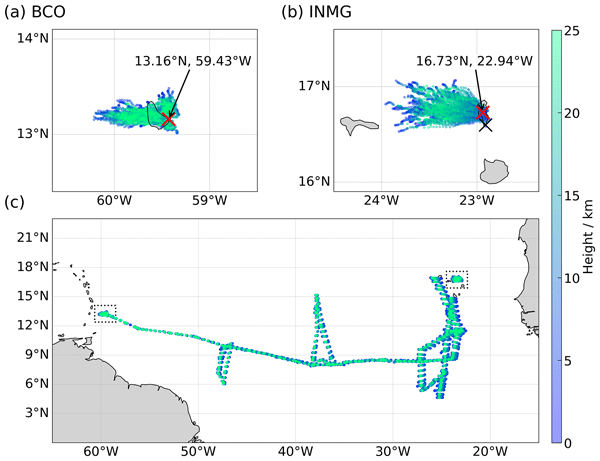
The RAPSODI dataset compiles 624 radiosonde profiles collected during the 2024 ORCESTRA campaign across the tropical Atlantic: from Cape Verde (INMG), the R/V Meteor, and the Barbados Cloud Observatory. It provides high-resolution temperature, humidity, wind, and pressure data to study convection, tropical waves, and ITCZ dynamics. Data are quality-controlled and openly available in Zarr format via IPFS.
Paulo Ceppi, Alejandro Bodas-Salcedo, Mark D. Zelinka, Timothy Andrews, Florent Brient, Robin Chadwick, Jonathan M. Gregory, Yen-Ting Hwang, Sarah M. Kang, Jennifer E. Kay, Thorsten Mauritsen, Tomoo Ogura, George Tselioudis, Masahiro Watanabe, Mark J. Webb, and Allison A. Wing
EGUsphere, https://doi.org/10.5194/egusphere-2026-398, https://doi.org/10.5194/egusphere-2026-398, 2026
Short summary
Short summary
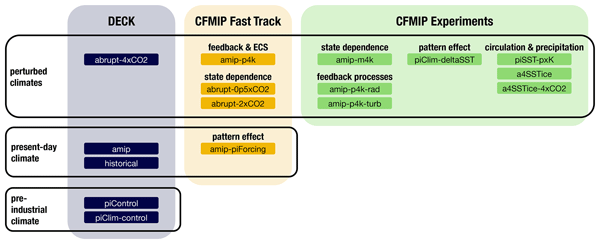
Clouds constitute a key uncertainty for climate change projections. The Cloud Feedback Model Intercomparison Project (CFMIP) aims to address this challenge by evaluating and understanding clouds and their impacts on atmospheric circulation, precipitation, and climate sensitivity. The present paper describes the CFMIP experiment protocol for the Coupled Model Intercomparison Project phase 7 (CMIP7), and discusses the accompanying science questions and opportunities for progress.
Julie Carles, Nicolas Bellouin, Najda Villefranque, and Jean-Louis Dufresne
Atmos. Chem. Phys., 25, 13953–13973, https://doi.org/10.5194/acp-25-13953-2025, https://doi.org/10.5194/acp-25-13953-2025, 2025
Short summary
Short summary
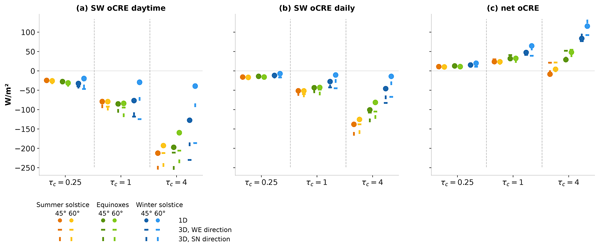
Cirrus and contrails affect Earth’s energy balance with a lot of remaining uncertainty. The balance between solar and terrestrial radiation is delicate to calculate, and factors such as cloud optical depth, shape, and Sun position are crucial to estimate the effect of those clouds on radiation. Also, often neglected three-dimensional paths of radiation, or 3D effects, may be important to account for at the climatic scale.
Yoann Tellier, Cyril Crevoisier, Raymond Armante, Jean-Louis Dufresne, and Nicolas Meilhac
Geosci. Model Dev., 15, 5211–5231, https://doi.org/10.5194/gmd-15-5211-2022, https://doi.org/10.5194/gmd-15-5211-2022, 2022
Short summary
Short summary
Accurate radiative transfer models (RTMs) are required to improve climate model simulations. We describe the module named 4A-Flux, which is implemented into 4A/OP RTM, aimed at calculating spectral longwave radiative fluxes given a description of the surface, atmosphere, and spectroscopy. In Pincus et al. (2020), 4A-Flux has shown good agreement with state-of-the-art RTMs. Here, it is applied to perform sensitivity studies and will be used to improve the understanding of radiative flux modeling.
Christophe Genthon, Dana Veron, Etienne Vignon, Delphine Six, Jean-Louis Dufresne, Jean-Baptiste Madeleine, Emmanuelle Sultan, and François Forget
Earth Syst. Sci. Data, 13, 5731–5746, https://doi.org/10.5194/essd-13-5731-2021, https://doi.org/10.5194/essd-13-5731-2021, 2021
Short summary
Short summary
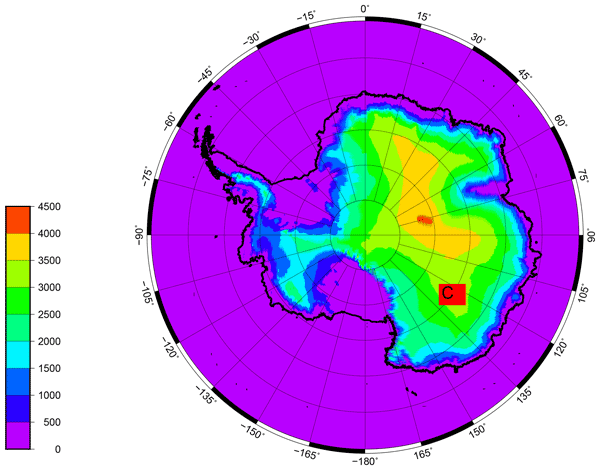
A 10-year dataset of observation in the atmospheric boundary layer at Dome C on the high Antarctic plateau is presented. This is obtained with sensors at six levels along a tower higher than 40 m. The temperature inversion can reach more than 25 °C along the tower in winter, while full mixing by convection can occur in summer. Different amplitudes of variability for wind and temperature at the different levels reflect different signatures of solar vs. synoptic forcing of the boundary layer.
Benjamin M. Sanderson, Angeline G. Pendergrass, Charles D. Koven, Florent Brient, Ben B. B. Booth, Rosie A. Fisher, and Reto Knutti
Earth Syst. Dynam., 12, 899–918, https://doi.org/10.5194/esd-12-899-2021, https://doi.org/10.5194/esd-12-899-2021, 2021
Short summary
Short summary
Emergent constraints promise a pathway to the reduction in climate projection uncertainties by exploiting ensemble relationships between observable quantities and unknown climate response parameters. This study considers the robustness of these relationships in light of biases and common simplifications that may be present in the original ensemble of climate simulations. We propose a classification scheme for constraints and a number of practical case studies.
Cited articles
Agee, E.: Mesoscale cellular convection over the oceans, Dynam. Atmos. Oceans, 10, 317–341, https://doi.org/10.1016/0377-0265(87)90023-6, 1987. a
Atkinson, B. W. and Wu Zhang, J.: Mesoscale shallow convection in the atmosphere, Rev. Geophys., 34, 403–431, https://doi.org/10.1029/96RG02623, 1996. a
Bony, S., Schulz, H., Vial, J., and Stevens, B.: Sugar, Gravel, Fish, and Flowers: Dependence of Mesoscale Patterns of Trade-Wind Clouds on Environmental Conditions, Geophys. Res. Lett., 47, e2019GL085988, https://doi.org/10.1029/2019GL085988, 2020. a
Brient, F., Couvreux, F., Rio, C., and Honnert, R.: Coherent subsiding structures in large-eddy simulations of atmospheric boundary layers, Q. J. Roy. Meteor. Soc., 150, 834–856, https://doi.org/10.1002/qj.4625, 2024. a
Brilouet, P., Durand, P., and Canut, G.: The marine atmospheric boundary layer under strong wind conditions: Organized turbulence structure and flux estimates by airborne measurements, J. Geophys. Res.-Atmos., 122, 2115–2130, https://doi.org/10.1002/2016JD025960, 2017. a
Burleyson, C. D. and Yuter, S. E.: Patterns of Diurnal Marine Stratocumulus Cloud Fraction Variability, J. Appl. Meteorol. Clim., 54, 847–866, https://doi.org/10.1175/JAMC-D-14-0178.1, 2015. a
Cesana, G. V. and Del Genio, A. D.: Observational constraint on cloud feedbacks suggests moderate climate sensitivity, Nat. Clim. Change, 11, 213–218, https://doi.org/10.1038/s41558-020-00970-y, 2021. a
Chen, Y.-S., Zhang, J., Hoffmann, F., Yamaguchi, T., Glassmeier, F., Zhou, X., and Feingold, G.: Diurnal evolution of non-precipitating marine stratocumuli in a large-eddy simulation ensemble, Atmos. Chem. Phys., 24, 12661–12685, https://doi.org/10.5194/acp-24-12661-2024, 2024. a
Denby, L. and Janssens, M.: cloudmetrics (Version v0.3.0), Zenodo [software], https://doi.org/10.5281/zenodo.10154543, 2023. a
Eastman, R. and Warren, S. G.: Diurnal Cycles of Cumulus, Cumulonimbus, Stratus, Stratocumulus, and Fog from Surface Observations over Land and Ocean, J. Climate, 27, 2386–2404, https://doi.org/10.1175/JCLI-D-13-00352.1, 2014. a
Eastman, R. and Wood, R.: Factors Controlling Low-Cloud Evolution over the Eastern Subtropical Oceans: A Lagrangian Perspective Using the A-Train Satellites, J. Atmos. Sci., 73, 331–351, https://doi.org/10.1175/JAS-D-15-0193.1, 2016. a
Eastman, R., McCoy, I. L., and Wood, R.: Wind, Rain, and the Closed to Open Cell Transition in Subtropical Marine Stratocumulus, J. Geophys. Res.-Atmos., 127, e2022JD036795, https://doi.org/10.1029/2022JD036795, 2022. a, b
Feingold, G., Glassmeier, F., Zhang, J., and Hoffmann, F.: Opinion: Inferring process from snapshots of cloud systems, Atmos. Chem. Phys., 25, 10869–10885, https://doi.org/10.5194/acp-25-10869-2025, 2025. a
GOES-R Calibration Working Group and GOES-R Series Program: NOAA GOES-R Series Advanced Baseline Imager (ABI) Level 1b Radiances, NOAA National Centers for Environmental Information [data set], https://doi.org/10.7289/V5BV7DSR, 2017. a
GOES-R Algorithm Working Group and GOES-R Program Office: NOAA GOES-R Series Advanced Baseline Imager (ABI) Level 2 Cloud Top Phase (ACTP), NOAA National Centers for Environmental Information [data set], https://doi.org/10.7289/V5NP22QW, 2018. a
Heim, C., Hentgen, L., Ban, N., and Schär, C.: Inter-model Variability in Convection-Resolving Simulations of Subtropical Marine Low Clouds, J. Meteorol. Soc. Jpn., Ser. II, 99, 1271–1295, https://doi.org/10.2151/jmsj.2021-062, 2021. a
Hogan, R. J. and Shonk, J. K. P.: Incorporating the Effects of 3D Radiative Transfer in the Presence of Clouds into Two-Stream Multilayer Radiation Schemes, J. Atmos. Sci., 70, 708–724, https://doi.org/10.1175/JAS-D-12-041.1, 2013. a
Hourdin, F., Jam, A., Rio, C., Couvreux, F., Sandu, I., Lefebvre, M., Brient, F., and Idelkadi, A.: Unified Parameterization of Convective Boundary Layer Transport and Clouds With the Thermal Plume Model, J. Adv. Model. Earth Sy., 11, 2910–2933, https://doi.org/10.1029/2019MS001666, 2019. a
IPCC: “The Earth's Energy Budget, Climate Feedbacks and Climate Sensitivity”, Climate Change 2021 – The Physical Science Basis: Working Group I Contribution to the Sixth Assessment Report of the Intergovernmental Panel on Climate Change, 923–1054, https://doi.org/10.1017/9781009157896.009, 2023. a
Janssens, M., Vilà-Guerau De Arellano, J., Scheffer, M., Antonissen, C., Siebesma, A. P., and Glassmeier, F.: Cloud Patterns in the Trades Have Four Interpretable Dimensions, Geophys. Res. Lett., 48, e2020GL091001, https://doi.org/10.1029/2020GL091001, 2021. a, b
Lang, F., Ackermann, L., Huang, Y., Truong, S. C. H., Siems, S. T., and Manton, M. J.: A climatology of open and closed mesoscale cellular convection over the Southern Ocean derived from Himawari-8 observations, Atmos. Chem. Phys., 22, 2135–2152, https://doi.org/10.5194/acp-22-2135-2022, 2022. a
Lewis, H. and Bellon, G.: Systematic Upstream Large-Scale Control of Subtropical Low-Cloud Properties, J. Climate, 38, 327–346, https://doi.org/10.1175/JCLI-D-24-0181.1, 2025. a
Lewis, H., Bellon, G., and Dinh, T.: Upstream Large-Scale Control of Subtropical Low-Cloud Climatology, J. Climate, 36, 3289–3303, https://doi.org/10.1175/JCLI-D-22-0676.1, 2023. a
McCoy, I. L., Wood, R., and Fletcher, J. K.: Identifying Meteorological Controls on Open and Closed Mesoscale Cellular Convection Associated with Marine Cold Air Outbreaks, J. Geophys. Res.-Atmos., 122, https://doi.org/10.1002/2017JD027031, 2017. a
McCoy, I. L., McCoy, D. T., Wood, R., Zuidema, P., and Bender, F. A.: The Role of Mesoscale Cloud Morphology in the Shortwave Cloud Feedback, Geophys. Res. Lett., 50, e2022GL101042, https://doi.org/10.1029/2022GL101042, 2023. a, b
McCoy, I. L., Baidar, S., Zuidema, P., Kazil, J., Brewer, W. A., Angevine, W. M., and Feingold, G.: Increased dynamic efficiency in mesoscale organized trade wind cumulus clouds, Atmos. Chem. Phys., 25, 16233–16261, https://doi.org/10.5194/acp-25-16233-2025, 2025. a
McMichael, L. A., Mechem, D. B., Wang, S., Wang, Q., Kogan, Y. L., and Teixeira, J.: Assessing the mechanisms governing the daytime evolution of marine stratocumulus using large-eddy simulation, Q. J. Roy. Meteor. Soc., 145, 845–866, https://doi.org/10.1002/qj.3469, 2019. a
Mechoso, C. R., Wood, R., Weller, R., Bretherton, C. S., Clarke, A. D., Coe, H., Fairall, C., Farrar, J. T., Feingold, G., Garreaud, R., Grados, C., McWilliams, J., De Szoeke, S. P., Yuter, S. E., and Zuidema, P.: Ocean–Cloud–Atmosphere–Land Interactions in the Southeastern Pacific: The VOCALS Program, B. Am. Meteorol. Soc., 95, 357–375, https://doi.org/10.1175/BAMS-D-11-00246.1, 2014. a
MODIS Science Data Support Team: MODIS/Terra Geolocation Fields 5-Min L1A Swath 1km, NASA Level 1 and Atmosphere Archive and Distribution System Distributed Active Archive Center [data set], https://doi.org/10.5067/MODIS/MOD03.061, 2017a. a
MODIS Science Data Support Team: MODIS/Aqua Geolocation Fields 5-Min L1A Swath 1km, NASA Level 1 and Atmosphere Archive and Distribution System Distributed Active Archive Center [data set], https://doi.org/10.5067/MODIS/MYD03.061, 2017b. a
Mohrmann, J., Wood, R., Yuan, T., Song, H., Eastman, R., and Oreopoulos, L.: Identifying meteorological influences on marine low-cloud mesoscale morphology using satellite classifications, Atmos. Chem. Phys., 21, 9629–9642, https://doi.org/10.5194/acp-21-9629-2021, 2021. a, b, c
Muhlbauer, A., McCoy, I. L., and Wood, R.: Climatology of stratocumulus cloud morphologies: microphysical properties and radiative effects, Atmos. Chem. Phys., 14, 6695–6716, https://doi.org/10.5194/acp-14-6695-2014, 2014. a, b, c
Myers, T. A., Scott, R. C., Zelinka, M. D., Klein, S. A., Norris, J. R., and Caldwell, P. M.: Observational constraints on low cloud feedback reduce uncertainty of climate sensitivity, Nat. Clim. Change, 11, 501–507, https://doi.org/10.1038/s41558-021-01039-0, 2021. a, b, c
Nam, C., Bony, S., Dufresne, J., and Chepfer, H.: The ‘too few, too bright’ tropical low-cloud problem in CMIP5 models, Geophys. Res. Lett., 39, 2012GL053421, https://doi.org/10.1029/2012GL053421, 2012. a
Peng, Q., Xie, S.-P., Miyamoto, A., Deser, C., Zhang, P., and Luongo, M. T.: Strong 2023–2024 El Niño generated by ocean dynamics, Nat. Geosci., 18, 471–478, https://doi.org/10.1038/s41561-025-01700-9, 2025. a
Platnick, S., Ackerman, S., King, M., Wind, G., Menzel, P., and Rich, F.: MODIS Atmosphere L2 Cloud Product (06_L2), NASA MODIS Adaptive Processing System, Goddard Space Flight Center, USA [data set], https://doi.org/10.5067/MODIS/MOD06_L2.061, 2015a. a
Platnick, S., Ackerman, S., King, M., Wind, G., Menzel, P., and Rich, F.: MODIS Atmosphere L2 Cloud Product (06_L2), NASA MODIS Adaptive Processing System, Goddard Space Flight Center, USA, https://doi.org/10.5067/MODIS/MYD06_L2.061, 2015b. a
Qu, X., Hall, A., Klein, S. A., and Caldwell, P. M.: On the spread of changes in marine low cloud cover in climate model simulations of the 21st century, Clim. Dynam., 42, 2603–2626, https://doi.org/10.1007/s00382-013-1945-z, 2014. a
Rahn, D. A. and Garreaud, R.: Marine boundary layer over the subtropical southeast Pacific during VOCALS-REx – Part 2: Synoptic variability, Atmos. Chem. Phys., 10, 4507–4519, https://doi.org/10.5194/acp-10-4507-2010, 2010. a
Schneider, T., Kaul, C. M., and Pressel, K. G.: Possible climate transitions from breakup of stratocumulus decks under greenhouse warming, Nat. Geosci., 12, 163–167, https://doi.org/10.1038/s41561-019-0310-1, 2019. a
Segal Rozenhaimer, M., Nukrai, D., Che, H., Wood, R., and Zhang, Z.: Cloud Mesoscale Cellular Classification and Diurnal Cycle Using a Convolutional Neural Network (CNN), Remote Sens.-Basel, 15, 1607, https://doi.org/10.3390/rs15061607, 2023. a
Smalley, K. M., Lebsock, M. D., Eastman, R., Smalley, M., and Witte, M. K.: A Lagrangian analysis of pockets of open cells over the southeastern Pacific, Atmos. Chem. Phys., 22, 8197–8219, https://doi.org/10.5194/acp-22-8197-2022, 2022. a
Tan, I., Zelinka, M. D., Coopman, Q., Kahn, B. H., Oreopoulos, L., Tselioudis, G., McCoy, D. T., and Li, N.: Contributions From Cloud Morphological Changes to the Interannual Shortwave Cloud Feedback Based on MODIS and ISCCP Satellite Observations, J. Geophys. Res.-Atmos., 129, e2023JD040540, https://doi.org/10.1029/2023JD040540, 2024. a
Villefranque, N. and Hogan, R. J.: Evidence for the 3D Radiative Effects of Boundary-Layer Clouds From Observations of Direct and Diffuse Surface Solar Fluxes, Geophys. Res. Lett., 48, e2021GL093369, https://doi.org/10.1029/2021GL093369, 2021. a
Wood, R. and Bretherton, C. S.: Boundary Layer Depth, Entrainment, and Decoupling in the Cloud-Capped Subtropical and Tropical Marine Boundary Layer, J. Climate, 17, 3576–3588, https://doi.org/10.1175/1520-0442(2004)017<3576:BLDEAD>2.0.CO;2, 2004. a, b, c
Wood, R. and Bretherton, C. S.: On the Relationship between Stratiform Low Cloud Cover and Lower-Tropospheric Stability, J. Climate, 19, 6425–6432, https://doi.org/10.1175/JCLI3988.1, 2006. a
Wood, R., Bretherton, C. S., and Hartmann, D. L.: Diurnal cycle of liquid water path over the subtropical and tropical oceans, Geophys. Res. Lett., 29, https://doi.org/10.1029/2002GL015371, 2002. a
Zelinka, M. D., Randall, D. A., Webb, M. J., and Klein, S. A.: Clearing clouds of uncertainty, Nat. Clim. Change, 7, 674–678, https://doi.org/10.1038/nclimate3402, 2017. a
Zhou, X. and Bretherton, C. S.: Simulation of Mesoscale Cellular Convection in Marine Stratocumulus: 2. Nondrizzling Conditions, J. Adv. Model. Earth Sy., 11, 3–18, https://doi.org/10.1029/2018MS001448, 2019. a, b
Zuidema, P., Painemal, D., De Szoeke, S., and Fairall, C.: Stratocumulus Cloud-Top Height Estimates and Their Climatic Implications, J. Climate, 22, 4652–4666, https://doi.org/10.1175/2009JCLI2708.1, 2009. a, b
Short summary
Stratocumulus clouds over the ocean form large cellular patterns whose physics and dynamics remains poorly understood but reflects boundary layer circulation. Using five years of geostationary satellite data, we show these patterns follow a diurnal cycle in the South-East Pacific, growing in the morning, decaying in the afternoon, and stabilizing at night. Despite changes in cell size, their proportion relative to boundary layer depth stays stable, suggesting a fundamental organizing mechanism.
Stratocumulus clouds over the ocean form large cellular patterns whose physics and dynamics...
Altmetrics
Final-revised paper
Preprint