
Articles | Volume 25, issue 23
https://doi.org/10.5194/acp-25-17399-2025
© Author(s) 2025. This work is distributed under
the Creative Commons Attribution 4.0 License.
the Creative Commons Attribution 4.0 License.
https://doi.org/10.5194/acp-25-17399-2025
© Author(s) 2025. This work is distributed under
the Creative Commons Attribution 4.0 License.
the Creative Commons Attribution 4.0 License.
Research article
| 
02 Dec 2025
Research article |
| 02 Dec 2025
| 02 Dec 2025
Reaction between Criegee intermediates and hydroxyacetonitrile: reaction mechanisms, kinetics, and atmospheric implications
Chaolu Xie
College of Physics and Mechatronic Engineering, Guizhou Minzu University, Guiyang 550025, China
Shunyu Li
College of Materials Science and Engineering, Guizhou Minzu University, Guiyang 550025, China
College of Physics and Mechatronic Engineering, Guizhou Minzu University, Guiyang 550025, China
College of Materials Science and Engineering, Guizhou Minzu University, Guiyang 550025, China
Related authors
Chaolu Xie and Bo Long
Atmos. Chem. Phys., 26, 6973–6992, https://doi.org/10.5194/acp-26-6973-2026, https://doi.org/10.5194/acp-26-6973-2026, 2026
Short summary
Short summary
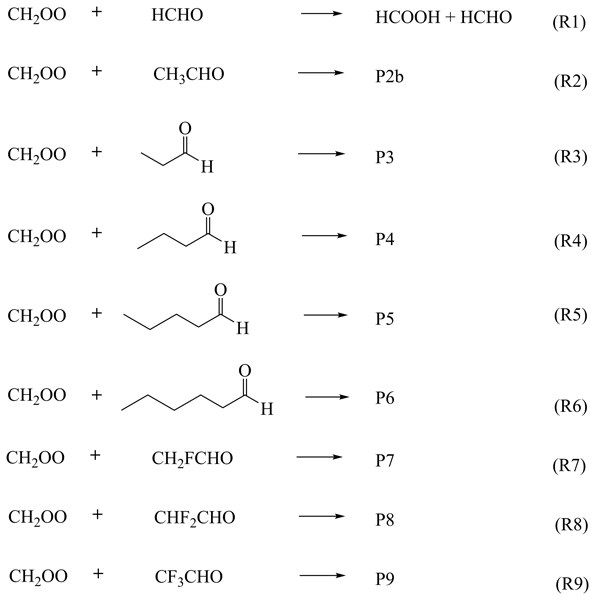
Chemical transformations are fundamental drivers of atmospheric composition. While elucidating these processes is critical, existing quantitative kinetic data remain significantly limited. We develop a computational framework that delivers quantitative kinetics for CH₂OO reactions with aldehydes from small to large systems, revealing fluorination-driven near–collision-limit reactivity and previously unrecognized impacts on nighttime Criegee chemistry and sulfate formation in the atmosphere.
Zegang Dong, Chaolu Xie, and Bo Long
Atmos. Chem. Phys., 25, 14315–14331, https://doi.org/10.5194/acp-25-14315-2025, https://doi.org/10.5194/acp-25-14315-2025, 2025
Short summary
Short summary
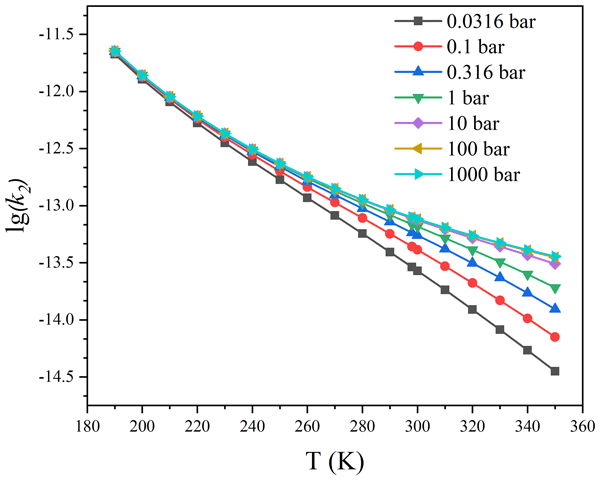
Perfluoroaldehydes are important products formed in the atmospheric oxidation of fluorinated compounds. However, their degradation routes are not clear. Here, we find a rapid route for the degradation of linear perfluoroaldehydes by hydroperoxy radical. The chemical processes are dominant over the corresponding oxidation processes by hydroxyl radical. The present findings are of great importance for elucidating the chemical transformation of linear perfluoroaldehydes in the atmosphere.
Chaolu Xie and Bo Long
Atmos. Chem. Phys., 26, 6973–6992, https://doi.org/10.5194/acp-26-6973-2026, https://doi.org/10.5194/acp-26-6973-2026, 2026
Short summary
Short summary
Chemical transformations are fundamental drivers of atmospheric composition. While elucidating these processes is critical, existing quantitative kinetic data remain significantly limited. We develop a computational framework that delivers quantitative kinetics for CH₂OO reactions with aldehydes from small to large systems, revealing fluorination-driven near–collision-limit reactivity and previously unrecognized impacts on nighttime Criegee chemistry and sulfate formation in the atmosphere.
Zegang Dong, Chaolu Xie, and Bo Long
Atmos. Chem. Phys., 25, 14315–14331, https://doi.org/10.5194/acp-25-14315-2025, https://doi.org/10.5194/acp-25-14315-2025, 2025
Short summary
Short summary
Perfluoroaldehydes are important products formed in the atmospheric oxidation of fluorinated compounds. However, their degradation routes are not clear. Here, we find a rapid route for the degradation of linear perfluoroaldehydes by hydroperoxy radical. The chemical processes are dominant over the corresponding oxidation processes by hydroxyl radical. The present findings are of great importance for elucidating the chemical transformation of linear perfluoroaldehydes in the atmosphere.
Qinghao Guo, Haofei Zhang, Bo Long, Lehui Cui, Yiyang Sun, Hao Liu, Yaxin Liu, Yunting Xiao, Pingqing Fu, and Jialei Zhu
Atmos. Chem. Phys., 25, 9249–9262, https://doi.org/10.5194/acp-25-9249-2025, https://doi.org/10.5194/acp-25-9249-2025, 2025
Short summary
Short summary
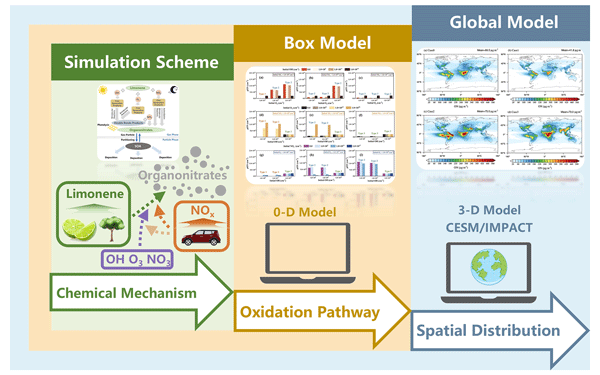
Limonene, a natural compound from plants, reacts with pollutants to form airborne particles that influence air quality and climate. Using advanced models with explicit chemical mechanisms, we show how different reaction pathways shape organonitrate formation, with some increasing and others decreasing particle levels. This approach enhances predictions of pollution and climate impacts while deepening our understanding of how natural and human-made emissions interact in the atmosphere.
Cited articles
Bao, J. L. and Truhlar, D. G.: Variational transition state theory: theoretical framework and recent developments, Chem. Soc. Rev., 46, 7548–7596, https://doi.org/10.1039/C7CS00602K, 2017.
Bao, J. L., Zhang, X., and Truhlar, D. G.: Barrierless association of CF2 and dissociation of C2F4 by variational transition-state theory and system-specific quantum Rice–Ramsperger–Kassel theory, Proc. Natl. Acad. Sci., 113, 13606–13611, https://doi.org/10.1073/pnas.1616208113, 2016a.
Bao, J. L., Zheng, J., and Truhlar, D. G.: Kinetics of Hydrogen Radical Reactions with Toluene Including Chemical Activation Theory Employing System-Specific Quantum RRK Theory Calibrated by Variational Transition State Theory, J. Am. Chem. Soc., 138, 2690–2704, https://doi.org/10.1021/jacs.5b11938, 2016b.
Bernath, P., Boone, C., and Crouse, J.: Wildfire smoke destroys stratospheric ozone, Science, 375, 1292–1295, https://doi.org/10.1126/science.abm5611, 2022.
Bucher, J. R.: Methyl isocyanate: A review of health effects research since Bhopal, Fundam. Appl. Toxicol., 9, 367–379, https://doi.org/10.1016/0272-0590(87)90019-4, 1987.
Bunnelle, W. H.: Preparation, properties, and reactions of carbonyl oxides, Chem. Rev., 91, 335–362, https://doi.org/10.1021/cr00003a003, 1991.
Canneaux, S., Bohr, F., and Henon, E.: KiSThelP: A program to predict thermodynamic properties and rate constants from quantum chemistry results, J. Comput. Chem., 35, 82–93, https://doi.org/10.1002/jcc.23470, 2014.
Chan, B. and Radom, L.: W2X and W3X-L: Cost-Effective Approximations to W2 and W4 with kJ mol−1 Accuracy, J. Chem. Theory Comput., 11, 2109–2119, https://doi.org/10.1021/acs.jctc.5b00135, 2015.
Chen, W., Zhang, P., Truhlar, D. G., Zheng, J., and Xu, X.: Identification of Torsional Modes in Complex Molecules Using Redundant Internal Coordinates: The Multistructural Method with Torsional Anharmonicity with a Coupled Torsional Potential and Delocalized Torsions, J. Chem. Theory Comput., 18, 7671–7682, https://doi.org/10.1021/acs.jctc.2c00952, 2022.
Chhantyal-Pun, R., Rotavera, B., McGillen, M. R., Khan, M. A. H., Eskola, A. J., Caravan, R. L., Blacker, L., Tew, D. P., Osborn, D. L., Percival, C. J., Taatjes, C. A., Shallcross, D. E., and Orr-Ewing, A. J.: Criegee Intermediate Reactions with Carboxylic Acids: A Potential Source of Secondary Organic Aerosol in the Atmosphere, ACS Earth Space Chem., 2, 833–842, https://doi.org/10.1021/acsearthspacechem.8b00069, 2018.
Chhantyal-Pun, R., Khan, M. A. H., Taatjes, C. A., Percival, C. J., Orr-Ewing, A. J., and Shallcross, D. E.: Criegee intermediates: production, detection and reactivity, Int. Rev. Phys. Chem., 39, 385–424, https://doi.org/10.1080/0144235X.2020.1792104, 2020a.
Chhantyal-Pun, R., Khan, M. A. H., Zachhuber, N., Percival, C. J., Shallcross, D. E., and Orr-Ewing, A. J.: Impact of Criegee Intermediate Reactions with Peroxy Radicals on Tropospheric Organic Aerosol, ACS Earth Space Chem., 4, 1743–1755, https://doi.org/10.1021/acsearthspacechem.0c00147, 2020b.
Chung, C.-A., Su, J. W., and Lee, Y.-P.: Detailed mechanism and kinetics of the reaction of Criegee intermediate CH2OO with HCOOH investigated via infrared identification of conformers of hydroperoxymethyl formate and formic acid anhydride, Phys. Chem. Chem. Phys., 21, 21445–21455, https://doi.org/10.1039/C9CP04168K, 2019.
Criegee, R.: Mechanism of Ozonolysis, Angew. Chem. Int. Ed., 14, 745–752, https://doi.org/10.1002/anie.197507451, 1975.
Docherty, K. S., Wu, W., Lim, Y. B., and Ziemann, P. J.: Contributions of Organic Peroxides to Secondary Aerosol Formed from Reactions of Monoterpenes with O3, Environ Sci Technol., 39, 4049–4059, https://doi.org/10.1021/es050228s, 2005.
Etz, B. D., Woodley, C. M., and Shukla, M. K.: Reaction mechanisms for methyl isocyanate (CH3NCO) gas-phase degradation, J. Hazard. Mater., 473, 134628, https://doi.org/10.1016/j.jhazmat.2024.134628, 2024.
Finewax, Z., Chattopadhyay, A., Neuman, J. A., Roberts, J. M., and Burkholder, J. B.: Calibration of hydroxyacetonitrile (HOCH2CN) and methyl isocyanate (CH3NCO) isomers using I− chemical ionization mass spectrometry (CIMS), Atmos. Meas. Tech., 17, 6865–6873, https://doi.org/10.5194/amt-17-6865-2024, 2024.
Foreman, E. S., Kapnas, K. M., and Murray, C.: Reactions between Criegee intermediates and the inorganic acids HCl and HNO3: Kinetics and atmospheric implications, Angew. Chem. Int. Ed., 128, 10575–10578, https://doi.org/10.1002/anie.201604662, 2016.
Franzon, L., Peltola, J., Valiev, R., Vuorio, N., Kurtén, T., and Eskola, A.: An Experimental and Master Equation Investigation of Kinetics of the CH2OO + RCN Reactions (R = H, CH3, C2H5) and Their Atmospheric Relevance, J. Phys. Chem. A, 127, 477–488, https://doi.org/10.1021/acs.jpca.2c07073, 2023.
Frisch, M. J., Trucks, G. W., Schlegel, H. B., Scuseria, G. E., Robb, M. A., Cheeseman, J. R., Scalmani, G., Barone, V., Mennucci, B., Petersson, G. A., Nakatsuji, H., Caricato, M., Li, X., Hratchian, H. P., Izmaylov, A. F., Bloino, J., Zheng, G., Sonnenberg, J. L., Hada, M., Ehara, M., Toyota, K., Fukuda, R., Hasegawa, J., Ishida, M., Nakajima, T., Honda, Y., Kitao, O., Nakai, H., Vreven, T., Montgomery, J. A., Peralta, J. E., Ogliaro, F., Bearpark, M., Heyd, J. J., Brothers, E., Kudin, K. N., Staroverov, V. N., Kobayashi, R., Normand, J., Raghavachari, K., Rendell, A., Burant, J. C., Iyengar, S. S., Tomasi, J., Cossi, M., Rega, N., Millam, J. M., Klene, M., Knox, J. E., Cross, J. B., Bakken, V., Adamo, C., Jaramillo, J., Gomperts, R., Stratmann, R. E., Yazyev, O., Austin, A. J., Cammi, R., Pomelli, C., Ochterski, J. W., Martin, R. L., Morokuma, K., Zakrzewski, V. G., Voth, G. A., Salvador, P., Dannenberg, J. J., Dapprich, S., Daniels, A. D., Farkas, O., Foresman, J. B., Ortiz, J. V., Cioslowski, J., and Fox, D. J.: Gaussian 16, Revision A.03, Gaussian Inc, Wallingford CT, https://gaussian.com/gaussian16/ (last access: 20 November 2023), 2016.
Gao, Q., Shen, C., Zhang, H., Long, B., and Truhlar, D. G.: Quantitative kinetics reveal that reactions of HO2 are a significant sink for aldehydes in the atmosphere and may initiate the formation of highly oxygenated molecules via autoxidation, Phys. Chem. Chem. Phys., 26, 16160–16174, https://doi.org/10.1039/D4CP00693C, 2024.
Garrett, B. C. and Truhlar, D. G.: Criterion of minimum state density in the transition state theory of bimolecular reactions, J. Chem. Phys., 70, 1593–1598, https://doi.org/10.1063/1.437698, 1979.
Garrett, B. C. and Truhlar, D. G.: Canonical unified statistical model. Classical mechanical theory and applications to collinear reactions, J. Chem. Phys., 76, 1853–1858, https://doi.org/10.1063/1.443157, 1982.
Georgievskii, Y. and Klippenstein, S. J.: Variable reaction coordinate transition state theory: Analytic results and application to the C2H3+H → C2H4 reaction, J. Chem. Phys., 118, 5442–5455, https://doi.org/10.1063/1.1539035, 2003.
Glasstone, S., Laidler, K. J., and Eyring, H.: The Theory of Rate Processes: The Kinetics of Chemical Reactions, Viscosity, Diffusion and Electrochemical Phenomena, McGraw-Hill Book Company, Incorporated, 1st Edn., ISBN 13 9780070233607, 1941.
Győrffy, W. and Werner, H.-J.: Analytical energy gradients for explicitly correlated wave functions. II. Explicitly correlated coupled cluster singles and doubles with perturbative triples corrections: CCSD(T)-F12, J. Chem. Phys., 148, 114104, https://doi.org/10.1063/1.5020436, 2018.
Hansen, A. S., Qian, Y., Sojdak, C. A., Kozlowski, M. C., Esposito, V. J., Francisco, J. S., Klippenstein, S. J., and Lester, M. I.: Rapid Allylic 1,6 H-Atom Transfer in an Unsaturated Criegee Intermediate, J. Am. Chem. Soc., 144, 5945–5955, https://doi.org/10.1021/jacs.2c00055, 2022.
Inomata, S., Sato, K., Hirokawa, J., Sakamoto, Y., Tanimoto, H., Okumura, M., Tohno, S., and Imamura, T.: Analysis of secondary organic aerosols from ozonolysis of isoprene by proton transfer reaction mass spectrometry, Atmos. Environ., 97, 397–405, https://doi.org/10.1016/j.atmosenv.2014.03.045, 2014.
Jalan, A., Allen, J. W., and Green, W. H.: Chemically activated formation of organic acids in reactions of the Criegee intermediate with aldehydes and ketones, Phys. Chem. Chem. Phys., 15, 16841–16852, https://doi.org/10.1039/C3CP52598H, 2013.
Jiang, H., Xie, C., Liu, Y., Xiao, C., Zhang, W., Li, H., Long, B., Dong, W., Truhlar, D. G., and Yang, X.: Criegee Intermediates Significantly Reduce Atmospheric (CF3)2CFCN, J. Am. Chem. Soc., 147, 12263–12272, https://doi.org/10.1021/jacs.5c01737, 2025.
Joshi, P. R. and Lee, Y.-P.: Identification of the HOCHC(O)NH2 Radical Intermediate in the Reaction of H + Glycolamide in Solid Para-Hydrogen and Its Implication to the Interstellar Formation of Higher-Order Amides and Polypeptides, ACS Earth Space Chem., 9, 769–781, https://doi.org/10.1021/acsearthspacechem.4c00409, 2025.
Kállay, M., Nagy, P. R., Mester, D., Rolik, Z., Samu, G., Csontos, J., Csóka, J., Szabó, P. B., Gyevi-Nagy, L., Hégely, B., Ladjánszki, I., Szegedy, L., Ladóczki, B., Petrov, K., Farkas, M., Mezei, P. D., and Ganyecz, Á.: The MRCC program system: Accurate quantum chemistry from water to proteins, J. Chem. Phys., 152, 074107, https://doi.org/10.1063/1.5142048, 2020.
Kar, T. and Scheiner, S.: Comparison of Cooperativity in CH
Katich, J. M., Apel, E. C., Bourgeois, I., Brock, C. A., Bui, T. P., Campuzano-Jost, P., Commane, R., Daube, B., Dollner, M., Fromm, M., Froyd, K. D., Hills, A. J., Hornbrook, R. S., Jimenez, J. L., Kupc, A., Lamb, K. D., McKain, K., Moore, F., Murphy, D. M., Nault, B. A., Peischl, J., Perring, A. E., Peterson, D. A., Ray, E. A., Rosenlof, K. H., Ryerson, T., Schill, G. P., Schroder, J. C., Weinzierl, B., Thompson, C., Williamson, C. J., Wofsy, S. C., Yu, P., and Schwarz, J. P.: Pyrocumulonimbus affect average stratospheric aerosol composition, Science, 379, 815–820, https://doi.org/10.1126/science.add3101, 2023.
Khan, M. A. H., Percival, C. J., Caravan, R. L., Taatjes, C. A., and Shallcross, D. E.: Criegee intermediates and their impacts on the troposphere, Environ. Sci-Proc. Imp., 20, 437–453, https://doi.org/10.1039/C7EM00585G, 2018.
Koss, A. R., Sekimoto, K., Gilman, J. B., Selimovic, V., Coggon, M. M., Zarzana, K. J., Yuan, B., Lerner, B. M., Brown, S. S., Jimenez, J. L., Krechmer, J., Roberts, J. M., Warneke, C., Yokelson, R. J., and de Gouw, J.: Non-methane organic gas emissions from biomass burning: identification, quantification, and emission factors from PTR-ToF during the FIREX 2016 laboratory experiment, Atmos. Chem. Phys., 18, 3299–3319, https://doi.org/10.5194/acp-18-3299-2018, 2018.
Kroll, J. H., Donahue, N. M., Cee, V. J., Demerjian, K. L., and Anderson, J. G.: Gas-Phase Ozonolysis of Alkenes: Formation of OH from Anti Carbonyl Oxides, J. Am. Chem. Soc., 124, 8518–8519, https://doi.org/10.1021/ja0266060, 2002.
Kukui, A., Chartier, M., Wang, J., Chen, H., Dusanter, S., Sauvage, S., Michoud, V., Locoge, N., Gros, V., Bourrianne, T., Sellegri, K., and Pichon, J.-M.: Role of Criegee intermediates in the formation of sulfuric acid at a Mediterranean (Cape Corsica) site under influence of biogenic emissions, Atmos. Chem. Phys., 21, 13333–13351, https://doi.org/10.5194/acp-21-13333-2021, 2021.
Lelieveld, J., Gromov, S., Pozzer, A., and Taraborrelli, D.: Global tropospheric hydroxyl distribution, budget and reactivity, Atmos. Chem. Phys., 16, 12477–12493, https://doi.org/10.5194/acp-16-12477-2016, 2016.
Lester, M. I. and Klippenstein, S. J.: Unimolecular Decay of Criegee Intermediates to OH Radical Products: Prompt and Thermal Decay Processes, Acc. Chem. Res., 51, 978–985, https://doi.org/10.1021/acs.accounts.8b00077, 2018.
Li, J. and Long, B.: Dual-level strategy for quantitative kinetics for the reaction between ethylene and hydroxyl radical, J. Chem. Phys., 160, 174301, https://doi.org/10.1063/5.0200107, 2024.
Liu, Y. P., Lynch, G. C., Truong, T. N., Lu, D. H., Truhlar, D. G., and Garrett, B. C.: Molecular modeling of the kinetic isotope effect for the [1,5]-sigmatropic rearrangement of cis-1,3-pentadiene, J. Am. Chem. Soc., 115, 2408–2415, https://doi.org/10.1021/ja00059a041, 1993.
Long, B., Cheng, J., Tan, X., and Zhang, W.: Theoretical study on the detailed reaction mechanisms of carbonyl oxide with formic acid, J. Mol. Struc-THEOCHEM, 916, 159–167, https://doi.org/10.1016/j.theochem.2009.09.028, 2009.
Long, B., Bao, J. L., and Truhlar, D. G.: Atmospheric Chemistry of Criegee Intermediates: Unimolecular Reactions and Reactions with Water, J. Am. Chem. Soc., 138, 14409–14422, https://doi.org/10.1021/jacs.6b08655, 2016.
Long, B., Bao, J. L., and Truhlar, D. G.: Unimolecular reaction of acetone oxide and its reaction with water in the atmosphere, Proc. Natl. Acad. Sci., 115, 6135–6140, https://doi.org/10.1073/pnas.1804453115, 2018.
Long, B., Bao, J. L., and Truhlar, D. G.: Kinetics of the Strongly Correlated CH3O + O2 Reaction: The Importance of Quadruple Excitations in Atmospheric and Combustion Chemistry, J. Am. Chem. Soc., 141, 611–617, https://doi.org/10.1021/jacs.8b11766, 2019a.
Long, B., Bao, J. L., and Truhlar, D. G.: Rapid unimolecular reaction of stabilized Criegee intermediates and implications for atmospheric chemistry, Nat. Commun., 10, 2003, https://doi.org/10.1038/s41467-019-09948-7, 2019b.
Long, B., Wang, Y., Xia, Y., He, X., Bao, J. L., and Truhlar, D. G.: Atmospheric Kinetics: Bimolecular Reactions of Carbonyl Oxide by a Triple-Level Strategy, J. Am. Chem. Soc., 143, 8402–8413, https://doi.org/10.1021/jacs.1c02029, 2021.
Long, B., Xia, Y., and Truhlar, D. G.: Quantitative Kinetics of HO2 Reactions with Aldehydes in the Atmosphere: High-Order Dynamic Correlation, Anharmonicity, and Falloff Effects Are All Important, J. Am. Chem. Soc., 144, 19910–19920, https://doi.org/10.1021/jacs.2c07994, 2022.
Long, B., Xia, Y., Zhang, Y.-Q., and Truhlar, D. G.: Kinetics of Sulfur Trioxide Reaction with Water Vapor to Form Atmospheric Sulfuric Acid, J. Am. Chem. Soc., 145, 19866–19876, https://doi.org/10.1021/jacs.3c06032, 2023.
Long, B., Zhang, Y.-Q., Xie, C.-L., Tan, X.-F., and Truhlar, D. G.: Reaction of Carbonyl Oxide with Hydroperoxymethyl Thioformate: Quantitative Kinetics and Atmospheric Implications, Research, 7, 0525, https://doi.org/10.34133/research.0525, 2024.
Luo, P. L., Chen, I. Y., Khan, M. A. H., and Shallcross, D. E.: Direct gas-phase formation of formic acid through reaction of Criegee intermediates with formaldehyde, Commun. Chem., 6, 130, https://doi.org/10.1038/s42004-023-00933-2, 2023.
Ma, C., Su, H., Lelieveld, J., Randel, W., Yu, P., Andreae, M. O., and Cheng, Y.: Smoke-charged vortex doubles hemispheric aerosol in the middle stratosphere and buffers ozone depletion, Sci. Adv., 10, eadn3657, https://doi.org/10.1126/sciadv.adn3657, 2024.
Marshall, P. and Burkholder, J. B.: Kinetics and Thermochemistry of Hydroxyacetonitrile (HOCH2CN) and Its Reaction with Hydroxyl Radical, ACS Earth Space Chem., 8, 1933–1941, https://doi.org/10.1021/acsearthspacechem.4c00176, 2024.
Mattila, J. M., Arata, C., Wang, C., Katz, E. F., Abeleira, A., Zhou, Y., Zhou, S., Goldstein, A. H., Abbatt, J. P. D., DeCarlo, P. F., and Farmer, D. K.: Dark Chemistry during Bleach Cleaning Enhances Oxidation of Organics and Secondary Organic Aerosol Production Indoors, Environ. Sci. Technol. Lett., 7, 795–801, https://doi.org/10.1021/acs.estlett.0c00573, 2020.
Mehta, P. S., Mehta, A. S., Mehta, S. J., and Makhijani, A. B.: Bhopal Tragedy's Health Effects: A Review of Methyl Isocyanate Toxicity, J. Am. Med. Assoc., 264, 2781–2787, https://doi.org/10.1001/jama.1990.03450210081037, 1990.
Newland, M. J., Rickard, A. R., Sherwen, T., Evans, M. J., Vereecken, L., Muñoz, A., Ródenas, M., and Bloss, W. J.: The atmospheric impacts of monoterpene ozonolysis on global stabilised Criegee intermediate budgets and SO2 oxidation: experiment, theory and modelling, Atmos. Chem. Phys., 18, 6095–6120, https://doi.org/10.5194/acp-18-6095-2018, 2018.
Nguyen, T. L., Lee, H., Matthews, D. A., McCarthy, M. C., and Stanton, J. F.: Stabilization of the Simplest Criegee Intermediate from the Reaction between Ozone and Ethylene: A High-Level Quantum Chemical and Kinetic Analysis of Ozonolysis, J. Phys. Chem. A, 119, 5524–5533, https://doi.org/10.1021/acs.jpca.5b02088, 2015.
Novelli, A., Vereecken, L., Lelieveld, J., and Harder, H.: Direct observation of OH formation from stabilised Criegee intermediates, Phys. Chem. Chem. Phys., 16, 19941–19951, https://doi.org/10.1039/C4CP02719A, 2014.
Osborn, D. L. and Taatjes, C. A.: The physical chemistry of Criegee intermediates in the gas phase, Int. Rev. Phys. Chem., 34, 309–360, https://doi.org/10.1080/0144235X.2015.1055676, 2015.
Papanastasiou, D. K., Bernard, F., and Burkholder, J. B.: Atmospheric Fate of Methyl Isocyanate, CH3NCO: OH and Cl Reaction Kinetics and Identification of Formyl Isocyanate, HC(O)NCO, ACS Earth Space Chem., 4, 1626–1637, https://doi.org/10.1021/acsearthspacechem.0c00157, 2020.
Parker, T. M., Burns, L. A., Parrish, R. M., Ryno, A. G., and Sherrill, C. D.: Levels of symmetry adapted perturbation theory (SAPT). I. Efficiency and performance for interaction energies, J. Chem. Phys., 140, 094106, https://doi.org/10.1063/1.4867135, 2014.
Peltola, J., Seal, P., Inkilä, A., and Eskola, A.: Time-resolved, broadband UV-absorption spectrometry measurements of Criegee intermediate kinetics using a new photolytic precursor: unimolecular decomposition of CH2OO and its reaction with formic acid, Phys. Chem. Chem. Phys., 22, 11797–11808, https://doi.org/10.1039/D0CP00302F, 2020.
Peverati, R. and Truhlar, D. G.: M11-L: A Local Density Functional That Provides Improved Accuracy for Electronic Structure Calculations in Chemistry and Physics, J. Phys. Chem. Lett., 3, 117–124, https://doi.org/10.1021/jz201525m, 2012.
Priestley, M., Le Breton, M., Bannan, T. J., Leather, K. E., Bacak, A., Reyes-Villegas, E., De Vocht, F., Shallcross, B. M. A., Brazier, T., Anwar Khan, M., Allan, J., Shallcross, D. E., Coe, H., and Percival, C. J.: Observations of Isocyanate, Amide, Nitrate, and Nitro Compounds From an Anthropogenic Biomass Burning Event Using a ToF-CIMS, J. Geophys. Res-Atmos., 123, 7687–7704, https://doi.org/10.1002/2017JD027316, 2018.
Ren, X., Harder, H., Martinez, M., Lesher, R. L., Oliger, A., Simpas, J. B., Brune, W. H., Schwab, J. J., Demerjian, K. L., He, Y., Zhou, X., and Gao, H.: OH and HO2 Chemistry in the urban atmosphere of New York City, Atmos. Environ., 37, 3639–3651, https://doi.org/10.1016/S1352-2310(03)00459-X, 2003.
Sanz-Novo, M., Belloche, A., Alonso, J. L., Kolesniková, L., Garrod, R. T., Mata, S., Müller, H. S. P., Menten, K. M., and Gong, Y.: Interstellar glycolamide: A comprehensive rotational study and an astronomical search in Sgr, Astron. Astrophys., 639, A135, https://doi.org/10.1051/0004-6361/202038149, 2020.
Stone, D., Whalley, L. K., and Heard, D. E.: Tropospheric OH and HO2 radicals: field measurements and model comparisons, Chem. Soc. Rev., 41, 6348–6404, https://doi.org/10.1039/C2CS35140D, 2012.
Sun, Y., Long, B., and Truhlar, D. G.: Unimolecular Reactions of E-Glycolaldehyde Oxide and Its Reactions with One and Two Water Molecules, Research, 6, 0143, https://doi.org/10.34133/research.0143, 2023.
Truhlar, D. G., Isaacson, A. D., Skodje, R. T., and Garrett, B. C.: Incorporation of quantum effects in generalized-transition-state theory, J. Phys. Chem., 86, 2252–2261, https://doi.org/10.1021/j100209a021, 1982.
Vereecken, L., Novelli, A., and Taraborrelli, D.: Unimolecular decay strongly limits the atmospheric impact of Criegee intermediates, Phys. Chem. Chem. Phys., 19, 31599–31612, https://doi.org/10.1039/C7CP05541B, 2017.
Wang, C., Mattila, J. M., Farmer, D. K., Arata, C., Goldstein, A. H., and Abbatt, J. P. D.: Behavior of Isocyanic Acid and Other Nitrogen-Containing Volatile Organic Compounds in The Indoor Environment, Environ. Sci. Technol., 56, 7598–7607, https://doi.org/10.1021/acs.est.1c08182, 2022a.
Wang, G., Iradukunda, Y., Shi, G., Sanga, P., Niu, X., and Wu, Z.: Hydroxyl, hydroperoxyl free radicals determination methods in atmosphere and troposphere, J. Environ. Sci., 99, 324–335, https://doi.org/10.1016/j.jes.2020.06.038, 2021.
Wang, P., Truhlar, D. G., Xia, Y., and Long, B.: Temperature-dependent kinetics of the atmospheric reaction between CH2OO and acetone, Phys. Chem. Chem. Phys., 24, 13066–13073, https://doi.org/10.1039/D2CP01118B, 2022b.
Werner, H.-J., Knowles, P. J., Knizia, G., Manby, F. R., and Schütz, M.: Molpro: a general-purpose quantum chemistry program package, WIREs Comput. Mol. Sci., 2, 242–253, https://doi.org/10.1002/wcms.82, 2012.
Worthy, W.: Methyl Isocyanate: The Chemistry of a Hazard, Chem. Eng. News Archive, 63, 27–33, https://doi.org/10.1021/cen-v063n006.p027, 1985.
Xia, Y., Long, B., Lin, S., Teng, C., Bao, J. L., and Truhlar, D. G.: Large Pressure Effects Caused by Internal Rotation in the s-cis-syn-Acrolein Stabilized Criegee Intermediate at Tropospheric Temperature and Pressure, J. Am. Chem. Soc., 144, 4828–4838, https://doi.org/10.1021/jacs.1c12324, 2022.
Xia, Y., Long, B., Liu, A., and Truhlar, D. G.: Reactions with Criegee intermediates are the dominant gas-phase sink for formyl fluoride in the atmosphere, Fundam. Res., 4, 1216–1224, https://doi.org/10.1016/j.fmre.2023.02.012, 2024.
Xie, C., Yang, H., and Long, B.: Reaction between peracetic acid and carbonyl oxide: Quantitative kinetics and insight into implications in the atmosphere, Atmos. Environ., 341, 120928, https://doi.org/10.1016/j.atmosenv.2024.120928, 2024.
Yao, L., Wang, M. Y., Wang, X. K., Liu, Y. J., Chen, H. F., Zheng, J., Nie, W., Ding, A. J., Geng, F. H., Wang, D. F., Chen, J. M., Worsnop, D. R., and Wang, L.: Detection of atmospheric gaseous amines and amides by a high-resolution time-of-flight chemical ionization mass spectrometer with protonated ethanol reagent ions, Atmos. Chem. Phys., 16, 14527–14543, https://doi.org/10.5194/acp-16-14527-2016, 2016.
Zhang, H., Zhang, X., Truhlar, D. G., and Xu, X.: Nonmonotonic Temperature Dependence of the Pressure-Dependent Reaction Rate Constant and Kinetic Isotope Effect of Hydrogen Radical Reaction with Benzene Calculated by Variational Transition-State Theory, J. Phys. Chem. A, 121, 9033–9044, https://doi.org/10.1021/acs.jpca.7b09374, 2017.
Zhang, L., Truhlar, D. G., and Sun, S.: Association of Cl with C2H2 by unified variable-reaction-coordinate and reaction-path variational transition-state theory, Proc. Natl. Acad. Sci., 117, 5610–5616, https://doi.org/10.1073/pnas.1920018117, 2020.
Zhang, Y., Xu, R., Huang, W., Ye, T., Yu, P., Yu, W., Wu, Y., Liu, Y., Yang, Z., Wen, B., Ju, K., Song, J., Abramson, M. J., Johnson, A., Capon, A., Jalaludin, B., Green, D., Lavigne, E., Johnston, F. H., Morgan, G. G., Knibbs, L. D., Zhang, Y., Marks, G., Heyworth, J., Arblaster, J., Guo, Y. L., Morawska, L., Coelho, M. S. Z. S., Saldiva, P. H. N., Matus, P., Bi, P., Hales, S., Hu, W., Phung, D., Guo, Y., and Li, S.: Respiratory risks from wildfire-specific PM2.5 across multiple countries and territories, Nat. Sustain., 8, 474–484, https://doi.org/10.1038/s41893-025-01533-9, 2025.
Zhang, Y. Q., Xia, Y., and Long, B.: Quantitative kinetics for the atmospheric reactions of Criegee intermediates with acetonitrile, Phys. Chem. Chem. Phys., 24, 24759–24766, https://doi.org/10.1039/D2CP02849B, 2022.
Zhang, Y. Q., Francisco, J. S., and Long, B.: Rapid Atmospheric Reactions between Criegee Intermediates and Hypochlorous Acid, J. Phys. Chem. A, 128, 909–917, https://doi.org/10.1021/acs.jpca.3c06144, 2024.
Zhao, Y., Lynch, B. J., and Truhlar, D. G.: Multi-coefficient extrapolated density functional theory for thermochemistry and thermochemical kinetics, Phys. Chem. Chem. Phys., 7, 43–52, https://doi.org/10.1039/B416937A, 2005.
Zhao, Y. C., Long, B., and Francisco, J. S.: Quantitative Kinetics of the Reaction between CH2OO and H2O2 in the Atmosphere, J. Phys. Chem. A, 126, 6742–6750, https://doi.org/10.1021/acs.jpca.2c04408, 2022.
Zheng, J. and Truhlar, D. G.: Quantum Thermochemistry: Multistructural Method with Torsional Anharmonicity Based on a Coupled Torsional Potential, J. Chem. Theory Comput., 9, 1356–1367, https://doi.org/10.1021/ct3010722, 2013.
Zheng, J., Zhang, S., and Truhlar, D. G.: Density Functional Study of Methyl Radical Association Kinetics, J. Phys. Chem. A, 112, 11509–11513, https://doi.org/10.1021/jp806617m, 2008.
Zheng, J., Mielke, S. L., Clarkson, K. L., and Truhlar, D. G.: MSTor: A program for calculating partition functions, free energies, enthalpies, entropies, and heat capacities of complex molecules including torsional anharmonicity, Comput. Phys. Commun., 183, 1803–1812, https://doi.org/10.1016/j.cpc.2012.03.007, 2012.
Zheng, J., Bao, J. L., Zhang, S., Corchado, J. C., Chuang, Y., Ellingson, B. A., and Truhlar, D. G.: Gaussrate, version 2017-B; University of Minnesota: Minneapolis, MN, https://comp.chem.umn.edu/gaussrate/ (last access: 4 November 2025), 2017a.
Zheng, J., Bao, J. L., Meana-Pañeda, R., Zhang, S., Lynch, B. J., Corchado, J. C., Chuang, Y., Fast, P. L., Hu, W. P., Liu, Y. P., Lynch, G. C., Nguyen, K. A., Jackels, C. F., Fernandez Ramos, A., Ellingson, B. A., Melissas, V. S., Villà, J., Rossi, I., Coitiño, E. L., Pu, J., Albu, T. V., Ratkiewicz, A., Steckler, R., Garrett, B. C., Isaacson, A. D., and Truhlar, D. G.: Polyrate-version 2017-C; University of Minnesota: Minneapolis, https://comp.chem.umn.edu/polyrate/ (last access: 4 November 2025), 2017b.
Short summary
Hydroxyacetonitrile is very important in the atmosphere, However, its chemical transformations are unclear. We develop theoretical methods and strategies to find a new reaction route for the sink of hydroxyacetonitrile by the reaction with Criegee intermediate. Moreover, in this study, the quantitative kinetics are also obtained, which improve the accuracy of atmospheric models. The reactions also provide further insights into the oxidation capacity of Criegee intermediates.
Hydroxyacetonitrile is very important in the atmosphere, However, its chemical transformations...


Altmetrics
Final-revised paper
Preprint