Articles | Volume 25, issue 21
https://doi.org/10.5194/acp-25-14629-2025
© Author(s) 2025. This work is distributed under
the Creative Commons Attribution 4.0 License.
https://doi.org/10.5194/acp-25-14629-2025
© Author(s) 2025. This work is distributed under
the Creative Commons Attribution 4.0 License.
Composition and Formation Mechanism of Brown Carbon: Identification and Quantification of Phenolic Precursors

Md. Al-Amin Hossen
Department of Chemistry, Faculty of Science, University of Dhaka, Dhaka-1000, Bangladesh
Mehedi Hasan Shakil
Department of Chemistry, Faculty of Science, University of Dhaka, Dhaka-1000, Bangladesh
Md. Fahim Ehasan
Environmental and Organic Chemistry Laboratory, Chemistry Division, Atomic Energy Centre Dhaka, Bangladesh
Abu Rayhan Mohammad Tareq
Environmental and Organic Chemistry Laboratory, Chemistry Division, Atomic Energy Centre Dhaka, Bangladesh
Abdus Salam
CORRESPONDING AUTHOR
Department of Chemistry, Faculty of Science, University of Dhaka, Dhaka-1000, Bangladesh
Related authors
No articles found.
Christopher R. Oxford, Haihui Zhu, Maya Mehrotra, Xuan Liu, Yuxuan Ren, Maya Arnott, Isaac Abionum Adimula, Taiye Benjamin Ajibolataiye, Clement Akoshile, Omar Amador-Munoz, Araya Asfaw, Rachel Ying-Wen Chang, Sagnik Dey, Ann M. Dillner, David J. Diner, Connor J. Flynn, Diana Francis, Paterne Gahungu, Rebecca M. Garland, Michel Grutter, Sina Hasheminassab, Fahad Imam, Jhoon Kim, Kristy Langerman, Pei-Chen Lee, Puji Lestari, Po-Hsiung Lin, S. Marcela Loria-Salazar, Tesfaye Mamo, Olga L. Mayol-Bracero, Mogesh Naidoo, Narendra Nelli, Sang Seo Park, Abdus Salam, Bighnaraj Sarangi, Trailokya Saud, Robyn Schofield, Yoav Schechner, Sachchida N. Tripathi, Emily K. West, Eli Windwer, Ming-Tsang Wu, Qiang Zhang, Michael Brauer, Yinon Rudich, Jay R. Turner, and Randall V. Martin
EGUsphere, https://doi.org/10.5194/egusphere-2026-3224, https://doi.org/10.5194/egusphere-2026-3224, 2026
This preprint is open for discussion and under review for Atmospheric Measurement Techniques (AMT).
Short summary
Short summary
A high-sensitivity balance, controlled temperature and relative humidity chamber, and filter samples collected around the world were used to develop a mass as a function of relative humidity relationship. We subsequently measured the chemical composition of these same samples. A relationship between the chemical composition and water mass was created and used to calculate aerosol water content showing how composition and water content varies worldwide.
Peng Yao, Katja Belec, Henry Holmstrand, Josh Balacky, Abdus Salam, Krishnakant Budhavant, Mohanan Remani Manoj, Khaled Shaifullah Joy, Md. Alamin Hossain, Atinderpal Singh, Anil Patel, Neeraj Rastogi, Chinmay Mallik, Kirpa Ram, Gyanesh Kumar Singh, and Örjan Gustafsson
Atmos. Chem. Phys., 26, 7765–7787, https://doi.org/10.5194/acp-26-7765-2026, https://doi.org/10.5194/acp-26-7765-2026, 2026
Short summary
Short summary
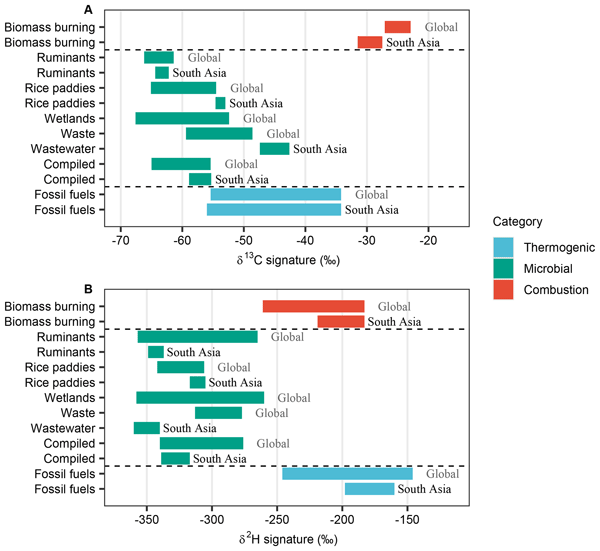
Methane is a powerful greenhouse gas, but its sources remain uncertain in many regions. The isotope fingerprints of methane are diagnostic of its sources, yet their source end-members are poorly constrained for South Asia. Here we determined the methane isotope signal for major sources in South Asia and found these to differ from global averages. Improved regional-specific isotope source fingerprints will help to improve top-down assessments of methane budgets and climate mitigation strategies.
Krishnakant Budhavant, Mohanan Remani Manoj, Hari Ram Chandrika Rajendran Nair, Samuel Mwaniki Gaita, Henry Holmstrand, Abdus Salam, Ahmed Muslim, Sreedharan Krishnakumari Satheesh, and Örjan Gustafsson
Atmos. Chem. Phys., 24, 11911–11925, https://doi.org/10.5194/acp-24-11911-2024, https://doi.org/10.5194/acp-24-11911-2024, 2024
Short summary
Short summary
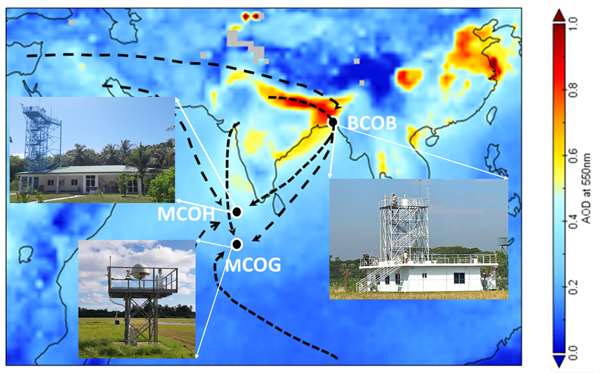
The South Asian Pollution Experiment 2018 used access to three strategically located receptor observatories. Observational constraints revealed opposing trends in the mass absorption cross sections of black carbon (BC MAC) and brown carbon (BrC MAC) during long-range transport. Models estimating the climate effects of BC aerosols may have underestimated the ambient BC MAC over distant receptor areas, leading to discrepancies in aerosol absorption predicted by observation-constrained models.
Cited articles
Andreozzi, R., Canterino, M., Caprio, V., Di Somma, I., and Sanchirico, R.: Salicylic acid nitration by means of nitric acid/acetic acid system: Chemical and kinetic characterization, Org. Process. Res. Dev., 10, 1199–1204, https://doi.org/10.1021/op060148o, 2006.
Ankhy, R. S., Roy, S., Nahar, A., Akbor, A., Al-amin Hossen, M., Jeba, F., Safiqul Islam, M., Moniruzzaman, M., and Salam, A.: Optical Characteristics of Brown Carbon in the Atmospheric Particulate Matter of Dhaka, Bangladesh: Analysis of Solvent Effects and Chromophore Identification, Heliyon, e36213, https://doi.org/10.1016/j.heliyon.2024.e36213, 2024.
Chow, K. S., Huang, X. H. H., and Yu, J. Z.: Quantification of nitroaromatic compounds in atmospheric fine particulate matter in Hong Kong over 3 years: Field measurement evidence for secondary formation derived from biomass burning emissions, Environmental Chemistry, 13, 665–673, https://doi.org/10.1071/EN15174, 2016.
Delhomme, O., Morville, S., and Millet, M.: Seasonal and diurnal variations of atmospheric concentrations of phenols and nitrophenols measured in the Strasbourg area, France, Atmos. Pollut. Res., 1, 16–22, https://doi.org/10.5094/APR.2010.003, 2010.
Esteves, P. M., Carneiro, J. W. de M., Cardoso, S. P., Barbosa, A. G. H., Laali, K. K., Rasul, G., Prakash, G. K. S., and Olah, G. A.: Unified mechanistic concept of electrophilic aromatic nitration: Convergence of computational results and experimental data, J. Am. Chem. Soc., 125, 4836–4849, https://doi.org/10.1021/ja021307w, 2003.
Feng, Y., Ramanathan, V., and Kotamarthi, V. R.: Brown carbon: a significant atmospheric absorber of solar radiation?, Atmos. Chem. Phys., 13, 8607–8621, https://doi.org/10.5194/acp-13-8607-2013, 2013.
Finewax, Z., De Gouw, J. A., and Ziemann, P. J.: Identification and Quantification of 4-Nitrocatechol Formed from OH and NO3 Radical-Initiated Reactions of Catechol in Air in the Presence of NOx: Implications for Secondary Organic Aerosol Formation from Biomass Burning, Environ. Sci. Technol., 52, 1981–1989, https://doi.org/10.1021/acs.est.7b05864, 2018.
Harrison, M. A. J., Barra, S., Borghesi, D., Vione, D., Arsene, C., and Iulian Olariu, R.: Nitrated phenols in the atmosphere: A review, Atmos. Environ., 39, 231–248, https://doi.org/10.1016/j.atmosenv.2004.09.044, 2005.
Heal, M. R., Harrison, M. A. J., and Neil Cape, J.: Aqueous-phase nitration of phenol by N2O5 and ClNO2, Atmos. Environ., 41, 3515–3520, https://doi.org/10.1016/j.atmosenv.2007.02.003, 2007.
Hems, R. F., Schnitzler, E. G., Liu-Kang, C., Cappa, C. D., and Abbatt, J. P. D.: Aging of Atmospheric Brown Carbon Aerosol, ACS Earth and Space Chemistry, 5, 722–748, https://doi.org/10.1021/acsearthspacechem.0c00346, 2021.
Hossain, M. A., Zaman, S. U., Roy, S., Islam, M. S., Zerin, I., and Salam, A.: Emission of particulate and gaseous air pollutants from municipal solid waste in Dhaka City, Bangladesh, J. Mater. Cycles Waste Manag., 26, 552–561, https://doi.org/10.1007/s10163-023-01855-w, 2024.
Hossen, M. A. A., Roy, S., Zaman, S. U., and Salam, A.: Emission of water soluble brown carbon from different combustion sources: Optical properties and functional group characterisation, Environ. Res. Commun., 5, https://doi.org/10.1088/2515-7620/acea1d, 2023.
Hossen, M. A. amin, Roy, S., Nahian, S., Zaman, S. U., Selim, A., and Salam, A.: Spectral characteristics of water-soluble Brown carbon and it's radiative impacts on the atmosphere of Dhaka, Bangladesh, Atmos. Environ., 351, 121185, https://doi.org/10.1016/J.ATMOSENV.2025.121185, 2025.
Hummel, M., Laus, G., Nerdinger, S., and Schottenberger, H.: Improved synthesis of 3-nitrosalicylic acid, Synth. Commun., 40, 3353–3357, https://doi.org/10.1080/00397910903419852, 2010.
Iinuma, Y., Böge, O., and Herrmann, H.: Methyl-nitrocatechols: Atmospheric tracer compounds for biomass burning secondary organic aerosols, Environ. Sci. Technol., 44, 8453–8459, https://doi.org/10.1021/es102938a, 2010.
Kumar, P., Hama, S., Nogueira, T., Abbass, R. A., Brand, V. S., Andrade, M. de F., Asfaw, A., Aziz, K. H., Cao, S. J., El-Gendy, A., Islam, S., Jeba, F., Khare, M., Mamuya, S. H., Martinez, J., Meng, M. R., Morawska, L., Muula, A. S., Shiva Nagendra, S. M., Ngowi, A. V., Omer, K., Olaya, Y., Osano, P., and Salam, A.: In-car particulate matter exposure across ten global cities, Science of the Total Environment, 750, https://doi.org/10.1016/j.scitotenv.2020.141395, 2021.
Laskin, A., Laskin, J., and Nizkorodov, S. A.: Chemistry of Atmospheric Brown Carbon, Chemical Reviews, 115, 4335–4382, https://doi.org/10.1021/cr5006167, 2015.
Laskin, A., West, C. P., and Hettiyadura, A. P. S.: Molecular insights into the composition, sources, and aging of atmospheric brown carbon, Chemical Society Reviews, 54, https://doi.org/10.1039/d3cs00609c, 2025.
Lee, H. J., Aiona, P. K., Laskin, A., Laskin, J., and Nizkorodov, S. A.: Effect of solar radiation on the optical properties and molecular composition of laboratory proxies of atmospheric brown carbon, Environ. Sci. Technol., 48, 10217–10226, https://doi.org/10.1021/es502515r, 2014.
Lee, S. H., Gordon, H., Yu, H., Lehtipalo, K., Haley, R., Li, Y., and Zhang, R.: New Particle Formation in the Atmosphere: From Molecular Clusters to Global Climate, Journal of Geophysical Research: Atmospheres, 124, 7098–7133, https://doi.org/10.1029/2018JD029356, 2019.
Li, M., Wang, X., Lu, C., Li, R., Zhang, J., Dong, S., Yang, L., Xue, L., Chen, J., and Wang, W.: Nitrated phenols and the phenolic precursors in the atmosphere in urban Jinan, China, Science of the Total Environment, 714, https://doi.org/10.1016/j.scitotenv.2020.136760, 2020.
Li, M., Wang, X., Zhao, Y., Du, P., Li, H., Li, J., Shen, H., Liu, Z., Jiang, Y., Chen, J., Bi, Y., Zhao, Y., Xue, L., Wang, Y., Chen, J., and Wang, W.: Atmospheric Nitrated Phenolic Compounds in Particle, Gaseous, and Aqueous Phases During Cloud Events at a Mountain Site in North China: Distribution Characteristics and Aqueous-Phase Formation, Journal of Geophysical Research: Atmospheres, 127, https://doi.org/10.1029/2022JD037130, 2022.
Liu, D., He, C., Schwarz, J. P., and Wang, X.: Lifecycle of light-absorbing carbonaceous aerosols in the atmosphere, NPJ Clim. Atmos. Sci., 3, 40, https://doi.org/10.1038/s41612-020-00145-8, 2020.
Liu, J., Lin, P., Laskin, A., Laskin, J., Kathmann, S. M., Wise, M., Caylor, R., Imholt, F., Selimovic, V., and Shilling, J. E.: Optical properties and aging of light-absorbing secondary organic aerosol, Atmos. Chem. Phys., 16, 12815–12827, https://doi.org/10.5194/acp-16-12815-2016, 2016.
Nakao, S., Clark, C., Tang, P., Sato, K., and Cocker III, D.: Secondary organic aerosol formation from phenolic compounds in the absence of NOx, Atmos. Chem. Phys., 11, 10649–10660, https://doi.org/10.5194/acp-11-10649-2011, 2011.
Park, J. I., Kim, M. S., Yeo, M., Choi, M., Lee, J. Y., Natsagdorj, A., Kim, C., Song, M., and Jang, K. S.: Chemical and morphological characterization by SEM–EDS of PM2.5 collected during winter in Ulaanbaatar, Mongolia, Atmos. Environ., 303, https://doi.org/10.1016/j.atmosenv.2023.119752, 2023.
Rahman, M. M., Rahaman, M. S., Islam, M. R., Rahman, F., Mithi, F. M., Alqahtani, T., Almikhlafi, M. A., Alghamdi, S. Q., Alruwaili, A. S., Hossain, M. S., Ahmed, M., Das, R., Emran, T. B., and Uddin, M. S.: Role of phenolic compounds in human disease: Current knowledge and future prospects, Molecules, 27, 233, https://doi.org/10.3390/molecules27010233, 2022.
Runa, F., Islam, M. S., Jeba, F., and Salam, A.: Light absorption properties of brown carbon from biomass burning emissions, Environmental Science and Pollution Research, 29, 21012–21022, https://doi.org/10.1007/s11356-021-17220-z, 2022.
Scalzone, A., Bonifacio, M. A., Cometa, S., Cucinotta, F., De Giglio, E., Ferreira, A. M., and Gentile, P.: pH-Triggered Adhesiveness and Cohesiveness of Chondroitin Sulfate-Catechol Biopolymer for Biomedical Applications, Front. Bioeng. Biotechnol., 8, https://doi.org/10.3389/fbioe.2020.00712, 2020.
Syedd-León, R., Sandoval-Barrantes, M., Trimiño-Vásquez, H., Villegas-Peñaranda, L. R., and Rodríguez-Rodríguez, G.: Revisiting the fundamentals of p-nitrophenol analysis for its application in the quantification of lipases activity, A graphical update, Uniciencia, 34, 31–42, https://doi.org/10.15359/RU.34-2.2, 2020.
Wang, H., Gao, Y., Wang, S., Wu, X., Liu, Y., Li, X., Huang, D., Lou, S., Wu, Z., Guo, S., Jing, S., Li, Y., Huang, C., Tyndall, G. S., Orlando, J. J., and Zhang, X.: Atmospheric Processing of Nitrophenols and Nitrocresols From Biomass Burning Emissions, Journal of Geophysical Research: Atmospheres, 125, https://doi.org/10.1029/2020JD033401, 2020.
Wang, J., Nie, W., Cheng, Y., Shen, Y., Chi, X., Wang, J., Huang, X., Xie, Y., Sun, P., Xu, Z., Qi, X., Su, H., and Ding, A.: Light absorption of brown carbon in eastern China based on 3-year multi-wavelength aerosol optical property observations and an improved absorption Ångström exponent segregation method, Atmos. Chem. Phys., 18, 9061–9074, https://doi.org/10.5194/acp-18-9061-2018, 2018a.
Wang, L., Wang, X., Gu, R., Wang, H., Yao, L., Wen, L., Zhu, F., Wang, W., Xue, L., Yang, L., Lu, K., Chen, J., Wang, T., Zhang, Y., and Wang, W.: Observations of fine particulate nitrated phenols in four sites in northern China: concentrations, source apportionment, and secondary formation, Atmos. Chem. Phys., 18, 4349–4359, https://doi.org/10.5194/acp-18-4349-2018, 2018b.
Wang, Y., Hu, M., Wang, Y., Zheng, J., Shang, D., Yang, Y., Liu, Y., Li, X., Tang, R., Zhu, W., Du, Z., Wu, Y., Guo, S., Wu, Z., Lou, S., Hallquist, M., and Yu, J. Z.: The formation of nitro-aromatic compounds under high NOx and anthropogenic VOC conditions in urban Beijing, China, Atmos. Chem. Phys., 19, 7649–7665, https://doi.org/10.5194/acp-19-7649-2019, 2019.
Wang, Y., Jorga, S., and Abbatt, J.: Nitration of Phenols by Reaction with Aqueous Nitrite: A Pathway for the Formation of Atmospheric Brown Carbon, ACS Earth Space Chem., 7, 632–641, https://doi.org/10.1021/acsearthspacechem.2c00396, 2023.
Wang, Z., Zhang, J., Zhang, L., Liang, Y., and Shi, Q.: Characterization of nitroaromatic compounds in atmospheric particulate matter from Beijing, Atmos. Environ., 246, https://doi.org/10.1016/j.atmosenv.2020.118046, 2021.
Wang, Y., Huang, R.-J., Zhong, H., Wang, T., Yang, L., Yuan, W., Xu, W., and An, Z.: Predictions of the optical properties of brown carbon aerosol by machine learning with typical chromophores, Environ. Sci. Technol., 58, 20588–20597, 2024.
Yang, J., Au, W. C., Law, H., Lam, C. H., and Nah, T.: Formation and evolution of brown carbon during aqueous-phase nitrate-mediated photooxidation of guaiacol and 5-nitroguaiacol, Atmos. Environ., 254, https://doi.org/10.1016/j.atmosenv.2021.118401, 2021.
Yang, J., Au, W. C., Law, H., Leung, C. H., Lam, C. H., and Nah, T.: pH affects the aqueous-phase nitrate-mediated photooxidation of phenolic compounds: implications for brown carbon formation and evolution, Environmental Science: Processes & Impacts, 25, 176–189, https://doi.org/10.1039/D2EM00004K, 2023.
Short summary
This study provides comprehensive insights into the compositions, surface elements, and formation mechanism of BrC in the atmosphere of Dhaka, Bangladesh, through the identification and quantification of seven key phenolic precursors and a laboratory-based aqueous-phase nitration experiment. We observed that PM2.5 particles predominantly exhibited spherical, irregular, and chain-like morphologies, with carbonaceous species, minerals, and trace elements.
This study provides comprehensive insights into the compositions, surface elements, and...
Altmetrics
Final-revised paper
Preprint